Uniswap v2 Review: Why This Legacy DEX Still Matters in 2026
A detailed review of Uniswap v2 in 2026. Learn why this legacy DEX still matters, how it compares to v3, and when you should use it for trading and liquidity provision.
When working with decentralized exchange, a peer‑to‑peer platform that lets users trade digital assets without a central authority. Also known as DEX, it empowers traders to keep custody of their funds while accessing order books, liquidity pools, and automated market makers.
A DEX encompasses self‑custodial exchange, a service where users retain their private keys instead of trusting a third‑party custodian. It requires cross‑chain trading, technology that lets assets move between different blockchain networks without wrapping or intermediaries. Together, these traits give DEXs the freedom to operate across ecosystems, lower barriers for global users, and align with the core principles of decentralized finance (DeFi, an open‑source financial layer built on smart contracts).
Self‑custodial exchange models boost security because the only person who can move the funds is the wallet owner. That means the risk of hacks targeting a central database drops dramatically—a point highlighted in many of our exchange reviews. Cross‑chain trading adds another layer of utility; users can swap Bitcoin for Ethereum, move tokens onto Layer‑2 solutions, or access emerging networks like Fantom without juggling multiple accounts. These capabilities also feed into DeFi lending, protocols that lend and borrow assets using smart contracts and algorithmic interest rates. When a DEX offers deep liquidity pools, lenders can earn higher yields, and borrowers can tap flash loans for arbitrage, all without a bank in sight.
Compared with centralized exchanges (CEXs), DEXs avoid KYC roadblocks, often provide lower fees, and let users trade directly from hardware wallets. However, they can face challenges like higher slippage on thin markets, slower transaction times on congested chains, and regulatory gray zones. Our collection below balances these angles: we dissect platform safety (Cryptex, Bexplus, DigiFinex), explore self‑custodial designs (C3 Exchange), and break down DeFi mechanics (Aave, Compound, MakerDAO). Whether you’re hunting a reliable DEX to swap tokens, evaluating a new cross‑chain bridge, or just curious how DeFi lending rates are set, the posts ahead give you actionable insights and real‑world examples.
Ready to see how these concepts play out in practice? Scroll down to discover in‑depth reviews, airdrop guides, and market analysis that tie directly into the decentralized exchange ecosystem.

A detailed review of Uniswap v2 in 2026. Learn why this legacy DEX still matters, how it compares to v3, and when you should use it for trading and liquidity provision.

A honest review of WagyuSwap on the Velas Network. We analyze fees, liquidity, and risks to help you decide if this fast DEX is worth your crypto.

Explore Cellana Finance, an Aptos-based DEX using the innovative ve(3,3) model. We analyze its pros, cons, risks, and whether it's worth your attention in 2026.
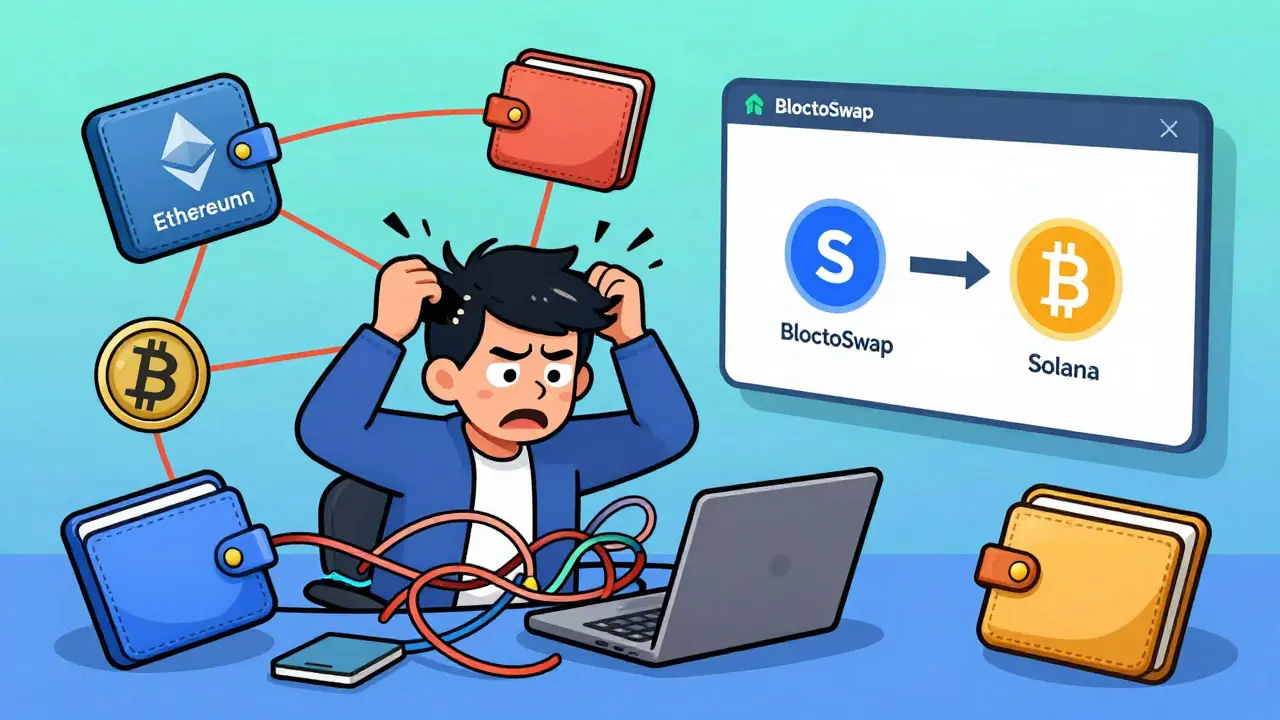
BloctoSwap review: A cross-chain DEX integrated into the Blocto wallet. We analyze its multi-chain support, hidden fees, and security for beginners.
Honest Morpheus Swap review for 2026. We analyze liquidity, the MNW token, and whether this DEX is still viable compared to Uniswap and KuCoin.

Comprehensive review of SharkSwap DEX. Learn about its peer-to-peer trading, security risks, and why your decentralized trades are still trackable for taxes.

Discover what Mute (MUTE) crypto coin is, its zkRollup privacy tech, the rebranding to Koi, and how its decentralized exchange works for traders.
An honest review of Biswap v2 crypto exchange. Explore its 0.1% fees, BNB Chain integration, and the risks of anonymous DeFi teams and 100x leverage.

Oasis Network isn't a crypto exchange-it's a privacy-first blockchain powering YuzuSwap and confidential DeFi. Learn how ROSE staking, ParaTimes, and encrypted transactions are changing decentralized finance.
IncrementSwap crypto exchange has no verifiable data, audits, or trading volume. Without transparency, it's impossible to trust. Stick to proven platforms like Uniswap or Bybit instead.
A detailed review of Apertum DEX, covering performance, fees, tokenomics, governance, and how it compares to Uniswap and Apex.