


Most people flock to big-name exchanges for safety, but the real money-making opportunities in DeFi often hide in the smaller, high-yield corners of the ecosystem. Biswap v2 is a decentralized exchange (DEX) built on the BNB Chain that focuses on ultra-low fees and a wide array of DeFi tools. Launched in 2021 by an anonymous team, it has evolved from a simple swap tool into a full-blown ecosystem where you can farm, stake, and even trade with leverage. But in a world where the BNB Chain is crowded with giants, does Biswap actually offer something unique, or is it just another clone?
Quick Takeaways: The Biswap v2 Essentials
- The Big Draw: Trading fees are capped at 0.1%, which is lower than many industry leaders.
- The Tech: Operates on the BNB Chain; no KYC required, meaning you keep total control of your funds.
- The Risks: Anonymous developers and high-leverage trading (up to 100x) can lead to significant losses.
- The Token: BSW powers the platform, though it has seen massive volatility since its 2021 peak.
How Biswap v2 Actually Works
Unlike a traditional exchange where a company holds your money, Biswap is a permissionless protocol. You connect a wallet like MetaMask or Trust Wallet and trade directly from your own balance. This removes the need for a middleman and, more importantly, removes the need for identity verification (KYC). If you value privacy, this is the primary reason to use a DEX.
The heart of the platform is the BSW token, which is the native utility token used for staking and governance within the Biswap ecosystem. Holding BSW isn't just about betting on a price increase; it allows you to participate in launchpools and earn rewards. However, the token has a history of wild swings, hitting a high of $2.13 in late 2021 before settling into the pennies range in recent years.
The DeFi Toolkit: Swapping, Farming, and Staking
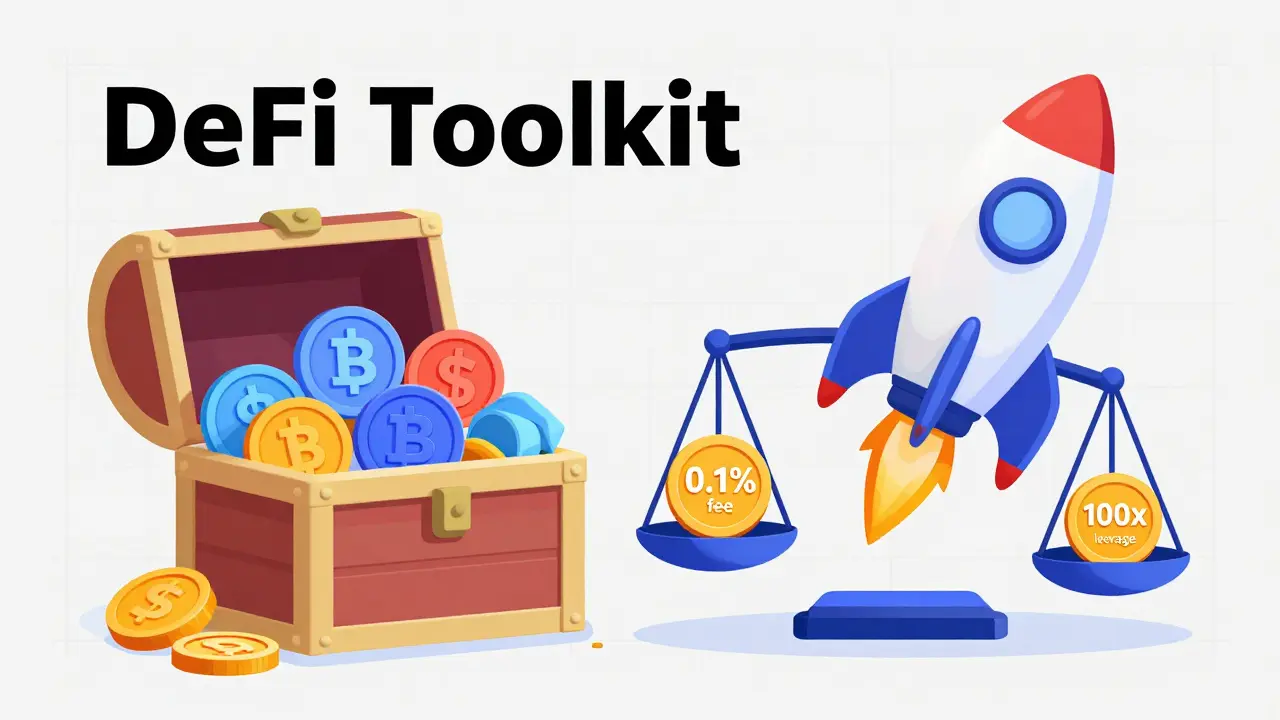
If you're just looking to trade, the swap interface is clean and supports over 300 assets. But the real action happens in the liquidity pools. By providing pairs of tokens to the exchange, you become a liquidity provider and earn a share of the trading fees. This is where yield farming is the process of staking or lending crypto assets to generate rewards in the form of additional cryptocurrency comes into play.
Biswap v2 separates itself by offering a more aggressive suite of tools than something like Uniswap. For instance, they've integrated leverage trading up to 100x. While this sounds great for those looking to multiply their gains, it's a double-edged sword. A small price movement in the wrong direction can liquidate your entire position in seconds. For most regular users, sticking to the staking and farming pools is a much saner approach.
| Feature | Biswap v2 | Average DEX |
|---|---|---|
| Trading Fee | 0.1% | 0.3% |
| KYC Required | No | No (usually) |
| Max Leverage | 100x | 2x - 20x |
| Asset Support | 300+ Tokens | Variable |
Security and the 'Anonymous Team' Dilemma
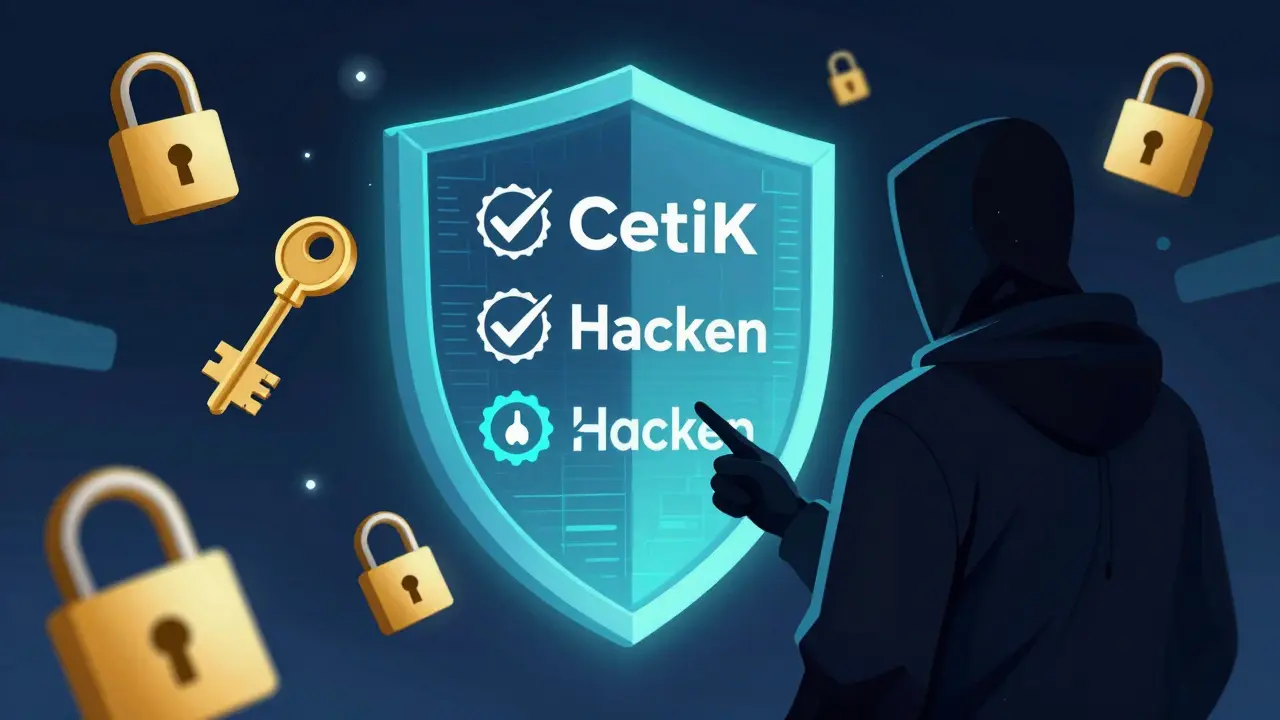
The biggest red flag for risk-averse investors is that the Biswap development team is anonymous. In the crypto world, this is common, but it means there is no one to hold accountable if things go south. To counter this, the platform has leaned heavily on third-party audits. CertiK is a blockchain security firm that provides smart contract auditing and real-time security monitoring has given them a solid score around 88/100. Other firms like PeckShield and Hacken have also scanned the code.
They've also implemented a multisig-timelock system. This means changes to the platform's core code can't be made instantly by a single person; there's a delay and a requirement for multiple signatures. This prevents the "rug pull" scenario where a developer suddenly drains all the funds and disappears overnight. While not a guarantee, it makes the platform significantly safer than un-audited projects.
User Experience: Is it Beginner Friendly?
If you've used a crypto wallet before, you'll find Biswap intuitive. The mobile experience is surprisingly smooth, with dedicated apps for iOS and Android that handle the connection to your wallet without the clunkiness usually found in browser-based DEXs. For those who are totally new, however, there's a learning curve. You'll need to spend a few hours understanding how to bridge funds to the BNB Chain, which is a blockchain network designed for smart contracts and decentralized applications, functioning as an extension of the Binance ecosystem, and how to manage your private keys.
The support is available 24/7, but don't expect an instant fix for complex technical issues. Since it's a decentralized platform, the "customer support" is more about guiding you through the UI rather than managing your account, because they don't actually have access to your account-only you do.
The Bottom Line: Who is Biswap v2 For?
Biswap v2 isn't trying to be the safest place for your life savings. It's a tool for active DeFi users who want to minimize fees and maximize yield. If you are trading high volumes of small-cap tokens on the BNB Chain, that 0.1% fee adds up to a lot of savings over a month. If you're a yield farmer, the staking rewards can be attractive provided you can handle the volatility of the BSW token.
However, if you're terrified of the idea of an anonymous team or the risk of smart contract bugs, you might prefer a more institutionalized platform. The trade-off is simple: you give up some security and transparency for lower fees and higher potential returns. Just remember that in the world of 100x leverage and yield farming, the risks are just as high as the rewards.
Is Biswap v2 safe to use?
It's generally considered safe for a DEX, having been audited by CertiK, Hacken, and PeckShield. However, the team is anonymous, and the use of high leverage introduces significant financial risk. Always use a separate "hot wallet" for DeFi and never store your entire portfolio on one platform.
Do I need to provide ID (KYC) to trade on Biswap?
No. Because it is a decentralized exchange, there is no central authority requiring identification. You only need a compatible Web3 wallet to start swapping tokens.
What are the trading fees on Biswap v2?
Biswap is known for its very low trading fees, which are set at 0.1%. This makes it one of the most cost-effective options for traders on the BNB Chain.
What is the BSW token used for?
BSW is the native token of the platform. It is used for staking to earn rewards, participating in the launchpool for new projects, and providing liquidity to earn a share of the platform's fees.
Can I trade fiat currency (like USD or EUR) on Biswap?
No, Biswap is a crypto-to-crypto exchange. You cannot deposit traditional fiat currency directly. You must first buy crypto on a centralized exchange (like Binance or Coinbase) and then transfer it to your wallet to use on Biswap.



People Comments
The 0.1% fee is definitely the main draw here... most other DEXs are just too greedy with their 0.3% standard!!!
yeah i messed around with the liquidity pools a bit. honestly, the impermanent loss is the real killer, not the fees. its a weird philosophcal trade off between yield and risk, and most ppl just dont see it until their bag drops 40% despite the APR looksin great. just be carefull out there
Absolute rubbish. Typical BNB Chain garbage with zero transparency on the dev side. Why anyone would trust an anonymous team over a properly regulated UK-based entity is beyond me. It is essentially a digital casino with fancy terminology to mask the lack of actual underlying value.
If you are looking to optimize your gas fees on the BNB Chain, Biswap is a fantastic choice! Just make sure you understand the slippage settings before you execute a large trade to avoid getting hit by MEV bots. The BSW token utility is actually quite strong if you leverage the launchpools correctly to compound your holdings over time. Keep pushing and stay bullish!
Imagine thinking 100x leverage is a "feature" 🙄. Only beginners think this is a good idea. Absolute joke 🤡
I've used Biswap for a few months now and the UI is way better than most of the clones. Just a tip: always use a burner wallet when interacting with new pools so you don't risk your main stash.
Anonymous teams are an unacceptable risk.
Zero KYC is a huge win!!! Privacy is everything!!!
Wake up people! Anonymous devs? That's just a smokescreen for the cabal to manipulate the order books. They'll use the multisig to fake security while the whales dump on the retail sheep. It's all part of the centralized control narrative pretending to be decentralized. Check the smart contract logs for the hidden mint functions before you get rugged by the globalists!
How quaint that we are still discussing "low fees" as a primary value proposition in 2024. One would assume that basic efficiency is the bare minimum, yet here we are, celebrating a 0.1% fee as if it were a revolutionary breakthrough in financial engineering. Truly fascinating.
Tvl is decent but volume is what matters for bsw price action. if the low fees dont attract high volume it's just a ghost town with a pretty app
This sounds like a good way to start learning DeFi. Just take it slow.
The idea of an anonymous team is such a haunting paradox! It represents the ultimate freedom of the digital age, yet it leaves us shivering in the cold of uncertainty. I find the courage of these developers almost poetic in its recklessness!
I completely agree with the advice to use a hot wallet. It's the only way to sleep peacefully at night when playing around with these protocols.
I can help anyone who is struggling with the bridging process! It can be a bit tricky at first, especially getting the gas tokens right, but once you get the hang of it, it's a breeze. Just reach out if you're stuck on the network settings!
The audacity of suggesting 100x leverage to the general public is an absolute travesty of financial ethics. It is a predatory mechanism designed to liquidate the unsuspecting masses for the benefit of the house. This is not "trading," it is gambling in its most vulgar form.
The CertiK audit is helpful, but audits only check for known vulnerabilities. They don't stop a dev from simply walking away with the keys if the multisig is compromised.
It is truly encouraging to see more options for decentralized trading. While the risks are present, the potential for financial inclusion is quite promising for those who exercise due diligence.
You've clearly missed the point about the BSW tokenomics. The inflationary pressure on BSW is the primary reason the price has tanked since 2021, regardless of the low fees.
I swear, every time I try to get into a new DEX, it's just some guys in a basement pretending to be geniuses while they wait for us to deposit our money. It's actually exhausting how common this is. I'm just so tired of the scams in this space, it's literally a nightmare!
The sheer incompetence of people fearing an anonymous team is laughable when you consider that the most robust financial architectures in the world are often managed by entities that are essentially black boxes to the average citizen. We are talking about a high-throughput L1 extension here, and the integration of synthetic assets through these low-fee conduits is the only way to maintain liquidity dominance over the foreign exchanges that are trying to eat our lunch in the global market. If you cannot handle the volatility of the BNB chain, you simply don't belong in the arena of high-frequency decentralized finance.
It's a small world in DeFi, and these niche platforms often have the most interesting communities.