


Finding a new trading platform often feels like a gamble. You see a name pop up in a DeFi forum or a tax guide, and suddenly everyone is talking about "hidden gems" in the decentralized world. SharkSwap is a decentralized cryptocurrency exchange (DEX) that allows users to trade digital assets peer-to-peer without relying on a central authority. But here is the catch: while the promise of privacy is great, the reality of blockchain is that everything is recorded. If you are thinking about moving your funds here, you need to know exactly what you are getting into-and what the tax man sees.
What exactly is SharkSwap?
Unlike giants like Coinbase or Binance, where a company holds your keys and manages your account, SharkSwap operates as a decentralized exchange. This means there is no "sign-up" process in the traditional sense. You don't provide an email or a phone number; you simply connect a compatible crypto wallet and start swapping tokens. The platform acts as a bridge, using smart contracts to execute trades automatically when certain conditions are met.
The primary draw here is the lack of an intermediary. You maintain full control of your private keys, which removes the risk of a centralized exchange going bankrupt and freezing your funds. However, this autonomy comes with a trade-off: you are solely responsible for your security. If you lose your seed phrase or send tokens to the wrong address, there is no customer support team to call for a refund.
Trading Experience and Interface
For most users, the experience on SharkSwap is straightforward. It follows the standard DEX model where you select a token you own, choose the token you want, and confirm the transaction in your wallet. Because it is a decentralized platform, the speed of your trade depends more on the underlying blockchain network than on the platform itself. During peak congestion, you might notice that your transactions take a few extra minutes to clear, or that gas fees spike unexpectedly.
One thing to watch out for is slippage. Since SharkSwap relies on liquidity pools, a large order can move the price of a token significantly. If you are trading low-volume assets, you might end up receiving fewer tokens than the initial quote suggested. Experienced traders usually adjust their slippage tolerance in the settings to avoid failed transactions during high volatility.
The Big Question: Tax and Compliance
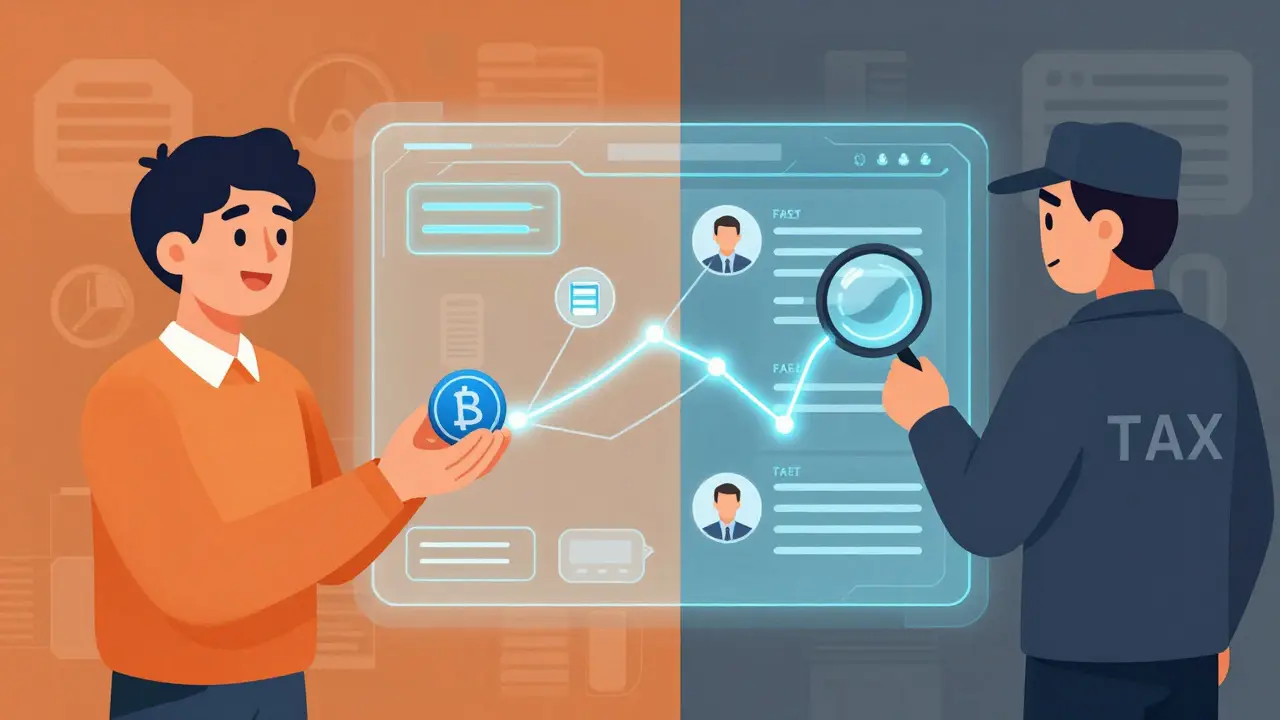
Many people jump into DEXs thinking they can fly under the radar. Here is a reality check: Blockchain Analysis tools have become incredibly sophisticated. Tax authorities, including the IRS, can track movements from your KYC-verified centralized exchange (like Kraken) straight into a DEX like SharkSwap.
Because every swap on SharkSwap is a taxable event, you cannot simply ignore these trades when tax season arrives. Whether you are providing liquidity to earn rewards or simply swapping ETH for a new altcoin, you are likely triggering capital gains or income. Using a tool like the Crypto Tax Calculator is highly recommended because manually tracking every single swap across a decentralized ledger is a nightmare. If you are trading in 2025 or 2026, assume the authorities can see your wallet's history.
How SharkSwap Compares to Other DEXs
When you put SharkSwap next to the industry leaders, the differences become clear. It doesn't have the massive liquidity or the institutional backing of a platform like Uniswap, but it offers a similar peer-to-peer experience. While newer competitors like Aster are introducing MEV-aware routing to prevent "sandwich attacks" (where bots manipulate prices to steal value from your trade), SharkSwap focuses on the core utility of swapping tokens.
| Feature | SharkSwap (DEX) | Centralized Exchanges (CEX) | Advanced DEXs (e.g., Aster) |
|---|---|---|---|
| Custody | Self-custody (You hold keys) | Exchange-custody (They hold keys) | Self-custody |
| KYC Requirements | None (Wallet connect) | Strict (ID verification) | None |
| Tax Tracking | Public Ledger (Traceable) | Direct Reporting | Public Ledger (Traceable) |
| Price Protection | Basic Slippage Control | Order Books / Limit Orders | MEV-aware Routing |
Security Pitfalls and How to Avoid Them
Trading on a DEX is like walking through a digital wild west. Since SharkSwap doesn't have a central security team guarding your funds, you are the security team. The most common danger is not the exchange itself, but the "tokens" you might find there. Anyone can create a token and list it on a DEX. This leads to "rug pulls," where developers drain the liquidity pool and leave investors with worthless coins.
To protect yourself, always check the contract address of a token before swapping. If the liquidity is unlocked or the contract hasn't been audited, you are taking a massive risk. Additionally, be wary of "approval" requests. When you first trade a token on SharkSwap, you grant the smart contract permission to spend that token. Malicious contracts can use this permission to drain your entire wallet balance long after you've left the site.
Is SharkSwap Right for You?
If you value privacy and want to avoid the hassle of KYC, SharkSwap is a viable tool. It is perfect for those who are comfortable managing their own wallets and understand that the "privacy" of a DEX is mostly an illusion against professional blockchain forensics. However, if you are a beginner who is intimidated by seed phrases and gas fees, a centralized exchange is still a safer bet.
For the DeFi enthusiast, the real value of SharkSwap lies in its ability to access tokens that aren't yet listed on major platforms. Just remember: the higher the reward, the higher the risk. Always trade with money you can afford to lose, and keep your tax records clean from day one.
Do I need to create an account to use SharkSwap?
No, you don't need a traditional account. You only need a decentralized wallet (like MetaMask or Trust Wallet) to connect to the platform and execute trades.
Are my trades on SharkSwap anonymous?
While you don't provide your name or email, your wallet address is public. Tax agencies and blockchain analysis firms can link your identity to your wallet if you have ever transferred funds from a KYC-verified exchange.
What happens if I send tokens to the wrong address on SharkSwap?
Because SharkSwap is decentralized, there is no central admin who can reverse a transaction. If you send funds to the wrong address, they are generally lost forever.
How do I handle taxes for SharkSwap trades?
Every swap is a taxable event. You should use a crypto tax software that can import your wallet history via API or CSV to calculate your capital gains and losses accurately.
What is slippage and how does it affect my trades?
Slippage is the difference between the expected price of a trade and the price at which the trade actually executes. In low-liquidity pools, slippage can be high, meaning you get fewer tokens than expected.

People Comments
Slippage is the real killer here!!! Use a limit order if you can, otherwise you get wrecked!!!
It's really great that you mentioned the security aspect of smart contract approvals because so many people just blindly click 'approve' without realizing they're essentially giving a third party a blank check to their wallet funds, which is a terrifying prospect for anyone not well-versed in DeFi. I've seen a few friends lose everything just by interacting with a flashy new token that promised 1000x returns, and it's a lesson that stays with you forever, so definitely take the time to use a tool like Revoke.cash to clean up your permissions regularly if you're active on DEXs like SharkSwap!
Oh sure, just trust the "public ledger" while the government builds a backdoor into every single protocol. It's almost like they want us to voluntarily track our own financial demise for them. Truly precious.
Your analysis of the liquidity pools is basic at best. In India, we are seeing far more efficient routing protocols that make this specific platform look like a relic from 2018. It is simply a matter of mathematical superiority in the code.
Typical globallist propaganda... they want you on a public chain so the C-suite cabal can track every satoshi through their fancy chainalysis tools. The whole DeFi thing is a honey pot to catch the "non-compliant" while the real money moves in off-chain dark pools. Wake up and stop trustin these smart contract fakes!
I LITERALLY ALMOST LOST MY MIND TRYING TO FIGURE OUT THE GAS FEES ON THIS THING! Like, why is it so expensive just to move a few pennies?! It's an absolute joke and honestly a travesty for the average user!
Sure, the tax man is always watching. Just lovely.
I think centralized exchanges are actually better for most people.
Imagine thinking a "bridge" is a safe place to keep your life savings. Good luck with that.
it's funny how we treat these digital tokens like actual money when really its just an agreement between a bunch of computers in a basement somewhere and the whole idea of a decentralized exchange is just a metaphor for how we want the world to be-free from the heavy hand of bureaucracy-even if the tax laws are still catchin up to the vibe of the internet which is basically just a big digital playground for adults now.
Let's keep it positive! 🚀 If you're new to this, just start with small amounts to get the hang of the wallet connection. You've got this! 💪✨
The sheer audacity of suggesting that a basic DEX is a "gem" is laughable. Only a peasant would find this impressive.
We need to be clear that while privacy is the goal, safety comes first. Don't let the hype push you into risky pools without doing your own research.
I tried to use a similar site last week but i think i messed up the walllet addres... so scary lol
It's a bit overwhelming for some, but it's a fair summary of the risks involved.