

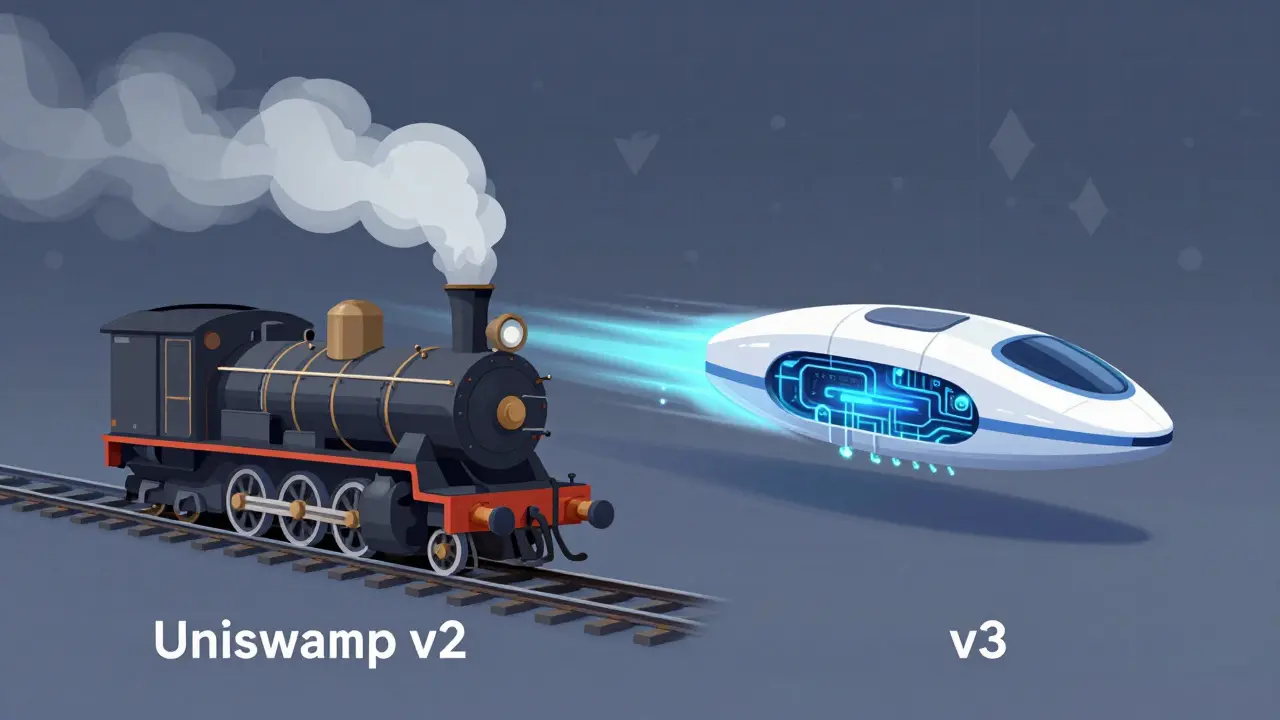
It is 2026. You might think Uniswap v2 is a relic from the early days of decentralized finance, buried under newer, flashier protocols. But that assumption could cost you money or miss out on unique opportunities. While Uniswap v3 dominates headlines with its concentrated liquidity, Uniswap v2 remains a quiet workhorse for specific types of traders and liquidity providers who value simplicity over complexity.
This review cuts through the noise to explain what Uniswap v2 actually does today, who should still use it, and why it hasn't disappeared despite being nearly six years old. We will look at the mechanics, the costs, the risks, and the real-world scenarios where this legacy protocol still beats the new kids on the block.
What Is Uniswap v2?
Uniswap v2 is an automated market maker (AMM) protocol on the Ethereum blockchain launched in May 2020 by Hayden Adams and the team at Uniswap Labs. It was the first version to allow direct swaps between any two ERC-20 tokens without forcing users to route through Ethereum (ETH) as an intermediary. Before v2, if you wanted to swap Token A for Token B, you had to sell A for ETH, then buy B with ETH. V2 eliminated that middle step, creating direct pools like DAI/USDC or UNI/WETH.
The core engine driving these trades is the constant product formula: x * y = k. In simple terms, this means the price of a token changes based on supply and demand within the pool. If someone buys a large amount of Token A, the supply of A decreases and the supply of Token B increases, automatically raising the price of A. This mechanism allows trading without an order book, meaning anyone can trade anytime, provided there is liquidity in the pool.
Why Does Uniswap v2 Still Exist?
If v3 is more efficient, why haven’t we all migrated? The answer lies in niche utility and legacy infrastructure. According to data from
, v2 still processes significant volume. Here is why:Feature Uniswap v2 Uniswap v3 Liquidity Model Full range (0 to infinity) Concentrated ranges Capital Efficiency Lower (standard) Up to 4,000x higher User Complexity Low (set and forget) High (requires active management) Fees Fixed 0.3% Tiered (0.05%, 0.3%, 1%) Daily Volume (Q1 2025) ~$150 million ~$1.2 billion
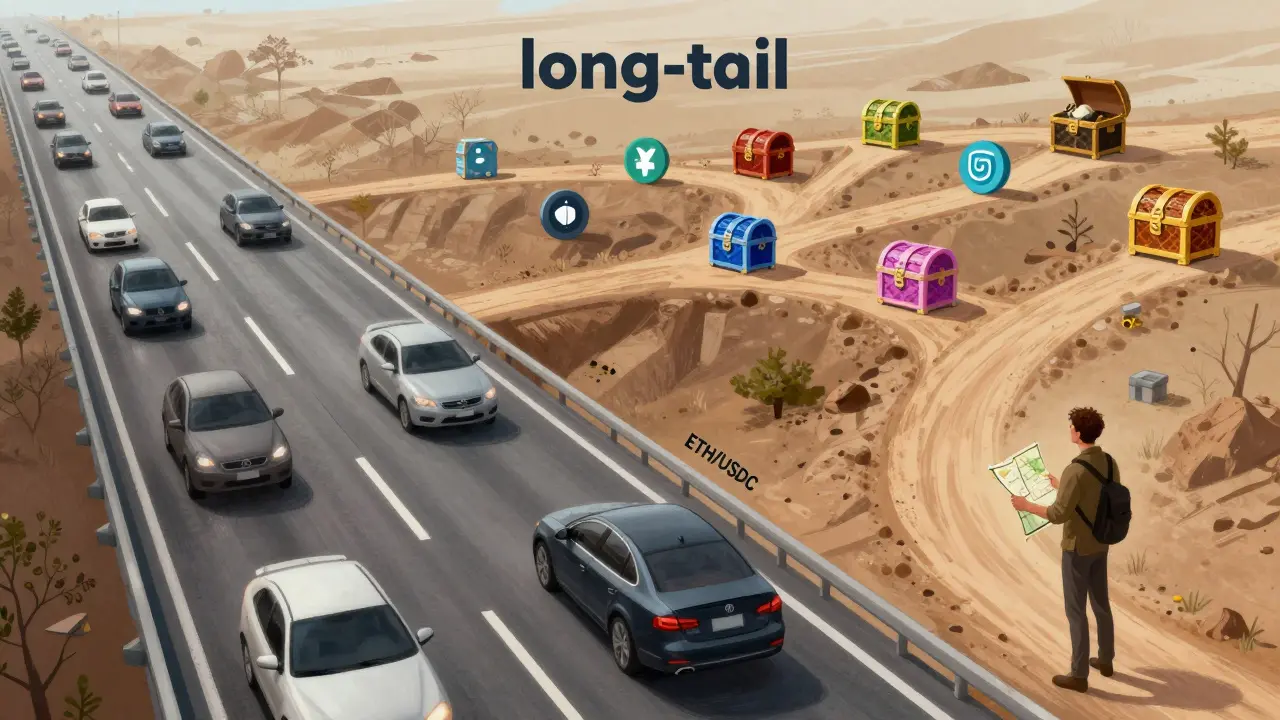
- Simplicity for Long-Tail Tokens: Many obscure or low-volume tokens never made it to v3 because they lack the liquidity depth required for concentrated positions. For these "long-tail" assets, v2 is often the only viable DEX option.
- Set-and-Forget Liquidity: Providing liquidity on v3 requires active monitoring. If the price moves out of your chosen range, you earn no fees. On v2, your liquidity works across the entire price spectrum. For passive investors who don't want to manage positions daily, v2 is less stressful.
- Legacy Integrations: Some older DeFi protocols and yield aggregators were built specifically on v2's architecture. Migrating them to v3 would require complex code changes, so they remain on v2.
How To Use Uniswap v2 in 2026
Using Uniswap v2 is straightforward, but you need to know where to find it since the main interface now defaults to v3. Most users access v2 through third-party aggregators or by selecting the specific version in advanced settings on certain wallets.
- Connect Your Wallet: You need an Ethereum-compatible wallet like MetaMask is a browser extension wallet for managing Ethereum assets. Ensure you have enough ETH to pay for gas fees.
- Find the Interface: Navigate to a platform that supports v2 routing. While the official Uniswap app prioritizes v3, many users utilize interfaces like SushiSwap is a decentralized exchange forked from Uniswap v2 or aggregators like 1inch is a DEX aggregator that finds the best prices across multiple protocols, which may route part of your trade through v2 pools if it offers a better rate.
- Select Your Tokens: Choose the token pair you wish to swap. Remember, v2 excels at direct ERC-20 to ERC-20 swaps.
- Set Slippage Tolerance: For volatile or low-liquidity tokens, set slippage between 0.5% and 2%. For stablecoins, 0.1% is usually sufficient.
- Confirm the Transaction: Review the quote. Note that v2 charges a flat 0.3% fee on most pairs. Confirm in your wallet and wait for the transaction to be mined.
Costs and Fees: What Will It Cost You?
Trading on Uniswap v2 involves two main costs: the protocol fee and the network gas fee.
Protocol Fee: Uniswap v2 charges a standard 0.3% fee on every swap. This fee is distributed to liquidity providers in the pool. Unlike v3, there are no lower tiers for stablecoins, which can make swapping USDC for USDT slightly more expensive than on other platforms like Curve Finance is a DEX optimized for stablecoin swaps with low fees.
Gas Fees: Since Uniswap v2 operates on the Ethereum mainnet, you pay ETH for gas. As of early 2025, average gas fees during off-peak hours were around $1.50 to $3.00 per transaction. However, during network congestion, these can spike to $50 or more. This is the biggest drawback for small trades. If you are swapping $10 worth of tokens, a $5 gas fee is a 50% loss. Therefore, v2 is best suited for larger trades or when Ethereum gas is low.
Risks and Security Considerations
Decentralized exchanges offer control, but they also shift responsibility to you. Here are the critical risks associated with Uniswap v2:
- Impermanent Loss: When you provide liquidity, you face impermanent loss. If the price of one token in your pair diverges significantly from the other, you may end up with less value than if you had just held the tokens. In v2, this risk is inherent to the 50/50 pool structure. Experts like Dan Robinson have noted that v2 pools can suffer up to 90% capital inefficiency compared to order books for volatile assets.
- Honeypot Tokens: Because anyone can create a pool on Uniswap v2, scammers frequently list fake tokens. These "honeypots" allow you to buy but not sell. Always verify the contract address using tools like Etherscan is a blockchain explorer for Ethereum transactions before interacting with unknown tokens.
- Smart Contract Risk: While Uniswap v2's code has been audited extensively and is considered secure, bugs can exist in the tokens themselves or in the integrations you use. Stick to well-known tokens and reputable interfaces.

Uniswap v2 vs. Alternatives
Is Uniswap v2 the best choice for you? It depends on your needs. Let's compare it to the current landscape.
| Platform | Best For | Fee Structure | Complexity |
|---|---|---|---|
| Uniswap v2 | Long-tail tokens, passive LPs | Flat 0.3% | Low |
| Uniswap v3 | Major pairs, active LPs | Tiered (0.05%-1%) | High |
| Curve Finance | Stablecoins, wrapped assets | Very Low (<0.04%) | Medium |
| PancakeSwap | BSC-based trading, low gas | Variable | Low |
If you are trading major pairs like ETH/USDC, Uniswap v3 or Curve is likely better due to lower slippage and fees. If you are on a Layer-2 solution like Arbitrum or Optimism, consider native DEXs on those chains to save on gas. Uniswap v2 shines when you need simplicity, are trading a lesser-known token, or prefer a hands-off approach to liquidity provision.
Future Outlook: Is V2 Dead?
Not dead, but fading. With the launch of Unichain is a Layer-2 blockchain designed by Uniswap Labs for DeFi and the dominance of v3, development focus has shifted away from v2. Analysts predict v2's market share will continue to decline, potentially dropping below 8% of Uniswap's total volume by late 2025. However, its open-source nature ensures it will remain available for years. It serves as the foundational blueprint for dozens of forks, including SushiSwap and PancakeSwap. For now, it remains a valid tool in the DeFi toolkit, particularly for those who prioritize ease of use over maximum efficiency.
Can I still provide liquidity on Uniswap v2?
Yes, you can. However, be aware that capital efficiency is lower compared to v3. You will earn fewer fees relative to the capital deployed unless you are providing liquidity for long-tail tokens that have no presence on v3.
Why is my Uniswap v2 transaction failing?
Most failures are due to insufficient gas limits or slippage tolerance. Increase your slippage tolerance (try 1-2% for volatile tokens) and ensure you have enough ETH to cover the estimated gas fee. Network congestion can also cause timeouts; try transacting during off-peak hours.
Is Uniswap v2 safe to use?
The core Uniswap v2 smart contracts are highly secure and have been battle-tested for years. The primary risk comes from interacting with malicious tokens listed on the platform. Always verify token contracts and avoid clicking suspicious links.
How do I find Uniswap v2 pools?
You can view v2 pools directly on Etherscan by searching for the Uniswap V2 Factory contract. Alternatively, use analytics platforms like Dune Analytics or DeFi Llama to filter for v2-specific liquidity and volume data.
What is the difference between Uniswap v2 and v3?
The main difference is liquidity concentration. V2 spreads liquidity across all possible prices, while v3 allows providers to concentrate liquidity in specific price ranges. This makes v3 much more capital-efficient but also more complex to manage.