



You might think that sending Bitcoin or Ethereum makes you invisible. After all, no one asks for your name when you generate a wallet address. But here is the hard truth: while your identity isn't written on the blockchain, your location often is. IP address tracking and geolocation verification are powerful tools used by researchers, law enforcement, and bad actors to pierce the veil of pseudonymity in cryptocurrency networks. If you are using standard nodes without extra precautions, you are likely broadcasting your physical location every time you transact.
This isn't science fiction. It is a documented reality backed by academic research and real-world investigations. Understanding how this tracking works is the first step to protecting yourself. Whether you are concerned about financial privacy, avoiding targeted attacks, or simply keeping your digital life separate from your online activity, knowing the mechanics of network-level surveillance is essential.
How IP Tracking Works on Blockchain Networks
To understand the risk, you need to look at how cryptocurrencies like Bitcoin actually function. They rely on a peer-to-peer (P2P) network. When you send a transaction, your software doesn't just shout it into the void. It sends that transaction data directly to nearby nodes-other computers running the same software-to propagate across the network.
Bitcoin's P2P protocol requires clients to announce new transactions to their connected peers. This creates a direct link between the transaction originating from your device and your public IP address.
Here is where the vulnerability lies. Researchers have demonstrated that by running modified client programs on multiple computers, they can record these propagating messages. Using statistical models, specifically naive Bayes classifiers, they can assign specific Bitcoin addresses to the IP addresses that broadcasted them. In simple terms, if you broadcast a transaction from your home Wi-Fi, a monitoring node can log that specific IP address as the source of those funds.
This method was notably detailed in a 2018 study published in PLoS One. The researchers showed that monitoring clients could operate undetected as regular Bitcoin clients. This means there is no "flag" indicating someone is watching; they just look like another participant in the network. Once an IP address is linked to a wallet, geolocation databases can pinpoint the general area of that user, often down to the city or neighborhood level.
The Reality of Anonymity vs. Pseudonymity
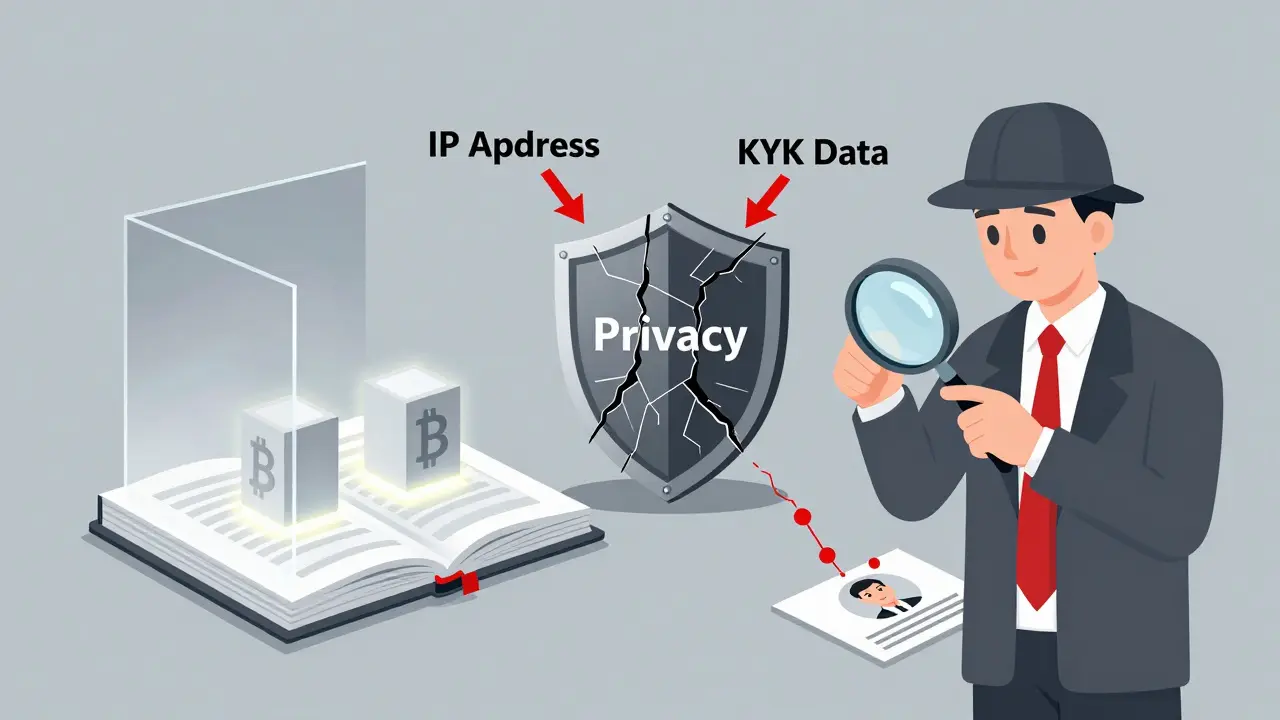
There is a critical distinction between being anonymous and being pseudonymous. Most major cryptocurrencies, including Bitcoin and Ethereum, are pseudonymous. Your wallet address acts as a username. It is not your legal name, but it is a persistent identifier. Every transaction ever made with that address is permanently recorded on the public ledger.
Blockchain transparency ensures that all incoming and outgoing payments for any address are publicly visible, creating a permanent history that can be analyzed.
When you combine this transparent ledger with IP tracking, the picture becomes clear. If an investigator links your IP address to Wallet A, they can see every other interaction Wallet A has had. They can trace funds back to exchanges where you performed Know Your Customer (KYC) checks, or forward to merchants who know your real name. The IP address is the key that unlocks the entire chain of activity.
This is why privacy advocates warn against publishing your Bitcoin address in public spaces, such as forums or social media. Doing so invites correlation attacks. If someone knows your handle on Twitter and sees your Bitcoin address posted there, they can monitor that address. If they also manage to capture your IP during a transaction, they have successfully de-anonymized you.
Comparison of Trackability Across Cryptocurrencies
Not all cryptocurrencies are created equal when it comes to privacy. The level of protection depends heavily on the underlying technology and how users interact with it.
| Cryptocurrency | Privacy Mechanism | Trackability Risk | Key Vulnerability |
|---|---|---|---|
| Bitcoin | None (Standard) | High | P2P propagation links IP to transaction; transparent ledger. |
| Zcash | zk-SNARKs (Optional) | Medium to High | Most users use transparent t-addresses; less than 15% of transactions were fully shielded in 2023. |
| Monero | Ring Signatures, Stealth Addresses | Low | Government crackdowns and exchange delistings limit usability; metadata leaks possible. |
| Ethereum | None (Standard) | High | Similar to Bitcoin; smart contract interactions create additional traceable footprints. |
Bitcoin remains highly susceptible to IP-based tracking because its architecture prioritizes decentralization and transparency over privacy. Zcash offers optional privacy through zero-knowledge proofs (zk-SNARKs), allowing users to choose between transparent (t-addresses) and shielded (z-addresses) transactions. However, a 2020 study revealed that many users inadvertently reveal their activity by improperly managing shielded funds or defaulting to transparent addresses. By 2023, fewer than 15% of Zcash transactions were completely shielded, significantly limiting its practical privacy benefits for the average user.
Monero is designed for maximum privacy, using ring signatures and stealth addresses to obscure both the sender and receiver. While technically superior in hiding transaction details, Monero faces significant external pressures. Government agencies have cracked down on its use, leading to delistings from major exchanges. This reduces liquidity and increases the friction of using Monero, which can itself be a marker of suspicious activity in some jurisdictions.
Who Is Watching? Law Enforcement and Commercial Firms
You are not just worried about random hackers. Sophisticated entities have dedicated resources to tracking crypto users. Law enforcement agencies worldwide have invested heavily in cryptocurrency investigation capabilities. They don't just guess; they use advanced data analysis techniques to uncover tax fraud, money laundering, and illegal trade.
Chainalysis and Elliptic are leading firms that provide blockchain analytics tools used by governments and businesses to trace illicit flows.
Companies like Chainalysis, Elliptic, and CipherTrace dominate the market. They sell software that helps authorities cluster wallets, identify exchanges, and correlate on-chain data with off-chain information. These tools are increasingly sophisticated, integrating traditional financial investigation methods with blockchain analysis. For example, if a suspect uses a VPN but forgets to disable IPv6, or if they connect to a centralized exchange that logs their IP, these firms can bridge the gap.
Even smaller investigative firms like Blockquiry are developing specialized fraud detection tools. The industry is growing rapidly as regulatory enforcement tightens globally. The message is clear: assuming you are invisible is a dangerous mistake. Authorities have the technical expertise and the commercial tools to track you if they have a reason to do so.
Practical Steps to Protect Your Privacy
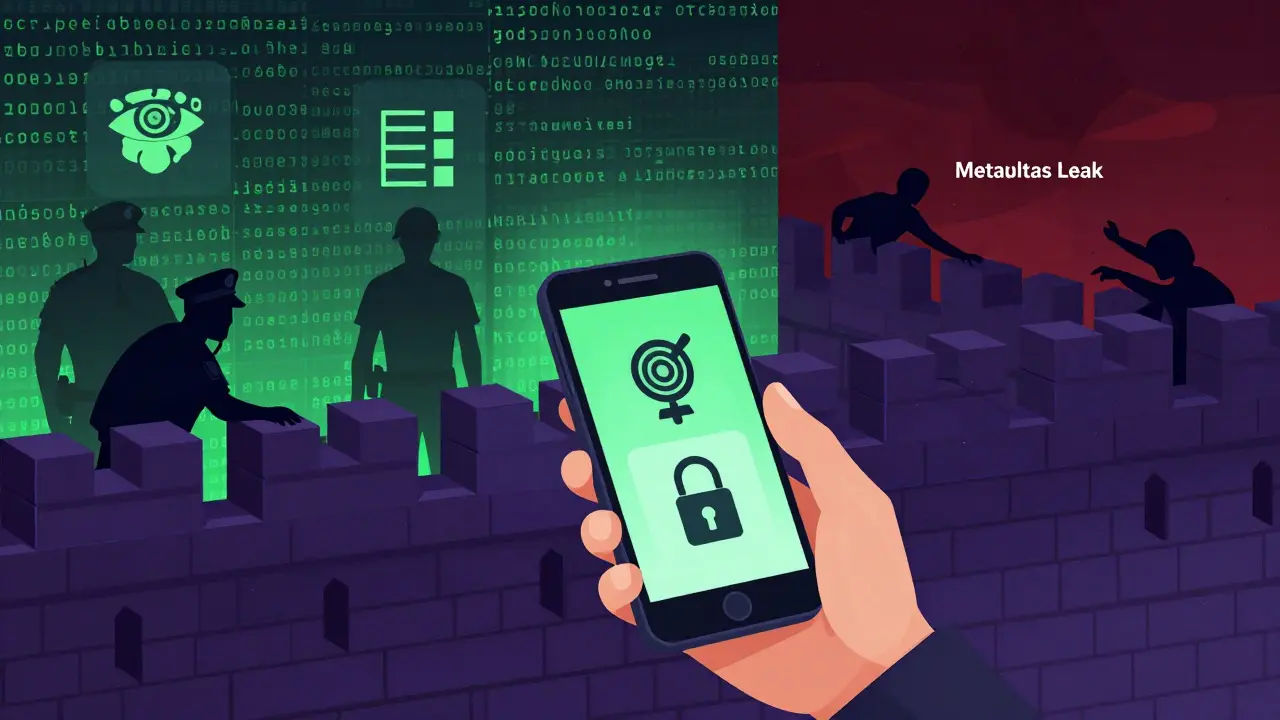
If you want to maintain privacy, you need to take active steps. Relying on the base functionality of your wallet is not enough. Here are proven methods to reduce your exposure:
- Use Tor: The Tor network routes your traffic through multiple relays, effectively hiding your original IP address from the nodes you connect to. Many privacy-focused wallets, such as Wasabi Wallet or Samourai Wallet (note: check current legal status in your jurisdiction), integrate Tor by default or offer easy configuration options. This prevents direct IP-to-wallet linking.
- Enable CoinJoin: CoinJoin is a technique that mixes your transaction inputs with those of other users. This breaks the link between your input address and your output address. While not foolproof, especially for large amounts, it adds a layer of complexity that makes heuristic clustering much harder for analysts.
- Avoid Centralized Exchanges for Large Holdings: Every time you deposit or withdraw from a KYC-compliant exchange, you link your real identity to your wallet. Use non-custodial solutions where possible, and be aware that even decentralized exchanges (DEXs) can leak IP addresses if not accessed via Tor.
- Never Reuse Addresses: Generate a new address for every transaction. This limits the amount of data associated with any single identifier. If one address is compromised, your entire history isn't exposed.
- Check for Metadata Leaks: Ensure your operating system and wallet software are up to date. Bugs in wallet implementations can sometimes leak IP addresses even when Tor is enabled. Always verify that your connection is properly routed before broadcasting sensitive transactions.
Virtual Private Networks (VPNs) are a common recommendation, but they come with caveats. A reputable VPN can hide your IP from your Internet Service Provider (ISP) and local nodes, but the VPN provider itself can see your traffic. If you are trying to evade law enforcement, a VPN log may be subpoenaed. Tor is generally considered more robust for anonymity because it does not rely on a single trusted provider.
The Future of Crypto Surveillance
The landscape is evolving. As tracking methodologies improve, so do privacy countermeasures. We are seeing an ongoing technological arms race. On one side, investigators are developing better statistical models and temporal correlation techniques. On the other, developers are building more robust privacy protocols.
However, the fundamental architecture of most blockchains remains a challenge for privacy. As long as networks require peers to validate and propagate transactions, there will be opportunities for network-level analysis. Future predictions suggest that IP-based tracking alone may become less effective as privacy technologies mature, but alternative methods-such as analyzing transaction timing patterns and cross-platform data integration-will fill the gap.
Regulatory frameworks are also maturing. Governments are pushing for stricter compliance from exchanges and wallet providers. This means that even if you protect your network traffic, your on-chain behavior might still be flagged by automated systems monitoring for suspicious patterns. The era of effortless anonymity in cryptocurrency is over. Privacy is now a feature you must actively configure and maintain.
Can my IP address be traced if I use Bitcoin?
Yes. If you use a standard Bitcoin client without additional privacy measures like Tor, your IP address is visible to the nodes you connect to. Researchers and investigators can record this IP and link it to your transaction broadcasts, potentially revealing your geographical location.
Is Monero truly untraceable?
Monero provides strong privacy features like ring signatures and stealth addresses, making it much harder to trace than Bitcoin. However, it is not immune to all forms of analysis. Metadata leaks, poor user practices, and government pressure on exchanges can still compromise privacy. Additionally, the act of converting fiat to Monero often involves KYC processes that link your identity to the initial acquisition.
Does using a VPN protect my crypto privacy?
A VPN hides your IP address from your ISP and local network nodes, which helps prevent direct IP-to-wallet linking. However, the VPN provider can still see your traffic and may keep logs. If you are seeking high-level anonymity against determined adversaries, Tor is generally recommended over a standard VPN because it does not rely on a single point of trust.
How do law enforcement agencies track crypto users?
Law enforcement uses a combination of techniques. They employ blockchain analysis firms like Chainalysis to cluster wallets and trace funds. They also conduct network-level surveillance to capture IP addresses. Additionally, they obtain data from centralized exchanges through subpoenas, linking KYC-verified identities to on-chain activities. Temporal analysis and pattern recognition are also used to correlate seemingly unrelated transactions.
What is the difference between anonymous and pseudonymous cryptocurrencies?
Anonymous cryptocurrencies hide the sender, receiver, and amount by default (e.g., Monero). Pseudonymous cryptocurrencies (e.g., Bitcoin, Ethereum) display transaction details publicly but associate them with wallet addresses rather than real names. Pseudonymity can be broken if the wallet address is linked to an identity through IP tracking, exchange KYC, or public disclosure.




People Comments
You people are absolutely delusional if you think Bitcoin is private. It is a public ledger, plain and simple. The only thing keeping you safe is that no one cares enough to look at your specific wallet unless you are doing something illegal or holding significant value. Stop pretending like you are some kind of cyberpunk hacker when you are just using an app on your phone connected to your home Wi-Fi.
It makes me wonder about the nature of trust in these digital systems. We build complex structures of code and mathematics to create value, yet we forget that the physical layer of the internet remains grounded in reality. When we send data, we are sending it through cables owned by corporations and governments. So perhaps the anonymity we seek is not a technical failure but a philosophical misunderstanding of how society operates. We want freedom from surveillance but we also want the convenience of centralized infrastructure. These two desires are often at odds with each other.
Actually, the naive Bayes classifier mentioned in the article is quite outdated for modern analysis. Current clustering algorithms use much more sophisticated heuristics involving timing correlations and amount matching across multiple hops. While IP tracking is a vector, the real issue is address reuse and poor operational security practices by users who don't understand the difference between a fresh address and a change address. Most wallets now generate new addresses automatically, which mitigates this specific risk somewhat, but the P2P propagation issue remains largely unsolved without Tor or I2P integration.
I appreciate this detailed breakdown; it really helps clarify things. Many people feel overwhelmed by the technical jargon surrounding privacy coins, so seeing it explained in such a structured way is very helpful. It is important to remember that privacy is a spectrum rather than a binary state. We should all strive to protect our personal information as best we can, but we must also be realistic about what is achievable in today's digital landscape. Thank you for sharing this valuable information with the community.
The masses will never understand why they need Monero until it is too late. They cling to their shiny, traceable tokens because they are told it is 'safer' by exchanges that are essentially banks with extra steps. True financial sovereignty requires obscuring the flow of funds completely. Ring signatures are not just a feature; they are a necessity for any currency that claims to be money. If anyone can see where your money goes, it is not your money anymore; it is merely permissioned access to value held by others.
i cant believe ppl still fall for this whole crypto scam thinking its secret. its all recorded forever on the blockchain lol. u guys r getting played by the system and dont even know it. just keep ur cash under the mattress if u want real privacy cause nothing digital is ever truly private anymore.
Oh my goodness, this is so scary! I had no idea that my location could be tracked just by sending bitcoin. I am definitely going to look into using Tor right away. It is really important that we take care of our online safety, especially with everything that is happening in the world. I hope everyone reads this carefully and protects themselves. Let us all stay safe and secure out there!
This is a well-researched post that highlights significant vulnerabilities in current cryptocurrency implementations. It is crucial for users to understand the limitations of pseudonymity. Implementing additional layers of security, such as utilizing the Tor network or employing CoinJoin techniques, can significantly enhance privacy. However, it is important to note that no solution is perfect, and users must remain vigilant against evolving surveillance technologies.
The heuristic clustering methods employed by firms like Chainalysis rely heavily on probabilistic models that assume rational actor behavior. When you introduce noise via mixers or privacy pools, the signal-to-noise ratio degrades significantly. However, the metadata leakage at the network layer, specifically during transaction propagation, remains a critical vulnerability for standard clients. The implementation of Dandelion++ in Bitcoin Core attempts to mitigate this by diffusing transactions through a stem phase before fluffing them out, which reduces the accuracy of IP attribution attacks.
Yeah, I guess most people just don't bother with all that extra setup. It seems like a lot of work just to send some money. But I can see why it matters if you're worried about prying eyes.
Oh, please! 🙄 Everyone acts like the government is breathing down their necks every time they buy a coffee with BTC. Relax, folks! 😂 Unless you're laundering money for a cartel, nobody cares about your IP address. You're not Snowden, you're just Dave from accounting buying a pizza. Stop living in fear and start enjoying the tech! 🍕💸
They want you to believe that privacy is for criminals. That is exactly what the deep state wants you to think. Once they have your IP linked to your wallet, they can track your every move. It is not just about money; it is about control. The blockchain is a honeypot designed to capture your identity while you think you are free. Wake up sheeple! 👁️👄👁️
In many cultures, the concept of privacy varies greatly. In Western societies, individual privacy is highly valued, whereas in some Eastern communities, collective transparency is more common. This cultural difference influences how people perceive the risks associated with cryptocurrency tracking. It is essential to approach this topic with an open mind and respect for diverse perspectives. Understanding these nuances can help bridge gaps in communication and foster a more inclusive dialogue about digital rights and financial autonomy.
It is interesting to see how different countries handle this. Some places are stricter than others. I think it is good to know the basics though.
Why do companies like Coinbase make it so hard to opt out of KYC? They claim decentralization but act like traditional banks. This hypocrisy undermines the entire ethos of cryptocurrency. Users deserve better options that respect their right to financial privacy without being forced into surveillance capitalism frameworks.
Boring stuff. Just use cash. 💀
The irony is palpable here. We built a decentralized network to escape centralized control, yet we voluntarily hand over our keys to centralized exchanges for convenience. 🤷♂️ It is like building a fortress and then leaving the gate wide open because carrying a key is inconvenient. Perhaps the real lesson is not about technology, but about human nature and our willingness to trade liberty for ease. 😅
the government knows everything anyway so why bother trying to hide it. they have cameras everywhere and listen to our phones. crypto is just another tool for them to track us down. i say give up and accept it because resistance is futile.
U r wrong abt monero being untraceable. Its not. U need to read more.
Listen up chumps! 🚨 If you're not using a VPN and Tor, you're basically naked on the internet. Don't come crying to me when your stash gets seized. Do your homework or get rekt. 📉🔥
Wow this is super intense! I never knew all this was going on behind the scenes. Thanks for the heads up! Im gonna go check out tor right now lol.
Look, I get that privacy is important, but lets not lose sight of the bigger picture. Crime is bad, yeah, but so is mass surveillance. We need to find a balance. Maybe the solution isnt to abandon crypto but to improve it. Lets work together to build better tools instead of fighting amongst ourselves. Peace and love. ✌️