

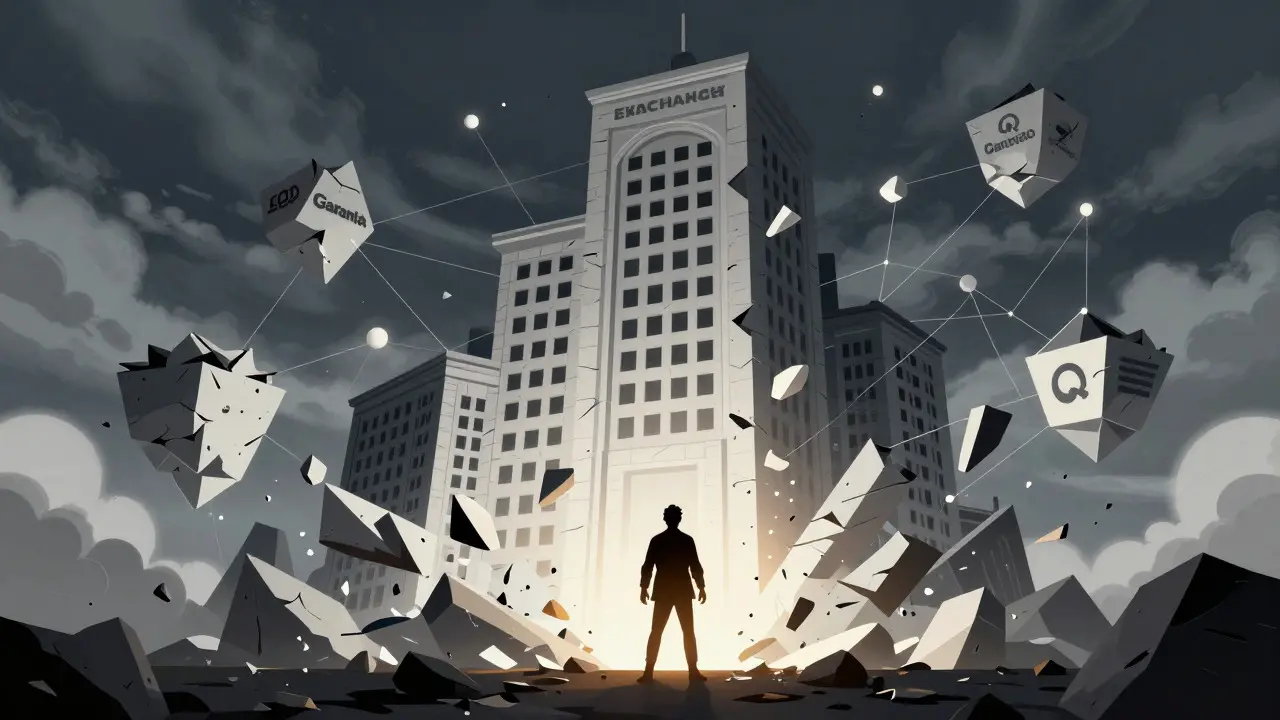
Imagine trying to send money abroad while your local bank is watching every move, and the main platform you use has just been hit with a fresh wave of international sanctions. That is the reality for many Russian crypto traders today. The story of Garantex, once a dominant exchange in the region, is no longer just about trading Bitcoin; it has become a case study in how financial restrictions shape user behavior and drive the evolution of underground financial networks.
The situation changed dramatically on August 14, 2025, when the U.S. Department of the Treasury’s Office of Foreign Assets Control (OFAC) re-designated Garantex. This wasn't just another name on a list. The move targeted the platform's specific role in facilitating cybercrime and moving value for ransomware actors. For traders, this meant immediate uncertainty: Would their accounts freeze? Could they still withdraw funds? More importantly, where would they go next? As we look at the landscape in mid-2026, the answer is clear: the ecosystem didn't disappear; it fragmented, decentralized, and moved further into the shadows.
From Centralized Exchange to Decentralized Network
To understand the impact, you have to look at what Garantex actually was before the hammer fell. Founded in late 2019 by Sergey Mendelev and Aleksandr Mira Serda, the platform started as a traditional centralized exchange registered in Estonia but operating heavily from Moscow and Saint Petersburg. It became the go-to spot for Russian users who needed liquidity and ease of use, often bypassing stricter local regulations. However, its convenience made it a prime target for illicit finance. By 2025, forensic analysis showed that over $100 million in transactions linked to darknet markets and ransomware groups had flowed through the system.
When the first sanctions hit in April 2022 under Executive Order 14024, many assumed the platform would collapse. Instead, it adapted. The recent 2025 sanctions accelerated this shift. Today, Garantex is less of a single company and more of a decentralized money laundering infrastructure. It relies on successor platforms like Grinex, which Treasury officials described as being created by former Garantex employees specifically to support sanctions evasion efforts. There is also Exved, a cross-border payment processor based in Moscow’s International Business Center, and MKAN Coin, a Telegram-based exchange operating out of Dubai. Together, these entities form a web that processes an estimated $300 million monthly, capturing roughly 15% of Russia's cryptocurrency-based international transfers.
The New User Journey: Complexity and Cost
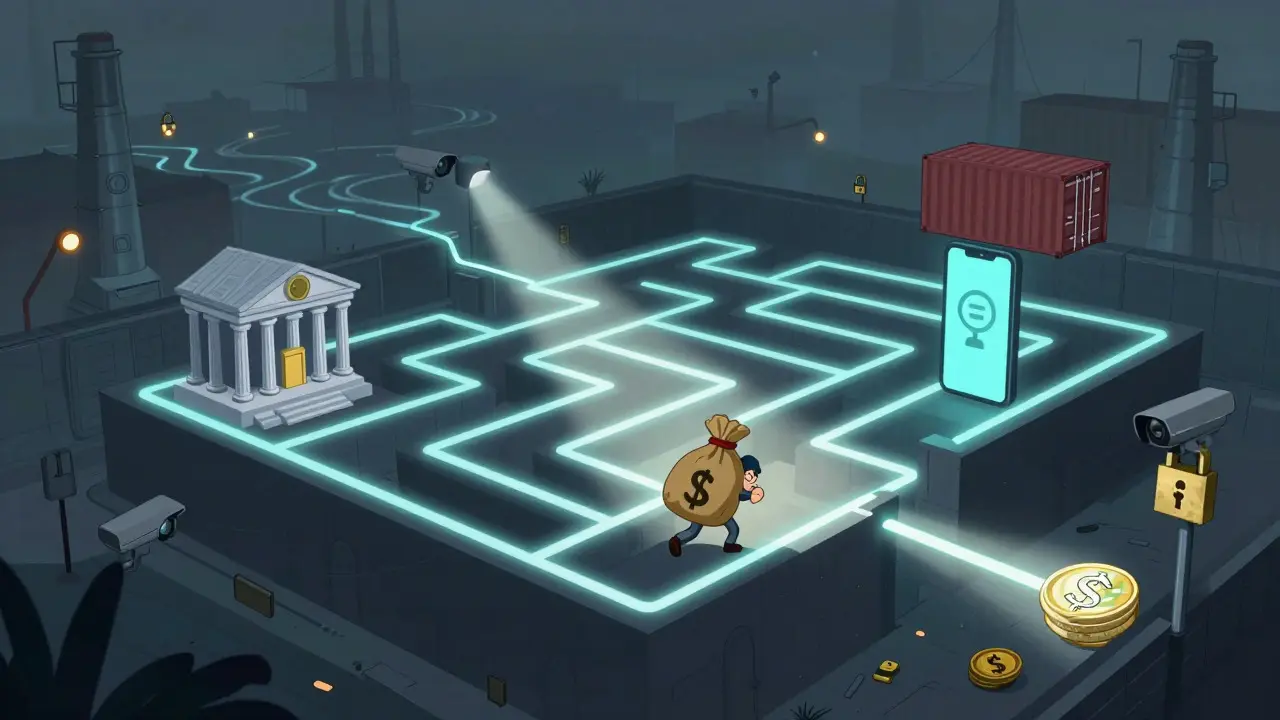
For the average trader, the most tangible impact of these restrictions is the increased friction involved in moving money. In the past, buying USDT (Tether) or other stablecoins was a straightforward process. Now, it involves a multi-step dance designed to obscure the money trail from regulators and banks.
Here is how a typical transaction looks now, based on investigations by Transparency International Russia and OCCRP:
- Rubles to Intermediary: Users transfer rubles to a Hong Kong-registered entity, such as Feilian Company Limited. This company holds an account at Russia's Alfa-Bank, creating a bridge between the local currency and foreign jurisdictions.
- Conversion and Transfer: The intermediary converts the funds and sends them to exporters or recipients in dollars, yuan, or USDT via foreign accounts.
- Final Settlement: The recipient receives the funds, often without any direct link back to the original Russian bank account visible to Western institutions.
This process is not instant. Verification with intermediary agents can take two to three weeks. For new users entering the space in 2026, the learning curve has steepened significantly. Where it used to take one to two weeks to get up to speed, novice users now report needing three to four weeks of guidance from community members. Official support channels have largely vanished, replaced by Telegram bots that offer minimal assistance. You are essentially relying on word-of-mouth and community knowledge sharing to navigate a system that is deliberately hard to document.
Costs have also risen. Before the major law enforcement actions in March 2025, transaction fees were typically around 0.1%. Following the seizures and intensified scrutiny, fees on various forums and peer-to-peer markets have climbed to as high as 1.5%. This is the price of doing business in a sanctioned environment.
Why Traders Stay: The Allure of Anonymity
If the process is slower, more expensive, and riskier, why do millions of Russians still use these channels? The Central Bank of Russia reported 18.7 million cryptocurrency users as of June 2025, a 22% increase from the previous year. The driving force is simple: access. Despite the sanctions, Russian traders need to move value across borders for imports, services, and personal savings. Traditional banking routes are often blocked or subject to heavy capital controls.
Crypto offers a way around this. A user on the Russian Telegram channel 'CryptoNews' noted in August 2025: “Even after sanctions, I can still convert rubles to USDT and send them abroad in 24 hours without my Russian bank flagging anything.” While the 24-hour claim might be optimistic for complex transfers, the core sentiment remains true. The 'crypto element' stays invisible to local banks because the conversion happens outside the domestic banking perimeter. For traders dealing with dual-use goods or international service providers, this invisibility is worth the extra fees and hassle.
Law Enforcement and the Cat-and-Mouse Game
The regulatory side is far from passive. On March 6, 2025, an international operation involving the U.S. Secret Service, German, and Finnish authorities seized three Garantex domains, confiscated servers, and froze $26 million in cryptocurrency. The following day, key figure Aleksej Besciokov was arrested in India. To put pressure on remaining leadership, the U.S. Department of State announced reward offers totaling up to $6 million in August 2025, including $5 million for information leading to the arrest of co-founder Aleksandr Mira Serda.
Despite these successes, the network has proven resilient. Chainalysis CEO Michael Gronager observed in September 2025 that “sanctions are creating more sophisticated, harder-to-track money laundering systems rather than eliminating them.” The FBI’s 2024 Internet Crime Report documented that cryptocurrency fraud surged 66% to nearly $10 billion globally, with Russia accounting for approximately 12% of global crypto-based illicit transactions. This suggests that while Garantex itself is under siege, the demand for the services it provides is only growing, pushing activity to newer, less scrutinized platforms.
| Feature | Pre-August 2025 | Post-August 2025 (2026 Context) |
|---|---|---|
| Primary Platform Structure | Centralized (Garantex EU OU) | Decentralized Network (Grinex, Exved, MKAN Coin) |
| Typical Transaction Fee | ~0.1% | 0.5% - 1.5% |
| User Onboarding Time | 1-2 weeks | 3-4 weeks |
| Support Channels | Email/Ticket System | Telegram Bots/Community Groups |
| Regulatory Visibility | High (Estonian Registration) | Low (Multi-jurisdictional, UAE/HK/Russia) |
Risks for the Individual Trader
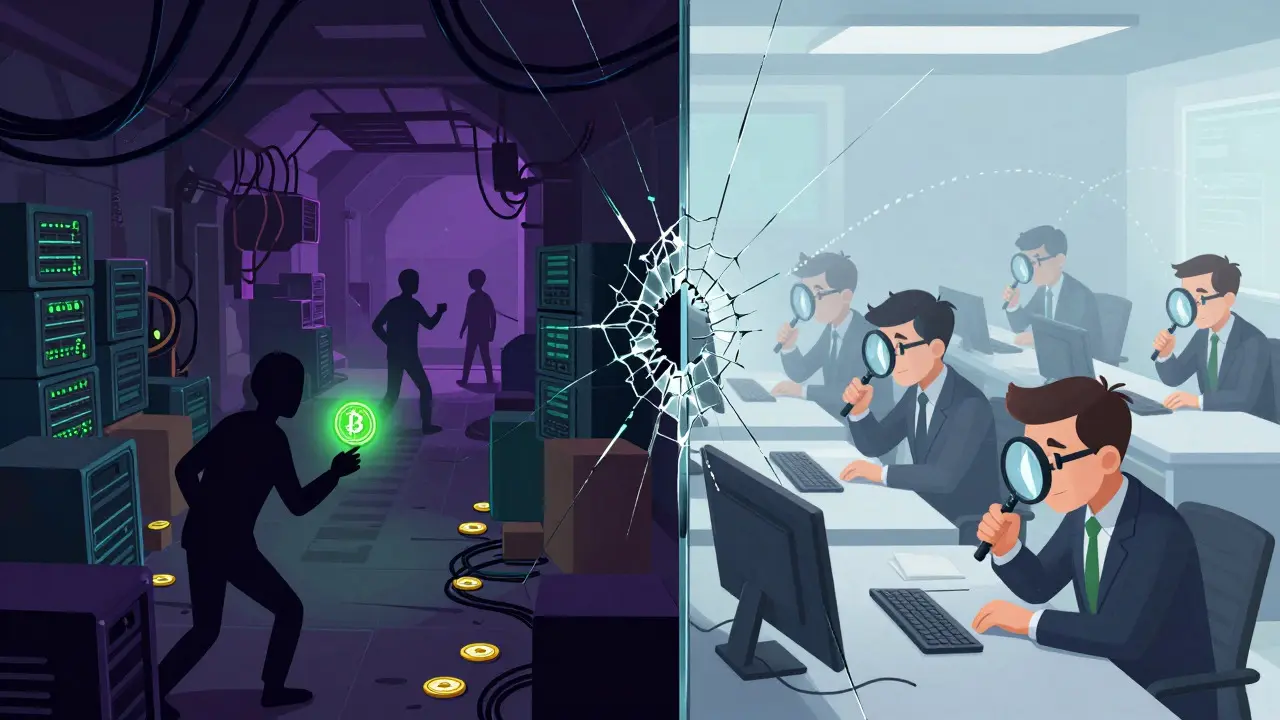
While the system works, it comes with significant risks that casual investors might overlook. First, there is counterparty risk. Since you are dealing with intermediaries like Feilian Company Limited or unknown P2P agents, there is no insurance if they run off with your funds. Second, legal ambiguity. While the U.S. sanctions primarily target the companies and executives, individuals using the platforms could theoretically face secondary sanctions if they interact with designated entities directly. Most traders operate in a gray zone, assuming that if the volume is small enough, they won't attract attention. But as the FBI notes, platforms like Garantex provide critical infrastructure for criminal enterprises, blurring the line between legitimate trade and illicit finance.
Furthermore, the volatility of the infrastructure means that a single domain seizure or server raid can lock users out of their funds temporarily. Unlike a regulated exchange with cold storage guarantees, these decentralized setups rely on trust and quick migration to new domains. If you hold large amounts of assets on a specific node, you are exposed to operational downtime.
What Comes Next?
Looking ahead, the trend is toward further fragmentation. Analysts predict that as traditional sanctions tools lose effectiveness against centralized hubs, the focus will shift to tracking stablecoin flows and cross-border payment processors like Exved. For Russian traders, this means the status quo will likely persist: a complex, fee-heavy, but functional system for moving value internationally. The days of simple, low-fee exchanges are gone, replaced by a robust underground economy that mirrors the complexity of the sanctions themselves.
For those navigating this space, the advice is consistent: diversify your exit routes, keep records meticulous, and stay updated on the latest OFAC designations. The game is changing fast, and staying informed is your best defense against getting caught on the wrong side of a frozen account.
Is Garantex completely shut down?
No. While the original central domains have been seized and the company is sanctioned, its operations continue through successor platforms like Grinex, Exved, and MKAN Coin. It has evolved into a decentralized network operating across multiple jurisdictions.
How much do fees cost now compared to before?
Fees have increased significantly. They rose from approximately 0.1% before the 2025 law enforcement actions to between 0.5% and 1.5% in the current post-sanction environment due to higher risk premiums and intermediary costs.
Can Russian banks track transactions made through Garantex?
Directly, it is difficult. The system uses intermediaries in jurisdictions like Hong Kong and the UAE to convert rubles to foreign currencies or stablecoins. This creates a buffer that keeps the crypto element invisible to local Russian banks, although the initial ruble transfer is visible.
Who are the key people behind the current network?
Aleksandr Mira Serda, the co-founder, is currently a fugitive with a $5 million bounty. Other key figures include former executives who migrated to new platforms. Aleksej Besciokov was arrested in India in March 2025, but the network continues to operate under new leadership structures.
What is the main risk for individual users?
The primary risks are counterparty default (intermediaries disappearing with funds) and operational downtime due to domain seizures. Additionally, there is a legal gray area regarding potential secondary sanctions, though this rarely affects small individual traders.