


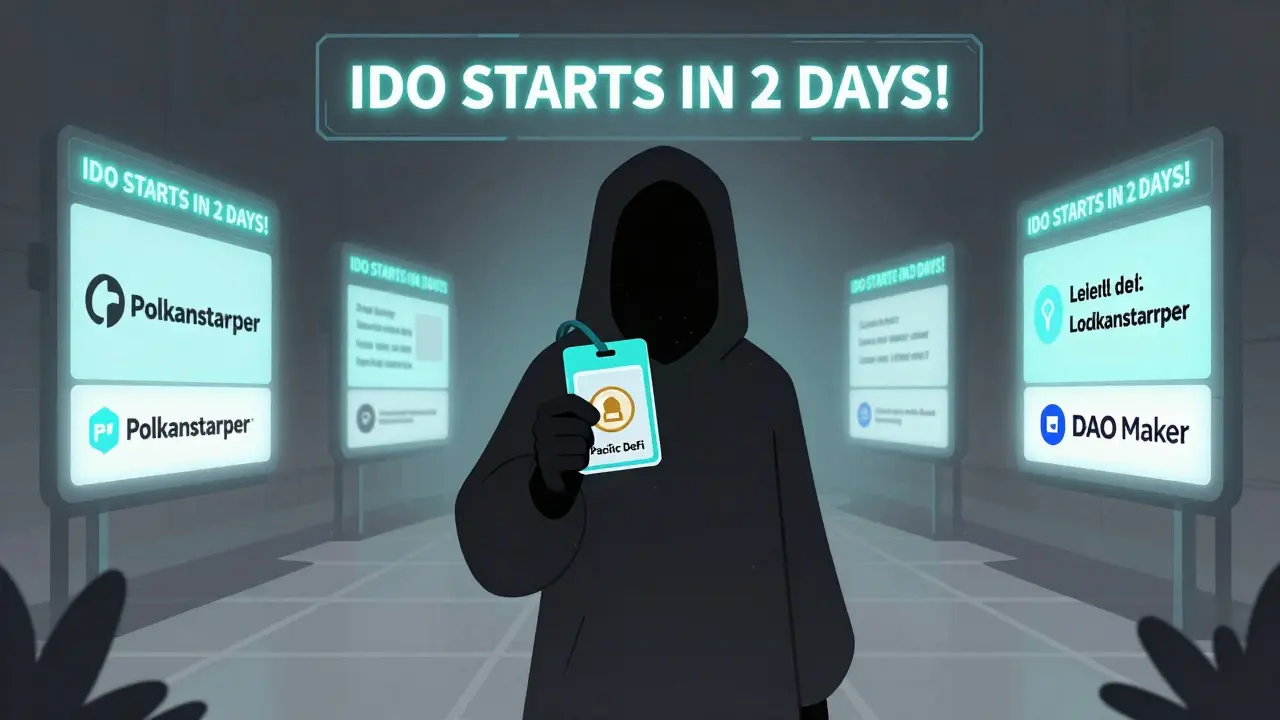
There’s no such thing as a Pacific DeFi IDO launch airdrop - at least not one that’s real, verified, or safe to engage with. If you’ve seen ads, Telegram groups, or YouTube videos promising free tokens from a project called "Pacific DeFi," you’re being targeted by a scam. This isn’t a rumor. It’s not a misunderstood announcement. It’s a ghost project - one that doesn’t appear on any legitimate crypto tracking platform, has no whitepaper, no GitHub repo, no team, and no presence on any verified launchpad.
Let’s cut through the noise. In early 2026, dozens of new DeFi projects flood the market every week. Most fail. A few survive. But only the ones with transparency, audits, and real community traction make it onto platforms like Polkastarter, DAO Maker, or BSCPad. None of these list Pacific DeFi. Not a single one. Airdrops.io, CryptoNinjas, ZebPay, ICO Bench - all of them track hundreds of active airdrops and IDOs in 2025 and 2026. Pacific DeFi isn’t on any of them. Not even in the "upcoming" section.
How Scams Like This Work
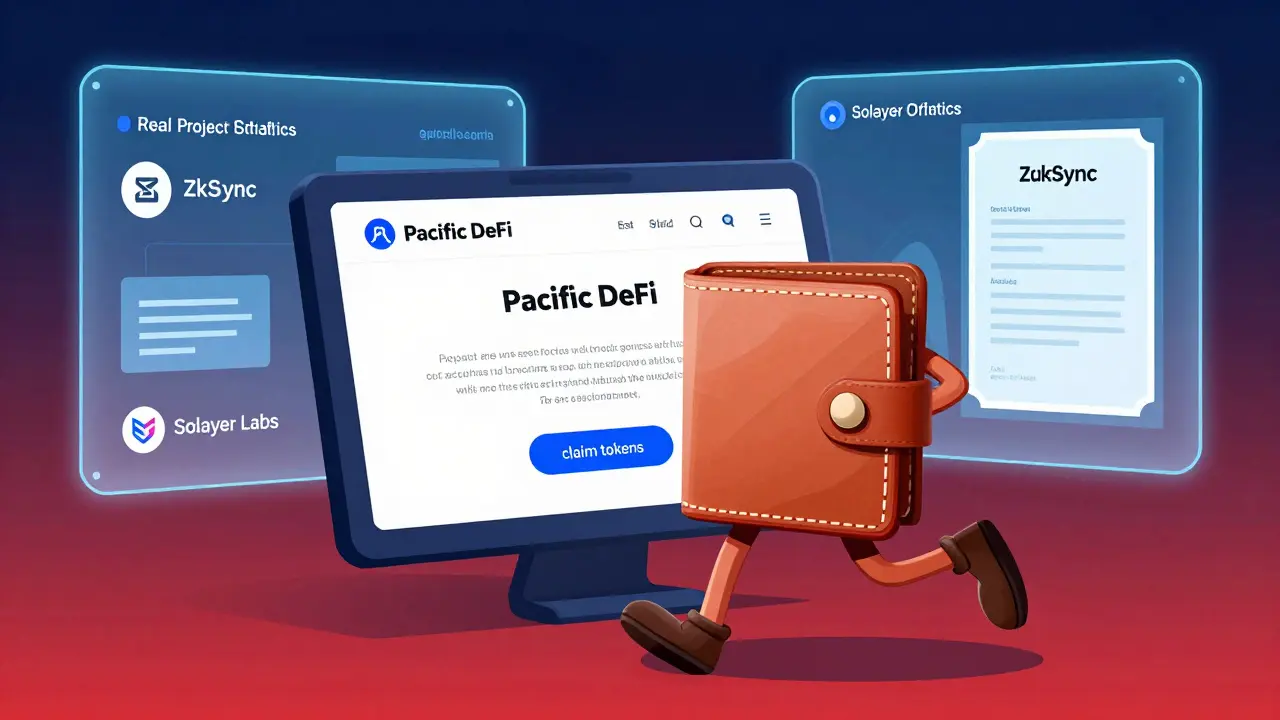
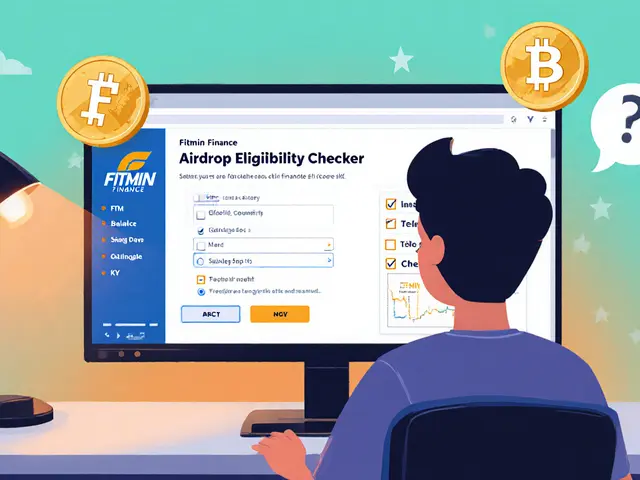
Fake airdrops don’t need to be fancy. They just need to look convincing. You’ll see a website with sleek graphics, a tokenomics diagram that looks professional, and a countdown timer that says "IDO Starts in 2 Days!" Then they ask you to connect your wallet. That’s the trap. Connecting your wallet doesn’t give them your private keys - but it does let them see your transaction history, your balances, and sometimes even your NFTs. From there, they’ll send you a phishing link disguised as a "claim your tokens" page. That page? It’s a fake contract that drains your ETH or SOL.
Or worse - they’ll ask you to send a small amount of crypto to "unlock" your airdrop. That’s a classic rug pull. You send $50. You get nothing back. And the project vanishes.
Real airdrops don’t work like this. Legit projects like Story Protocol or Plume Network in 2025 didn’t ask you to send funds. They didn’t pressure you with fake timers. They rewarded users who had already interacted with their testnet, participated in governance, or held specific tokens. They published their smart contracts on Etherscan. They had GitHub commits dating back months. They had audits from CertiK or Hacken. Pacific DeFi has none of that.
What You Should Look For
If you’re ever unsure whether a DeFi airdrop is real, ask yourself these five questions:
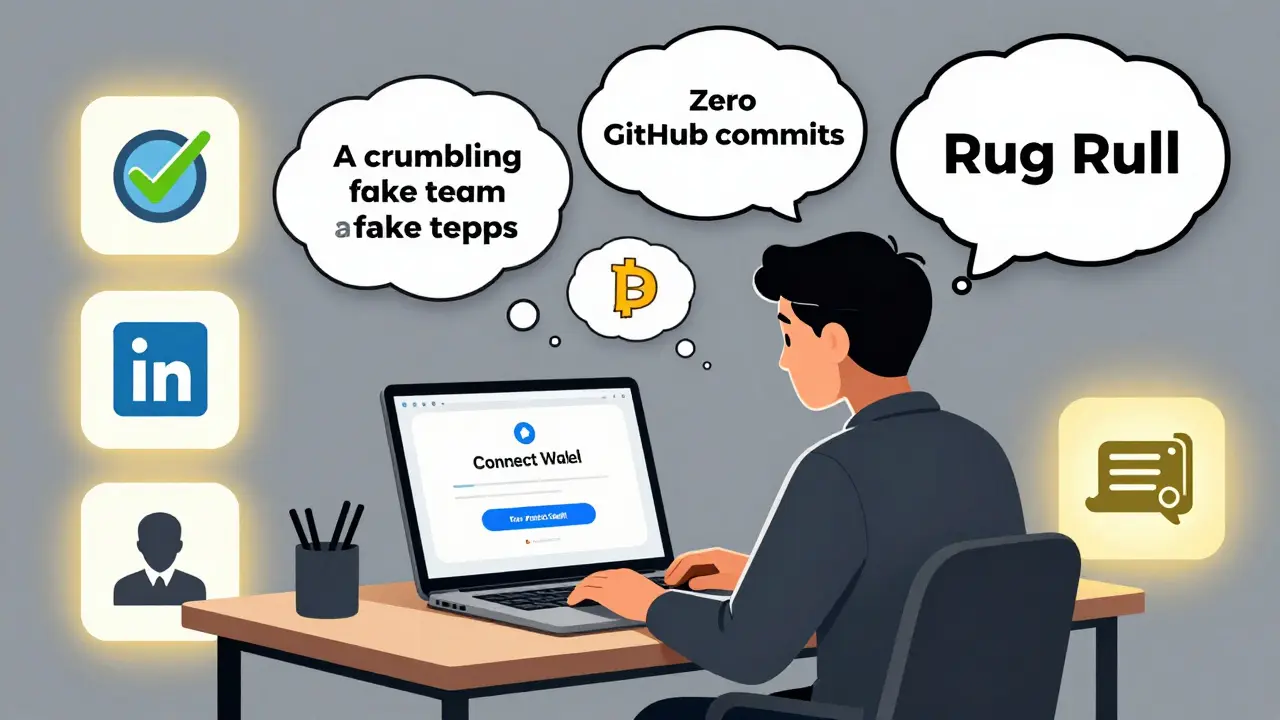
- Is it listed on a known launchpad like Polkastarter, DAO Maker, or BSCPad?
- Is there a live GitHub repository with code commits from the last 30 days?
- Has the project been audited by a reputable firm - and is the report publicly accessible?
- Does the team have LinkedIn profiles, Twitter histories, or public appearances?
- Are there community discussions on Reddit, Discord, or Twitter that aren’t just bots posting "JOIN NOW!"?
If even one of these is missing, walk away. Pacific DeFi fails all five.
Why No One Talks About It
Legitimate projects get talked about. They’re covered by CoinDesk, CoinTelegraph, Decrypt. They show up in newsletters from CoinGecko and CoinMarketCap. Their founders do AMAs. Their tokenomics are dissected by analysts. Pacific DeFi? Silence. Zero mentions. Zero coverage. Zero trace.
That’s not an oversight. That’s a red flag screaming from every angle. If a project is real and raising funds, someone would have noticed. Someone would have written about it. Someone would have flagged it as a potential opportunity. The fact that no one has - across dozens of industry sources - means it doesn’t exist as a real project.
What to Do If You Already Engaged
If you connected your wallet to a Pacific DeFi site, you need to act fast. Here’s what to do:
- Go to your wallet (MetaMask, Phantom, etc.) and revoke all permissions granted to unknown contracts.
- Check your transaction history for any outgoing transfers since you interacted with the site.
- Move all remaining funds to a new wallet - don’t reuse the same one.
- Never connect your wallet again to a site that asks you to "claim" tokens without clear documentation.
There’s no way to recover lost funds once they’re sent to a scam contract. But you can stop further damage.
Real Airdrops in 2026 - What’s Actually Happening
While Pacific DeFi is fake, real airdrops are still happening. In early 2026, Layer 2 networks like zkSync and Arbitrum are rewarding early users. Solana-based projects like Solayer Labs are distributing tokens to those who staked or used their synthetic asset protocols. These projects don’t hide. They announce their airdrops on their official blogs. They post the contract addresses. They explain exactly how many tokens you’ll get based on your activity.
Compare that to Pacific DeFi’s vague promises: "Join now, get 10,000 tokens!" No rules. No metrics. No transparency. That’s not a launch. That’s a lure.
Final Warning
The crypto space is full of opportunity - but also full of predators. Scammers know people want free tokens. They know the FOMO is real. They build fake websites that look better than real ones. They use AI to generate fake team photos and LinkedIn profiles. They copy-paste whitepapers from other projects and change the name.
Pacific DeFi is one of many. Don’t be the next victim. If it sounds too good to be true - it is. If you can’t find it on a trusted platform - it doesn’t exist. And if you’re being pressured to act fast - that’s the scam talking.
Stick to verified projects. Check multiple sources. Never send crypto to claim airdrops. And if you see Pacific DeFi pop up again - report it. Share this article. Save someone else from losing their money.


People Comments
lol i just connected my wallet bc the site looked so slick 😅
It’s not about the tokens. It’s about the ritual of hope. We keep clicking because we refuse to admit we’ve been trained to crave free things. The scam works because it mirrors the structure of belief - not finance.
We don’t lose money. We lose the illusion that the system cares. And that’s the real rug pull.
The structural silence around Pacific DeFi is the most telling audit of all. No whitepaper, no commits, no audits - it’s not just unverified, it’s ontologically absent. The market doesn’t ignore projects by accident. It ignores them because they violate the basic ontology of trust in Web3.
Real airdrops are artifacts of participation. This is an artifact of manipulation.
this is all a deep state op to push people into centralised exchanges. they want you scared so you hand over your keys to coinbase. remember 2017? same script different actors.
yo i just got scammed by this thing last week. i thought i was getting 50k tokens but it drained my SOL wallet. i felt so dumb. but then i realized - it’s not about being dumb. it’s about being human. we all want to believe in something good. that’s not a flaw. it’s a feature.
don’t beat yourself up. just revoke permissions, make a new wallet, and keep going. you’re not alone.
why do they always use countdown timers like its a black friday sale lmao
I’ve seen this exact site… the logo was *almost* identical to a real project I followed… I almost fell for it… I’m so glad I double-checked… I think I’ve lost my trust in aesthetics now… 😔
The failure mode here is not technical. It is epistemological. The user is not being defrauded by a smart contract. They are being defrauded by a failure of epistemic hygiene. The absence of verifiable metadata - GitHub, audit, team - is not a gap. It is a categorical negation of legitimacy.
One cannot audit a ghost. One cannot trust a void. The market is not broken. The user’s criteria for trust are.
It’s not just about the scam. It’s about the moral rot of the entire space. People *want* to be fooled. They crave the fantasy of effortless wealth. That’s why these scams thrive - because we’ve turned crypto into a casino where the house always wins… and we keep buying tickets because we think next time… next time will be different.
same. i got phished. sent $70. got nothing. now i just stare at my wallet like it betrayed me 😔
DON’T LET THIS BREAK YOU 💪
Every loss is a lesson. Every revoked permission is a win. You didn’t lose money - you bought a real-world lesson in crypto literacy. That’s priceless.
Go make a new wallet. Join a real community. Start small. Stay sharp. You got this. The ecosystem needs more smart people - not more scammed ones.
I appreciate the thorough breakdown. The five-point checklist is especially useful. I’ve shared it with my crypto-adjacent friends who still think ‘free tokens’ are real.
One addition: always check the contract address on Etherscan before connecting. If it’s a new, unverified contract with zero transactions - walk away.
I’m so glad you wrote this. I’ve been trying to warn people for months. I even made a Notion doc with screenshots of fake vs real airdrop sites. I don’t post often - but I’ll keep sharing this. No one should lose their life savings to a fake countdown timer.
Thank you for being the voice of reason in a noisy, desperate space.
I’m sick of these ‘crypto safety’ articles. You’re all just fearmongering to protect the big exchanges. Real innovation happens in the shadows. Pacific DeFi might be shady - but maybe it’s just ahead of its time. You’re all too scared to take risks. That’s why America’s falling behind in crypto.
The tragedy is not the scam. It is the collective surrender to aesthetic deception. A website with gradient buttons and a ‘team photo’ made by Midjourney is deemed credible. Meanwhile, real projects with raw GitHub commits and sparse Discord channels are dismissed as ‘unpolished.’
We have outsourced discernment to UI. That is not a market failure. It is a civilizational one.