


The landscape of securities regulations is shifting beneath our feet. If you are working in blockchain or digital assets, you know the feeling. One day, every token looks like a security to regulators; the next, there is talk of safe harbors and deregulation. As we move through 2026, the confusion isn't gone-it’s just different. The era of blanket enforcement is fading, replaced by a complex patchwork of federal guidance, state-level mandates, and evolving case law.
You don’t need a law degree to survive this, but you do need a strategy. Ignoring compliance isn’t an option anymore, even if headlines suggest otherwise. Regulators are still watching, but their focus has narrowed. They care less about speculative hype and more about investor protection, market integrity, and clear disclosure. This guide cuts through the noise to show you exactly where the lines are drawn today and how to stay on the right side of them.
The Regulatory Reset: From Enforcement to Clarity
To understand where we stand in 2026, we have to look at the pivot that happened in 2025. For years, the Securities and Exchange Commission (SEC) operated under a stance that many in the crypto industry found aggressive. Under former Chairman Gary Gensler, the agency pursued hundreds of enforcement actions, often arguing that most tokens were unregistered securities. That approach created a chilling effect, pushing innovation offshore and creating legal uncertainty for startups.
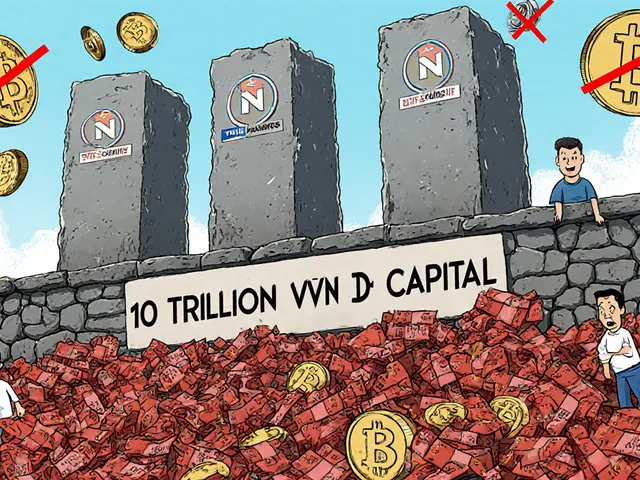
Then came the shift. With the inauguration of President Trump in January 2025 and the appointment of Paul Atkins as SEC Chairman in April 2025, the tone changed dramatically. The new administration prioritized deregulation and capital formation. Atkins openly criticized previous rules as "overly complex" and burdensome. This wasn’t just rhetoric; it was reflected in action. In the first half of 2025, enforcement actions dropped by 42%, and the percentage of those involving crypto fell from 56% to just 28%.
But here is the catch: fewer lawsuits doesn’t mean no rules. It means the rules are being rewritten. The SEC launched "Project Crypto" in August 2025, aiming to clarify regulatory boundaries rather than punish everyone indiscriminately. The goal? To define what constitutes a security in the digital age over the next 12 to 18 months. Until those definitions are final, you are operating in a transition zone. You can’t assume old precedents are dead, but you also can’t ignore the new direction toward nuance.
Is Your Token a Security? The Howey Test Still Applies
At the heart of all this confusion is one legal standard: the Howey Test. Established in 1946, this test determines whether a transaction qualifies as an "investment contract," which is a type of security. If your project fails this test, you are likely selling an unregistered security, which brings massive liability.
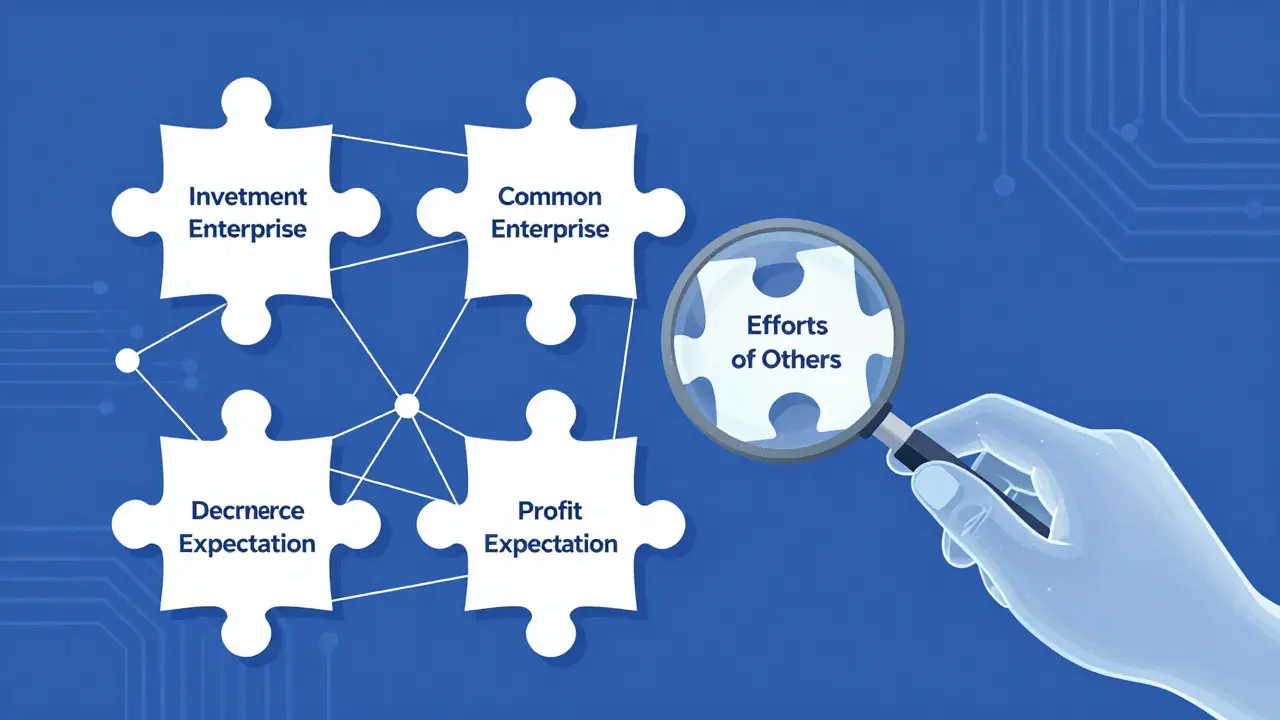
The test asks four questions:
- Is there an investment of money?
- Is there a common enterprise?
- Is there an expectation of profits?
- Are those profits derived from the efforts of others?
In the blockchain world, the first three are usually easy to answer. People buy tokens with money, hoping to profit from the success of the network. The fourth question-"efforts of others"-is where it gets tricky. Does the value of your token depend on the centralized team building the platform, or does it rely on a decentralized network of users?
In 2026, the SEC is looking closely at decentralization. If your protocol is truly decentralized, with no central entity controlling upgrades or marketing, you have a stronger argument that it is not a security. However, if your foundation is still heavily involved in development, governance, or promotion, you are walking a tightrope. The recent court rulings limiting agency authority, such as Loper Bright Enterprises v. Raimondo, have made it harder for regulators to interpret rules broadly, but they haven’t eliminated the Howey Test itself. You still need to prove decentralization factually, not just theoretically.
Navigating the State-by-State Patchwork
Federal clarity is coming, but it’s slow. Meanwhile, states are moving fast. This creates a compliance nightmare for multi-state firms. California, New York, and Texas have each proposed their own digital asset regulations. Some are friendly; others are restrictive.
For example, New York’s BitLicense remains one of the strictest frameworks in the country. Operating without it can shut down your business in the US’s largest financial hub. On the other hand, some states are offering "safe harbors" for certain types of utility tokens. By Q2 2026, 14 states are expected to have implemented their own crypto asset frameworks. This fragmentation means compliance costs can be 2.3 times higher than under a unified federal system.
| Jurisdiction | Primary Focus | Key Requirement | Risk Level |
|---|---|---|---|
| Federal (SEC) | Investor Protection & Disclosure | Registration or Exemption | High (if non-compliant) |
| New York | Consumer Safety & Anti-Money Laundering | BitLicense Application | Very High |
| Texas | Innovation & Clear Classification | Utility Token Safe Harbor | Medium |
| California | Data Privacy & Market Conduct | State-Specific Disclosures | High |
If you are launching a product nationwide, you cannot pick and choose which laws to follow. You must comply with the strictest requirements across all jurisdictions where you have customers. This often means adopting federal standards as a baseline and then adding layers for specific states.
AI Governance: The New Compliance Frontier
Here is a twist you might not expect: artificial intelligence is now a major part of securities compliance. In 2025, the SEC identified AI governance as a key examination area. Why? Because many fintech and crypto firms use AI for trading algorithms, customer service bots, and risk assessment. If your AI makes a mistake that harms investors, you are liable.
Deloitte’s 2025 report found that while 78% of capital markets organizations have formal AI governance frameworks, only 32% feel confident they meet regulatory expectations. The gap is real. Regulators want to see documentation of how your AI models work, how they are tested, and who oversees them. It’s not enough to say "the algorithm decided." You need human oversight and explainability.
Implementing this requires resources. Firms reported spending an average of $250,000 annually on AI monitoring tools alone. But skipping this step is risky. In 2025, several firms received deficiency letters during exams specifically questioning their AI oversight. The lesson? Treat your AI systems like any other regulated process. Document everything, test rigorously, and keep a human in the loop.

Practical Steps for Blockchain Compliance in 2026
So, what should you do right now? Here is a practical checklist based on current trends and expert advice:
- Conduct a Token Audit: Re-evaluate your tokenomics using the Howey Test. Are profits driven by your team’s efforts? If yes, consider registering or seeking an exemption. If no, document your decentralization roadmap clearly.
- Map Your Jurisdictions: Identify where your users are located. Check local regulations in those states. Do you need a BitLicense in NY? Are you exempt in Texas? Create a matrix of requirements.
- Strengthen KYC/AML: Know Your Customer and Anti-Money Laundering rules are non-negotiable. Ensure your identity verification processes are robust and up-to-date. FINRA reported an 18% increase in deficiency letters related to crypto disclosures in 2025. Don’t let sloppy ID checks sink your business.
- Document AI Usage: If you use AI, create a governance framework. Define roles, responsibilities, and testing protocols. Keep logs of model decisions and updates.
- Engage Early with Regulators: Don’t wait for a subpoena. Proactive dialogue can save you millions. One CCO noted that early talks with the SEC’s Office of Risk and Strategy helped avoid enforcement action after self-reporting a violation. Build relationships before you need them.
Also, invest in RegTech. The regulatory technology sector grew to $18.2 billion in 2025. Tools from vendors like Advent, Charles River, and Broadridge can automate much of the monitoring and reporting burden. For mid-sized firms, the cost of these platforms is justified by the reduction in manual labor and error rates. 94% of large firms already use integrated compliance platforms. If you aren’t, you’re falling behind.
The Human Element: Culture and Training
Technology helps, but culture drives compliance. A study by the Investment Adviser Association found that firms need 1.8 full-time compliance staff per $1 billion in assets under management. But headcount isn’t enough. You need expertise. The learning curve for new compliance professionals is steep-8 to 12 months for general securities knowledge, plus another 4 to 6 months for crypto-specific rules.
Successful programs share three traits: regular cross-departmental coordination, quarterly impact assessments of regulatory changes, and documented AI governance. Make compliance a company-wide priority, not just a department’s job. Train your developers, marketers, and customer support teams on basic regulatory principles. When everyone understands the risks, you reduce the chance of accidental violations.
Remember, the goal isn’t just to avoid fines. It’s to build trust. Investors are wary. Clear, honest communication about your regulatory status builds credibility. Hide nothing. Disclose conflicts of interest. Be transparent about risks. In a space plagued by scams, transparency is your strongest competitive advantage.
Does the Howey Test still apply to cryptocurrencies in 2026?
Yes, the Howey Test remains the primary legal standard for determining if a digital asset is a security. While regulatory enforcement has shifted, the underlying legal framework has not changed. Projects must still demonstrate that profits are not primarily derived from the efforts of a central party to avoid classification as a security.
What is "Project Crypto" and how does it affect my business?
Project Crypto is an initiative launched by the SEC in August 2025 to clarify regulatory boundaries for digital assets. Instead of broad enforcement, it aims to provide clearer guidelines over the next 12-18 months. For businesses, this means a temporary period of uncertainty followed by potentially more defined rules. Stay updated on SEC announcements regarding safe harbors and exemptions.
Why is AI governance important for securities compliance?
AI is increasingly used in trading, risk assessment, and customer interactions. Regulators require firms to have oversight mechanisms for AI systems to prevent errors that could harm investors. Lack of proper AI governance led to numerous deficiency letters in 2025. You must document how your AI works, who oversees it, and how decisions are validated.
Do I need a license in every state where I have customers?
It depends on the state’s regulations. Some states like New York require specific licenses (e.g., BitLicense) for any crypto-related activity. Others may have exemptions or different registration requirements. You must comply with the laws of every jurisdiction where you operate. Consulting with legal experts familiar with multi-state regulations is crucial.
How much does compliance cost for a mid-sized blockchain firm?
Costs vary widely, but mid-sized broker-dealers spend around $315,000 annually on Regulation Best Interest compliance alone. Additional costs include RegTech software ($250,000+ for AI monitoring), legal fees, and staffing. Investing in automation and proactive compliance can reduce long-term risks and potential fines.