


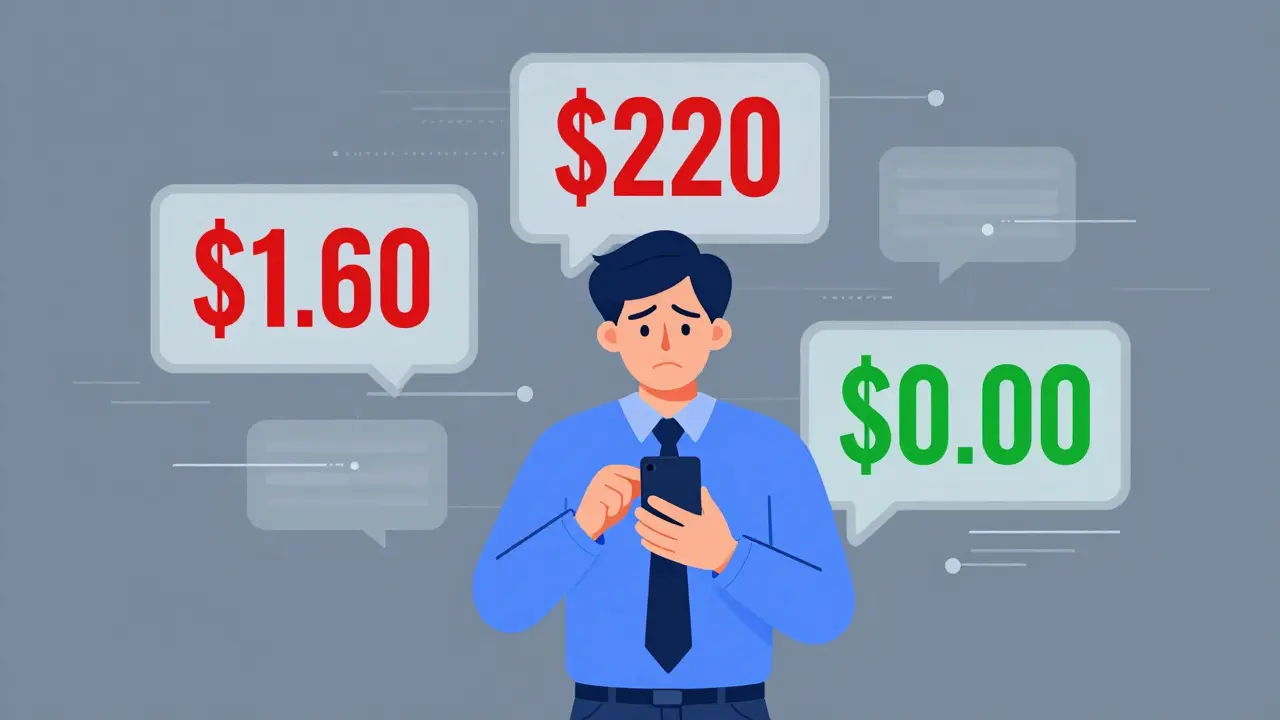
Have you ever tried to check the price of a cryptocurrency only to find that three different websites give you three completely different numbers? One says it’s worth $1.60, another claims it’s $220, and a third insists its value is zero. If you are looking at YouCoin, specifically the ticker UCON, this is exactly where you stand in mid-2026.
YouCoin isn’t just another meme coin or a standard utility token. It bills itself as an "equity governance token" for the YouCoin Metaverse. But if you dig past the marketing language, you will find a project shrouded in mystery, data inconsistencies, and significant liquidity risks. Before you consider buying even a single fraction of a UCON token, you need to understand what this asset actually is, why the data is so broken, and whether there is any real value behind the hype.
What Is YouCoin (UCON) Actually?
To understand YouCoin, we have to look at how it defines itself versus how the market treats it. Officially, YouCoin Metaverse is a niche ecosystem that uses the UCON token for equity-style governance and ownership participation. It was launched in 2021 and operates on the SERO blockchain.
The core promise of UCON is simple: it acts like a share in a company, but for a digital metaverse. Instead of just using a token to buy virtual land or pay for transactions, holders of UCON are supposed to have voting rights and a sense of ownership over the ecosystems built under the YouCoin brand. This "equity" angle is rare in crypto, where most tokens are purely functional utilities.
However, the execution has been messy. There are currently two distinct listings for this token on major trackers: "YouCoin Metaverse (old)" and "YouCoin Metaverse (new)." This suggests a token migration occurred at some point, likely moving assets from one smart contract to another. For investors, this creates immediate confusion. Are you holding the old, potentially worthless contract? Or the new one with active trading? The lack of clear communication from the development team makes this distinction critical and difficult to verify.
The Supply Shock: Why Only 1 Million Tokens?
If you are used to tokens like Bitcoin (21 million max supply) or Ethereum (uncapped but deflationary), YouCoin’s supply structure looks unusual. CoinMarketCap and Crypto.com both report a fixed maximum supply of just 1,000,000 UCON tokens.
This low supply is intentional. By keeping the total number of tokens low, the project aims to mimic traditional equity shares. In theory, scarcity drives value. If there were billions of UCON tokens, each one would be worth fractions of a cent. With only one million, each token carries more weight in terms of governance power and theoretical value.
But here is the catch: while the *maximum* supply is 1 million, multiple sources including Yahoo Finance and Mudrex report the *circulating* supply as 0. How can a token exist but have no circulating supply? This usually means one of two things:
- Tokens are locked: The entire supply might be held in a treasury wallet or vested for early investors, meaning none are available for public trading yet.
- Data feed errors: The aggregators simply cannot track where the tokens are because they are not being traded on major, transparent exchanges.
When the circulating supply is reported as zero, the market capitalization also drops to zero. This makes it impossible to judge the project’s size or health using standard metrics. You are essentially flying blind regarding how much of the token is actually in play.
The Price Nightmare: From $1.60 to $220
Let’s talk about the elephant in the room: the price. As of June 2026, trying to find the "real" price of UCON is like playing a game of telephone where everyone lies.
| Platform | Reported Price (USD) | Circulating Supply | Notes |
|---|---|---|---|
| CoinMarketCap (New) | $1.62 | Unknown | Last updated May 2026; clusters with other low-price feeds. |
| Mudrex | $1.68 | 0.00 | Reports $0 market cap despite non-zero price. |
| Symlix | $1.69 | Unknown | Shows +7.76% gain over 7 days; peer-to-peer data. |
| Gate.com | $39.84 | Active Volume | Reports $206K daily volume; significantly higher than others. |
| Crypto.com | $221.37 | 1,000,000 Max | Extremely high outlier; potential decimal error or leveraged product. |
| Binance | $0.00 | 0 | Listing appears dormant or inactive. |
Look at that table. You have a range from $0 to over $220. This is not normal volatility; this is data fragmentation. Here is why this happens:
- Thin Liquidity: When very few people trade a token, a single small buy order can spike the price dramatically. On Gate.com, a modest volume of $200k might move the needle significantly compared to Bitcoin’s billions.
- Decimal Errors: Sometimes, exchanges misconfigure the number of decimal places for a token. If a token should be priced at $1.60 but the exchange displays it as $160 or $1600 due to a setup error, it skews all external data feeds.
- Old vs. New Contracts: Some platforms might still be tracking the "old" UCON contract, which could be worthless, while others track the "new" one. Without a unified standard, these prices don’t match.
For a regular investor, this discrepancy is a massive red flag. If you buy UCON at $1.60 on Coinbase and try to sell it on Crypto.com expecting $220, you will likely face slippage, withdrawal issues, or realize the listing is stale. Always assume the lowest reliable price is the closest to reality when liquidity is this thin.

Technical Backbone: The SERO Blockchain
YouCoin doesn’t run on Ethereum or Solana. It lives on the SERO blockchain. SERO, often called Super Zero, is a privacy-focused platform known for confidential transactions and smart contracts. This choice of infrastructure is interesting.
Why use a privacy chain for a metaverse governance token? The implication is that YouCoin wants to protect the identity of its voters and owners. In many corporate structures, shareholder identities are private until certain thresholds are met. By building on SERO, UCON theoretically allows users to participate in governance without broadcasting their holdings to the public ledger.
However, this comes with trade-offs:
- Wallet Compatibility: You cannot hold native UCON in a standard MetaMask wallet connected to Ethereum. You need a SERO-compatible wallet. This adds friction for average users who aren’t tech-savvy.
- Limited Ecosystem: SERO is a smaller network. Fewer decentralized finance (DeFi) protocols support it, meaning you can’t easily stake UCON or lend it out to earn yield like you might with tokens on BNB Chain or Polygon.
- Audit Transparency: Privacy chains make it harder to audit transaction flows. While this protects user privacy, it also makes it harder for regulators and security firms to verify that the token isn’t being manipulated by insiders.
There is no public GitHub repository linked prominently in major listings, nor are there details on smart contract audits. This lack of technical transparency is typical for micro-cap projects but increases the risk profile significantly.
Is There Any Real Utility?
The term "Metaverse" has become a buzzword, but does YouCoin actually have a metaverse? According to current data, the answer is vague. There are no widely known games, virtual worlds, or NFT marketplaces associated with the YouCoin brand that have gained mainstream traction.
The "equity governance" model suggests that UCON holders vote on decisions related to the ecosystem. But what decisions? Who is running the ecosystem? The research reveals no named founders, no visible development team, and no case studies of successful governance actions. Without a visible product or community, the token relies entirely on speculative hope rather than demonstrated utility.
Compare this to established metaverse tokens like Decentraland (MANA) or The Sandbox (SAND). Those projects have millions of users, active land sales, and clear partnerships. YouCoin ranks around #55,484 by market cap on LiveCoinWatch. That puts it in the bottom tier of tracked cryptocurrencies. It is essentially invisible to the broader market.
Risks and Red Flags You Must Know
If you are considering investing in UCON, you must treat it as a high-risk speculative asset, similar to a lottery ticket. Here are the specific risks based on the current data landscape:
- Illiquidity Risk: With reported circulating supplies of zero and fragmented trading volumes, you may buy the token and find no one willing to buy it back from you. You could be stuck holding an asset you cannot sell.
- Data Reliability: The extreme price discrepancies mean you cannot trust automated portfolio trackers. Your "paper gains" might disappear instantly if you try to execute a trade.
- Regulatory Uncertainty: Because UCON markets itself as an "equity" token, it may fall under securities laws in countries like the US or EU. If regulators classify it as an unregistered security, exchanges could delist it overnight, crashing the price to zero.
- No Community Signal: There are no active Reddit threads, Twitter/X communities, or Discord servers with significant engagement. A healthy crypto project thrives on community advocacy. YouCoin lacks this social proof.
Future Outlook: Speculation vs. Reality
Some platforms, like Bitget, offer price predictions. They project UCON could reach $3.11 in 2027 and $7.63 by 2032. These numbers sound impressive, implying a nearly 400% return. However, take these with a grain of salt. These projections are often generated by algorithms that extrapolate past trends without accounting for fundamental realities like lack of adoption or regulatory crackdowns.
For UCON to succeed, several things need to happen:
- Clear Product Launch: The YouCoin Metaverse needs to launch a tangible product-a game, a platform, or a service-that people actually want to use.
- Exchange Listings: It needs to list on major, reputable exchanges with deep liquidity pools to stabilize the price and eliminate the $1 vs $200 discrepancy.
- Team Transparency: The developers need to reveal themselves, publish whitepapers, and provide regular updates on development progress.
Until then, UCON remains a ghost town in the crypto world. It exists on paper and on obscure ledgers, but it lacks the lifeblood of a vibrant economy: active users and consistent trading volume.
How to Buy UCON (If You Still Want To)
If you have weighed the risks and decided to proceed, here is the general process. Note that availability changes frequently due to the token’s obscurity.
- Identify the Correct Exchange: Currently, Gate.com shows active trading pairs. Verify if Coinbase or other platforms you trust have listed the "new" UCON contract. Do not rely on Binance’s dormant listing.
- Create a Wallet: If you plan to hold long-term, set up a SERO-compatible wallet. If you are just trading, keep it on the exchange, but understand the custody risk.
- Verify the Contract Address: This is crucial. Find the official contract address for the "new" UCON from a trusted source (like the project’s official website or verified social media). Compare it to the address on the exchange. If they don’t match, do not buy.
- Start Small: Given the illiquidity, never invest more than you can afford to lose completely. Even a small amount might be hard to exit quickly.
Is YouCoin (UCON) a scam?
While there is no definitive proof of malicious intent labeling it a "scam," YouCoin exhibits many characteristics of high-risk or abandoned projects. These include anonymous teams, inconsistent data, zero circulating supply reports, and lack of visible utility. Treat it as highly speculative and potentially worthless.
Why is the price of UCON different on every website?
The price discrepancies are caused by thin liquidity, potential decimal configuration errors on exchanges, and the existence of "old" vs "new" token contracts. Different platforms may be tracking different versions of the token or relying on flawed data feeds.
Can I use MetaMask to store YouCoin?
Not directly. YouCoin operates on the SERO blockchain, not Ethereum. You will need a wallet that supports the SERO network to hold native UCON tokens securely off-exchange.
What is the total supply of YouCoin?
The maximum total supply is fixed at 1,000,000 UCON tokens. However, the circulating supply is often reported as 0, indicating that tokens may be locked or that tracking data is incomplete.
Is YouCoin listed on Binance?
Binance lists "YouCoin Metaverse (old)", but the price is effectively $0 and trading appears dormant. It is unclear if the "new" UCON contract is actively traded on Binance. Relying on this listing for current value is risky.

People Comments
Look, I don't care about your fancy metaverse dreams or whatever. This is a classic pump and dump scheme designed to bleed dry the naive. The US market is flooded with these garbage tokens that have zero real utility. It's pathetic how people fall for this every single time.
i mean its kinda scary how the prices are all over the place lol
You are missing the point entirely. The volatility isn't a bug, it's a feature of decentralized markets. People like you just want central control because you can't handle freedom. The data chaos is simply the market correcting itself against centralized narratives. Stop whining.
Haha, wow Carl. You really need to chill out dude :) It's just a token. No one is forcing anyone to buy it. Maybe take a breath and look at the tech side of SERO instead of yelling about scams. Privacy coins have their own niche appeal.
The regulatory landscape in the United States is going to crush projects like this if they don't comply with SEC guidelines immediately. We need strong financial sovereignty here. These anonymous teams operating on obscure chains are a threat to our economic stability. It’s not just 'garbage,' it’s unregulated securities fraud waiting to happen. Wake up.
I suppose we could argue both sides; however, the lack of transparency is undeniably concerning! On the other hand, privacy is a fundamental right, isn't it? One must consider the implications of surveillance capitalism versus the risks of anonymity. It is a delicate balance, truly.
Oh, please. Do you actually think the average retail investor understands the nuances of confidential transactions on the SERO blockchain? It is absolutely laughable. This project exhibits all the hallmarks of a low-effort cash grab by developers who couldn't secure funding on Ethereum. The liquidity depth is non-existent, which means any attempt to exit will result in catastrophic slippage. It is intellectually dishonest to suggest there is any 'niche appeal' here. It is simply broken infrastructure wrapped in buzzwords.
This article is so boring and repetitive. Why do we even care about this coin? It's dead anyway. Nobody reads these long guides anymore. Just give me the bottom line: stay away.
It is important to approach new technologies with an open mind. Even if this project seems risky now, learning about different blockchains helps us understand the broader ecosystem. Let's support each other in staying informed rather than just dismissing things quickly.
The tragedy of UCON is not just its failure as an investment, but its failure as a concept. It represents the hollowing out of the metaverse dream into mere speculative vehicles. We built castles in the sky, only to find them constructed of sand and lies. How did we get here? Where is the vision?
Hey everyone! 👋 Don't let the negativity get you down. While UCON might be a mess, the crypto space is full of opportunities if you know where to look. Always DYOR (Do Your Own Research)! 🚀 Stay safe and keep learning!
I checked my portfolio and realized I accidentally bought some old UCON years ago 😂 It's sitting at $0.00 value. Can someone tell me if I should just delete my wallet or is there a chance the devs wake up? Also, why does no one reply to my DMs on Twitter? 🤔
the price difference between gate and crypto.com is wild. i guess thats what happens when there is no real trading volume. its basically a ghost town.
We need to stop attacking individuals for exploring different assets. The diversity of blockchain solutions is what makes this industry exciting. However, I agree that transparency is key. If the team won't show their faces, why should we trust them? It's a simple question of accountability.
If you are thinking about buying this, please make sure you understand the SERO network first. It's not like ETH. You can't just plug in MetaMask. You need a specific wallet. Most people don't even know that part.
It is frankly astonishing that anyone would entertain this narrative without rigorous due diligence! The circulating supply being reported as zero is a massive red flag indicating either complete abandonment or severe technical incompetence. Furthermore, the reliance on privacy features for a governance token is contradictory to the very essence of transparent democratic participation within a digital ecosystem. Do not be foolish.
They are hiding the real supply because the insiders already dumped everything. The 'privacy' chain excuse is just cover for money laundering. Wake up sheeple. The government knows exactly what is happening and lets it slide until they need a scapegoat. Trust nothing.
Come on guys! Life is too short to worry about bad coins. Focus on the winners! Bitcoin is king! Ethereum is queen! Everything else is noise. Go out there and make your money while others complain!
People who buy tokens like this are just greedy. They deserve to lose their money. It's moral hazard at its finest. If you can't afford to lose it, don't buy it. Simple as that. Stop acting like victims when the market corrects your stupidity.
What if the scarcity is intentional to test the limits of governance models? Perhaps the lack of liquidity is a feature to prevent whale manipulation. We often assume illiquidity is a flaw, but could it be a filter for serious participants? It forces you to think longer term. What do you think about the philosophical implications of ownership in a vacuum?
The digital ether swallows these tokens whole, leaving only the skeletal remains of hope. It is a necropolis of code, where the ghosts of algorithms dance in the void. You cling to the price charts like a drowning man grasping at straws, unaware that the water is rising. The silence of the developers is deafening, a symphony of neglect played on the keys of greed. Beware the siren song of the metaverse, for it leads only to the abyss.