



Have you stumbled upon a ticker called CRYSTL and wondered what it actually does? You are not alone. In the crowded world of decentralized finance, new tokens pop up daily, often with names that sound familiar or promising. Crystl Finance is one such project. It positions itself as a yield optimizer on the Polygon network, a blockchain known for fast transactions and low fees. But here is the catch: unlike major players in the space, information about this specific coin is incredibly thin.
If you are looking at the price chart today, July 9, 2026, you might see a number like $0.0001348 per token. That looks cheap, right? But before you buy, you need to understand exactly what you are getting into. This isn't just about the price; it is about the technology, the risks, and the glaring lack of transparency that surrounds this particular asset.
The Quick Reality Check
- What it is: A small-cap token associated with a DeFi yield aggregator protocol on Polygon.
- Current Status: Listed on exchanges but with missing data for market cap and circulating supply.
- Risk Level: High. Due to low liquidity, lack of audits, and minimal public documentation.
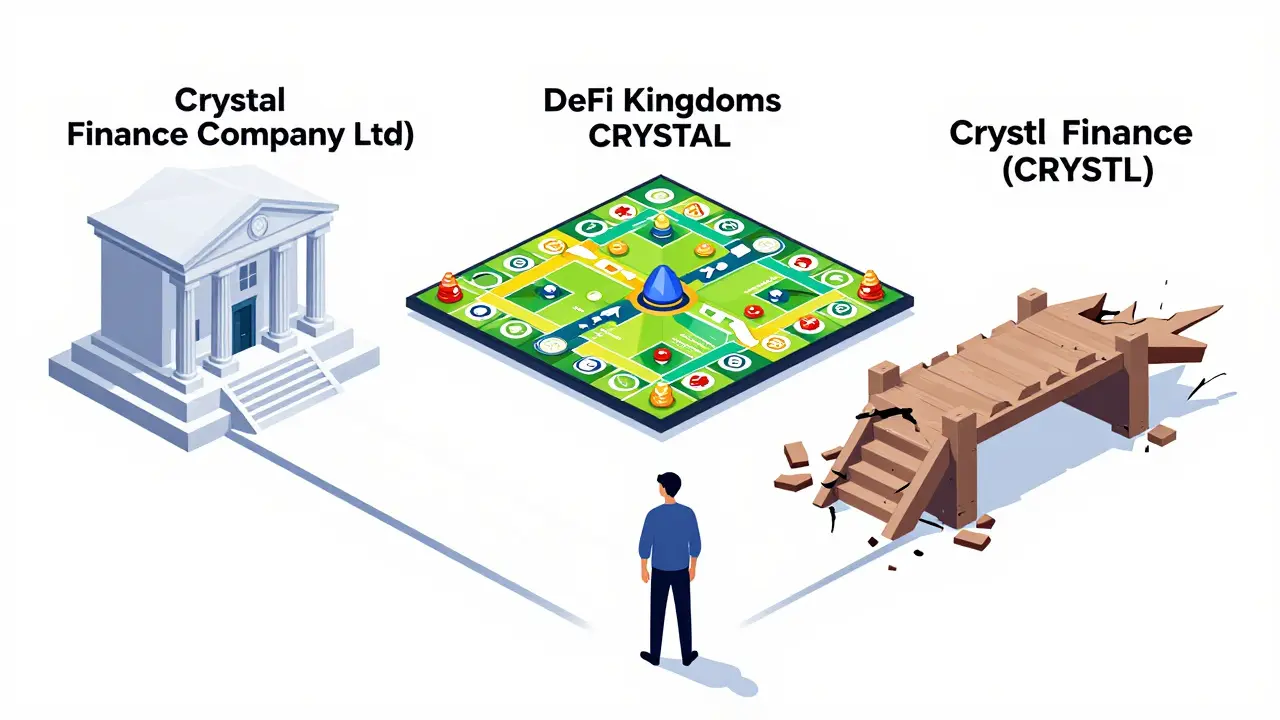
- Confusion Alert: Do not mix it up with traditional finance companies named "Crystal" or gaming tokens like those from DeFi Kingdoms.
So, What Exactly Is Crystl Finance?
To understand Crystl Finance, you first need to grasp the concept of a yield aggregator. Think of these protocols as automated investment managers. Instead of you manually moving your money between different lending platforms or liquidity pools to get the best interest rate, a yield aggregator does it for you. It uses smart contracts to automatically harvest rewards and reinvest them, compounding your returns over time.
Crystl Finance operates within this niche. Specifically, it runs on Polygon. Polygon is an Ethereum sidechain that allows for cheaper and faster transactions than the main Ethereum network. By building on Polygon, Crystl Finance aims to make yield farming more accessible by reducing gas fees-the transaction costs that can eat into profits on other networks.
However, being a yield aggregator doesn't automatically make a project safe or profitable. The sector is fiercely competitive. As of mid-2025, there were over 200 yield aggregator protocols globally, holding billions in total value locked (TVL). The vast majority of that money sits with the top-tier, well-audited giants. Crystl Finance is not among them. It is a minor player in a massive ocean.
The Data Gap: Why the Numbers Look Weird
Here is where things get tricky. If you check a standard crypto exchange listing for CRYSTL today, you will see some strange figures. The price might be listed, and you might even see a 24-hour percentage change (like +9.45%). But look closer at the market capitalization and circulating supply. They often show as zero.
Does this mean no tokens exist? No. It usually means the exchange or data provider simply lacks reliable information. There is no verified count of how many CRYSTL tokens are out there. Without knowing the circulating supply, you cannot calculate the true market cap or the fully diluted valuation. This opacity is a red flag. Established projects publish their tokenomics clearly-how many tokens were created, who holds them, and when they unlock. Crystl Finance offers none of this publicly.
This lack of data makes it impossible to assess inflation risk. If millions of tokens are suddenly dumped onto the market, the price could crash instantly. With bigger projects, you know the schedule. With CRYSTL, you are guessing.

Don't Get Confused: Similar Names, Different Worlds
One of the biggest pitfalls for beginners is name confusion. "Crystal" and "Crystl" appear everywhere in finance and tech. Here is how to tell them apart so you don't invest in the wrong thing.
| Name / Ticker | Type | Function | Relation to CRYSTL |
|---|---|---|---|
| Crystl Finance (CRYSTL) | Crypto Token | DeFi Yield Aggregator on Polygon | The subject of this article |
| Crystal Finance Company Ltd | Traditional Bank | SME Loans & Credit in Nigeria | Unrelated regulated financial institution |
| Crystal Specialist Finance | Mortgage Broker | Commercial Finance in UK | Unrelated traditional lender |
| DeFi Kingdoms CRYSTAL | Gaming Token | In-game currency for RPG elements | Different ecosystem, fixed supply cap |
| WEMIX ROM CRYSTAL | Gaming Token | Virtual economy asset | Different blockchain, unrelated utility |
Notice the difference? The traditional finance entities are regulated banks. They have physical offices, customer service lines, and legal obligations. The gaming tokens have clear rules about supply caps and usage within games. Crystl Finance (CRYSTL) has none of these safeguards. It is a standalone crypto asset with minimal public footprint.
How Would You Actually Use It?
If you decide to proceed despite the risks, how does the process work? Since Crystl Finance is a yield aggregator, the user experience follows a standard DeFi pattern:
- Connect Your Wallet: You would use a browser-based wallet like MetaMask or Trust Wallet, configured for the Polygon network.
- Fund Your Wallet: You need MATIC (or POL, depending on the current native token symbol) for gas fees and the assets you want to farm (like USDC or WMATIC).
- Deposit into Vaults: You send your assets to the Crystl Finance smart contract vaults.
- Auto-Compounding: The protocol automatically moves your funds to earn yields and reinvests the profits.
It sounds simple, but the devil is in the details. Who wrote the code? Has it been audited by a reputable security firm like CertiK or OpenZeppelin? For most top-tier aggregators, the answer is yes. For Crystl Finance, there is no publicly available audit report. This means if there is a bug in the code, hackers could drain the vaults, and there would be no insurance or recourse for users.
The Risk Profile: Proceed with Caution
Let's talk about why you should be skeptical. In crypto, we judge projects by three pillars: Team, Tech, and Transparency. Crystl Finance struggles on all three.
1. Lack of Team Identity
Most credible DeFi projects reveal their founders or at least provide a track record of previous work. Crystl Finance remains anonymous. While anonymity is common in crypto, it increases the risk of a "rug pull," where developers abandon the project and take the funds.
2. Zero Market Presence
If you search for "Top 10 Yield Aggregators 2026," Crystl Finance won't be there. It doesn't appear in major industry reports or institutional analyses. This suggests very low Total Value Locked (TVL). Low TVL means low liquidity. If you try to withdraw a large amount, you might not find enough buyers, causing your value to drop significantly.
3. Regulatory Ambiguity
Unlike the traditional "Crystal" finance firms mentioned earlier, which operate under strict national laws, DeFi projects exist in a gray area. If regulators crack down on unregistered securities or yield-bearing tokens, small, undocumented projects like Crystl Finance are the first to disappear. They lack the legal teams to navigate compliance.
Is It Worth Your Money?
I am not here to tell you what to do with your money, but I can help you think like an investor. Ask yourself these questions:
- Do I understand the smart contract risks?
- Am I comfortable with the possibility of losing 100% of my investment due to a hack or abandonment?
- Why would I choose this over established, audited alternatives like Yearn Finance or Beefy Finance?
If your answer to the last question is "because the price is low," remember that a low price does not mean good value. A penny stock can still go to zero. Value comes from utility, adoption, and trust. Currently, Crystl Finance lacks visible proof of any of these.
For serious investors, the absence of a whitepaper, audit reports, and clear tokenomics is a dealbreaker. For curious experimenters willing to gamble small amounts, it represents a high-risk speculative play. Just ensure you never invest money you cannot afford to lose completely.
Where can I buy CRYSTL token?
CRYSTL is listed on at least one centralized exchange, but availability may vary by region. Due to its low liquidity, you may also find it on decentralized exchanges (DEXs) on the Polygon network, such as SushiSwap or QuickSwap, though slippage could be high.
Is Crystl Finance a scam?
There is no definitive proof labeling it a scam, but it exhibits several high-risk characteristics typical of fraudulent projects: anonymous team, lack of audits, and missing market data. Treat it with extreme caution.
What is the total supply of CRYSTL?
As of July 2026, the total supply and circulating supply are not reliably reported on major tracking platforms, often showing as zero. This indicates a lack of transparent data integration rather than an actual zero supply.
How does Crystl Finance differ from Crystal Finance (the bank)?
They are completely unrelated. Crystal Finance refers to various traditional financial institutions in countries like Nigeria, Cameroon, and the UK. Crystl Finance (CRYSTL) is a cryptocurrency token on the Polygon blockchain.
Can I stake CRYSTL for rewards?
While yield aggregators typically allow staking or depositing assets, the specific mechanics for CRYSTL are unclear due to the lack of official documentation. Always verify contract addresses before interacting with any dApp.




People Comments
its just another rug pull waiting to happen. people are so gready they dont even read the basics anymore. total waste of time.
I really hope this project turns out okay!! It seems like there is a lot of potential if they just clean up their act... I mean, everyone makes mistakes right? Please don't be too harsh on them!!! They are trying their best!
While I appreciate the optimism, it is important to note that the lack of audits is a significant concern. We should proceed with caution and ensure we have all the necessary information before making any decisions.
The fundamental misalignment between the tokenomics and the actual utility is glaring. You are looking at a classic case of liquidity fragmentation without any underlying value accrual mechanism. The smart contract architecture is likely suboptimal for yield optimization given the gas constraints on Polygon, leading to inefficient capital allocation. It is essentially a Ponzi scheme disguised as DeFi innovation.
I guess that's true. I haven't looked into it much myself.
Oh wow! 🤯 Can you believe these people think they can just mint tokens and get rich?! 😂 It’s absolutely hilarious how naive everyone is! 💸 I bet the founders are laughing all the way to the bank while you guys argue about market caps! 📉🚀
This is obviously part of a larger narrative control strategy by the SEC and big banks to suppress legitimate decentralized alternatives. They want you to believe it's risky because it threatens their monopoly on financial data. The 'missing' supply data isn't an error; it's censorship. Wake up! 🐍
You need to stop spreading fear and actually look at the code! Why are you so afraid of transparency? If it were a scam, wouldn't the community know by now? You are being incredibly rude and unhelpful to new investors who just want to learn.
Wow. Just wow. Everyone is so dramatic. It's just a token. Chill out. 🙄
In the grand tapestry of existence, does a token truly hold value if no one believes in it? 🤔 Perhaps the real yield is the knowledge gained from losing money. Or maybe not. Who knows? 😅
listen up kids. this is how u lose money. dont be dumb. buy btc or go home. 📉💀
The analysis provided in the post is superficial at best. It fails to account for the broader macroeconomic factors influencing DeFi adoption rates. Furthermore, the assumption that low liquidity equates to high risk is a binary oversimplification that ignores the strategic positioning of niche protocols. This type of thinking is exactly why retail investors consistently underperform institutional players.
i feel like we are missing the bigger picture here. its not just about the money, its about the journey. what if this is the next big thing? we should support small projects instead of tearing them down. lets be kind to each other!
It is quite amusing to witness such a profound lack of due diligence among the general populace. One would assume that basic financial literacy would preclude interest in unvetted assets. Clearly, education is lacking in this sphere.
Let's think about this together! What if we approached this with curiosity instead of judgment? There might be something unique here that we are overlooking. Let's explore the possibilities!
you're all wrong. the silence is the loudest sound. trust the process. no questions needed.
It is imperative that we consider the intricate web of regulatory frameworks that govern digital assets, particularly when dealing with entities that operate in the shadows of anonymity, which inevitably leads to a situation where the consumer is left vulnerable to exploitation by malicious actors who have no accountability whatsoever in the current legal landscape.
Look, the tech is trash. The team is ghosting. The numbers are fake. Stop pretending otherwise. It's a dump and run. Period.