

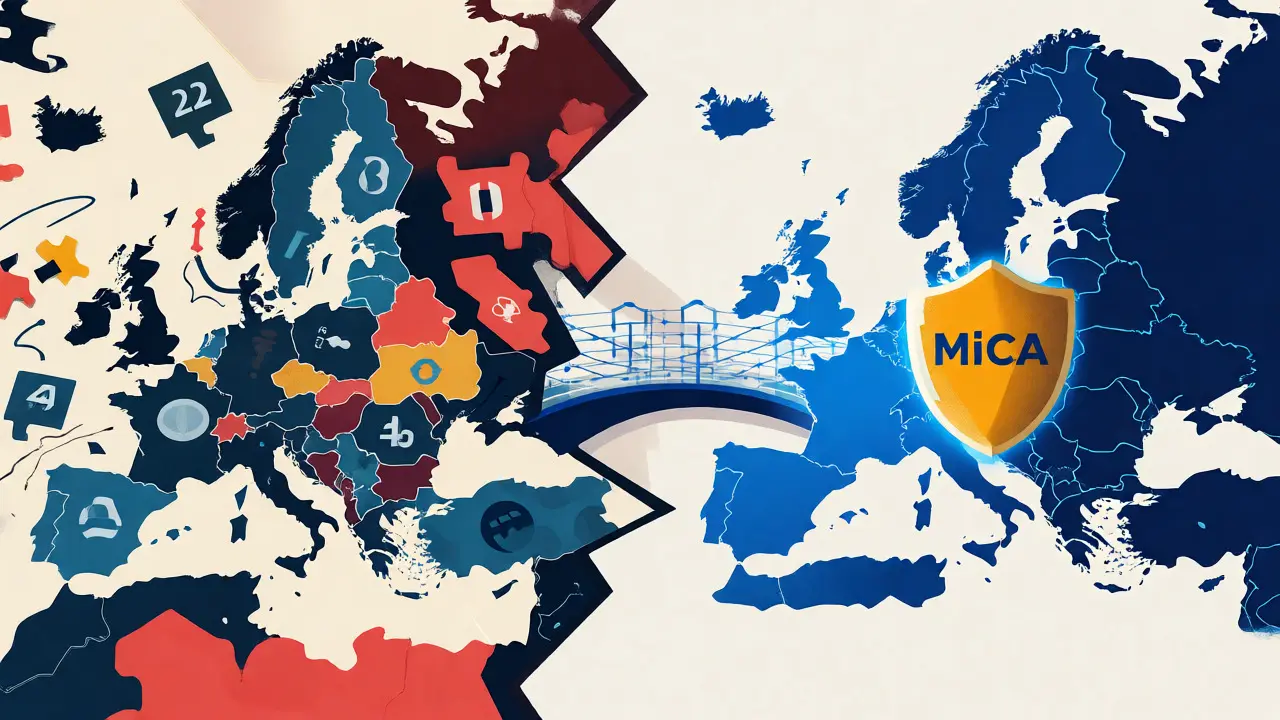
Imagine trying to run a business where the rules change every time you cross a border. For years, that was the reality for MiCA regulation is not just another bureaucratic hurdle; it is the first comprehensive legal framework in the world designed specifically for digital assets. If you are running a crypto exchange, issuing tokens, or managing a wallet service in Europe, this rulebook dictates your survival. It replaces the chaotic patchwork of 27 different national laws with one unified standard across the European Union.
You might wonder why this matters if you’re not based in Brussels. The answer is simple: market access. MiCA grants "passporting" rights. Once you get licensed in one EU country, you can operate in all 27 member states without reapplying. That is a massive win for scalability. But getting there? That requires navigating strict capital requirements, environmental disclosures, and consumer protection mandates. This guide breaks down exactly what you need to do to stay compliant and competitive.
What Is MiCA and Who Does It Affect?
The Markets in Crypto-Assets (MiCA) Regulation is an EU law that establishes uniform rules for crypto-assets not covered by existing financial services legislation. Think of it as GDPR for cryptocurrency. Before MiCA, a startup in Malta had completely different obligations than one in Germany. Now, the bar is set uniformly high.
The regulation primarily targets two groups:
- Crypto-Asset Service Providers (CASPs): These are businesses offering professional services like trading platforms, custody wallets, or advice on crypto assets. If your primary business involves handling other people’s digital money, you are a CASP.
- Token Issuers: Anyone launching new digital tokens must publish a detailed whitepaper approved by regulators. This applies to utility tokens, asset-referenced tokens (stablecoins), and e-money tokens.
There is a notable exception: Bitcoin and Ethereum are largely excluded from the token issuance rules because they are decentralized public networks with no single issuer to regulate. However, if you are building a service *on top* of them, you still fall under CASP rules.
Licensing and Authorization: The Gateway to the EU Market
You cannot simply open shop in Paris or Berlin. You need authorization. This process is rigorous and takes time-typically six to twelve months. Here is what authorities look for when reviewing your application:
- Physical Presence: You must have a registered office within the EU. Virtual offices often don’t cut it. Most national competent authorities require actual staff presence.
- Resident Director: At least one director must reside in the EU member state where you apply. They need relevant experience in financial services.
- Capital Requirements: Money talks. You need minimum capital reserves. For most services, that is €100,000. If you handle order execution or portfolio management, it jumps to €150,000. Significant providers face even higher thresholds.
- Governance Structure: You need a clear organizational chart showing who is responsible for compliance, risk, and operations.
Once authorized, you gain passporting rights. This means a license from Luxembourg lets you serve customers in Spain, Italy, and beyond without additional licensing fees. Early adopters report this saves about 40% in compliance costs compared to the old fragmented system.
Stablecoins Under Scrutiny: Reserves and Redemption
If you issue a stablecoin, pay attention. MiCA treats these as critical infrastructure. The goal is to prevent another Terra Luna collapse. The rules are strict:
| Token Type | Reserve Requirement | Redemption Right | Regulatory Oversight |
|---|---|---|---|
| E-Money Tokens (EMT) | 1:1 in Euro deposits | At par value, anytime | National Central Banks |
| Asset-Referenced Tokens (ART) | High-quality liquid assets | At par value, anytime | ESMA (if >€1B cap) |
| Significant ARTs | Enhanced liquidity buffers | Daily verification | Direct ESMA supervision |
For major players, the stakes are higher. If your stablecoin has a market cap over €1 billion or serves more than 15 million users, it is classified as "significant." This triggers direct oversight by the European Securities and Markets Authority (ESMA). You will need to conduct quarterly stress tests and prove your reserves are liquid enough to handle a bank-run scenario.

Consumer Protection and Transparency Rules
Europeans are used to strong consumer rights. MiCA extends these to crypto. No more hiding behind vague terms of service. You must provide clear, standardized information to your clients.
Your marketing materials cannot be misleading. If you claim "zero risk," you better back it up. More importantly, you must disclose fees clearly. Users complained for years about hidden withdrawal costs. MiCA mandates transparent fee structures. Early feedback shows users appreciate this clarity, though some exchanges have reduced their token listings to keep operational costs manageable.
Another big change: liability. If your platform suffers a hack due to poor security practices, you are liable. You must hold insurance or sufficient capital to cover losses. This pushes companies to upgrade their cybersecurity protocols significantly.
Environmental Impact: The Green Crypto Mandate
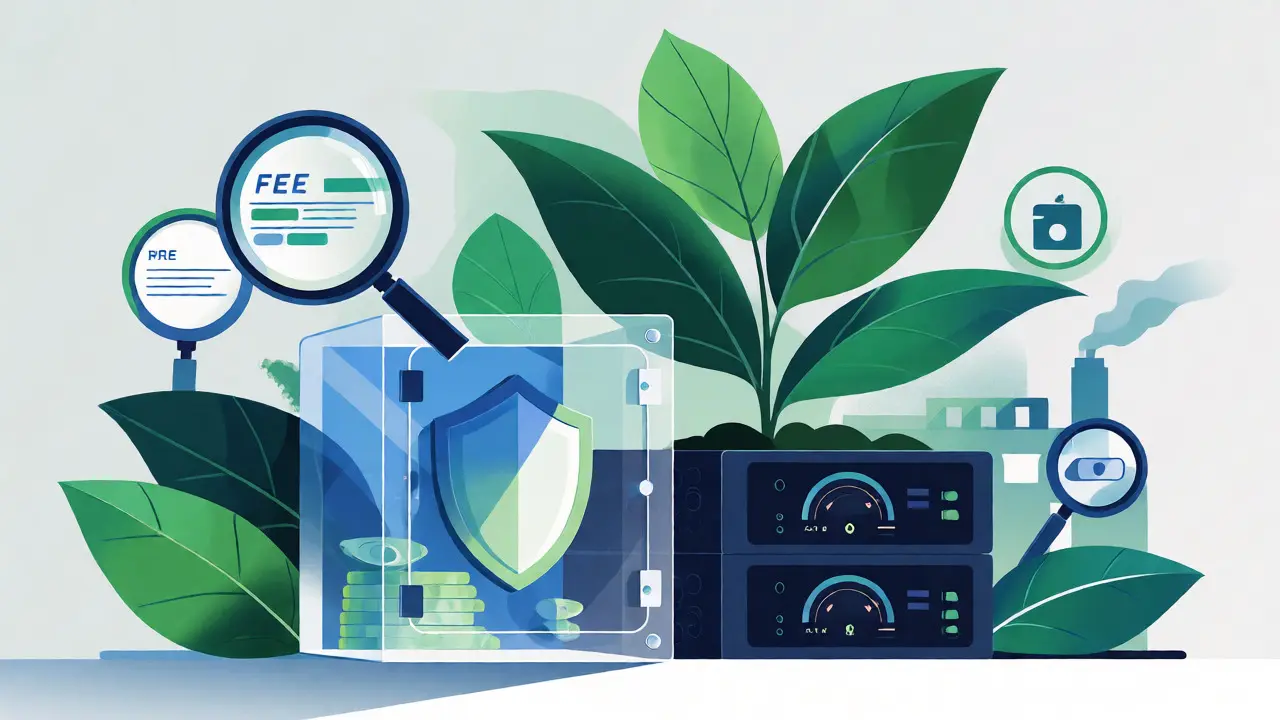
This is where MiCA stands out globally. You cannot ignore your carbon footprint anymore. Every CASP and token issuer must publicly disclose the energy consumption of their consensus mechanisms.
Here is how it works in practice:
- Proof-of-Work (PoW): High energy usage. You must detail annual electricity consumption in kilowatt-hours and estimated CO2 emissions.
- Proof-of-Stake (PoS): Lower impact, but still requires reporting. The focus shifts to hardware efficiency and data center sourcing.
Why does this matter? Investors are increasingly ESG-conscious. A project that hides its environmental stats looks risky. Conversely, a transparent report builds trust. Note that while this doesn’t ban PoW, it makes the cost of running such networks visible to everyone.
Market Abuse and Anti-Money Laundering (AML)
Financial crimes don’t take holidays. MiCA integrates tightly with existing AML directives. You must implement robust customer identification (KYC) procedures. Anonymous wallets are effectively banned for regulated entities.
The Travel Rule applies here too. For transactions over €1,000, you must collect and share sender and receiver details. This ensures traceability. Additionally, market abuse provisions prohibit insider dealing and manipulation. Penalties are steep: fines can reach twice the profit gained or loss avoided. Regulators are watching social media hype cycles closely now.
Practical Steps for Compliance
So, what do you actually need to do? Don’t wait until the deadline. Start now.
- Audit Your Services: Determine if you are a CASP, an issuer, or both. Map each product against MiCA definitions.
- Choose Your Jurisdiction: Research which EU country offers the fastest processing times. France and Luxembourg currently lead, averaging five months for approval.
- Budget Realistically: Expect initial setup costs between €500,000 and €1.2 million. This includes legal fees, technical upgrades, and staffing.
- Hire Local Experts: Bring in a compliance officer with CAMS certification. Legal counsel familiar with local nuances is non-negotiable.
- Prepare Documentation: Draft your whitepaper and program of operations early. Expect multiple rounds of revisions with the regulator.
It is worth noting that many non-EU firms are choosing geo-blocking instead of full compliance. If your user base in Europe is small, blocking EU IPs might be cheaper than setting up a subsidiary. But if you want long-term growth, the investment pays off.
Frequently Asked Questions
Does MiCA apply to Bitcoin and Ethereum?
Not directly for issuance, since they are decentralized. However, businesses providing services related to them, like exchanges or custodians, must comply with CASP rules. The token issuance whitepaper requirement generally excludes fully decentralized public networks.
How long does the licensing process take?
Typically six to nine months, depending on the country. France and Luxembourg tend to be faster, while Germany and Italy may take longer. Preparation time before applying can add several months.
What happens if I fail to comply?
You face heavy fines, potential suspension of services, and reputational damage. In severe cases, regulators can revoke your license. Non-compliant firms may also be barred from operating in the EU entirely.
Can I use my UK license in the EU?
No, not automatically. Post-Brexit, the UK is a third country. You need separate EU authorization unless a specific equivalence agreement is reached, which is currently under discussion but not yet finalized for general crypto services.
Are DeFi protocols affected by MiCA?
Currently, pure DeFi protocols are in a gray area. However, if a protocol has a central entity controlling governance or operations, it may be treated as a CASP. Regulatory clarity is evolving, so monitor updates from ESMA closely.