

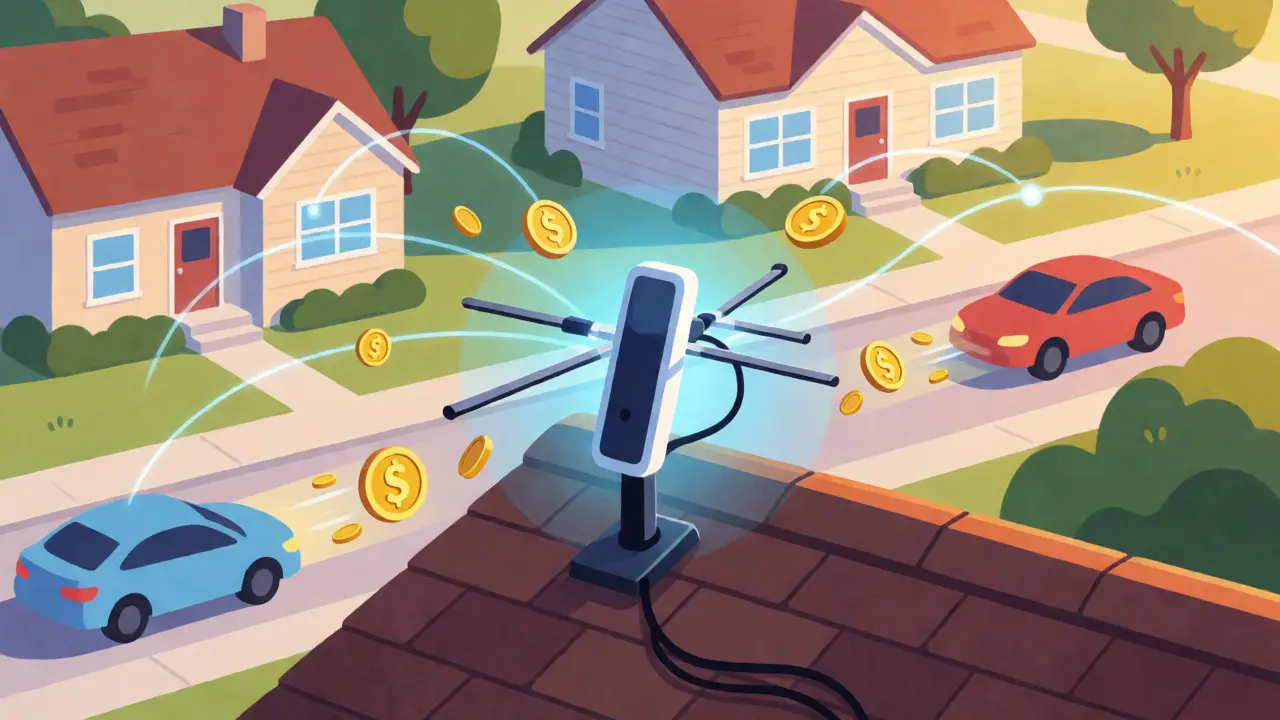
Imagine running a small antenna on your roof. It’s not just collecting data; it’s earning you money every time a neighbor sends a text or checks the weather. That’s the core promise of DePIN (Decentralized Physical Infrastructure Networks)-a sector that blends hardware deployment with blockchain incentives to build real-world services. But here is the catch: many projects in this space are failing because their token economics don’t align with reality. They rely on hype rather than actual service usage.
If you’ve looked at the charts lately, you might have noticed DePIN tokens behaving differently than the rest of the market. While meme coins swing wildly based on tweets, established DePIN networks like Helium and Filecoin show more stability. Why? Because they generate actual revenue from non-crypto customers. This article breaks down how DePIN token economics work, why supply distribution matters more than price action, and how to spot a project that will survive the next market cycle.
The Core Difference: Revenue vs. Speculation
Most crypto projects live and die by speculation. You buy a token hoping someone else pays more for it later. DePIN flips this model. In a healthy DePIN network, the token has two distinct roles: it acts as a reward for providers (people who run hardware) and as a payment method for users (companies or individuals buying the service).
Consider the difference between a meme coin and a utility token. A meme coin has no underlying cash flow. Its value is purely psychological. In contrast, a DePIN token derives value from the demand for its physical service. For example, if an IoT company needs to track shipping containers globally, they pay in HNT (Helium’s native token) to use the network. If demand for tracking rises, demand for HNT rises. This creates a direct link between business success and token value.
This distinction is critical for investors. When evaluating a DePIN project, ask one question: "Where does the money come from?" If the answer is "new investors," you’re looking at a Ponzi-like structure. If the answer is "enterprise contracts and user fees," you’re looking at sustainable economics. According to recent industry reports, successful DePIN projects exhibit 30-40% less volatility than average crypto assets precisely because this revenue floor exists.
Anatomy of a Healthy DePIN Token Model
Tokenomics isn’t just about how many tokens exist. It’s about how they move through the system. A robust DePIN economic model typically consists of four pillars: Supply Distribution, Incentive Structures, Governance, and Utility.
Supply Distribution sets the stage. Most successful projects allocate roughly 40-50% of the total supply to network participants (miners/providers). Another 15-20% goes to the team, usually locked up for three to four years to prevent early dumping. The remaining portion covers treasury reserves and community incentives. If a project gives too much to insiders, retail investors suffer. If it gives too little to providers, the network can’t grow.
Incentive Structures must reward specific behaviors. Staking might offer 5-20% annual yield, but only if you keep your node online. Providers earn rewards for uptime and data accuracy, not just for showing up. Some networks implement dynamic rewards that decrease as the network matures, preventing over-inflation. For instance, Helium initially paid high rewards to bootstrap coverage, then gradually reduced emissions as enterprise adoption grew.
Governance ensures the network adapts. Who decides if the reward rate changes? In many DePINs, token holders vote on upgrades. However, simple voting often leads to plutocracy (rule by the rich). Advanced projects use quadratic voting or delegated proof-of-stake to ensure smaller stakeholders still have a voice. Without fair governance, centralized entities can manipulate token issuance to their benefit.
Utility must extend beyond speculation. Tokens need concrete use cases: paying for data credits, staking to become a validator, or accessing premium features. If a token is only used for trading, its velocity is high, and its holding pressure is low. Strong utility locks tokens in the ecosystem, reducing circulating supply and supporting price stability.
The Buy-and-Burn Mechanism: Creating Scarcity
One of the most effective tools in DePIN tokenomics is the buy-and-burn mechanism. Here’s how it works: when users pay for services, a portion of that revenue is used to buy back tokens from the open market and destroy them permanently. This reduces the total supply, creating deflationary pressure.
Take IoTeX as an example. Since implementing this mechanism in early 2023, the project has allocated 30% of service revenue to buybacks. The result? A steady reduction in IOTX supply by approximately 2.1% annually. Compare this to inflationary models where new tokens are constantly minted to pay miners. In those systems, even if demand grows, the price can stagnate if supply grows faster. Buy-and-burn aligns the interests of users and token holders: every dollar spent on the network directly benefits token owners.
However, this mechanism requires transparency. Users need to verify burns on-chain. Projects that hide their burn rates or manipulate accounting lose trust quickly. Always check if the burn transactions are publicly verifiable before investing.
Real-World Performance: Winners and Losers
Not all DePIN projects succeed. The graveyard is full of networks that launched with great hardware but poor economics. Let’s look at two contrasting scenarios.
Case Study: Helium. Launched in 2013, Helium pioneered the concept. By mid-2024, it had generated $28.3 million in service revenue from enterprise IoT customers. Its transition to the Solana blockchain increased transaction throughput significantly, making micro-payments feasible. Despite early criticism about low earnings for hotspot owners, the shift toward enterprise-grade connectivity stabilized the network. Long-term operators report modest but consistent returns, proving that slow, steady growth beats speculative spikes.
Case Study: Render Network. Render focuses on distributed GPU computing. Early adopters invested heavily in hardware, expecting massive returns. However, inconsistent demand meant some nodes earned only $18.50 monthly after electricity costs. The problem wasn’t the technology; it was the mismatch between hardware capacity and actual compute demand. Without guaranteed contracts, providers faced unpredictable income, leading to churn.
| Feature | Speculative Model | Revenue-Driven Model |
|---|---|---|
| Primary Value Driver | Market Sentiment | Service Demand |
| Volatility | High (>80% swings) | Moderate (30-40% lower) |
| Token Sink | Limited | Buy-and-Burn / Staking |
| Customer Base | Crypto Traders | Enterprises & Consumers |
| Sustainability | Low | High |
Pitfalls to Avoid in DePIN Investing
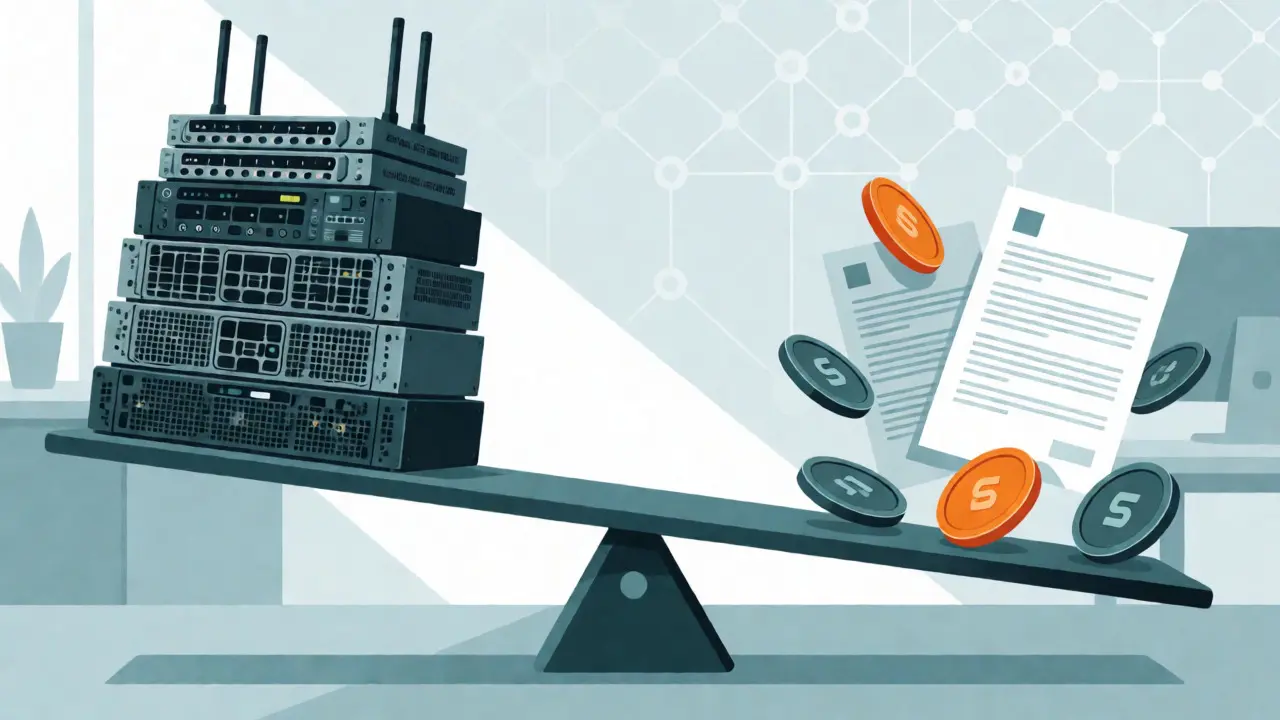
Before you deploy capital, watch out for these red flags. First, beware of "hardware hype." Just because a project sells expensive devices doesn’t mean the network is valuable. If the hardware cost exceeds potential earnings within two years, the model is flawed. Second, check regulatory compliance. With 78% of jurisdictions lacking specific DePIN regulations, legal risks remain high. Projects operating in gray areas face sudden shutdowns or tax liabilities.
Third, scrutinize the roadmap. Many projects promise enterprise partnerships but fail to deliver signed contracts. Look for verifiable on-chain payments, not press releases. Delphi Digital warned recently that several projects overstated revenue claims. Always cross-reference claimed earnings with blockchain explorers.
Finally, consider the competition. Centralized alternatives like AWS or Verizon still hold performance advantages in latency and reliability. DePIN wins on cost and decentralization, not speed. If a project claims to beat centralized solutions in every metric, be skeptical. Success lies in niche markets where decentralization offers genuine value, such as rural coverage or censorship-resistant storage.
The Future: Consolidation and Institutional Adoption
The DePIN market is projected to reach $22.3 billion by 2027, growing at a 47.2% CAGR. But this growth won’t be evenly distributed. Messari predicts that 70% of current DePIN projects will fail by 2026. Only those with transparent tokenomics and real revenue will survive.
Institutional interest is rising. Thirty-eight Fortune 500 companies now use DePIN services, primarily for IoT connectivity. As traditional firms integrate blockchain rails, they demand auditable financials and stable token values. This forces DePIN projects to mature, moving away from wild speculation toward disciplined economic management.
For investors, the strategy should focus on quality over quantity. Diversify across different sectors-storage, compute, wireless-but prioritize projects with proven enterprise traction. Keep an eye on governance proposals; active communities signal health. And remember, patience is key. DePIN is a marathon, not a sprint. The winners will be those who build lasting infrastructure, not just temporary hype cycles.
What makes DePIN different from traditional crypto mining?
Traditional mining solves arbitrary mathematical puzzles to secure a blockchain. DePIN mining involves providing real-world services, such as wireless coverage, storage, or computing power. Rewards are tied to the actual usage of these services by external customers, creating a direct link between token value and business revenue.
How do buy-and-burn mechanisms affect token price?
Buy-and-burn uses network revenue to purchase tokens from the market and destroy them. This reduces the total circulating supply. If demand remains constant or grows while supply shrinks, basic economic principles suggest upward price pressure. It also signals confidence, as the project is returning value to token holders rather than diluting them.
Is DePIN profitable for individual hardware providers?
It depends on the network maturity and location. Established networks like Helium offer modest but stable returns, often covering electricity costs with slight profit. Newer networks may offer higher rewards but carry greater risk due to uncertain demand. Providers must calculate ROI carefully, factoring in hardware depreciation and energy costs.
What are the biggest risks in DePIN token economics?
Key risks include regulatory uncertainty, lack of real revenue (relying solely on token sales), and centralization of hardware ownership. Additionally, technical failures or security breaches can erode trust. Investors should avoid projects with opaque financial reporting or excessive insider allocations.
Can DePIN compete with centralized cloud providers?
In specific niches, yes. DePIN often offers lower costs for storage and bandwidth due to utilizing underused consumer hardware. However, centralized providers currently lead in latency, support, and enterprise SLAs. DePIN competes best in areas requiring global coverage, censorship resistance, or cost efficiency rather than raw speed.