


You’ve probably heard the hype. Decentralized Finance (DeFi) promises to cut out the middlemen, give you higher yields, and let you bank from anywhere with just an internet connection. But is it actually better than walking into your local branch or using a trusted mobile banking app? It’s not a simple yes or no. The choice depends entirely on what you value more: control and potential returns, or safety and simplicity.
As of mid-2025, DeFi has grown into a $247 billion ecosystem, yet it still represents less than 5% of the assets held by traditional banks. This gap tells a story. Traditional banking offers centuries of stability and legal protection, while DeFi offers speed, transparency, and financial inclusion for the unbanked. Let’s break down exactly how they stack up against each other so you can decide which system serves your needs best.
The Core Difference: Who Holds the Keys?
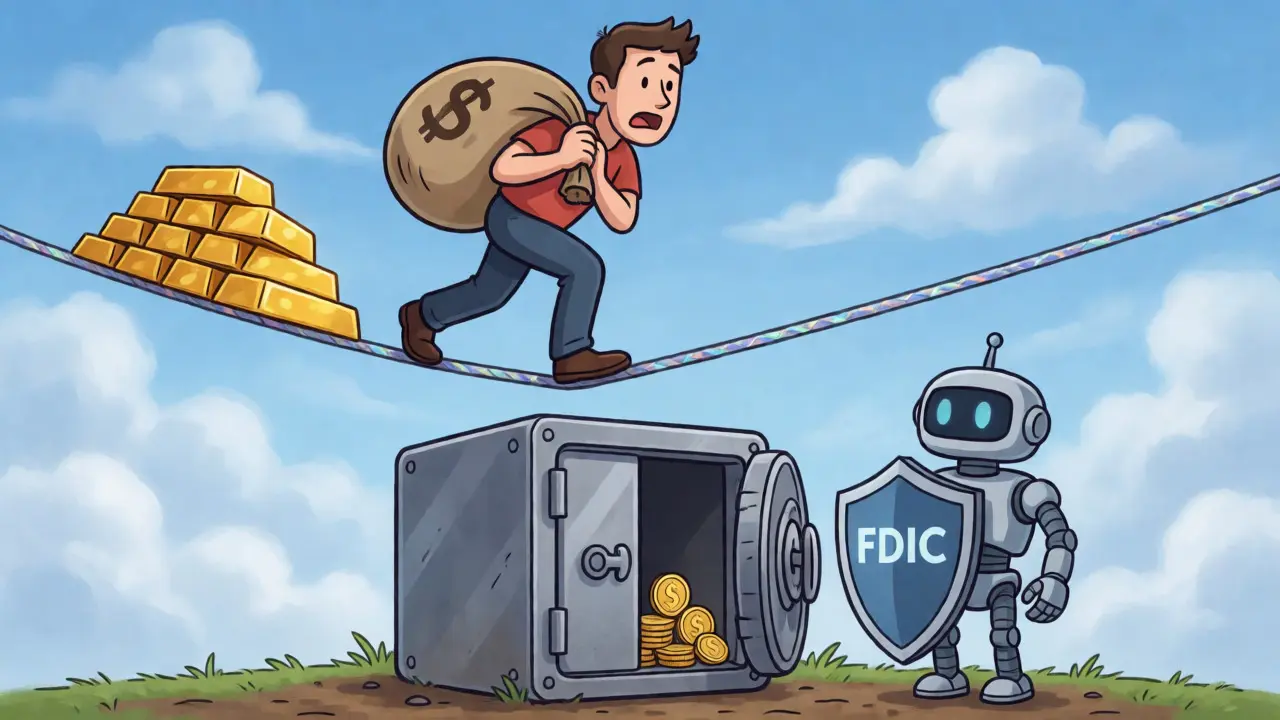
The biggest distinction isn’t about interest rates or fees-it’s about custody. In Traditional Banking, when you deposit money, the bank holds it. You trust them to keep it safe, lend it out, and return it when you ask. If the bank fails, government insurance like the FDIC in the US covers up to $250,000 per depositor. This is a massive safety net built over decades of regulation.
In contrast, Decentralized Finance operates on a self-custodial model. You hold your own private keys in a digital wallet like MetaMask or Trust Wallet. No one can freeze your account or deny you access because there is no central authority. However, this freedom comes with responsibility. If you lose your recovery phrase, your money is gone forever. There is no customer service line to call, and no insurance policy to bail you out if you make a mistake.
Accessibility and Onboarding Speed
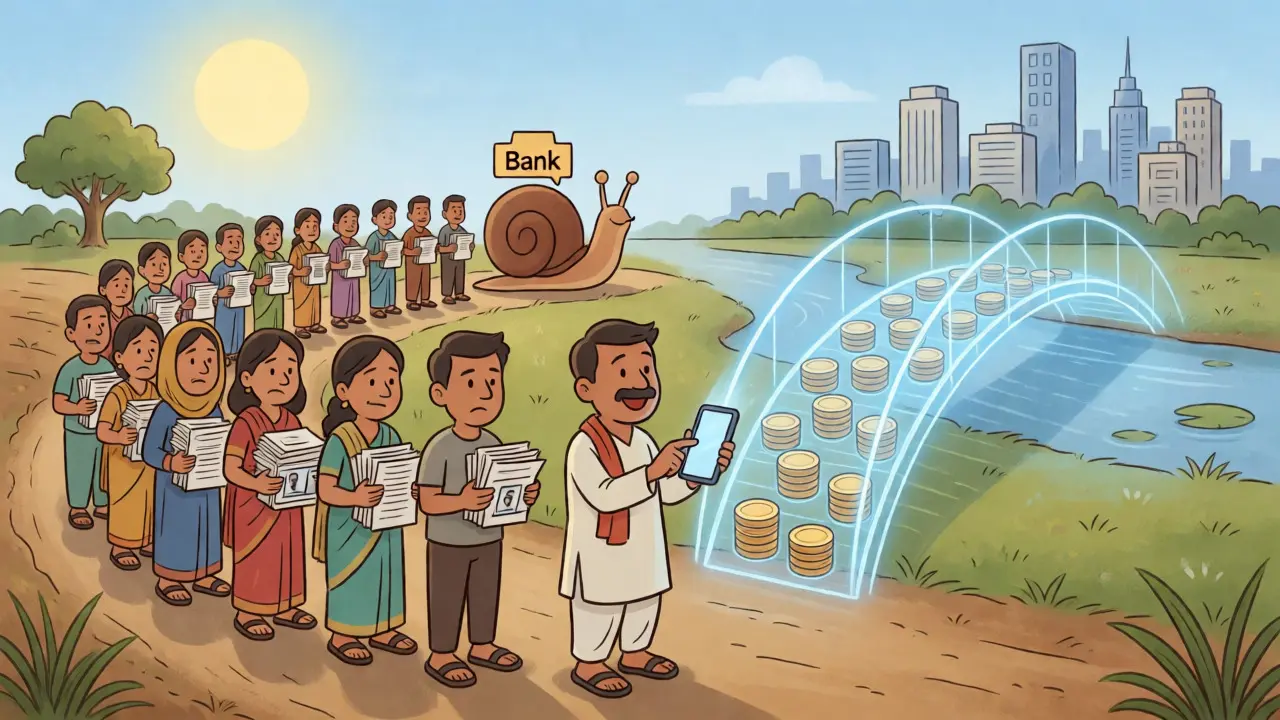
Have you ever tried opening a bank account as a foreigner or someone without a fixed address? It can be a nightmare of paperwork. Traditional banks require government-issued IDs, proof of address, and often minimum deposits averaging $250 in the US. This excludes billions of people globally who are unbanked or underbanked due to lack of documentation or geographic isolation.
DeFi removes these barriers. All you need is a smartphone and an internet connection. According to World Bank data, this opens financial services to roughly 5.4 billion people who previously had limited access. For example, a farmer in India might struggle to provide land documents for a local bank loan but can instantly lend stablecoins on Aave to earn yield. The onboarding process takes minutes, not days. You don’t need credit checks or approval committees. Just connect your wallet, and you’re in.
Transaction Speed and Cross-Border Efficiency
If you’ve ever sent money internationally via wire transfer, you know the pain. SWIFT transfers typically take 3 to 5 business days to settle, and they come with hefty fees ranging from $25 to $30 per transaction, plus hidden exchange rate markups. Traditional banking infrastructure, while reliable, is slow because it relies on legacy systems that communicate through intermediaries across different time zones and regulatory jurisdictions.
DeFi transactions settle in seconds or minutes. On networks like Solana, finality happens in under a second; on Ethereum Layer 2 solutions, it’s usually under 15 seconds. More importantly, DeFi is borderless. Sending $100 from New York to Nairobi costs the same network fee as sending it to London. There are no correspondent banks, no holidays slowing things down, and no arbitrary cutoff times. For users who frequently send money abroad, this efficiency alone can justify switching to DeFi protocols.
| Feature | Traditional Banking | DeFi |
|---|---|---|
| Custody Model | Custodial (Bank holds funds) | Self-Custodial (User holds keys) |
| Access Requirements | KYC, ID, Proof of Address | Internet + Digital Wallet |
| Average Savings Yield | ~0.45% APY | Variable (e.g., 8.7% on Aave) |
| Cross-Border Transfer Time | 3-5 Business Days | Seconds to Minutes |
| Fees Structure | Fixed monthly/wire fees ($12-$30) | Network Gas Fees ($0.15-$3.50) |
| Insurance/Protection | FDIC/RBI Insurance | None (Code is Law) |
Yields and Interest Rates: Why the Gap Exists
One of the main reasons people explore DeFi is the yield. Traditional savings accounts currently average around 0.45% APY in the US. Even high-yield online banks rarely exceed 5%. In the DeFi world, lending platforms like Aave have offered yields above 8% for stablecoins like USDC. Why the difference?
Traditional banks pay low interest because they operate with high overheads-branches, staff, compliance teams-and they must maintain strict capital reserves. They also profit heavily from the spread between what they pay you and what they charge borrowers. DeFi protocols automate this matching directly between lenders and borrowers using smart contracts. With fewer intermediaries taking a cut, more of the borrower’s interest payment goes directly to the lender. However, these rates are variable and market-driven. They can spike during high demand or drop significantly when liquidity is abundant, unlike the relatively stable rates set by central banks.
Risk Factors: Smart Contracts vs. Institutional Failure
Security is where many people hesitate. Traditional banking feels safe because it’s backed by governments. If a bank collapses, regulators step in. While bank runs happen, they are rare in developed economies. The primary risks here are inflation eroding purchasing power and bureaucratic errors.
DeFi introduces technical risk. Since everything runs on code, bugs in smart contracts can lead to hacks. The Poly Network hack in 2021 resulted in a $610 million loss, though most funds were eventually returned. Today, audits are standard, but no code is perfect. Additionally, users face "impermanent loss" when providing liquidity, and volatility in crypto assets can wipe out gains quickly. Unlike a bank fraud claim, which is often resolved within days, recovering funds from a DeFi exploit can be complex and uncertain. A recent analysis showed that 97% of DeFi fraud victims receive no restitution, compared to nearly full resolution for traditional banking fraud cases.
Privacy and Regulatory Compliance
Traditional banking is synonymous with KYC (Know Your Customer) and AML (Anti-Money Laundering) laws. Every transaction is tied to your identity. Banks report large transactions to tax authorities, and your financial history is visible to regulators. This transparency helps prevent crime but reduces privacy.
DeFi offers pseudonymity. Transactions are recorded on a public blockchain, but they are linked to wallet addresses, not names. Unless you voluntarily link your identity or use a regulated on-ramp, your activity remains anonymous to outsiders. This appeals to those who value privacy, but it also raises concerns for regulators regarding tax evasion and illicit flows. As regulations tighten, some DeFi front-ends now require KYC, blurring this line further.
Which Should You Choose?
There is no single winner. For most people, a hybrid approach works best. Keep your emergency fund and daily spending money in a traditional bank for ease of use, bill payments, and FDIC insurance. Use DeFi for specific goals: earning higher yields on idle cash, accessing credit without collateral checks, or making fast international transfers.
If you are tech-savvy and comfortable managing private keys, DeFi offers powerful tools that traditional banks haven’t matched yet. If you prioritize peace of mind and hate complexity, stick with traditional institutions. The good news is that the two worlds are converging. Major banks like JPMorgan are testing blockchain rails, and DeFi is becoming more user-friendly with easier wallets and lower gas fees. You don’t have to choose one forever-you can start small and scale up as you learn.
Is DeFi safer than traditional banking?
It depends on how you define safety. Traditional banking is safer against operational failures and theft due to insurance and regulation. DeFi is safer against censorship and seizure because no central authority controls your funds, but it carries higher risks of smart contract bugs and user error.
Do I need to pay taxes on DeFi earnings?
Yes, in most jurisdictions, including the US and UK, DeFi rewards, interest, and trading profits are taxable events. Because DeFi transactions are public on the blockchain, tax authorities can track them, especially if you use centralized exchanges to convert crypto to fiat.
Can banks shut down my DeFi account?
No, because DeFi protocols run on decentralized blockchains. No single entity controls the network. However, if you use a centralized interface or exchange to interact with DeFi, that company could restrict your access.
What happens if I lose my DeFi wallet password?
If you lose your seed phrase (recovery phrase), you permanently lose access to your funds. Unlike a bank password, there is no "forgot password" feature. This is why secure storage of your seed phrase is critical in DeFi.
Are DeFi fees always cheaper than bank fees?
Not always. During periods of high network congestion, Ethereum gas fees can spike to over $50 per transaction, making small transfers expensive. However, on Layer 2 networks or alternative chains like Polygon or Solana, fees are often cents, which is much cheaper than wire transfer fees.