



Buying Bitcoin in Argentina or Brazil used to be a headache. High inflation, strict capital controls, and banking restrictions made getting into crypto feel like a mission impossible. That’s where C-Patex is an Argentina-based centralized cryptocurrency exchange founded in November 2014 that targets Latin American markets with localized fiat conversion options. Owned by the EHOLD Group, it has been around since 2014, positioning itself as a gateway for regional users. But does standing the test of time mean it’s actually good? Or is it just surviving?
I’ve dug through the latest data from late 2025 and early 2026 to see if C-Patex still holds up against giants like Binance or regional players like Mercado Bitcoin. The short answer? It’s a mixed bag. It’s decent for absolute beginners who need education and local currency support, but it falls short on liquidity, speed, and trust scores compared to the rest of the industry.
The Basics: What Is C-Patex?
C-Patex isn’t your typical global exchange. It’s built specifically for the Latin American context. If you’re sitting in Buenos Aires or São Paulo and want to trade crypto using Argentine Pesos (ARS) or Brazilian Reals (BRL), this platform speaks your language-literally and financially.
Here is what defines the platform today:
- Ownership: Part of the EHOLD Group and the broader Patex Ecosystem.
- Infrastructure: Operates on the Patex Network, which is a Layer 2 blockchain infrastructure based on an Optimism fork designed to address scalability and transaction costs. This means faster, cheaper transactions than standard Ethereum.
- Target Audience: Primarily retail investors in Argentina and Brazil.
- Availability: Restricted for US-based investors due to regulatory constraints.
The idea behind the Patex Network is solid. By using a Layer 2 solution, they aim to solve the slow speeds and high gas fees associated with Layer 1 networks like Ethereum. However, technology alone doesn’t make an exchange great. You also need liquidity, security, and user trust. Let’s look at those next.
Trading Experience: Coins, Fees, and Limits
If you are looking for hundreds of altcoins, C-Patex might disappoint you. As of late 2025, the platform lists only about 37 cryptocurrencies. You’ll find the big names like Bitcoin (BTC), Ethereum (ETH), Solana (SOL), XRP, Cardano (ADA), and stablecoins like USDC and USDT. They also have their native token, PATEX.
Compare that to Binance, which offers over 350 coins, or even Mercado Bitcoin with 50+. The selection here is basic. It covers the essentials, but there’s no room for niche trading or hunting for new gems directly on the exchange.
Fee Structure
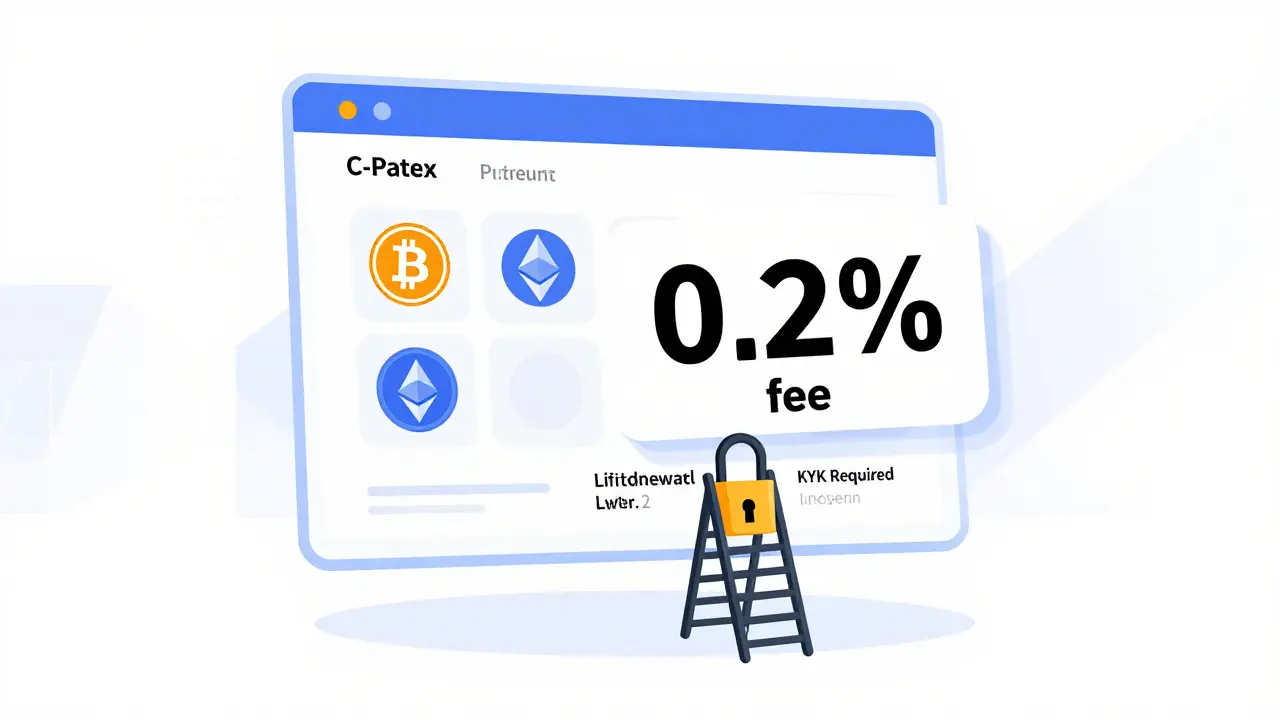
The fee model is simple: a flat 0.2% for both makers and takers. There are no tiers. Whether you trade $10 or $10,000, you pay 0.2%.
| Exchange | Maker/Taker Fee | Crypto Assets | Tiered Discounts? |
|---|---|---|---|
| C-Patex | 0.2% | ~37 | No |
| Binance | 0.10% - 0.02% | 350+ | Yes (Volume & BNB) |
| Mercado Bitcoin | 0.4% | 50+ | No |
| Bitso | 0.5% (starting) | 30+ | Yes |
Is 0.2% expensive? Not really. It’s competitive. But because there are no volume discounts, active traders will eventually find better rates elsewhere. For casual buyers, it’s fair.
Withdrawal Limits
This is where things get restrictive. You cannot withdraw anything without completing KYC (Know Your Customer) verification. Here is the breakdown:
- Unverified: $0 daily withdrawal limit.
- Basic KYC: Up to $500 USD daily.
- KYC + 2FA: Up to $100,000 USD daily.
If you plan to move large amounts regularly, you must set up Two-Factor Authentication (2FA). This is a good security practice anyway, so it’s not a bad requirement.
Safety, Regulation, and Trust Issues
This is the most critical section. When you put money on an exchange, you need to know two things: Are they regulated? And do users trust them?
Regulatory Status
The information here is murky. Some sources claim C-Patex is regulated by the UK’s Financial Conduct Authority (FCA), but independent checks and other reviews suggest this is unverified or incorrect. More likely, C-Patex operates without tier-1 regulation in major jurisdictions. In Argentina, the Financial Information Unit (UIF) has not clearly classified it in its official registry. In Brazil, the Central Bank has not authorized it for BRL transactions despite the platform claiming support.
This lack of clear regulation means fewer protections for you if something goes wrong. You don’t have the same safety net as you would with a heavily regulated entity like Coinbase in the US or Revolut in Europe.
User Reviews and Reputation
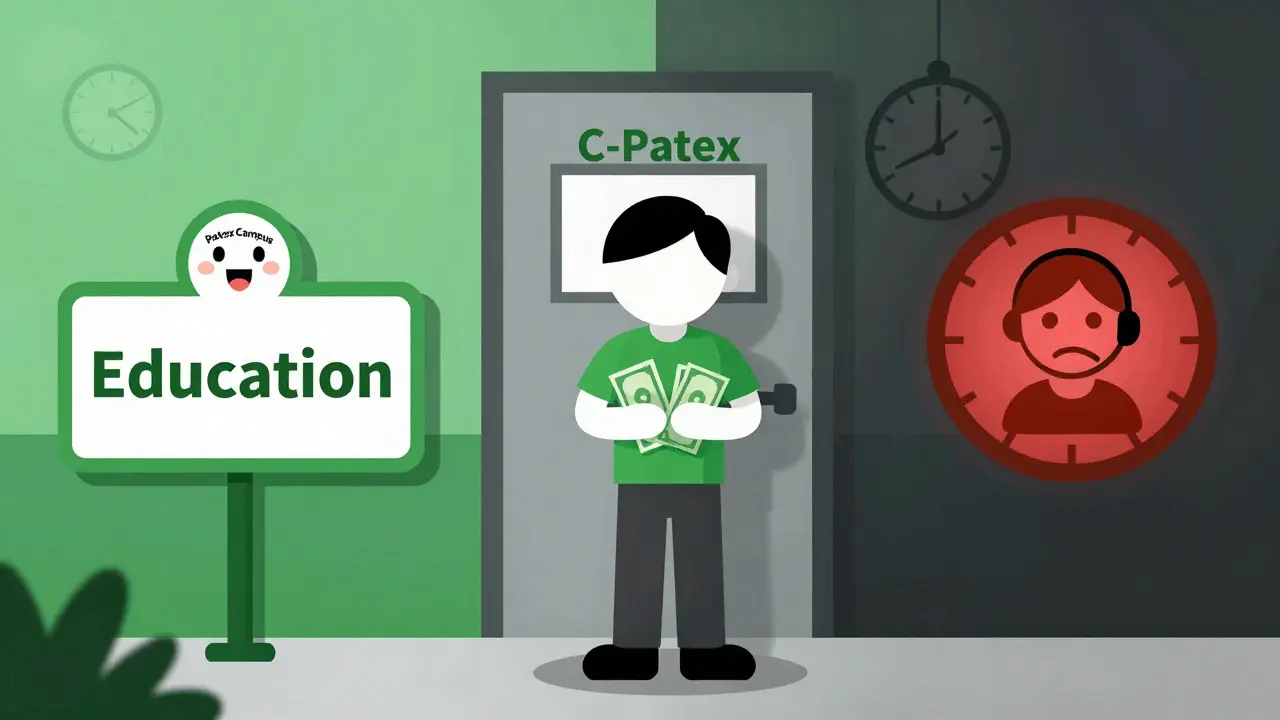
The numbers are concerning. On Trustpilot, C-Patex holds a rating of roughly 1.9 out of 5 stars based on recent reviews. About 86% of these reviews are one-star ratings. Common complaints include:
- Withdrawal Delays: Users report waiting 7 business days for withdrawals that were promised within 24-48 hours.
- Poor Support: Email support responses can take 11 days. There is no live chat or phone support.
- Account Issues: Difficulties navigating the site and resolving account freezes.
While some users praise the educational resources, the operational friction seems to outweigh the benefits for many. A 1.9 rating is a red flag that demands caution.
Educational Resources: The Bright Spot
If C-Patex has one genuine advantage, it’s the Patex Campus, which is an educational initiative offering structured learning paths for cryptocurrency fundamentals tailored for beginners. For someone in Latin America who has never touched crypto, this is valuable. They offer tutorials in Spanish and Portuguese, explaining basics like wallets, private keys, and market trends.
They also provide a demo trading feature using virtual USDT. This lets you practice buying and selling without risking real money. It’s not as advanced as the paper-trading tools on larger platforms, but it’s enough for a novice to get comfortable with the interface.
Who Should Use C-Patex? (And Who Should Avoid It)
Based on the data, C-Patex is not for everyone. Here is how to decide if it fits your needs.
Good For:
- Absolute Beginners in LatAm: If you are in Argentina or Brazil, speak Spanish or Portuguese, and need help understanding what crypto is, the Patex Campus is a helpful starting point.
- Small Investors: If you only plan to invest small amounts (under $500/day) and want to buy BTC or ETH with local fiat currency easily.
- Ecosystem Participants: If you believe in the long-term potential of the Patex Network and want to hold the PATEX token.
Bad For:
- Active Traders: Low liquidity means slippage. You might not get the price you expect when buying or selling larger amounts.
- Advanced Users: No derivatives, no futures, limited coin selection, and poor charting tools.
- US Residents: The platform restricts access for US investors.
- Risk-Averse Investors: Given the low Trustpilot score and regulatory ambiguity, this is not a safe harbor for large savings.
Alternatives to Consider
If C-Patex doesn’t fit your needs, consider these alternatives depending on your location and goals:
- Binance: Best for global reach, lowest fees, and highest liquidity. Available in many LatAm countries, though regulatory status varies.
- Mercado Bitcoin: The leading exchange in Brazil. Better regulation and higher trust locally than C-Patex, though fees are slightly higher (0.4%).
- Bitso: Strong presence in Mexico and expanding. Good balance of ease of use and security.
- Coinbase: Ideal for US residents or those prioritizing maximum regulatory compliance and security, despite higher fees.
Final Verdict
C-Patex fills a specific niche: helping beginners in Argentina and Brazil enter the crypto world with local language support and fiat on-ramps. Its integration with the Patex Network Layer 2 solution is technically interesting. However, the platform suffers from significant drawbacks: extremely low liquidity, poor customer support response times, ambiguous regulatory status, and very low user satisfaction scores on review sites.
If you are a beginner in LatAm, you can use it cautiously for small amounts while leveraging its educational content. But if you are serious about trading, or if you value fast support and deep liquidity, you should look at more established competitors like Binance or Mercado Bitcoin. Never invest more than you can afford to lose, especially on platforms with lower trust ratings.
Is C-Patex regulated?
The regulatory status of C-Patex is unclear. While some unverified claims suggest FCA regulation, authoritative sources indicate it operates without tier-1 regulation in major jurisdictions. It is not clearly listed in Argentina's UIF registry nor authorized by Brazil's Central Bank for BRL transactions. Users should exercise caution due to this lack of transparent oversight.
What are the trading fees on C-Patex?
C-Patex charges a flat fee of 0.2% for both maker and taker orders. Unlike larger exchanges like Binance, there are no tiered discounts based on trading volume or token holdings. This makes it predictable but potentially more expensive for high-volume traders.
Can I use C-Patex in the United States?
No. C-Patex explicitly restricts access for US-based investors due to regulatory constraints. It is primarily designed for users in Latin America, specifically Argentina and Brazil.
How secure is C-Patex?
C-Patex uses cold storage for assets, wallet whitelisting, device tracking, and 2FA authentication. However, its low Trustpilot rating (1.9/5) highlights issues with withdrawal delays and support responsiveness, which impacts perceived security and reliability. Always enable 2FA for maximum account protection.
What cryptocurrencies can I trade on C-Patex?
As of late 2025, C-Patex supports approximately 37 cryptocurrencies. Major assets include Bitcoin (BTC), Ethereum (ETH), Solana (SOL), XRP, Cardano (ADA), USDC, BNB, and various USDT variants. The selection is limited compared to global exchanges.
Is C-Patex good for beginners?
Yes, for beginners in Latin America. The Patex Campus offers educational resources in Spanish and Portuguese, and the demo trading feature allows practice without risk. However, the poor customer support and withdrawal delays can frustrate new users when issues arise.