



Can you actually use Bitcoin to buy groceries or pay for a service in Tehran right now? The short answer is no. If you are holding crypto and trying to spend it directly at a local shop, you will hit a wall. But the longer answer is messy, complicated, and constantly shifting. Iran sits in a bizarre regulatory gray zone where mining is legal, trading is heavily monitored, but direct payments are effectively banned.
For years, Iranians turned to cryptocurrency as a lifeline against economic sanctions and a collapsing national currency. Today, the government has tightened its grip significantly. As of early 2025, the landscape changed from "wild west" to "strictly controlled." Understanding this shift is critical if you are doing business with Iranian partners, living there, or simply watching the global crypto market.
The Current Legal Status: Controlled, Not Banned
To understand why payments are restricted, you have to look at who holds the keys. In January 2025, President Masoud Pezeshkian issued a directive that placed all power in the hands of the Central Bank of Iran (CBI). This wasn't just a minor policy tweak; it was a complete overhaul. The CBI became the sole authority regulating the entire cryptocurrency market.
Here is what that means for you:
- No Direct Payments: You cannot use crypto as a direct method of payment for goods and services within the country. Merchants are not allowed to accept Bitcoin or Ethereum directly.
- Licensed Platforms Only: All cryptocurrency platforms must obtain specific licenses. They need direct payment gateways that operate within approved parameters.
- Total Transparency: Brokers must conduct Rial transactions through designated accounts approved by the central bank. There is no anonymity here.
The CBI now has unrestricted access to all data, statistics, and records related to anyone involved in crypto activities. Whether you are an individual trader, a legal entity, or a business, you are under surveillance. The goal isn't necessarily to stop people from owning crypto, but to ensure the state knows exactly where every coin is moving.
From Blockade to Surveillance: The 2024-2025 Shift
The path to today's rules wasn't straight. It was volatile. On December 27, 2024, the Central Bank implemented a program that effectively blocked all Iranian cryptocurrency-to-Rial and Rial-to-cryptocurrency payments via internet websites inside Iran. For weeks, it felt like the door was slammed shut.
Then, in January 2025, the door cracked open again-but only on the government's terms. The central bank began unblocking exchanges, but with a massive catch: these exchanges had to use the government's own API system. This provided authorities with full access to user data. We moved from a complete prohibition to a model of controlled permission with total surveillance.
This hybrid strategy serves two masters. On one hand, the state wants to curb speculative activity that hurts the Rial's stability. On the other, it recognizes crypto as a tool for sanctions evasion. By forcing all transactions through licensed, monitored channels, they can track capital flight while still allowing some liquidity in the market.
Why Mining Is Legal (But Hard)
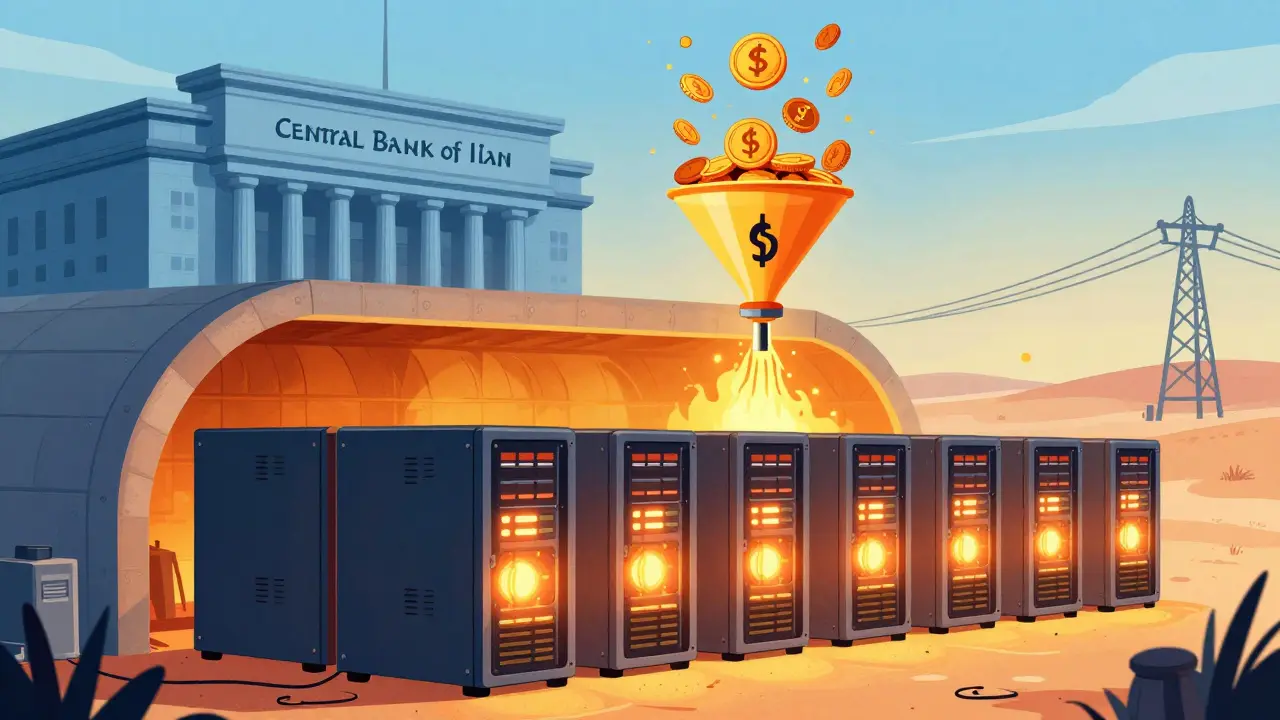
If payments are off-limits, why does Iran remain a major player in the crypto world? The answer is energy. Cryptocurrency mining remains legal in Iran under strict government regulations. The country legalized mining in 2019, seeing potential revenue generation amidst heavy international sanctions.
However, "legal" doesn't mean easy. Miners must:
- Obtain licenses from the Ministry of Industry, Mine and Trade.
- Adhere to government-set electricity tariffs specifically for mining operations.
- Use only approved hardware.
- Sell their digital assets directly to the Central Bank of Iran.
Iran's energy-intensive mining operations account for approximately 4.5% of global cryptocurrency mining activity. This strains the electrical grid significantly. In December 2024, rolling power outages across multiple regions were blamed on unauthorized Bitcoin mining. Authorities discovered large-scale illegal mining operations and called for judicial action. Licensed miners face high energy tariffs that have made mining financially unsustainable for many, pushing a significant portion of the industry underground.
The Advertising Ban and Public Awareness
In February 2025, the Iranian government took another drastic step: a comprehensive nationwide ban on cryptocurrency advertising. This covers both online and physical spaces. It is one of the most restrictive advertising policies globally.
You won't see billboards promoting crypto exchanges. You won't find sponsored posts on social media encouraging investment. The government's intent is clear: limit public exposure to cryptocurrency markets while maintaining state control over digital asset adoption. This creates a paradox where citizens are encouraged to mine (for state revenue) but discouraged from engaging with the broader market narrative.
Exchange Operations and the Black Market
Despite the restrictions, demand remains high. The Rial continues to depreciate due to economic sanctions and inflation. Between January and July 2025, Iran recorded approximately $3.7 billion in total cryptocurrency flows, an 11% decline from the same period in 2024. While down, that is still a massive volume of money.
Local exchanges like Nobitex operate under stringent regulations. The Central Bank prohibits the use of foreign-mined cryptocurrencies for domestic transactions to reinforce control. Yet, many Iranians utilize Virtual Private Networks (VPNs) to access foreign exchanges, circumventing local restrictions and avoiding government scrutiny.
Multi-agency oversight through Anti-Money Laundering and Counter-Terrorism Financing (AML/CTF) protocols strengthens governmental control. Know Your Customer (KYC) checks are rigorous. However, the Rial's instability drives users to unofficial markets to hedge against currency collapse. This creates a dual economy: a regulated, visible layer and a hidden, peer-to-peer layer.
International Pressure and Sanctions Evasion
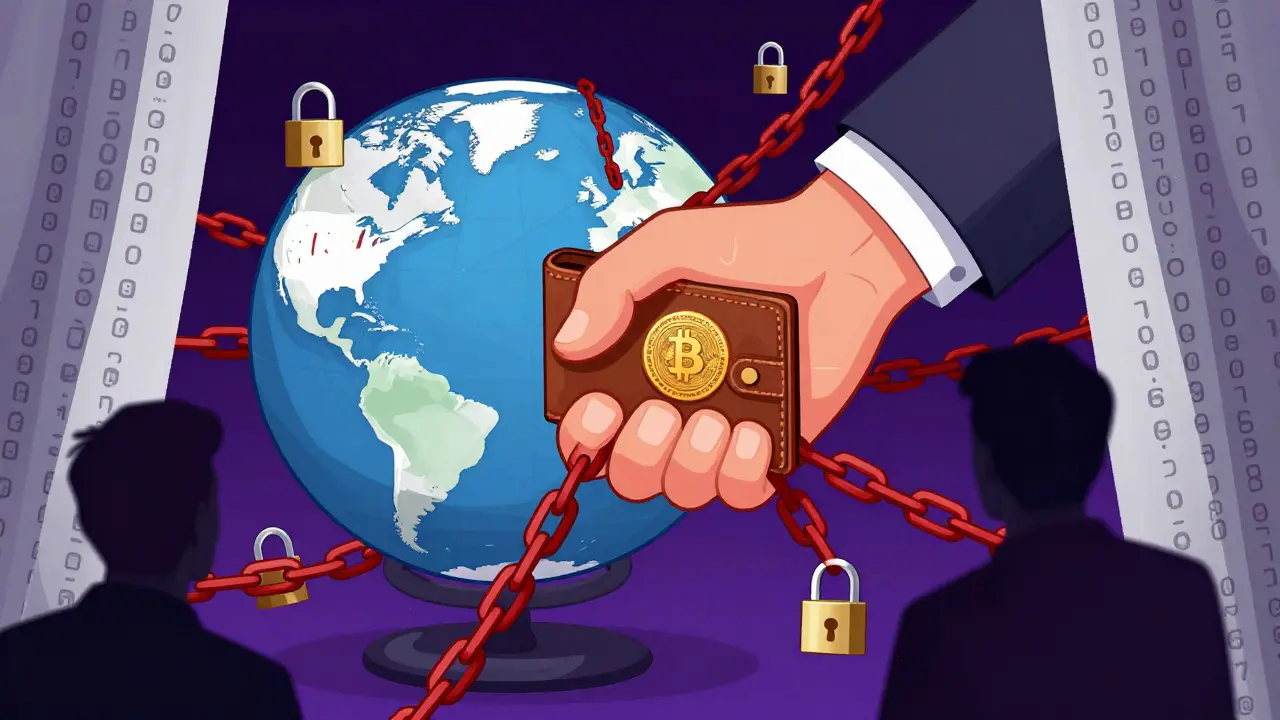
Crypto in Iran isn't just a domestic issue; it's a geopolitical flashpoint. International sanctions severely obstruct Iran's access to the traditional financial system. Since 2017, Iran has grown reliant on Bitcoin and other digital currencies as alternative methods to bypass these sanctions.
This reliance draws heat. On July 2, 2025, Tether carried out its largest-ever freeze of Iranian-linked funds. They froze 42 cryptocurrency addresses, with more than half having substantial exposure to Nobitex. The involvement of the Islamic Revolutionary Guard Corps (IRGC) in cryptocurrency activities has raised serious international concerns. IRGC-linked wallets are specifically targeted by international compliance actions.
For foreign businesses, this is a red flag. Engaging in crypto transactions with Iranian entities carries immense risk. Compliance teams worldwide are scrutinizing any wallet or address linked to Iranian infrastructure.
The Digital Rial: The State's Alternative
If the government hates decentralized crypto, why not just embrace digital money? They are. Iran is developing a Central Bank Digital Currency (CBDC) called "Rial Currency." This is the electronic version of common banknotes, functioning as electronic cash.
Unlike Bitcoin, Rial Currency cannot be mined. Its supply is regulated exclusively by the central bank. A pilot program on Kish Island aims to reduce dollar dependency and provide a modern payment method without the volatility or privacy features of decentralized crypto. This initiative represents part of Iran's strategy to maintain monetary control while embracing digital payment technologies.
| Activity | Legal Status | Key Restrictions |
|---|---|---|
| Cryptocurrency Mining | Legal | Requires license, high electricity tariffs, must sell to CBI |
| Crypto Trading (Exchanges) | Restricted/Legal | Must use govt-approved APIs, full data transparency required |
| Direct Payments (Goods/Services) | Effectively Prohibited | No merchant acceptance, no P2P payment rails |
| Crypto Advertising | Banned | Nationwide ban on online and physical promotion |
| Digital Rial (CBDC) | Promoted | State-controlled, non-mineable, pilot programs active |
Risks for Foreign Businesses and Investors
If you are outside Iran looking to engage, proceed with extreme caution. The regulatory environment is not just complex; it is hostile to external interference. Using crypto to send money to Iranian freelancers or suppliers might seem like a loophole, but it exposes you to severe compliance risks.
First, the freezing of funds by entities like Tether shows that stablecoin issuers are actively cooperating with sanction regimes. Second, the Iranian government monitors all inbound and outbound flows through licensed exchanges. Any attempt to move value using decentralized finance (DeFi) tools or unregulated P2P networks is likely to be flagged by international banks and payment processors.
Furthermore, the lack of legal recourse is a major issue. If a transaction goes wrong, there is no consumer protection framework that applies across borders. You are operating in a jurisdiction where the state prioritizes control over market freedom.
What Does This Mean for Everyday Iranians?
For the average person in Tehran, life is a balancing act. They need crypto to preserve wealth against inflation, but they cannot easily spend it. Most hold Bitcoin or USDT (Tether) as a store of value, converting it back to Rials only when necessary through monitored exchanges.
The ban on advertising keeps new entrants away, creating a knowledge gap. Older investors know how to navigate the VPNs and trusted brokers, but newcomers struggle. The psychological toll of constant surveillance and the threat of account freezes adds stress to daily financial decisions.
Despite the hurdles, the market persists. The drive to protect savings from hyperinflation outweighs the fear of regulation for many. This resilience suggests that while the government can control the pipes, it cannot stop the water from flowing-it just makes the plumbing much harder to manage.
Can I use Bitcoin to buy things in Iran?
No. Direct cryptocurrency payments for goods and services are effectively prohibited in Iran. Merchants cannot accept Bitcoin or Ethereum directly. You must convert crypto to Rials through a licensed, government-monitored exchange before making purchases.
Is cryptocurrency mining legal in Iran?
Yes, but with strict conditions. Miners must obtain licenses from the Ministry of Industry, Mine and Trade, pay high government-set electricity tariffs, and sell their mined assets directly to the Central Bank of Iran. Unauthorized mining is illegal and subject to penalties.
Why did Iran ban cryptocurrency advertising?
In February 2025, Iran imposed a nationwide ban on crypto advertising to limit public exposure to volatile markets and maintain state control over digital asset adoption. The government wants to prevent speculative frenzies that could destabilize the national currency.
How does the Central Bank of Iran monitor crypto transactions?
The CBI requires all licensed exchanges to use government-approved API systems. This gives authorities full access to user data, transaction records, and statistics. All participants, including individuals and businesses, are subject to Central Bank oversight and licensing requirements.
What is the Digital Rial?
The Digital Rial is Iran's Central Bank Digital Currency (CBDC). Unlike decentralized cryptocurrencies, it cannot be mined and its supply is controlled entirely by the Central Bank. It functions as electronic cash and is being piloted to reduce dependency on foreign currencies like the US Dollar.
Are foreign crypto exchanges accessible in Iran?
Officially, no. Many foreign exchanges are blocked or restricted. However, many Iranians use Virtual Private Networks (VPNs) to access them. This is risky, as international entities like Tether have frozen Iranian-linked funds, and using unapproved platforms can lead to legal issues domestically.



People Comments
You are completely missing the point of this entire regulatory framework if you think it is about freedom. It is about control, pure and simple. The state does not care about your ability to buy groceries; they care about preventing capital flight that undermines their sovereign power structure. Every single transaction is now a data point for the Central Bank of Iran. This is not a market; it is a surveillance apparatus disguised as financial policy. People who engage in this system without understanding the geopolitical weight are naive. The freezing of Tether addresses proves that international compliance is weaponized against Iranian entities. You cannot separate the economics from the politics here. The IRGC involvement makes every wallet a potential target for sanctions enforcement. This is why foreign businesses stay away. The risk is not just financial; it is existential for your business license. Do not mistake the gray zone for opportunity. It is a trap.
I find it utterly pathetic that people still believe crypto offers any real privacy in these sanctioned regimes. The article states clearly that direct payments are banned, yet there is always some dreamer thinking they can slip through the cracks. You cannot outsmart a centralized banking authority when they have legislative power to mandate API integration. It is embarrassing how many people ignore the basic mechanics of state control. They want your money but they also want to know exactly where it goes. That is the definition of extortion. If you are trying to send money to freelancers in Tehran, you are walking into a minefield. Tether freezing funds is not an anomaly; it is the standard operating procedure for anyone touching Iranian infrastructure. Stop pretending this is decentralized finance. It is state-managed liquidity with heavy monitoring. The only winners here are the authorities who get to watch every move.
isn't it funny how we call it freedom when the government holds the keys? i mean really think about that for a second. they say mining is legal but you have to sell to them. that's not a market that's a hostage situation. and the ads ban? classic fear tactic. keep the kids confused so they don't ask questions. it's all theater really. the rials keep falling and the people keep hiding in stablecoins because what else do they have? it's sad but true. nobody wins except maybe the miners who get cheap electricity until the grid fails. then everyone loses. pretty grim picture honestly.
Oh, look at you, quoting the central bank directives like you wrote them yourself! How absolutely thrilling! But let me tell you something, my dear friend, the reality on the ground is far more chaotic than your little bullet points suggest. You see, while you sit there analyzing the 'legal status,' actual humans are navigating a minefield of black markets and VPNs every single day. It is not just 'restricted'; it is a daily battle for survival. And don't get me started on the 'Digital Rial.' As if a CBDC is going to save them from hyperinflation when the underlying economy is crumbling! It is just another tool for control, wrapped in shiny digital packaging. You think you understand the nuance? Please. You are missing the human element entirely. The stress, the fear, the constant checking of exchange rates-it is exhausting. So, next time you write a tidy summary, remember the messy, terrifying reality behind those lines.
i think its interesting how they try to stop the ads but cant stop the need. people will always find a way to protect their savings. the government says no but the people say yes by using vpns. its like trying to hold back water with a sieve. eventually it leaks everywhere. and the mining part is so weird too. they encourage it for revenue but then cut power or raise tariffs. its contradictory behavior. maybe they dont know what they want either? or maybe they just want to squeeze every last bit of value before the whole thing collapses. hard to say but definitely stressful for everyone involved.
Let me break this down for those who are struggling to grasp the obvious. The Central Bank of Iran has effectively nationalized the cryptocurrency narrative. They allow mining because it generates hard currency revenue for the state, which they desperately need due to sanctions. They ban direct payments because they cannot track them easily enough, and they cannot tolerate anonymity. The licensed exchanges are not free markets; they are extensions of the CBI’s surveillance network. When Tether froze those wallets, it was a coordinated effort between international compliance bodies and local enforcement. This is not a loophole; it is a closed loop. Anyone thinking they can use DeFi to bypass this is ignorant of how deep the AML/CTF protocols go. The IRGC’s involvement ensures that any significant movement of funds is flagged immediately. There is no 'gray area' for large transactions. It is black and white: state control or nothing.
lol seriously? you think banning ads stops people from trading? thats the dumbest thing ive ever heard. people are desperate to save their money from inflation. they will use whatever vpn they can find. the government is chasing shadows here. they block one site and ten more pop up. its a game of whack-a-mole. and the miners? theyre just burning electricity until the lights go out. typical iran strategy. overpromise and underdeliver. meanwhile the rest of us are watching our portfolios drop. great read though. lots of words. not much substance.
look man, i get that its complicated but lets not pretend its hopeless. yeah the gov wants control but people are smart. they adapt. the fact that 3.7 billion dollars flowed in just half a year shows theres demand. you cant kill demand with regulations alone. the mining sector is tough sure but its still running. and the digital rial? maybe it works for small stuff but nobody trusts it for big savings. bitcoin is still king for a reason. decentralization matters even if the access is hard. we gotta support the resilience of these communities. theyre fighting for financial sovereignty in the most hostile environment possible. respect that. dont just dismiss it as failed policy. its a struggle for survival.
Oh, wow. Another article pretending to explain the 'complexity' while ignoring the moral bankruptcy of the entire system. You talk about 'regulatory gray zones' as if it is a fascinating puzzle. It is not. It is a dystopian nightmare where the state extorts its citizens under the guise of economic stability. The 'licensed platforms' are just toll booths for the regime. And you dare to mention 'foreign businesses' engaging with this? Are you insane? The compliance risks are not just 'severe'; they are catastrophic. One wrong move and you are blacklisted globally. Tether didn't just freeze funds; they sent a message. The IRGC is not a partner; they are a threat. Yet here we are, discussing it like it is a stock tip. Disgusting. The lack of consumer protection is the least of your worries. You are playing with fire in a powder keg.
Right?! I mean, come on! It is absolutely brilliant how they manage to keep everything under such tight control. The sheer audacity of banning ads while encouraging mining is mind-blowing. It is like saying 'you can build the house but you can't live in it.' And the Digital Rial pilot on Kish Island? Classic move. Test it in a bubble first. If it works, roll it out. If it fails, blame the locals. It is ruthless efficiency. I am actually impressed by the level of coordination between the Central Bank and the Ministry of Industry. Most countries couldn't pull off such a synchronized crackdown. It is dramatic, yes, but also incredibly effective for maintaining the status quo. Just don't expect any freedom anytime soon.
This is a really important topic! 🌍 The situation in Iran highlights the tension between state control and individual financial autonomy. While the regulations are strict, the resilience of the crypto community is inspiring. 💪 People are finding ways to preserve their wealth despite the odds. The role of the Central Bank is clear, but the human element remains strong. We should pay attention to how these policies evolve. 📈 It is a complex dance between sanctions, surveillance, and survival. Keep learning and stay informed! 🔒
One must appreciate the sheer theatricality of the Iranian government's approach to cryptocurrency. It is almost Shakespearean in its complexity. On one hand, they proclaim the virtues of mining as a patriotic duty. On the other, they ban advertising as if it were pornography. The contradiction is palpable. It is not merely regulation; it is performance art. The 'Digital Rial' is not a currency; it is a prop in a larger political drama. Foreign observers often miss the nuance, reducing it to simple supply and demand. How quaint. The reality is a labyrinth of bureaucracy and surveillance. To navigate it requires not just knowledge, but a certain... flexibility of conscience. One hopes the reader possesses such qualities.
nah its all fake. the numbers are made up. the government lies about everything. why would they tell the truth about crypto flows? they probably inflate it to look busy. and the mining? its just stealing electricity from regular people. i bet the miners are rich guys connected to the regime. normal people cant afford the licenses. its rigged. always rigged. dont believe the hype. its just propaganda.
i feel like we are forgetting the everyday people who just want to buy food. it seems so unfair that they have to jump through all these hoops just to keep their savings safe. the inflation is crazy and the rials are worthless so crypto is the only option left. but now they have to use vpns and worry about getting frozen. its scary. i hope things get better for them soon because it sounds really stressful to live like that every day. the government should focus on helping people instead of controlling them so much. its just not right.
its tough out there. people are doing what they can to survive. the system is broken but the spirit is strong. we should be kind to each other during hard times. crypto helps some but hurts others. its complicated. lets just hope for peace and stability for everyone involved.
The idea that we should sympathize with this is laughable. Iran is a rogue state that uses crypto to fund terrorism and evade sanctions. The US and its allies are right to crack down. Tether freezing those wallets was necessary. These people chose their path. They support a regime that oppresses its own people. Why should we care if their 'freedom' is restricted? It is not freedom; it is illicit activity. The sanctions are working. The crypto flow is declining. Good. Let them suffer the consequences of their actions. No sympathy here.
I think it is worth looking at the technical side of how the API integration works. The Central Bank requiring specific gateways means that every transaction is tagged. It is not just about blocking; it is about tracing. For developers, this is a nightmare of compliance. For users, it is a loss of privacy. But for the state, it is total visibility. The question is whether this model can be sustained long-term. The energy costs for mining are rising. The grid is strained. And the public trust in the Rial is low. Crypto fills that void. The state knows this. They are trying to plug the leak, but the pressure is immense. It is a fascinating case study in state vs. technology.