

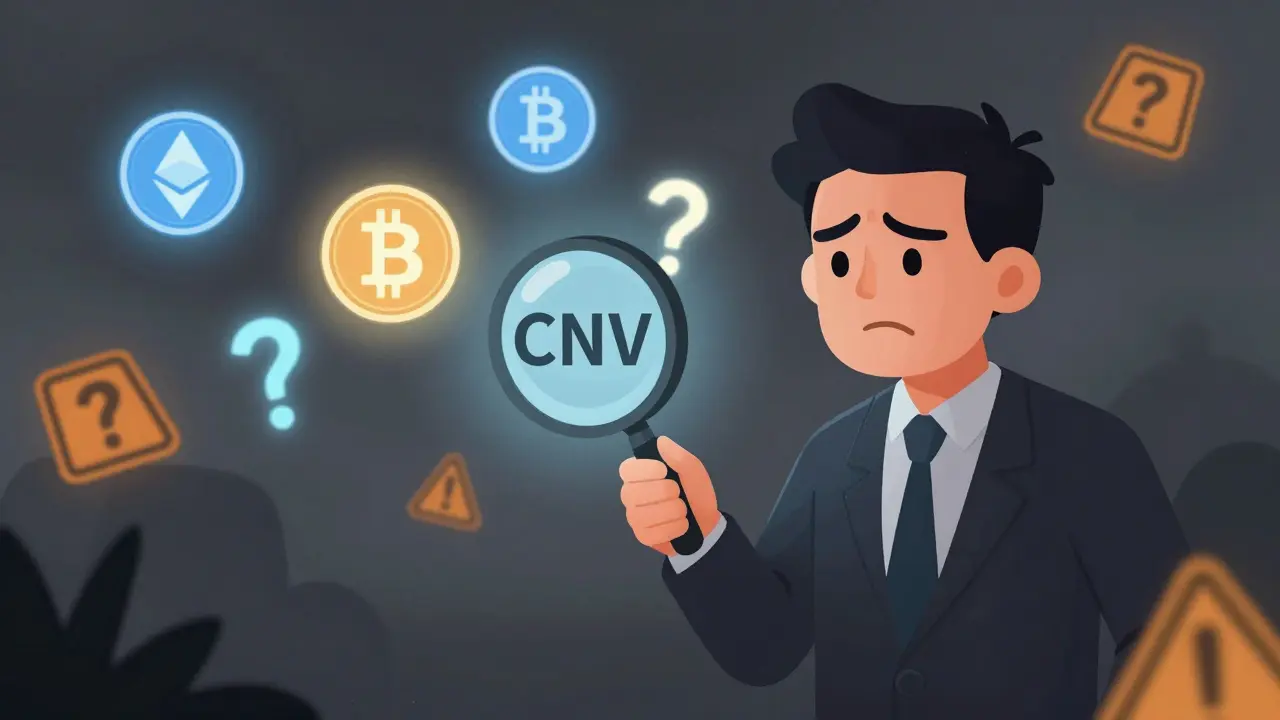
There is a major misunderstanding in the title of this search. Concave is not a cryptocurrency exchange. It is a specific digital asset token, identified by the ticker symbol CNV. If you are looking for a platform to trade Bitcoin or Ethereum, you will not find it here. Instead, you are likely trying to figure out if this obscure token is worth your money or if it’s a trap.
The reality is stark. As of mid-2026, Concave (CNV) operates in the shadows of the crypto market. It lacks the transparency, security audits, and regulatory compliance that define legitimate projects. Most importantly, it is almost exclusively traded on KuCoin, a centralized exchange known for listing high-risk, low-cap assets. This article breaks down what CNV actually is, why it isn’t listed on major platforms like Coinbase, and the severe risks involved in trading it.
What Is Concave (CNV)?
To understand the risk, you first need to know what you are buying. In the world of Cryptocurrency, there are two main types of entities: exchanges (platforms where you trade) and tokens (the assets themselves). Concave falls squarely into the latter category.
Concave (CNV) is a speculative token with virtually no public documentation regarding its utility, development team, or underlying blockchain technology. Unlike established coins such as Bitcoin or Ethereum, which have open-source codebases and detailed whitepapers available on GitHub, CNV offers none of this. There is no verifiable roadmap, no active developer community, and no clear use case beyond speculation.
This lack of information is not an oversight; it is a red flag. Legitimate projects publish their technical specifications to build trust. When a project hides its fundamentals, it often means there is nothing substantial behind the marketing hype. The token’s price movements are driven purely by supply and demand shocks on the few exchanges that list it, rather than technological adoption or real-world utility.
Where Can You Trade Concave?
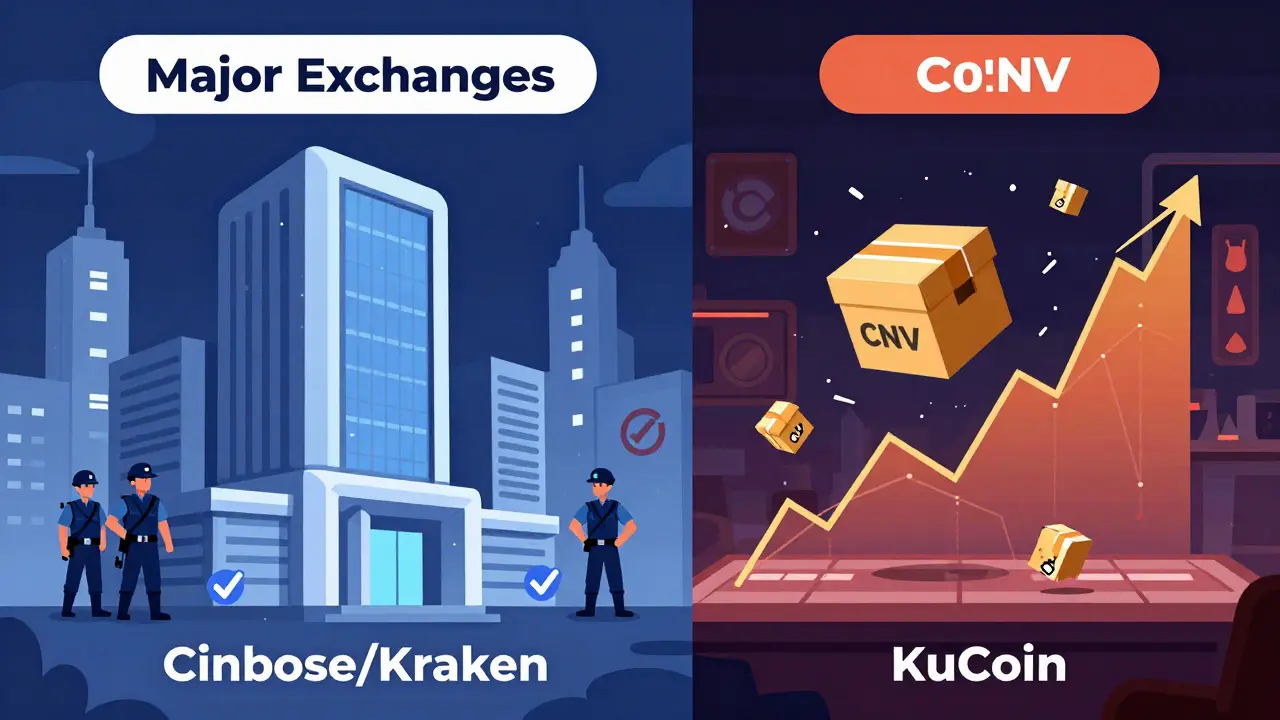
If you want to buy or sell CNV, your options are extremely limited. The primary venue for trading Concave is KuCoin. According to recent data, KuCoin lists CNV with significant volatility, showing price swings of nearly 30% in a single 24-hour period. This level of instability is far higher than even volatile altcoins, let alone stable assets like Bitcoin.
You will not find Concave on regulated, mainstream exchanges. Platforms like Coinbase, Kraken, and Binance US do not list CNV. These platforms conduct rigorous due diligence before adding new assets, checking for security vulnerabilities, legal compliance, and market integrity. The absence of CNV from these major venues suggests it failed to meet basic listing standards.
| Exchange | CNV Listed? | Regulatory Status | Risk Level |
|---|---|---|---|
| KuCoin | Yes | Offshore / Less Regulated | High |
| Coinbase | No | Publicly Traded / Highly Regulated | Low |
| Kraken | No | SEC Compliant | Low |
| Binance US | No | US Regulated | Low |
This isolation limits liquidity. With fewer buyers and sellers, it becomes easier for large holders to manipulate the price. A single large sell order can crash the value of your investment because there aren’t enough other traders to absorb the shock.
Red Flags: Why Experts Avoid CNV
In the crypto industry, silence from experts is loud. Reputable research firms like Messari, CoinDesk, and The Block analyze thousands of tokens. They look for code quality, team credibility, and economic models. Concave does not appear in their reports. Why? Because there is nothing to analyze.
Consider the contrast with Solana. Solana publishes detailed developer documentation, hosts regular hackathons, and has a transparent governance model. Its growth is tracked by metrics like daily active addresses, which grew from hundreds to millions over several years. Concave has no such metrics. There are no GitHub repositories to show code updates, no Discord communities discussing features, and no academic or institutional interest.
The only "analysis" available for CNV comes from speculative price prediction sites offering forecasts through 2029 without disclosing their methodology. These predictions are essentially guesses. Without fundamental data-such as transaction volume, holder distribution, or partnership announcements-any price target is pure fiction. Relying on these numbers is akin to betting on a horse race without knowing if the horses have legs.
User Experience and Support Risks
Trading CNV is not just technically risky; it is also practically difficult. If you encounter issues while trading on KuCoin, you won’t find specialized support for Concave. Customer service teams at major exchanges handle thousands of tickets daily. For obscure tokens, support is often automated or non-existent.
Educational resources are equally scarce. Coinbase offers learning modules for hundreds of cryptocurrencies, helping users understand what they own. For CNV, there are no tutorials, no guides, and no community forums. You are left to navigate the interface alone, increasing the chance of making costly errors, such as sending funds to the wrong address or falling for phishing scams.
Furthermore, user feedback on trusted review platforms like Trustpilot or Reddit is virtually nonexistent. Legitimate mid-cap tokens generate thousands of monthly discussions. CNV generates silence. This lack of organic community engagement suggests that very few people actually hold or use the token, which further exacerbates liquidity risks.

Scam Awareness and Regulatory Context
The broader context of the crypto market in 2026 is one of increased regulation. Agencies like the California DFPI actively track crypto scams, documenting fraudulent platforms that promise unrealistic returns. While Concave itself hasn’t been explicitly labeled a scam by regulators, its characteristics mirror those of fraudulent schemes: opaque origins, high volatility, and promises of quick gains without substance.
Investors should be wary of any token that:
- Lacks a publicly identifiable development team.
- Is not listed on major, regulated exchanges.
- Has no clear utility or product.
- Shows extreme price volatility with low volume.
Concave checks all these boxes. The absence of a formal market capitalization ranking on CoinMarketCap indicates it is either newly launched or has negligible market presence. Both scenarios carry high risk. New launches often suffer from "rug pulls," where developers abandon the project and take the funds. Negligible presence means the token may become illiquid overnight, trapping your money.
Safer Alternatives for Crypto Trading
If you are interested in cryptocurrency investing, consider sticking to assets with proven track records and robust infrastructure. Bitcoin remains the store of value leader, with deep liquidity and widespread adoption. Ethereum dominates the smart contract space, powering decentralized finance (DeFi) and non-fungible tokens (NFTs).
For those seeking higher growth potential, look toward established Layer-1 blockchains like Solana or Polygon. These projects have active development teams, clear roadmaps, and listings on top-tier exchanges. They offer the upside of innovation without the existential risk of disappearing entirely.
When choosing an exchange, prioritize platforms that comply with local regulations. In the U.S., Coinbase and Kraken offer insured custody and strict KYC (Know Your Customer) procedures. Globally, Binance and KuCoin provide more variety but require careful vetting of individual assets. Never invest in a token solely because it appears on a less-regulated exchange.
Is Concave (CNV) a crypto exchange?
No, Concave (CNV) is not an exchange. It is a cryptocurrency token. You cannot trade other assets on "Concave." Instead, you trade the CNV token itself on platforms like KuCoin.
Why isn't Concave listed on Coinbase or Kraken?
Major exchanges like Coinbase and Kraken have strict listing criteria involving security audits, legal compliance, and market viability. Concave likely fails to meet these standards due to its lack of transparency, limited liquidity, and unknown development team.
Is it safe to buy Concave (CNV)?
Buying CNV carries significant risk. The token has high volatility, low liquidity, and no fundamental value proposition. There is a real possibility that the value could drop to zero if trading dries up or if the project is abandoned.
Where can I buy Concave (CNV)?
The primary place to buy CNV is on the KuCoin exchange. However, availability may change, and you should verify current listings directly on the platform before attempting to trade.
What is the purpose of the Concave token?
There is no publicly documented utility or purpose for the Concave token. Unlike functional tokens used for governance or access to services, CNV appears to exist primarily for speculative trading.