

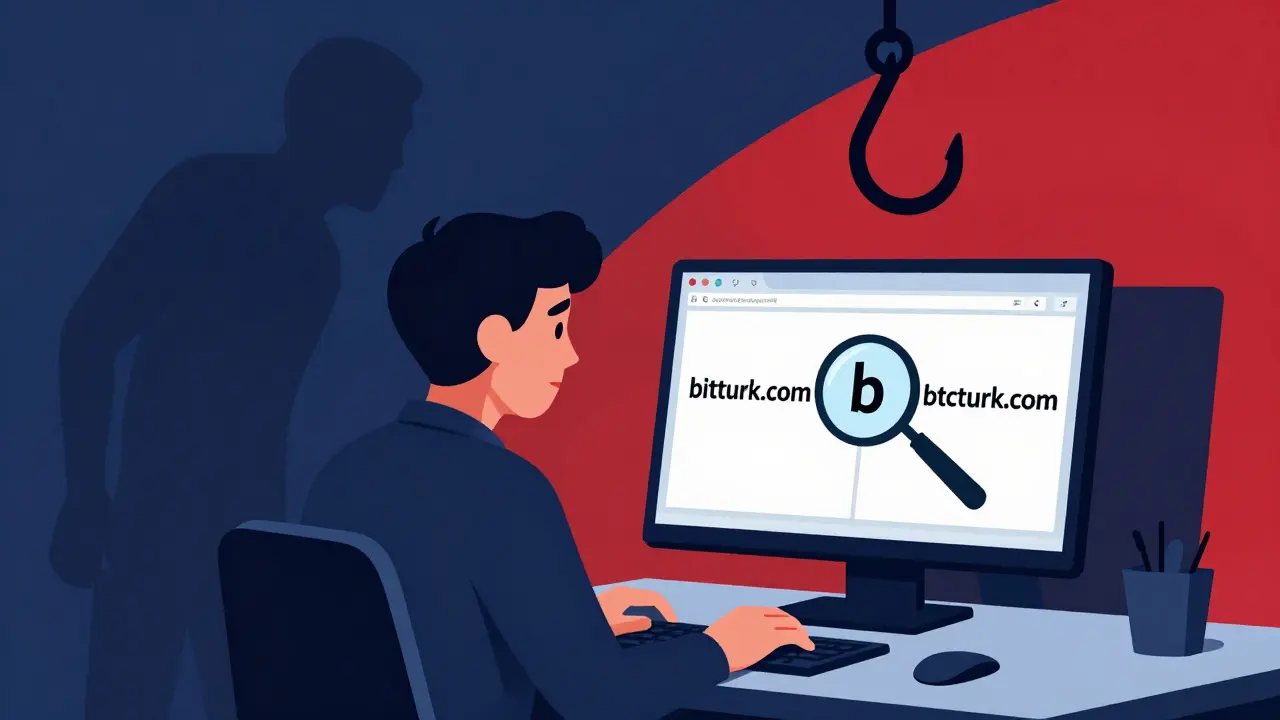
Have you ever typed a URL into your browser only to realize you landed on the wrong site? In the world of cryptocurrency, that mistake can cost you everything. This is exactly the problem surrounding BitTurk, a platform that has confused thousands of users since its inception. If you are looking for a reliable place to trade Bitcoin in Turkey or internationally, you need to know one critical fact before you deposit a single cent: BitTurk is not the same as BtcTurk. They are completely different companies, and mixing them up is a common entry point for scams.
In this review, we cut through the noise. We will look at who actually owns BitTurk, whether it holds the necessary licenses to operate in 2026, and why most security experts advise extreme caution. You will learn how to spot the differences between legitimate exchanges and copycats, understand the regulatory landscape in Turkey, and find out where you should actually be trading your crypto safely.
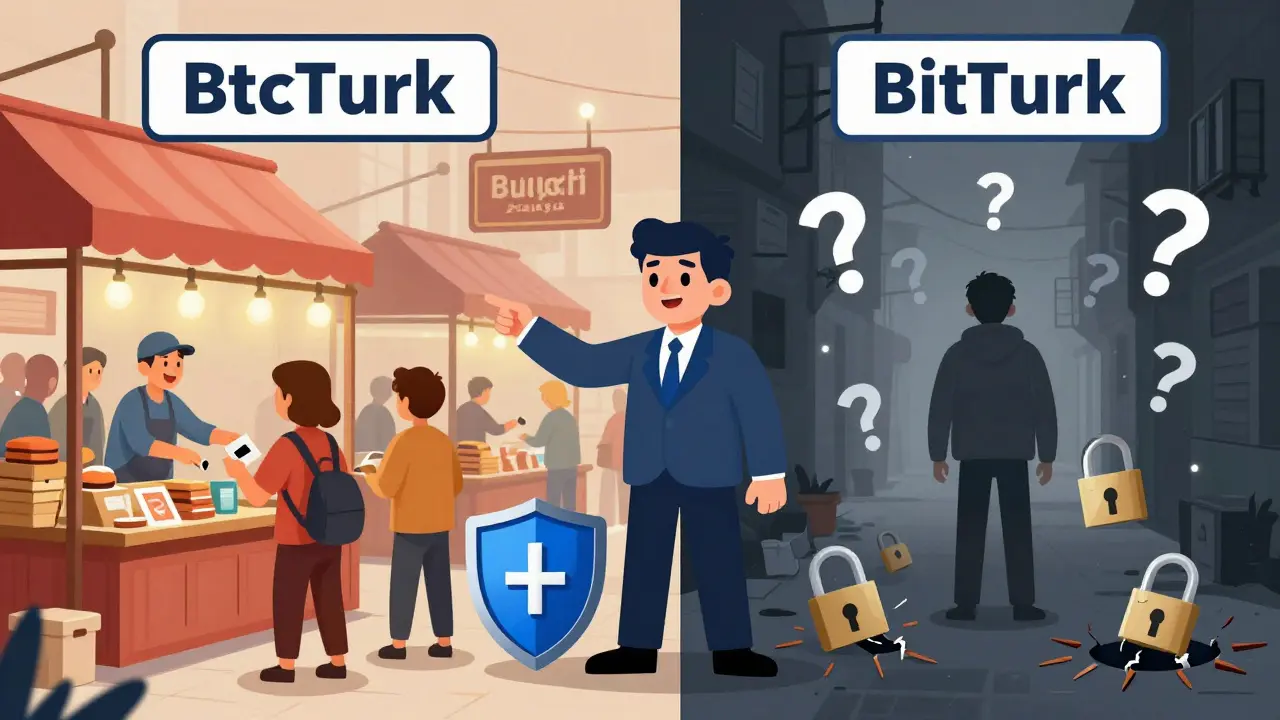
The Name Game: BitTurk vs. BtcTurk
The biggest issue with BitTurk isn't its technology or its fees-it's its name. The platform operates under the domain bitturk.com. Just one letter away from this is BtcTurk, which is widely recognized as the largest and most established cryptocurrency exchange in Turkey. Founded in July 2013, BtcTurk has over a decade of history, supports more than 100 cryptocurrencies, and processes transactions in Turkish Lira (TRY) for verified local users.
BitTurk, on the other hand, claims to have been founded in 2017. It positions itself as "the first Turkey crypto money Exchange," a claim that lacks any independent verification from regulatory bodies. This naming similarity creates a dangerous situation known as "typosquatting" or brand confusion. When users search for the popular BtcTurk, they might accidentally click on ads or links leading to BitTurk. Once there, they assume they are on the safe, regulated platform. This confusion was highlighted by BTCC Knowledge in September 2025, which warned users about the phishing risks associated with exchanges using similar names.
| Feature | BitTurk (bitturk.com) | BtcTurk (btcturk.com) |
|---|---|---|
| Founded | 2017 (Claimed) | July 2013 |
| Market Position | Niche / Unknown | Largest in Turkey (~85% share) |
| Regulatory Status | Not on SPK licensed list | Registered & Regulated |
| Cryptocurrencies | Limited / Unclear | 100+ Coins |
| User Base | <2% of market | Massive, verified user base |
| Fiat Support | Unclear | Turkish Lira (TRY) |
If you are a Turkish resident looking to trade with Lira, you want BtcTurk. If you land on BitTurk, you are stepping into uncharted territory with no clear benefits over the established giant.
Regulatory Red Flags in Turkey
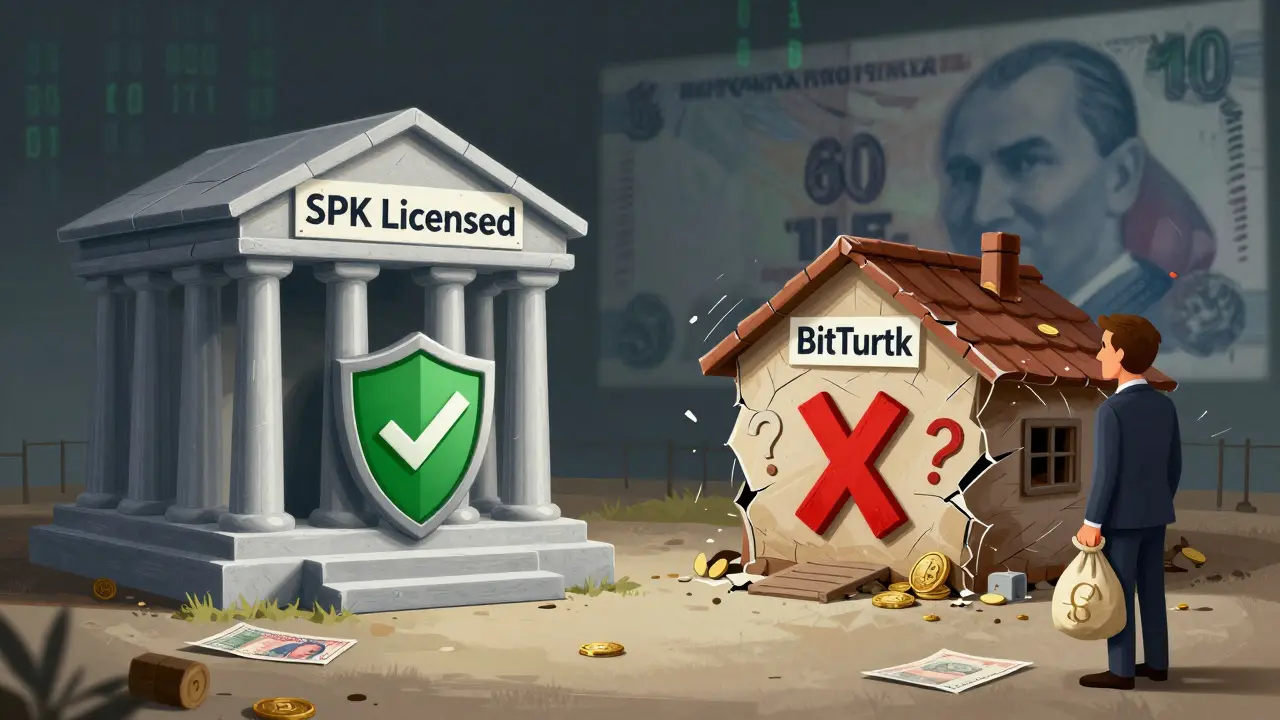
When evaluating any financial platform, regulation is non-negotiable. In Turkey, the Capital Markets Board (SPK) tightened its rules significantly in 2024. These new licensing requirements took effect on January 1, 2025. Any exchange operating legally within Turkey must now hold a specific cryptocurrency operation license issued by the SPK.
Here is the problem: As of late 2025 and into 2026, BitTurk does not appear on the SPK’s official list of licensed operators. This is a massive red flag. TradingFinder.com’s October 2025 analysis explicitly stated that any Turkish exchange not listed on the SPK registry should be considered high-risk. Without this license, BitTurk is likely operating in a legal gray area or potentially illegally. This means if something goes wrong-whether it’s a hack, a withdrawal freeze, or a shutdown-you have no legal recourse. The government cannot help you recover funds from an unlicensed entity.
Delphi Digital’s regional market report from October 2025 noted growing concerns about Turkish exchanges operating without clear oversight. While they didn't name BitTurk specifically, the trend is clear: regulators are cracking down. Exchanges without proper licensing face imminent shutdown risks, according to warnings from Cryptolegal.uk. Using an unregulated platform exposes your assets to total loss without warning.
Security and Transparency Gaps
Let’s talk about where your money sits. Legitimate exchanges like Binance or Coinbase publish detailed security audits, cold storage percentages, and insurance coverage details. BitTurk offers none of this. Their website claims to offer "robust security features" and Google Authenticator integration for two-factor authentication (2FA). While 2FA is a basic necessity, it doesn't tell us how the exchange secures its main wallets.
There are no published third-party security audit reports for BitTurk. We don't know if they use multi-signature wallets. We don't know what percentage of user funds are kept offline in cold storage. Without this transparency, you are trusting the platform based solely on their word. In the crypto industry, trust must be verified, not assumed.
Furthermore, the platform’s technical specifications are vague. Slashdot’s comparative analysis from September 2025 showed that BitTurk supports API access and integrates with major blockchains like Bitcoin and Ethereum. However, these are standard features found on every free demo platform. They do not indicate robustness. The lack of comprehensive API documentation or developer resources suggests the platform is not built for serious traders or institutions.
User Experience and Hidden Barriers
Signing up for BitTurk sounds easy because they advertise a "free trial" and "free version." But ease of entry often hides difficult exits. Users on Reddit and Turkish forums like Paribu.com have reported significant hurdles during registration. Many smaller Turkish exchanges require local phone numbers and strict ID verification that international users cannot provide. If you are outside Turkey, you may find yourself locked out after creating an account.
For those inside Turkey, the experience is mixed but leans negative due to language barriers. The English interface appears to be machine-translated, leading to confusing instructions and potential misunderstandings during critical steps like withdrawals. Customer support is advertised as 24/7, but forum threads from August 2025 describe slow response times, especially for non-Turkish queries. When you need help urgently-like when a transaction fails-slow support is not just annoying; it’s dangerous.
Additionally, there is virtually no positive user feedback. Trustpilot shows no verified reviews for BitTurk as of October 2025. Revain, a blockchain-based review platform, lists only one rating with no detailed comments. In contrast, BtcTurk has thousands of reviews. The silence around BitTurk is deafening. Why would a successful exchange have zero social proof?
Why You Should Avoid BitTurk
So, why does BitTurk exist? It seems designed to capture traffic from users searching for BtcTurk. With less than 2% of the domestic market share, according to Delphi Digital, it serves a tiny niche of novice traders who may not realize they are on a different, riskier platform. There is no technological advantage, no lower fee structure (fees are undocumented), and no better security.
Using BitTurk introduces unnecessary risk. You are exposing your capital to an unregulated entity with poor transparency and a confusing brand identity. In 2026, with so many secure, regulated options available, there is no logical reason to choose BitTurk.
Instead, consider these safer alternatives:
- BtcTurk: The safest choice for Turkish residents wanting TRY pairs.
- Binance: The global leader with deep liquidity, strong security, and SPK compliance efforts.
- Kraken or Coinbase: Excellent for international users needing fiat on-ramps and top-tier security.
Always double-check the URL. Look for the padlock icon, verify the domain spelling, and check the SPK registry if you are in Turkey. Your digital assets are hard-earned; don’t let a typo cost you everything.
Is BitTurk the same as BtcTurk?
No, they are completely different companies. BtcTurk (btcturk.com) is a well-established, regulated exchange founded in 2013. BitTurk (bitturk.com) is a separate, lesser-known platform founded in 2017. Confusing the two is a common security risk.
Is BitTurk licensed by the Turkish SPK?
As of 2026, BitTurk does not appear on the Capital Markets Board (SPK) official list of licensed cryptocurrency operators. Operating without this license makes it a high-risk platform for users in Turkey.
Can I withdraw my money from BitTurk easily?
There is limited public information on withdrawal processes. User reports suggest potential barriers such as strict ID verification and slow customer support. Without regulatory oversight, there is no guarantee you can access your funds if issues arise.
What are the fees on BitTurk?
BitTurk does not publicly document its trading fees, withdrawal limits, or minimum deposit requirements in authoritative sources. This lack of transparency is a major disadvantage compared to competitors like BtcTurk or Binance.
Is BitTurk a scam?
While not officially labeled a scam by law enforcement, BitTurk exhibits many characteristics of high-risk platforms: unregulated status, name confusion with a major competitor, and lack of transparency. Security experts advise avoiding it due to these red flags.
Which crypto exchange is best for Turkish users?
BtcTurk is the dominant and most trusted option for Turkish residents due to its long history, SPK registration, and support for Turkish Lira. International users may prefer Binance or Kraken for broader asset selection and global security standards.
Does BitTurk have a mobile app?
Slashdot data indicates BitTurk offers native applications for iPhone, Android, and other devices. However, given the platform's overall lack of transparency and regulatory standing, downloading apps from unverified sources carries additional security risks.