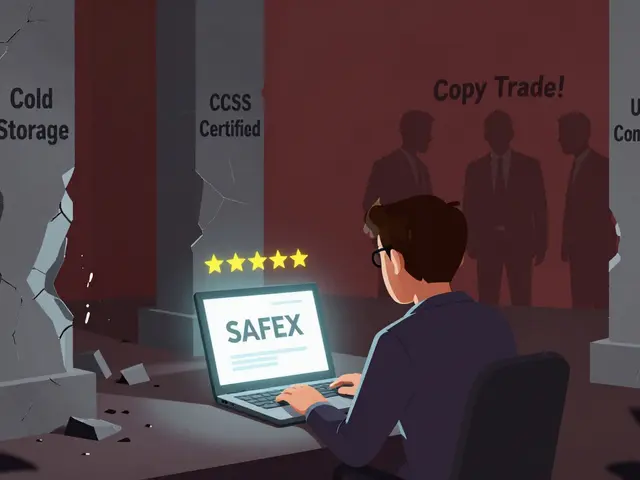


Have you heard about Bitsmo? Maybe someone sent you a link promising easy profits, or you saw an ad claiming it’s the next big thing in trading. Before you click "Sign Up" and deposit your hard-earned money, pause for a second. There is a massive problem with this name right now. Most likely, you are looking at a platform that either doesn’t exist yet, is a clone of a legitimate service, or-worst case scenario-is a phishing site designed to steal your funds.
The confusion stems from one major source: Bitso, a well-known cryptocurrency exchange founded in Mexico. Because "Bitsmo" sounds almost identical to "Bitso," scammers often use slight misspellings to trick users who aren't paying close attention. This is called typosquatting. If you are reading this because you want to trade safely, you need to know exactly what you are dealing with. Right now, there is no credible evidence of a legitimate, widely-used global exchange called Bitsmo that operates independently of Bitso or as a verified financial institution in 2026.
The Big Confusion: Bitsmo vs. Bitso
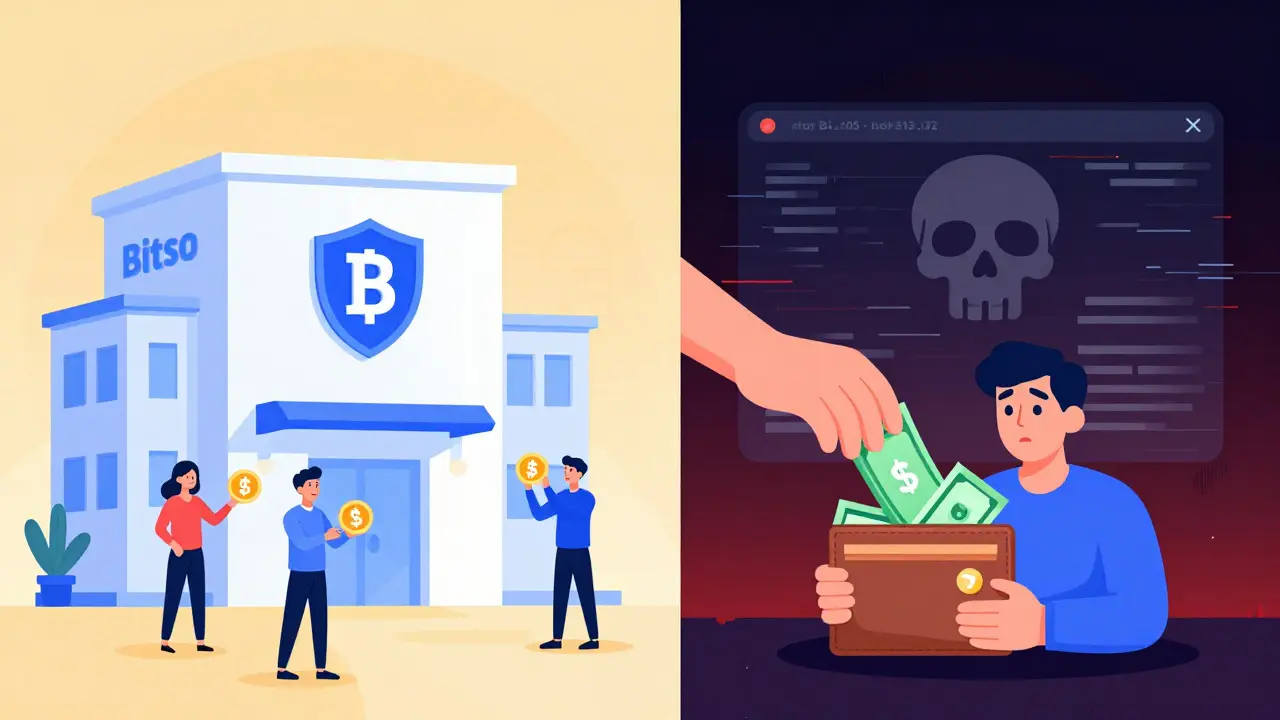
Let’s clear the air immediately. When people search for "Bitsmo," they usually end up on pages discussing Bitso is a leading Latin American cryptocurrency exchange founded in 2014 by Guillermo Garrido and David Gárate. Bitso is real. It is regulated. It has millions of users in Mexico, Brazil, Argentina, and Colombia. It allows you to buy Bitcoin, Ethereum, and other assets using local fiat currencies like pesos and reais.
Bitsmo, on the other hand, lacks this footprint. A deep dive into financial records, regulatory filings, and user forums reveals very little. There was a brief mention of "Bitsmo" on Bitcoin Talk years ago as a concept for connecting crypto to banking, but nothing materialized into a major public exchange. If you are trying to access a site called bitsmo.com or similar, check the URL carefully. Is it bitso.com? Or is it something else entirely?
| Feature | Bitso (Legitimate) | Bitsmo (Unverified/Scam Risk) |
|---|---|---|
| Founded | 2014 | Unknown / No clear history |
| Regulation | Licensed in Mexico, Brazil, etc. | No known regulatory licenses |
| User Base | Millions in LatAm | Minimal to non-existent public data |
| Security Proof | Regular audits, cold storage | No public audit reports |
| Website | bitso.com | Varying domains, often suspicious |
Red Flags: How to Spot a Fake Exchange
If you have landed on a website claiming to be Bitsmo, run through this checklist. Scammers are getting smarter, but they still make mistakes. Look for these warning signs:
- Too-Good-To-Be-True Promises: Does the site promise guaranteed daily returns? Legitimate exchanges like Bitso or Coinbase never guarantee profits. They facilitate trades; the market determines the price.
- Poor Website Quality: Check the spelling and grammar. Professional financial institutions hire editors. If the site is full of errors, broken links, or low-resolution images, leave immediately.
- Hidden Identity: Who runs Bitsmo? Can you find names of founders on LinkedIn? Legitimate companies have transparent leadership teams. Anonymous teams are a huge risk.
- Pressure Tactics: Do you feel rushed? Phrases like "Limited spots available" or "Deposit now to get a bonus" are classic manipulation techniques used by fraudsters.
- Unsupported Payment Methods: Be wary if they only accept obscure cryptocurrencies or direct wire transfers to personal accounts. Regulated exchanges use escrow services and verified banking partners.
Is Bitsmo a Scam? The Verdict
Based on the lack of verifiable data, regulatory presence, and user reviews as of July 2026, the safest assumption is that Bitsmo is either a defunct project or a fraudulent operation impersonating Bitso. In the world of crypto, if you can’t verify it, don’t trust it. There are no Trustpilot reviews, no Reddit communities discussing successful withdrawals, and no news articles from reputable sources like CoinDesk or Bloomberg covering its launch.
This isn’t just about being cautious; it’s about survival. Thousands of users lose millions every year to fake exchanges. The pattern is always the same: you deposit money, see fake profits on your screen, and then when you try to withdraw, you’re told to pay more fees. Then the site disappears.
Safe Alternatives for Trading Crypto
If your goal is to buy, sell, or trade cryptocurrency, stick to platforms with proven track records. Here are some reliable options depending on where you live:
- Bitso: Ideal if you are in Latin America. It offers high liquidity, local currency support, and strong security measures.
- Coinbase: Great for beginners in the US and Europe. It is publicly traded and heavily regulated.
- Binance: Offers advanced features and a wide range of coins for experienced traders globally (check local availability).
- Kraken: Known for excellent customer support and strong security protocols.
These platforms have faced scrutiny, yes, but they also have millions of users, transparent fee structures, and established legal entities. You can look them up, read their terms of service, and understand how they protect your funds.
How to Protect Your Crypto Assets
Regardless of which exchange you choose, never keep large amounts of crypto on the platform. Exchanges are targets for hackers. Use a hardware wallet like Ledger or Trezor for long-term storage. This gives you control over your private keys. Remember the saying: "Not your keys, not your coins." If the exchange goes down or gets hacked, your funds are safe in your own wallet.
Also, enable two-factor authentication (2FA) everywhere. Don’t use SMS-based 2FA if you can avoid it; use an authenticator app like Google Authenticator or Authy. This adds a critical layer of security against account takeovers.
What to Do If You Already Deposited Money
If you’ve already sent money to a site claiming to be Bitsmo and suspect foul play, act fast. First, contact your bank or credit card company to dispute the transaction. Provide them with any screenshots, emails, or chat logs you have. Second, report the site to relevant authorities. In the US, file a complaint with the FTC. In the UK, report to Action Fraud. In New Zealand, contact the Police Online Reporting system. While recovery is difficult, reporting helps prevent others from falling victim.
Finally, change passwords for any email accounts associated with the sign-up process. Scammers often harvest email addresses for further phishing attempts.
Is Bitsmo the same as Bitso?
No, they are not the same. Bitso is a legitimate, regulated exchange founded in 2014. Bitsmo appears to be an unverified or potentially fraudulent site using a similar name to confuse users. Always double-check the URL to ensure you are on bitso.com if you intend to use Bitso.
Is Bitsmo a scam?
There is strong evidence to suggest Bitsmo is a scam or a phishing site. It lacks regulatory licenses, user reviews, and a clear corporate identity. Exercise extreme caution and avoid depositing funds.
Where can I safely trade crypto in 2026?
Stick to well-known, regulated exchanges like Bitso (for LatAm), Coinbase, Binance, Kraken, or local brokers in your country. These platforms have established reputations and security measures.
How do I spot a fake crypto exchange?
Look for red flags like guaranteed returns, poor website quality, anonymous teams, pressure tactics, and unsupported payment methods. Always verify regulatory status before signing up.
Should I use a hardware wallet?
Yes, especially for long-term holdings. Hardware wallets like Ledger or Trezor store your private keys offline, protecting them from online hacks and exchange failures.