

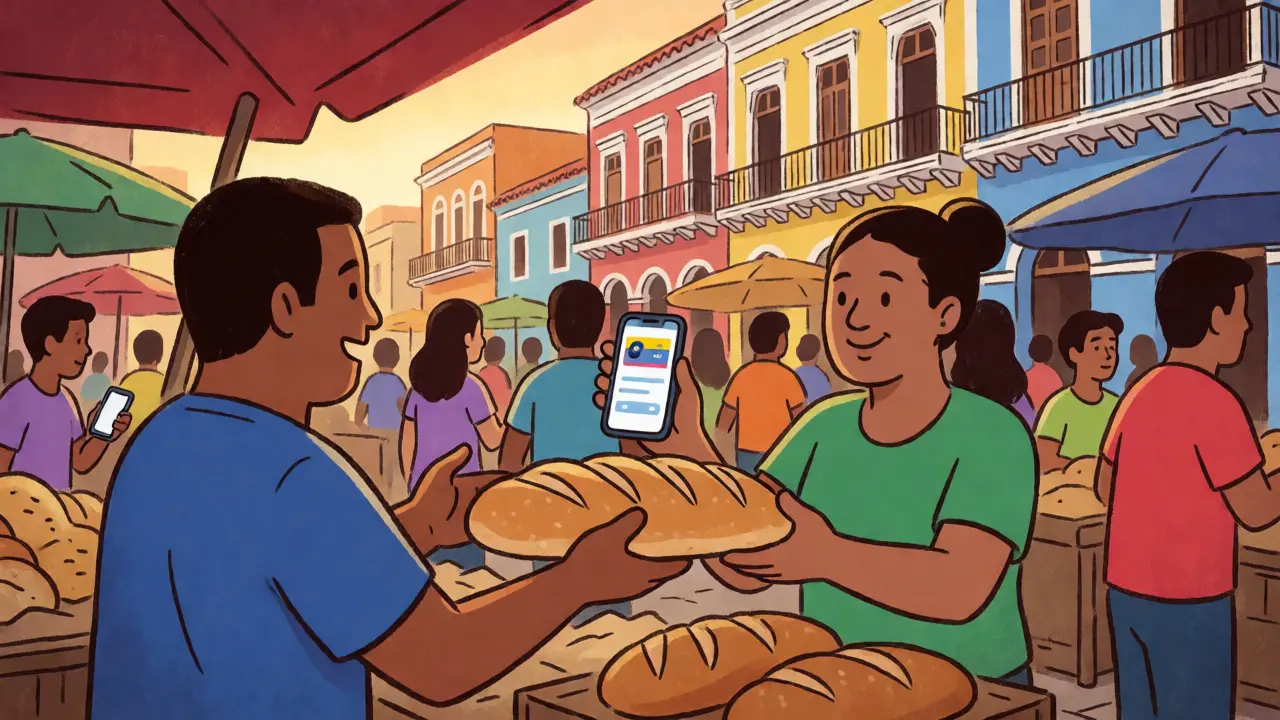
Imagine waking up to find your salary has lost half its purchasing power overnight. That’s not a hypothetical scenario for millions of Venezuelans; it’s their Tuesday morning reality. While the rest of the world debates whether Bitcoin is digital gold or a speculative bubble, people in Caracas are using it-and more commonly, stablecoins-to buy bread, pay rent, and send money home. This isn’t about getting rich quick. It’s about keeping your savings from evaporating in a furnace of hyperinflation.
| Metric | Value/Status | Source/Context |
|---|---|---|
| Inflation Rate | ~229% Annual | Venezuelan Finance Observatory (OVF), May 2024 |
| Crypto Adoption Rank | #13 Globally | Chainalysis 2024 Index |
| Dominant Asset | USDT (Tether) | Known locally as "Binance dollars" |
| Remittance Share | 9% ($461M) | Of total $5.4B remittances in 2023 |
| P2P Market Leader | Binance (63%) | Followed by LocalBitcoins (22%) |
Why Bitcoin Isn't the Main Player Here
Here’s the twist: while the title says "Bitcoin," the real hero in Venezuela’s economic drama is USDT (a stablecoin pegged to the US dollar). Why? Because when you’re trying to survive, volatility is the enemy. You don’t want your grocery money swinging 10% up or down in an hour. You want stability. USDT offers that by mirroring the USD, providing a psychological and practical anchor against the bolívar’s freefall.
Bitcoin does have a role, but it’s smaller. It’s often used for long-term savings by those who trust code over central banks. But for daily commerce-buying phone accessories, paying for taxi rides, or splitting dinner bills-stablecoins win every time. The speed matters too. A Bitcoin transaction can take anywhere from 10 minutes to an hour during congestion. USDT on the Tron network? Usually under two minutes. In a country where internet speeds average just 14.79 Mbps (ranking 153rd globally), waiting for a confirmation block feels like an eternity.
The Mechanics of Survival: How People Actually Use Crypto
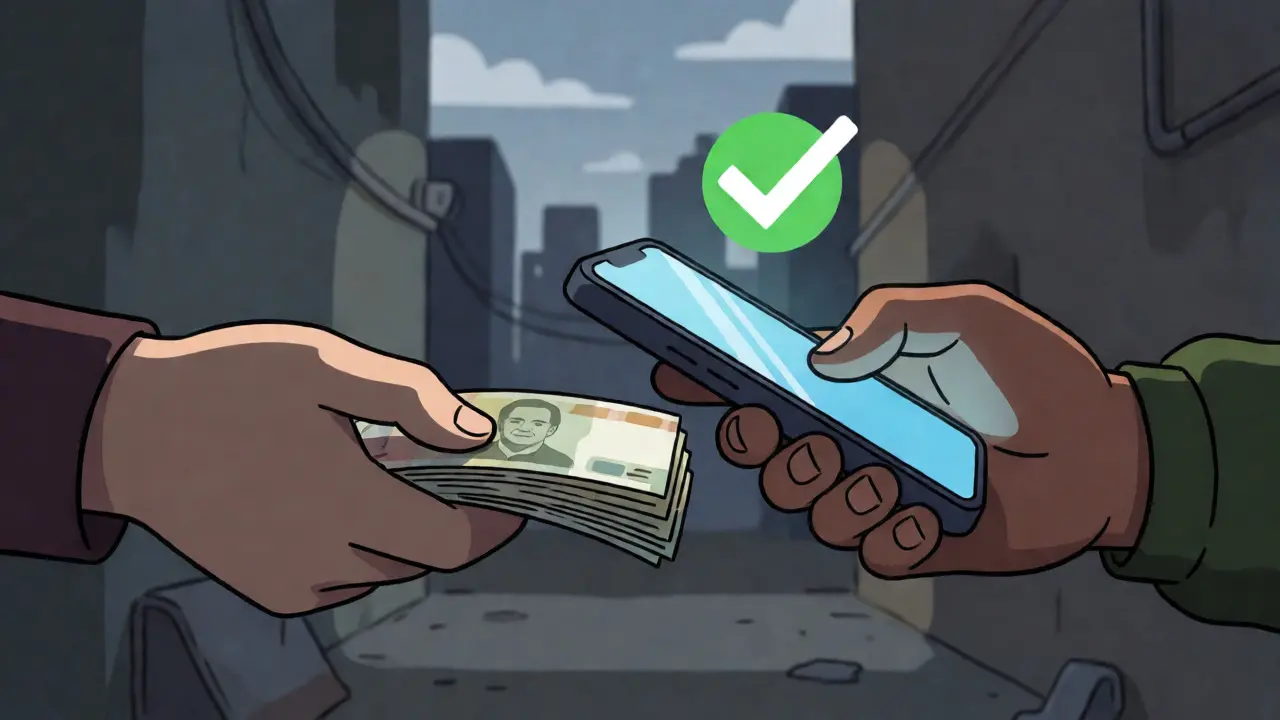
So, how does this work without traditional banking infrastructure? The answer lies in Peer-to-Peer (P2P) trading. Platforms like Binance P2P allow users to trade directly with each other. One person sends USDT from their digital wallet; the other transfers local currency via bank transfer or even cash handoffs. No middleman bank required. This bypasses the severe restrictions imposed by U.S. sanctions since 2017, which have choked off traditional international banking channels.
Consider Victor Sousa, a resident of Caracas. He told reporters he buys phone accessories with USDT because "there's lots of places accepting it now." His goal isn't speculation; it's preservation. "The plan is to one day have my savings in crypto," he said. Similarly, another user named Carlos explained, "I use USDT for everything-buying food, paying rent. It is much more reliable than the bolivar." These aren't tech enthusiasts showing off new gadgets. They are ordinary people adapting to extraordinary circumstances.
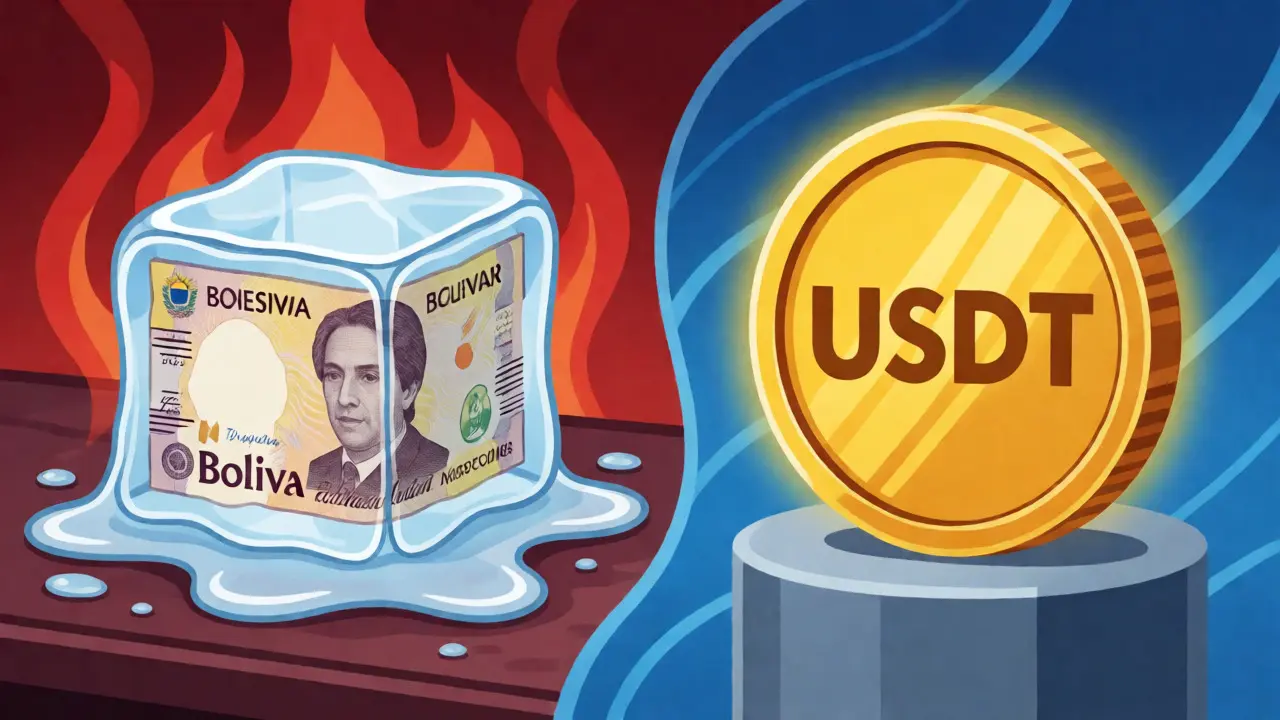
The ecosystem relies heavily on digital wallets. Approximately 4.3 million Venezuelans-about 13% of the population-use platforms like Binance Wallet or Airtm. This adoption didn't happen because government ads convinced them to try blockchain. It happened because their salaries stopped covering basic needs. Economist Aarón Olmos put it bluntly: "Venezuelans started using cryptocurrencies out of necessity." When inflation hits 229%, holding local currency is like holding an ice cube in a sauna.
Regulatory Whiplash and Sanctions Hurdles
If you think this is a smooth ride, think again. The Venezuelan government’s stance on crypto has been, to put it mildly, inconsistent. In 2018, they launched their own cryptocurrency, the Petro, backed by oil reserves. Fast forward to 2024, and the Petro had collapsed amid corruption allegations tied to oil-linked transactions. Meanwhile, the private sector thrived while regulators struggled to keep up.
Then there’s the elephant in the room: U.S. sanctions. Executive Order 13850 restricts certain financial interactions. While this hasn't stopped P2P markets, it creates friction. For instance, Binance blocks services for accounts linked to sanctioned entities, affecting roughly 18% of attempted transactions according to internal data shared with CoinTelegraph. This means users often need multiple accounts or creative workarounds to move funds freely.
The legal framework is equally murky. The 2020 Crypto Assets Law exists on paper but offers little practical guidance. The Central Bank of Venezuela acknowledged crypto’s role in the economy in a 2024 report but provided no formal regulatory structure. Essentially, the market operates in a gray zone-a de facto acceptance of parallel crypto economies because the alternative is total financial paralysis.
Challenges: Connectivity and Centralization Risks
It’s not all seamless. Internet access remains a major bottleneck. Only 45% of the population has reliable connectivity, despite 68% owning smartphones. If the power goes out or the internet drops, you can’t access your digital savings. During network outages, 22% of users reported difficulties converting crypto to physical goods. Imagine standing at a checkout counter, unable to complete a payment because your connection failed. That’s the reality for many.
There’s also the risk of centralization. Most stablecoins used in Venezuela are issued by Tether Limited. Chainalysis reports that Tether controls 76% of the stablecoin market there. If Tether faces regulatory scrutiny or liquidity issues abroad, Venezuelan users feel the shockwaves immediately. Unlike Bitcoin, which is decentralized, USDT depends on a company’s ability to maintain its reserve backing. University of Caracas economist Luisa Mendoza warns that "centralized stablecoin risks and U.S. sanctions complicate long-term viability."
Education plays a huge role here. Many newcomers struggle with the learning curve. However, community-driven education has filled gaps left by the state. YouTube channels like "Cripto Para Todos" (with over 127,000 subscribers) and mandatory courses at Universidad Central de Venezuela help users navigate wallets, exchanges, and security practices. Most people master basic transactions within two to three weeks, but mistakes happen. Spread costs during high-demand periods average 3.7%, eating into already tight budgets.
The Future: Temporary Lifeline or Permanent Shift?
Will this stick? Experts are split. IMF Senior Advisor David Lipton cautioned that "digital assets provide tactical relief but cannot substitute for sound monetary policy." He’s right-crypto doesn’t fix production shortages or supply chain breaks. It just helps people cope with the symptoms.
However, the momentum is real. With 65% of surveyed merchants in Caracas accepting cryptocurrency, the infrastructure is building itself organically. Enterprise adoption is rising too; 28% of medium-to-large businesses now accept crypto payments, up from 9% in 2023. Some analysts predict that if the bolívar stabilizes below 50% annual inflation (unlikely before 2027), crypto usage might decline. But others argue that once people taste financial autonomy, they won’t go back easily.
There’s hope in regional integration, too. Discussions around BRICS cross-border payment initiatives could offer alternatives less vulnerable to U.S. sanctions. If Venezuela can integrate these systems, crypto might transition from a desperate survival tool to a formalized part of the national financial fabric. Until then, for millions of Venezuelans, checking their USDT balance is as routine as checking their bank account used to be.
Why do Venezuelans prefer USDT over Bitcoin?
Venezuelans prefer USDT (Tether) because it is a stablecoin pegged to the US dollar, offering price stability essential for daily transactions. Bitcoin's volatility makes it risky for buying groceries or paying rent, whereas USDT maintains near-perfect parity with the USD, protecting purchasing power against the bolívar's rapid devaluation.
How do U.S. sanctions affect crypto usage in Venezuela?
U.S. sanctions restrict international banking relationships and block services for accounts linked to sanctioned entities. This affects approximately 18% of attempted transactions on major platforms like Binance. Users often rely on Peer-to-Peer (P2P) markets to bypass these restrictions, allowing direct person-to-person trades without traditional intermediary banks.
Is crypto adoption in Venezuela driven by investment or necessity?
Adoption is primarily driven by necessity rather than speculative investment. High inflation (around 229% annually) and low wages force citizens to seek value preservation tools. Unlike in countries like the U.S. where institutional investment dominates, Venezuelan usage focuses on daily commerce, remittances, and protecting savings from currency collapse.
What are the main technical challenges for crypto users in Venezuela?
The biggest challenges are poor internet connectivity and power outages. Venezuela ranks 153rd globally for internet speed, averaging 14.79 Mbps. Unreliable connections can delay transactions or prevent access to digital wallets, making it difficult to convert crypto to goods during critical moments. Additionally, spread costs during high demand can reach 3.7%, increasing transaction expenses.
Did the Venezuelan government support cryptocurrency?
The government launched its own cryptocurrency, the Petro, in 2018, backed by oil reserves. However, it collapsed in 2024 due to corruption allegations and lack of trust. The government's stance remains inconsistent, with minimal practical regulation through the 2020 Crypto Assets Law, leaving the market largely self-regulated by user demand and P2P platforms.


![What is Sheesha Finance [ERC20] (SHEESHA) crypto coin? Token details, risks, and real-world performance](/uploads/2025/11/thumbnail-what-is-sheesha-finance-erc20-sheesha-crypto-coin-token-details-risks-and-real-world-performance.webp)