

Imagine sending money to a friend across the ocean and paying absolutely nothing for the privilege. No network fees, no gas costs, no hidden charges eating into your transfer. For years, this sounded like a fantasy in the crypto world, where Bitcoin and Ethereum users often grapple with transaction costs that spike during busy periods. But zero-fee cryptocurrency transactions are now a reality, powered by networks that have fundamentally rethought how digital value moves.
These systems aren't just cheaper; they operate on different technical foundations that eliminate the need for traditional miner incentives. If you're curious about how you can send value without paying a cent, or which networks actually deliver on this promise, you're in the right place. Let's break down the mechanics, the top players, and what this means for everyday users in 2026.
The Core Problem: Why Fees Exist in Traditional Crypto
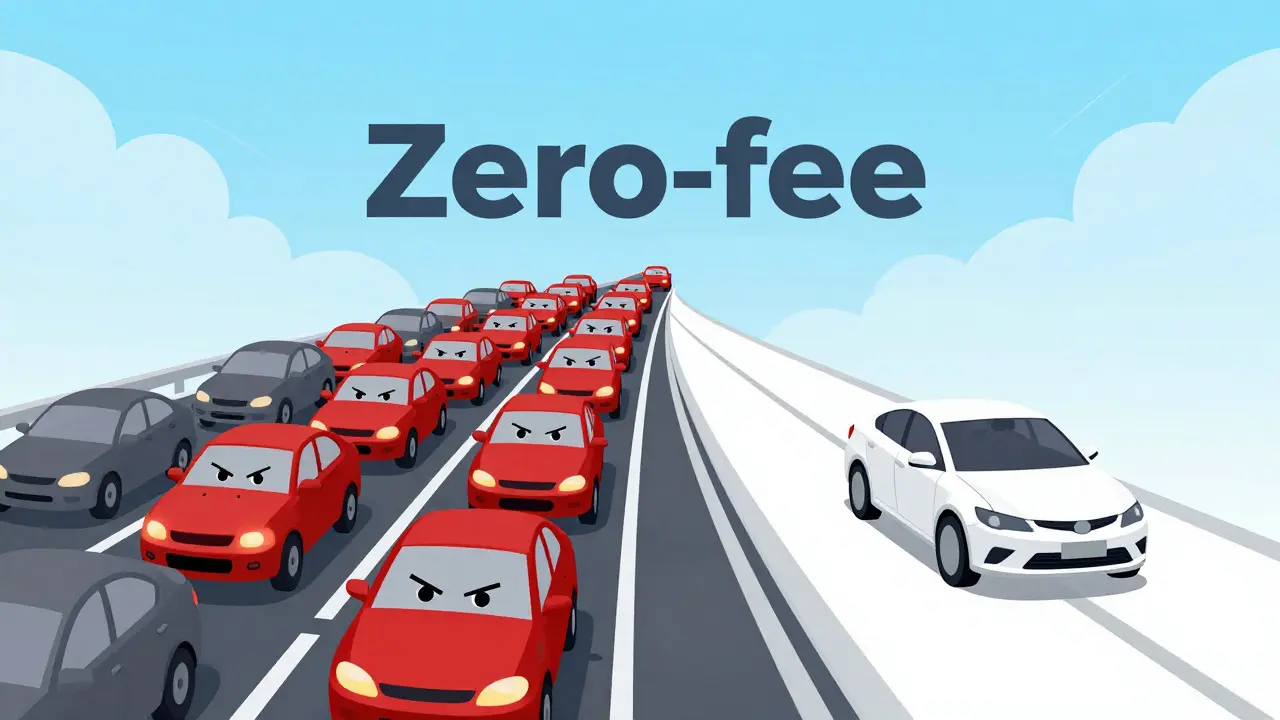
To understand why zero-fee models are revolutionary, we first need to look at why fees exist in the first place. In traditional blockchains like Bitcoin is a decentralized digital currency secured by proof-of-work mining, miners solve complex mathematical puzzles to validate blocks. To ensure these miners keep doing their job, they compete for transaction fees. The higher the fee, the more likely your transaction gets included in the next block. This creates a market dynamic where congestion leads to high costs.
Ethereum is a smart contract platform that uses gas fees to pay for computational work. Here, every action, from a simple transfer to running a smart contract, consumes "gas." During high demand, gas prices skyrocket, making even small transfers expensive. This friction is a major barrier to mass adoption. If it costs $5 to send $10, most people won't bother. Zero-fee cryptocurrencies aim to remove this barrier entirely by changing the consensus mechanism rather than just lowering the price.
How Zero-Fee Networks Actually Work
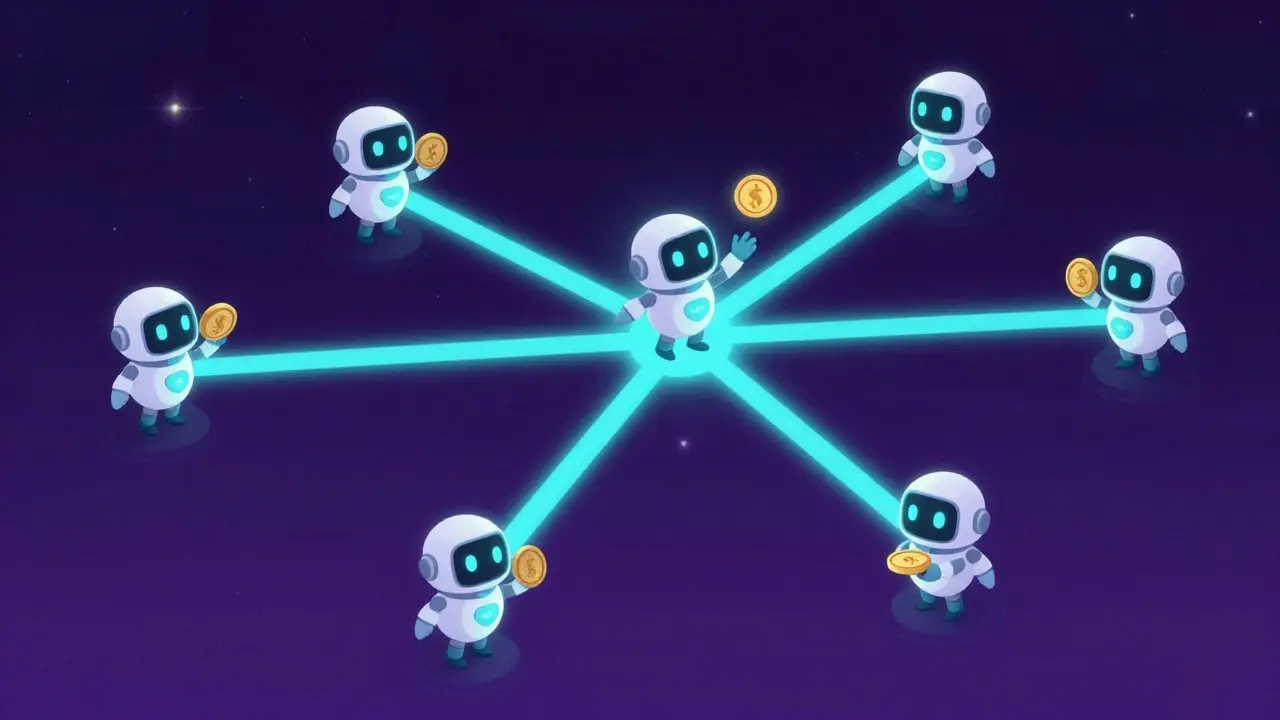
There is no single way to achieve zero fees. Different projects use different architectures to bypass the traditional miner incentive model. The three main approaches dominating the landscape in 2026 are Directed Acyclic Graphs (DAGs), Delegated Proof-of-Stake (DPoS), and unique account-based structures.
- DAG Structures: Instead of a linear chain of blocks, transactions form a web-like structure. Users often help validate other transactions as part of their own process, effectively becoming micro-miners without needing to pay fees.
- Delegated Proof-of-Stake (DPoS): A select group of elected validators secures the network. Because validation is centralized among trusted delegates, the need for high individual transaction fees to incentivize thousands of independent miners disappears.
- Account-Based Lattices: Each user has their own blockchain. There is no global queue of transactions waiting to be mined, so there is no competition for block space, and thus no need for fees.
These methods trade off some aspects of decentralization or change the security model, but they succeed in one critical area: removing cost from the equation.
Top Zero-Fee Cryptocurrencies in 2026
Not all "low-fee" coins are truly zero-fee. Some charge fractions of a cent, while others are genuinely free. Here are the leading contenders and how they compare.
| Coin Name | Architecture Type | Fee Structure | Primary Use Case |
|---|---|---|---|
| Nano | Block-Lattice (DAG) | Truly Zero | Instant payments, micropayments |
| IOTA | Tangle (DAG) | Truly Zero | Internet of Things (IoT) |
| Tron | Delegated Proof-of-Stake | Near-Zero (<$0.01) | Gaming, DeFi, Media |
| Stellar | Stellar Consensus Protocol | Ultra-Low (~$0.000004) | Cross-border payments |
Nano: The Pioneering Fee-Free Network
Nano is a cryptocurrency built on a block-lattice architecture where each account has its own chain. Since there is no central ledger to mine, there are no miners. When you send XNO, you sign a block that changes your balance and the recipient's balance. It’s instant and free. This makes Nano ideal for splitting dinner bills or sending small tips without worrying about the fee eating up half the amount. However, its smaller community size means fewer merchants accept it compared to Bitcoin.
IOTA: Built for Machines
IOTA is a distributed ledger technology designed for machine-to-machine communication. It uses the Tangle, a DAG structure. When you make a transaction, you must approve two previous transactions. This requirement means every user helps secure the network, eliminating the need for fees. As the Internet of Things grows, IOTA becomes crucial for scenarios where billions of devices need to exchange tiny amounts of data or value without the overhead of traditional blockchain costs.
Tron and Stellar: The Practical Compromises
Tron is a high-throughput blockchain using DPoS to enable scalable applications. While not technically "zero," fees are so low (often under a cent) that they are negligible for most users. This makes it popular for gaming and decentralized finance apps where high volume is key. Similarly, Stellar is a payment protocol focused on cross-border remittances. Its fee is a fraction of a cent, making it competitive with bank wire transfers but far faster and cheaper.
Pros and Cons of Using Zero-Fee Crypto
While the idea of free transactions is appealing, it’s important to weigh the trade-offs.
The Advantages:
- Micropayment Viability: You can send $0.05 without losing $0.03 in fees. This opens up new business models like pay-per-click content or IoT data trading.
- Speed: Many zero-fee networks, especially DAGs, settle transactions in seconds because there is no block time waiting period.
- User Experience: No need to calculate gas limits or worry about peak congestion times. It feels like sending an email.
The Challenges:
- Adoption Hurdles: Fewer merchants and exchanges support these coins compared to Bitcoin or Ethereum. Liquidity can be thinner.
- Security Models: DPoS systems rely on a smaller set of validators, which some purists argue reduces decentralization. DAGs require careful coordination to prevent spam.
- Network Funding: Without fees, how do developers get paid? Most zero-fee networks rely on inflationary token issuance or initial fundraising rounds to fund development, which can lead to inflation over time.

Getting Started: A Practical Guide
If you want to try zero-fee transactions, here is how to approach it.
- Choose Your Network: Decide based on your goal. For personal spending, Nano is excellent. For developer projects involving IoT, look at IOTA. For cross-border business, consider Stellar.
- Get a Wallet: Download a reputable wallet. For Nano, official wallets like Nault or Papaya are standard. For IOTA, use the official Stronghold or Firefly wallets. Ensure the wallet is non-custodial if you value privacy.
- Acquire the Token: Buy the coin on a major exchange that supports it. Check liquidity before buying large amounts. Note that some exchanges may charge withdrawal fees, so buy directly on the platform if possible or use a peer-to-peer marketplace.
- Test Small Transfers: Send a tiny amount to yourself or a friend to test the speed and confirm the lack of fees. Verify that the receiving wallet supports the specific network architecture.
Keep in mind that while the transaction itself is free, converting fiat currency (like USD or NZD) to crypto usually involves a spread or fee from your exchange. That cost exists regardless of the underlying blockchain.
The Future of Feeless Payments
As we move further into 2026, the pressure on traditional banks and legacy crypto to reduce costs is mounting. Zero-fee cryptocurrencies are no longer niche experiments; they are viable alternatives for specific use cases. The technology proves that you don't need expensive mining hardware to secure a network. By leveraging user participation and efficient consensus algorithms, these projects offer a glimpse into a future where digital money flows as freely as information does today.
Will zero-fee coins replace Bitcoin? Probably not anytime soon. But for the millions of daily micro-transactions that currently clog up bank systems or become too expensive on public blockchains, they are already winning. The question isn't whether zero-fee transactions will grow, but how quickly the rest of the financial system will adapt to compete with them.
Are zero-fee cryptocurrencies safe?
Yes, but the security model differs from Bitcoin. Networks like Nano and IOTA rely on user participation and DAG structures to prevent double-spending. Tron uses a set of elected validators. While less battle-tested than Proof-of-Work, these systems have operated securely for years. Always use reputable wallets and verify contract addresses if interacting with DeFi protocols on these chains.
Which zero-fee coin is best for beginners?
Nano is often recommended for beginners due to its simplicity and true zero-fee structure. The setup is straightforward, and transactions are instant. If you are interested in cross-border payments, Stellar is also user-friendly with very low costs, though not strictly zero.
Do zero-fee coins have inflation?
Many do. Since there are no transaction fees to reward validators or developers, many zero-fee networks issue new tokens over time to fund operations and reward stakers. Nano, for example, has a fixed supply but relies on pre-mine distribution. Tron has an inflationary component. Always check the tokenomics before investing.
Can I use zero-fee crypto for online shopping?
Acceptance is growing but still limited. You can find merchants accepting Nano and Stellar through directories. For broader acceptance, you might need to convert to a more mainstream asset first, which defeats the purpose. However, for direct person-to-person payments, the utility is highest.
What is the difference between zero-fee and low-fee?
Zero-fee means the network charges exactly 0 units of the native token for processing a transaction. Low-fee (or near-zero) means the cost is negligible, such as less than $0.01. Tron and Stellar fall into the low-fee category, while Nano and IOTA are true zero-fee networks.
- Poplular Tags
- zero-fee crypto
- Nano
- IOTA
- Tron
- Stellar