


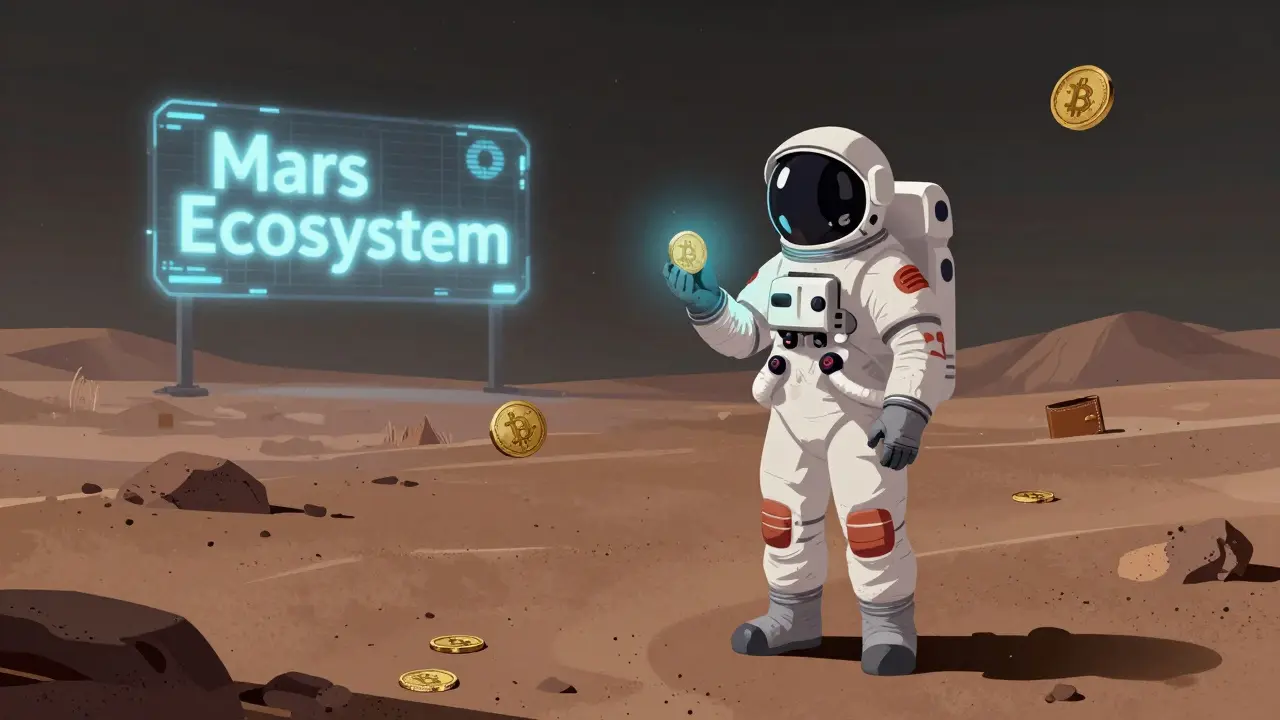
XMS Price Impact Calculator
Current Market Conditions
$0.000297 - $0.0004989 per XMS token
Daily trading volume: $2,300
The XMS airdrop from Mars Ecosystem was one of the more talked-about crypto promotions in 2024 - not because it made people rich, but because it showed how small DeFi projects try to build momentum with limited resources. If you missed it, you didn’t miss out on a life-changing payout. You missed a small, structured learning opportunity that’s now closed. Here’s what actually happened, who got paid, and what it means for you today.
What Is XMS, Really?
XMS is the governance token of Mars Ecosystem, a DeFi project trying to build what it calls the "central bank of DeFi." Its main goal? To fix problems with existing stablecoins. Most stablecoins like USDT or USDC are backed by reserves, but they don’t give users much control. Mars Ecosystem wanted to create something different: a stablecoin called USDM, backed by a mix of crypto assets, governed by token holders, and traded on its own decentralized exchange, MarsSwap.
XMS isn’t a payment token. It doesn’t pay dividends. It doesn’t even have a clear use case outside voting on protocol changes. But that’s the point - it’s meant to give power to the community through MarsDAO, the project’s decentralized governing body. Think of it like owning a share in a startup that hasn’t launched its product yet.
The Two Major XMS Airdrops - And Why They’re Gone
There were two big XMS airdrops. Both are over. No new ones are planned - at least not publicly.
The first was a small-scale giveaway: 50 XMS tokens to 1,000 people. That’s $0.025 at today’s price. Not much. But it wasn’t about the money. It was about testing the waters - getting early adopters to sign up, connect wallets, and join the community.
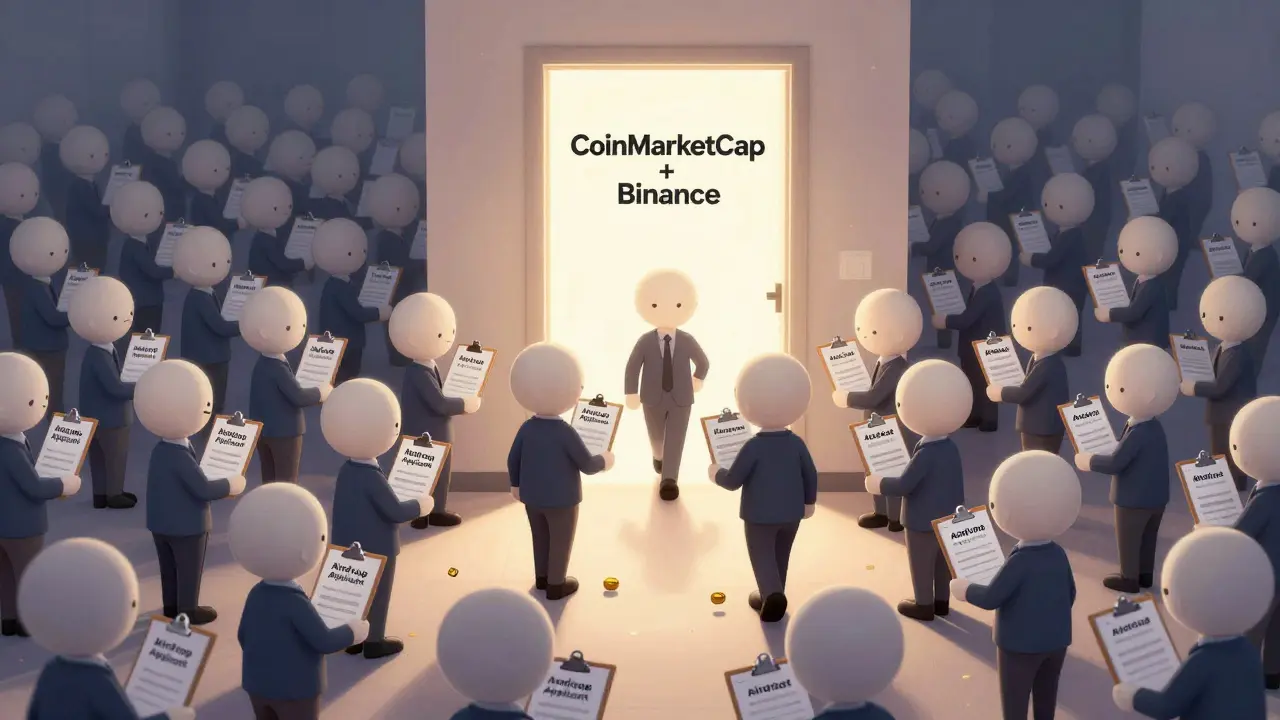
The second airdrop was the real deal. In partnership with CoinMarketCap, Mars Ecosystem distributed $200,000 worth of XMS tokens across 40,000 winners. Each winner got $5 in XMS. That sounds like a lot until you realize how many people applied. The competition was fierce, and the bar was high.
To qualify, you had to:
- Have a CoinMarketCap account
- Have a Binance account
- Watch three educational videos about Mars Ecosystem
- Pass a quiz with 100% accuracy
- Submit your BEP-20 wallet address
That’s not an airdrop for beginners. That’s a filtered, educational funnel. If you didn’t already use Binance and CoinMarketCap, you weren’t even in the game. And if you skipped the videos or got one quiz question wrong? No tokens. No second chances.
Token distribution happened within 3 days after the campaign ended. If you didn’t claim it then, you lost it. No reminders. No extensions.
Where Is XMS Trading Now?
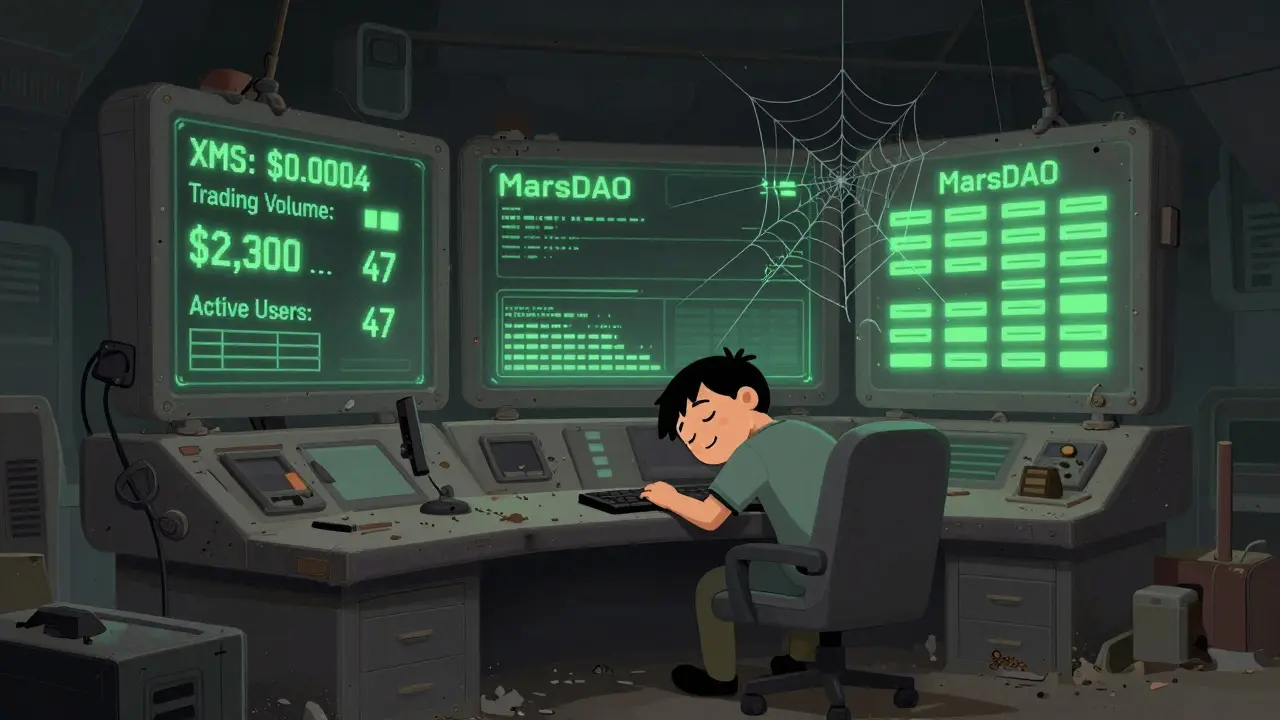
Today, XMS is trading between $0.000297 and $0.0004989 - depending on which site you check. That’s a huge gap. Why? Because there’s almost no liquidity.
On Binance, the 24-hour trading volume is around $2,300. That’s less than what a single whale might move on Ethereum. CoinMarketCap lists it at #5575 in market cap. CoinGecko says it’s #5891. Neither number matters much - the project is too small to be tracked accurately.
Here’s what that means for you: if you bought XMS now, you’d be one of the only people trading it. Selling it later? Good luck finding a buyer. The price could drop 50% in minutes if someone dumps a few thousand tokens.
Historical data shows it had a 15% gain over 30 days - but that’s because it started from near zero. It’s not a trend. It’s noise.
What’s Mars Ecosystem Actually Building?
Beyond the airdrop hype, Mars Ecosystem has some real technical goals:
- USDM - a stablecoin designed to stay pegged to $1 using a mix of collateral and algorithmic adjustments.
- MarsSwap - a decentralized exchange where users can trade USDM and other assets without relying on centralized platforms.
- MarsDAO - the voting system that lets XMS holders decide on fee changes, new features, and treasury use.
They also partnered with MugglePay, a crypto-to-business payment service. That’s a smart move. Instead of chasing traders, they’re trying to get merchants to accept USDM as payment. If that works, it could give the token real utility - not just speculation.
But here’s the catch: no one is using it yet. MugglePay hasn’t rolled out USDM widely. MarsSwap has minimal traffic. The bug bounty program on Immunefi (offering up to $10,000 for security flaws) is active - which is good - but it’s also a sign they’re still fixing bugs, not scaling.
Why the Airdrop Failed to Create Lasting Value
Airdrops are meant to build communities. But Mars Ecosystem’s airdrop built a list of email addresses and wallet addresses - not a movement.
Most people who got XMS didn’t hold it. They sold it immediately. Why? Because they didn’t believe in the project. They just wanted free money. That’s not a community. That’s a transaction.
Compare this to MakerDAO or Uniswap. Their tokens are used every day. People vote. People stake. People build on top of them. XMS? It’s sitting in wallets, collecting dust.
The project’s website still says "Be a DeFi Hitchhiker," but no one’s hitching. The social media accounts are quiet. The Discord server has fewer than 50 active users. There’s no roadmap update. No team announcements. No new partnerships.
When a project stops talking, it’s usually because it ran out of money - or out of ideas.
Can You Still Get XMS Tokens?
No airdrops are active. No new campaigns are announced. The only way to get XMS now is to buy it on a decentralized exchange like PancakeSwap - but you’ll need to use Binance Smart Chain (BSC) and pay gas fees in BNB.
Here’s what that looks like in practice:
- Buy BNB on Binance.
- Send it to a Web3 wallet like MetaMask or Trust Wallet.
- Connect your wallet to PancakeSwap.
- Search for XMS/BNB pair.
- Swap BNB for XMS.
But here’s the reality: you’re buying a token with $2,300 in daily volume. If you buy $100 worth, you might move the price. If you try to sell it later, you might not find a buyer at the same price. You’re taking on high risk for zero guaranteed upside.
Is Mars Ecosystem Still Alive?
Technically, yes. The website is up. The contract is live. The bug bounty is active. But activity? Barely.
There’s no evidence of new development. No GitHub commits in months. No Twitter threads from the team. No AMAs. No press releases.
It’s not dead - but it’s not alive either. It’s in limbo.
If you’re holding XMS, you’re holding a speculative bet on a project that has yet to prove it can do anything beyond run a successful airdrop. And even that airdrop was built on a platform (CoinMarketCap) that doesn’t even list XMS as a top-tier project anymore.
What Should You Do Now?
If you got XMS in the airdrop and still have it - hold it. Don’t sell unless you need cash. It might never go up, but it won’t crash to zero unless the whole project shuts down.
If you didn’t get it - don’t chase it. Don’t buy it. Don’t waste your time trying to find a "last chance" airdrop. Those don’t exist anymore.
If you’re looking for DeFi projects with real momentum, look at established ones: Aave, Compound, Curve, or even newer ones like Pendle or Lyra. They have volume, users, and teams that talk regularly.
Mars Ecosystem is a cautionary tale. It had a good idea. It ran a smart airdrop. But it didn’t build anything people wanted to use. And in crypto, that’s the same as failing.
Don’t mistake hype for progress. Don’t confuse airdrop winners with loyal users. And never invest in a token just because it gave away free money once.
- Poplular Tags
- XMS airdrop
- Mars Ecosystem Token
- XMS token
- USDM stablecoin
- MarsSwap




People Comments
Let’s be real - this whole thing was a vanity project dressed up as DeFi innovation. They didn’t build a central bank. They built a spreadsheet with a token attached. And now? Ghost town. The only thing more dead than XMS is the Discord server.
People who claimed the airdrop didn’t care about governance. They cared about flipping $5 into coffee money. That’s not community building. That’s flea market capitalism.
The structural flaw in Mars Ecosystem's design lies in its misalignment between token utility and economic incentive. XMS serves no function beyond governance participation, yet governance participation requires active engagement, which is not incentivized beyond speculative hope. This results in a classic free-rider problem within decentralized governance frameworks. The airdrop was not a failure of marketing but of mechanism design.
I appreciate the breakdown. Honestly, I watched the videos, passed the quiz, and got my $5. Didn’t sell it right away - held for 3 months. Still sitting there. No movement. No updates. No team activity.
But I don’t blame the project for trying. Most DeFi projects die this way. The real lesson? Don’t chase free tokens unless you believe in the tech. And even then… check the GitHub commits.
At least they didn’t rug. That’s more than I can say for half the projects last year.
THIS IS THE NEW NORMAL OF DEFI FRAUD. THEY LAUNCHED A TOKEN WITH ZERO LIQUIDITY, USED A THIRD-PARTY PLATFORM TO CREATE ARTIFICIAL DEMAND, AND THEN VANISHED. THE ONLY VALUE WAS IN THE AIRDROP - WHICH WAS DESIGNED TO BE A TACTICAL DISTRACTION. NOW THE TOKEN IS A ZOMBIE. NO VOLUME. NO COMMUNITY. NO ROADMAP. JUST A CONTRACT ON BSC THAT STILL EXISTS BECAUSE NO ONE BOUGHT THE DOMAIN TO SHUT IT DOWN.
THEY DIDN’T BUILD A CENTRAL BANK. THEY BUILT A SCAM WITH A WHITEPAPER.
So… XMS is basically the crypto version of that one high school club that had a cool name and a flyer but never actually met? 😅
‘Be a DeFi Hitchhiker’ - yeah, but no one’s stopping to pick you up. And the bus left 6 months ago. 🚍💨
I lived in India when this airdrop happened. Saw a ton of people in local crypto groups trying to qualify. Everyone was so serious about those videos and the quiz. Like it was a job interview.
Then the tokens dropped. And poof. Everyone vanished. No one talked about it after. Just a bunch of wallets with 5 bucks of dust.
Kinda sad, honestly. It felt like a ritual with no meaning after the ritual ended.
They didn’t fail because they were bad. They failed because they were too smart for their own good.
Filtering users with a quiz? That’s not community building. That’s gatekeeping disguised as education.
Real DeFi grows by welcoming the confused. Not by punishing them for missing one quiz question.
If you got XMS and still have it - cool. Don’t stress. It’s not money lost, it’s a lesson learned.
If you didn’t get it? Don’t chase it. There’s no FOMO here. Just noise.
Focus on projects that talk to you, not at you. That’s the real edge in crypto.
LOL you guys act like this was some grand experiment. Nah. They ran a bot farm to hit the 40k winner quota. Half those wallets are burner addresses from a Telegram group that sold access to the quiz answers for 0.01 ETH.
And now? The devs are on a beach in Bali. The website’s still up because they forgot to cancel the hosting. That’s it.
so like… i got the airdrop but didnt know how to claim it? i thought it was automatic? oops. now i feel dumb. but also like… why was it so hard to just send it to my wallet? why all the steps? like… i just wanted free money 😅
also why does no one ever explain gas fees? i spent more on bnb than i got in xms. whoops again.
I think what’s most telling here isn’t the token price - it’s the silence.
Projects that are alive don’t go quiet. They post updates. They answer questions. They admit mistakes. They celebrate small wins.
Mars Ecosystem didn’t just fade - it disappeared. And that’s more honest than pretending to be active when you’re not.
Maybe the real lesson is: in crypto, honesty is rarer than a working airdrop.
Been in crypto since 2017. Seen a hundred airdrops. This one? Honestly? The most boring one.
No drama. No rug. No hype. Just… nothing.
It’s like a startup that spent six months building a website and then realized no one wanted their product. They didn’t lie. They just didn’t care enough to keep going.
Respect the silence.
Someone actually wrote a 2000-word essay about a $0.0003 token? Wow.
Next up: ‘The Rise and Fall of My Neighbor’s Pet Rock Collection’.
Thank you for this thoughtful, meticulously researched analysis. The clarity with which you outlined the structural deficiencies of XMS’s tokenomics is both refreshing and necessary in this space.
It is a sobering reminder that utility must precede speculation - and that governance without participation is merely an illusion of democracy.
Well done.
it’s wild how people treat crypto like it’s a lottery and not a technology experiment.
we’re supposed to be building open systems, but everyone just wants free money and then leaves.
the real tragedy isn’t that xms failed - it’s that no one stayed to help fix it.
we’re all just tourists here. 🌍✨
For anyone still holding XMS: keep it. It’s not going to zero unless the contract is burned. And who knows? Maybe in 2027, someone revives it with a real team.
Until then, treat it like a digital time capsule. A reminder of what happens when good intentions meet poor execution.
It’s worth noting that the XMS contract has not been renounced. The owner wallet still holds 42% of the total supply. This is a critical red flag - it means the project retains unilateral control over tokenomics, contradicting the decentralized governance narrative.
Further, the liquidity pool on PancakeSwap is unverified. No audit reports exist for the core contracts. This is not a DeFi project. It is a speculative instrument wrapped in a whitepaper.
Or… maybe the whole thing was a honeypot. The airdrop was bait. The 40k winners were all bots. The ‘community’ was fake. And now they’re quietly draining the liquidity pool while we all debate whether it’s dead or just napping.
Who’s the real sucker here? The guy who held? Or the guy who bought after the airdrop?