

Gas fees on Ethereum can feel like a slap in the face. You want to swap tokens or mint an NFT, but the network is congested, and the fee jumps to $50 or more. That’s exactly why Scroll was built. It’s an Ethereum Layer 2 scaling solution designed to make transactions faster and cheaper without sacrificing the security you trust from the mainnet. But what about the SCR token? Is it just another speculative asset, or does it have real utility in this ecosystem? Let’s break down what Scroll is, how its technology works, and why the SCR token matters for users and developers alike.
The Core Problem: Why We Need Scroll
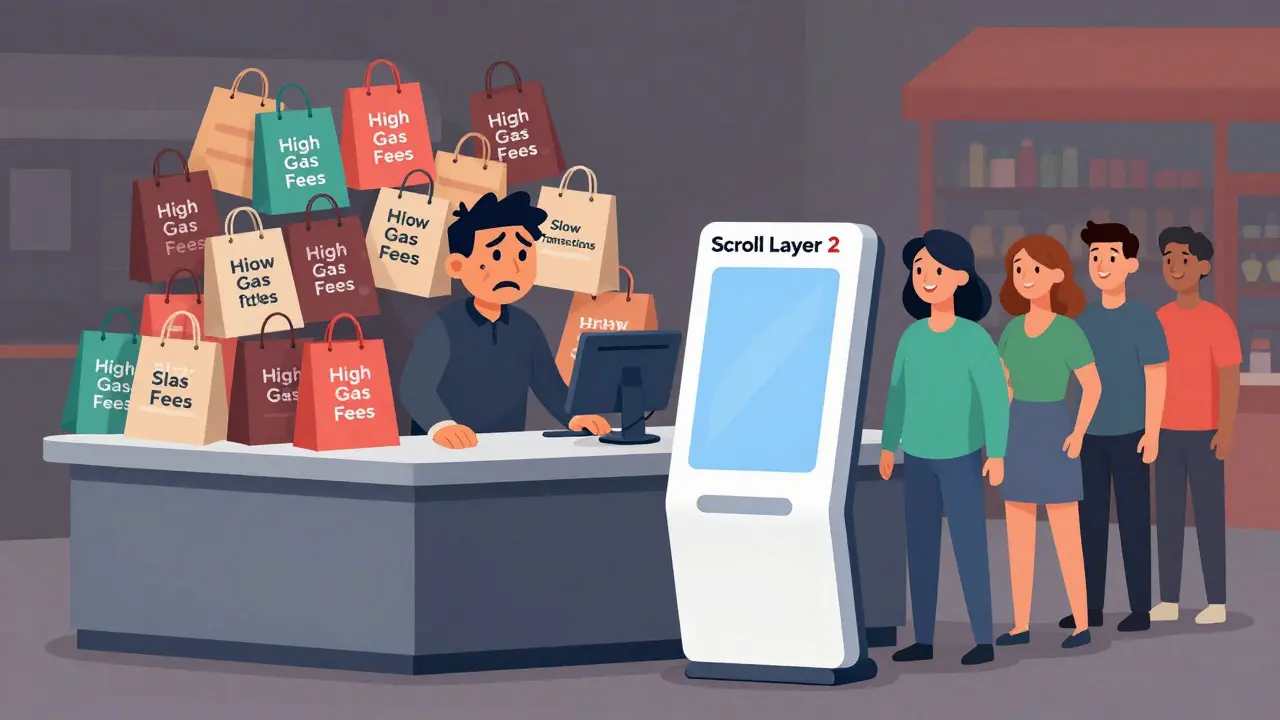
Ethereum is secure and decentralized, but it’s also slow and expensive when demand spikes. The base layer (Layer 1) has limited throughput, meaning only so many transactions can be processed per second. When everyone tries to use the network at once, congestion occurs, and gas prices skyrocket. This creates a barrier for everyday users who don’t want to pay premium rates for simple interactions.
Scroll addresses this by acting as a secondary layer that sits on top of Ethereum. It handles the heavy lifting of transaction processing off-chain and then posts the results back to Ethereum. This approach keeps the security of the mainnet while dramatically improving speed and reducing costs. Think of it like moving checkout lines from a single cashier to multiple self-service kiosks-the store (Ethereum) stays the same, but the flow (transactions) becomes much smoother.
How Scroll Works: The Power of zkEVM
Not all Layer 2 solutions are created equal. Some use optimistic rollups, which assume transactions are valid unless someone proves otherwise. Scroll takes a different route by using zk-rollups, specifically leveraging zero-knowledge proofs. This means every batch of transactions is accompanied by a cryptographic proof that validates their correctness before they’re submitted to Ethereum.
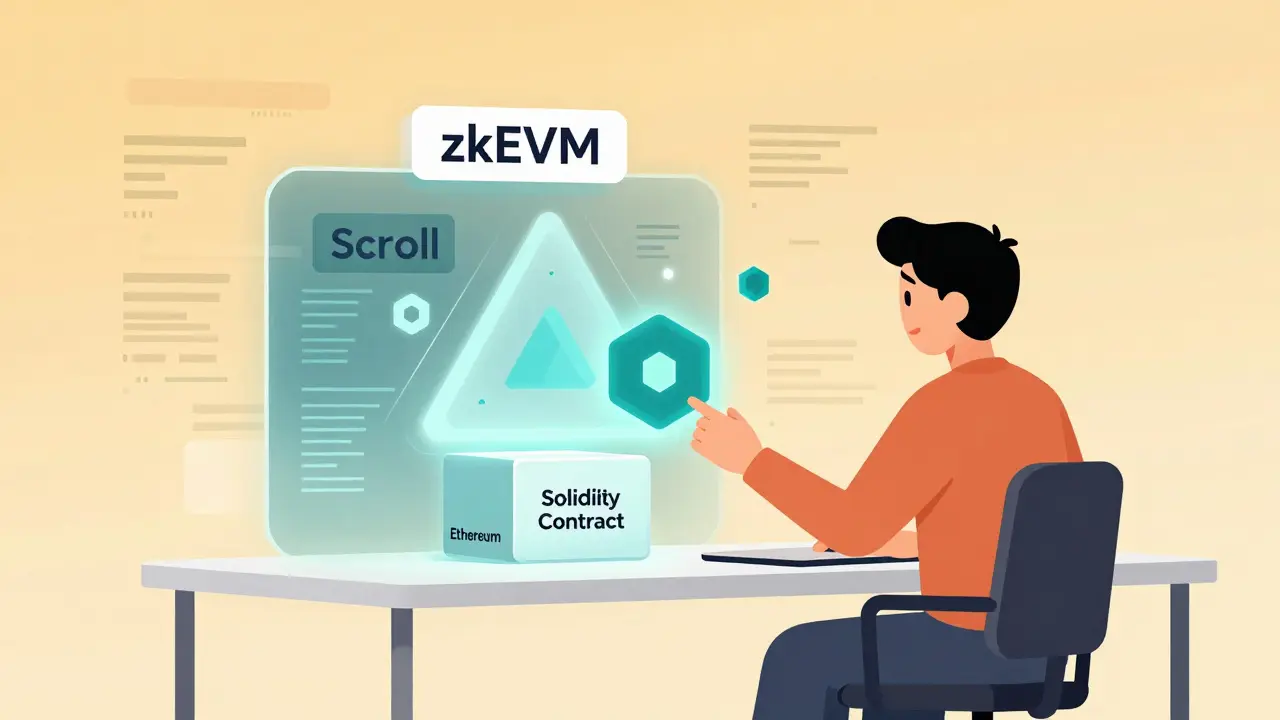
The real game-changer here is Scroll’s implementation of zkEVM (Zero-Knowledge Ethereum Virtual Machine). Most other ZK-based solutions require developers to rewrite their smart contracts because they aren’t fully compatible with Ethereum’s existing codebase. Scroll’s zkEVM is byte-code compatible with Ethereum. What does that mean for you? If you’re a developer, you can deploy your existing Solidity contracts on Scroll with minimal to no changes. If you’re a user, it means you can interact with familiar apps like Uniswap or Aave directly on Scroll, enjoying lower fees without learning new tools or interfaces.
Understanding the SCR Token Utility
The SCR token is the native asset of the Scroll ecosystem. It’s not just a store of value; it has specific functions that keep the network running smoothly. First and foremost, SCR is used to pay for transaction fees on the network. While you can often bridge assets from Ethereum to use on Scroll, having SCR allows for direct payment of gas, potentially offering cost efficiencies depending on market conditions.
Beyond fees, SCR plays a crucial role in governance. As a decentralized project, Scroll relies on community input for major decisions. Holding SCR gives you voting power on proposals related to protocol upgrades, treasury management, and future development directions. This ensures that the platform evolves in a way that benefits its users rather than being dictated solely by a central team.
Additionally, SCR serves as an incentive mechanism. Validators, provers, and sequencers-who are responsible for securing the network and generating those critical zero-knowledge proofs-are rewarded in SCR. This aligns the interests of network participants with the long-term health of the ecosystem. They’re motivated to maintain high uptime and security because their rewards depend on it.
Token Supply and Distribution Details
When evaluating any cryptocurrency, understanding its supply dynamics is essential. The SCR token has a capped total supply of 1 billion tokens. This fixed cap prevents inflationary pressure that could dilute value over time. However, how these tokens are distributed matters just as much as the total number.
To ensure stability and prevent early investors from dumping their holdings immediately after launch, Scroll employs vesting schedules. Tokens allocated to investors, contributors, and the team are locked for specific periods before being gradually released. This structure helps mitigate volatility and encourages long-term commitment to the project. For instance, a portion of the supply is reserved for ecosystem growth and community incentives, ensuring there’s always fuel for adoption and development.
Security and Decentralization Guarantees
One of the biggest concerns with Layer 2 solutions is whether they compromise the decentralization that makes Ethereum special. Scroll prioritizes maintaining Ethereum’s security model. By posting cryptographic proofs and transaction data to the Ethereum mainnet, Scroll ensures that all activities are verifiable and censorship-resistant. If something goes wrong on Scroll, the underlying Ethereum smart contracts can step in to verify the state and protect user funds.
This design preserves the trust-minimization principles of Ethereum. You don’t need to trust Scroll’s operators blindly; you trust the mathematics of the zero-knowledge proofs and the security of the Ethereum blockchain. This is a significant advantage over some other scaling solutions that rely on multi-signature wallets or smaller validator sets, which introduce additional points of failure.
Market Context and Current Status
As of May 2026, Scroll is an operational and active Layer 2 network. The SCR token trades on various exchanges, reflecting the growing interest in ZK-based scaling solutions. With a current price around $0.04435 USD and a 24-hour trading volume exceeding $3 million, SCR shows consistent liquidity. While short-term price fluctuations are normal in the crypto market, the fundamental value proposition of Scroll-fast, cheap, and secure Ethereum transactions-remains strong.
The broader trend in the industry is moving toward zero-knowledge technologies. As more projects adopt ZK-proofs for privacy and scalability, Scroll’s position as a leading zkEVM solution puts it in a favorable spot. Developers are increasingly looking for platforms that offer both ease of migration and robust security, and Scroll delivers on both fronts.
Comparing Scroll to Other Layer 2 Solutions
It’s helpful to see how Stack up against competitors. Here’s a quick comparison of Scroll with other popular Layer 2 options:
| Feature | Scroll | Arbitrum One | Polygon PoS |
|---|---|---|---|
| Type | ZK-Rollup (zkEVM) | Optimistic Rollup | Sidechain / PoS |
| EVM Compatibility | Full Bytecode Compatible | High (with minor tweaks) | High |
| Security Model | Cryptographic Proofs on L1 | Fraud Proofs on L1 | Independent Validator Set |
| Transaction Finality | Fast (Seconds) | Slower (Challenge Period) | Fast |
| Developer Experience | Seamless Migration | Good | Good |
As you can see, Scroll’s unique selling point is its combination of ZK-security and full EVM compatibility. Arbitrum offers great performance but relies on optimistic assumptions, which can lead to longer finality times during disputes. Polygon provides speed but operates as a sidechain, meaning it doesn’t inherit Ethereum’s security guarantees in the same way. Scroll bridges the gap by offering the best of both worlds: Ethereum-level security with near-instant finality and easy developer onboarding.
Practical Use Cases for Users
If you’re wondering how to actually use Scroll in your daily crypto life, here are a few common scenarios:
- DeFi Trading: Swap tokens on Uniswap or provide liquidity on Curve with significantly lower gas fees than on Ethereum mainnet.
- NFT Minting: Participate in NFT drops on Scroll-based marketplaces where minting costs are pennies instead of dollars.
- Bridge Assets: Move your ETH or ERC-20 tokens from Ethereum to Scroll using official bridges to access lower-cost transactions.
- Governance Participation: Hold SCR to vote on proposals that shape the future of the Scroll ecosystem.
The key takeaway is that Scroll isn’t just a technical experiment; it’s a functional part of the Ethereum infrastructure. Whether you’re a trader, a collector, or a developer, Scroll offers a practical path to interacting with Web3 without the friction of high costs.
Is Scroll safe to use?
Yes, Scroll is considered highly secure because it uses zero-knowledge proofs to validate transactions on the Ethereum mainnet. This means the security of your assets is backed by Ethereum’s robust consensus mechanism, not just by Scroll’s own validators.
Do I need SCR tokens to use Scroll?
Not necessarily. You can bridge ETH from Ethereum mainnet to Scroll and use it to pay for gas fees. However, holding SCR may offer cost advantages for transaction fees and allows you to participate in governance.
What is the difference between Scroll and Arbitrum?
The main difference lies in their underlying technology. Scroll uses ZK-rollups with cryptographic proofs for immediate validity, while Arbitrum uses Optimistic Rollups that assume transactions are valid unless challenged. Scroll also boasts full bytecode EVM compatibility, making it easier for developers to migrate existing contracts.
Can I deploy my existing Ethereum smart contracts on Scroll?
In most cases, yes. Because Scroll uses a zkEVM that is byte-code compatible with Ethereum, you can typically deploy your Solidity contracts with little to no modification. This is a major advantage over other ZK-based solutions that require rewriting code.
What happens if the Scroll network fails?
Since Scroll posts its state and proofs to Ethereum, the mainnet acts as a source of truth. In the event of a failure or dispute, Ethereum’s smart contracts can verify the correct state, ensuring that user funds remain secure and accessible.
- Poplular Tags
- Scroll crypto coin
- SCR token
- Ethereum Layer 2
- zkEVM
- zero-knowledge proofs