



Imagine being able to take out a loan in stablecoins while your original crypto assets continue to earn interest. Most people think you have to choose: either hold your assets for long-term gains or sell them for cash. Hubble Protocol is a decentralized finance (DeFi) platform built on the Solana blockchain that lets you do both by borrowing against your crypto holdings. Launched on January 28, 2022, it aims to bring a more flexible lending experience to the Hubble Protocol ecosystem, though it has faced a rocky road since its debut.
How Hubble Protocol Actually Works
At its core, the protocol operates as a decentralized credit line. Instead of a bank checking your credit score, the system looks at the collateral you provide. The star of the show here is USDH, a decentralized stablecoin that users mint by depositing other crypto assets as security. If you have SOL, BTC, or ETH, you can lock them in the protocol to generate USDH.
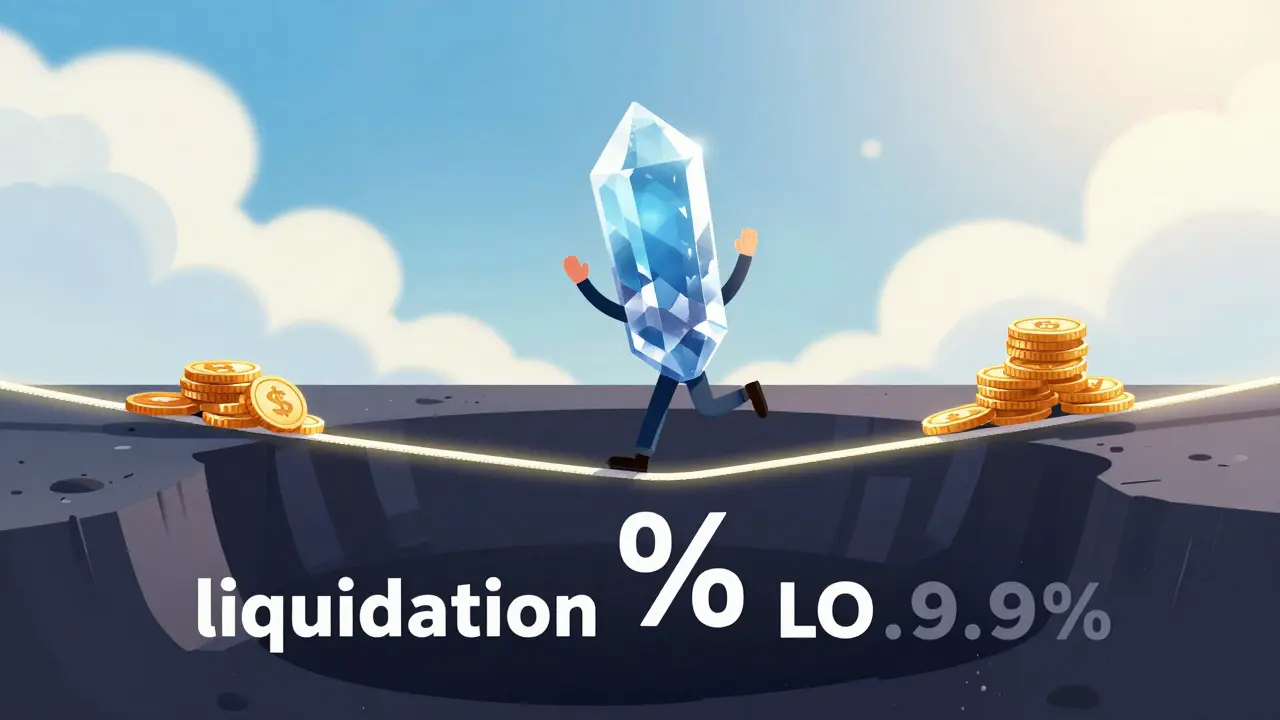
One of the most aggressive features of the platform is its Loan-to-Value (LTV) ratio. Hubble allows a 90.9% LTV. To put that in plain English: if you deposit $1,000 worth of Solana, you can borrow roughly $909 in USDH. While this gives you massive liquidity, it's a double-edged sword. Because the margin is so thin, a price drop of just 10% in your collateral could trigger a liquidation, meaning the protocol sells your assets to pay back the loan.
The real kicker? You earn yield-positive interest on your collateral while the loan is active. You're essentially earning money on the assets you're using as a guarantee, which is a rare setup in the DeFi world.
The Role of the HBB Token
If USDH is the tool you use for borrowing, HBB is the engine that runs the protocol. The HBB token serves as the native governance and utility token for the platform. Holding HBB isn't just about speculating on the price; it gives you a seat at the table.
Token holders can use HBB to participate in governance, meaning they vote on how the protocol evolves. Additionally, HBB allows users to earn USDH rewards. However, the market performance of HBB has been volatile. After hitting an all-time high of $5.12 during the mainnet launch in early 2022, the price saw a massive correction, sliding toward the $0.004 range by 2025. This trend highlights the extreme risk associated with early-stage DeFi tokens.
| Attribute | Value / Detail |
|---|---|
| Total Supply | 100 Million HBB |
| Circulating Supply | ~68.33 Million HBB |
| Total Value Locked (TVL) | $2.6 Million |
| Max LTV Ratio | 90.9% |
| Blockchain Platform | Solana |
Funding and Institutional Backing
Hubble didn't start with nothing. It attracted significant attention from the venture capital world. Between its pre-seed and strategic rounds, the project raised between $15 million and $22.4 million. This capital came from some heavy hitters in the crypto space, including Multicoin Capital, a prominent venture fund that led the strategic financing round, as well as firms like Delphi Digital, Jump Capital, and Crypto.com Capital.
Having this kind of backing usually suggests a high level of confidence in the technical architecture. However, funding doesn't always equate to mass adoption. While the developers have kept the codebase active-with consistent weekly commits-the project's market cap has shrunk significantly compared to its early valuation.
Stability and Risk Management
To keep the system from crashing when prices swing, Hubble uses a Stability Pool. This is where users provide liquidity to act as a buffer for the protocol. If a borrower's position becomes undercollateralized, the Stability Pool helps manage the risk. There's also an incentive for users to perform "in-house liquidations," where they essentially act as the cleanup crew to keep the system healthy.
But let's be real about the risks. The 90.9% LTV is incredibly tight. In a market where Bitcoin or Solana can drop 15% in a few hours, the risk of losing your collateral is very high. For a regular person, this means you can't just "set it and forget it." You need to monitor your collateral ratio constantly or risk a total loss of your deposit.
The Future: Phases 2 and 3
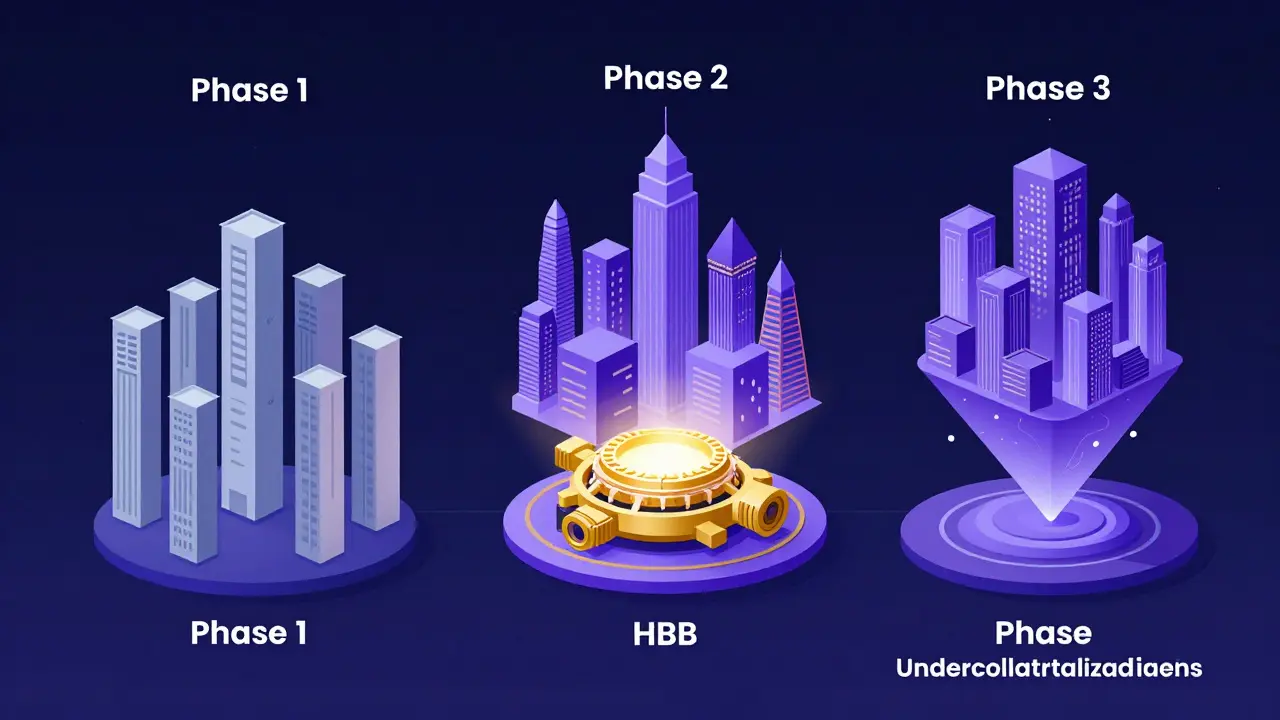
The current version of the platform is known as Phase 1. The team has outlined a roadmap to expand the protocol's utility. Phase 2 is intended to introduce DeFi structured products, which would offer more complex ways to earn yield. Phase 3 aims to bring undercollateralized loans to the table.
Undercollateralized loans would be a game-changer. Currently, you have to put up more value than you borrow. An undercollateralized system would allow users to borrow without putting up a 1:1 (or higher) value of assets. While this sounds great, it's incredibly difficult to implement in a decentralized way without a centralized credit score system, making Phase 3 a massive technical hurdle.
Trading and Accessibility
If you're looking to buy HBB, you won't find it on big centralized exchanges like Coinbase or Binance. Almost 100% of the trading volume happens on decentralized exchanges (DEX) within the Solana ecosystem. This means you'll need a Solana-compatible wallet (like Phantom) and a basic understanding of how to swap tokens on a DEX.
This lack of centralized exchange presence is a hurdle for mainstream growth. Most casual investors prefer the ease of a login-and-buy interface. By living exclusively on DEXs, Hubble is catering to the "power users" of DeFi, which limits its pool of potential new holders.
Is Hubble Protocol safe to use?
Like all DeFi protocols, it carries risks. The biggest risk is liquidation; because the LTV is 90.9%, a small price drop in your collateral can lead to your assets being sold. Additionally, the HBB token has seen extreme price volatility, losing over 99% of its value from its all-time high.
What is the difference between HBB and USDH?
USDH is the stablecoin you borrow or mint to use as a liquid asset. HBB is the governance token that gives you voting rights and allows you to earn rewards. Think of USDH as the currency and HBB as the equity/membership in the protocol.
Can I earn interest while borrowing on Hubble?
Yes, that is one of the protocol's unique selling points. You earn yield-positive interest on the crypto assets you deposit as collateral, even while you have a loan active in USDH.
Where can I buy HBB coins?
HBB is primarily traded on decentralized exchanges (DEX) on the Solana blockchain. You will not find it on major centralized exchanges (CEX), so you'll need a Solana wallet to trade it.
What happens if my collateral value drops?
If the value of your collateral falls below the required threshold (due to the 90.9% LTV), your position becomes eligible for liquidation. This means the protocol will sell your collateral to ensure the USDH loan is covered.
- Poplular Tags
- Hubble Protocol
- HBB crypto coin
- USDH stablecoin
- Solana DeFi
- crypto borrowing



People Comments
lending on solana is usually way faster than other chains but that ltv is absolute insanity if you aren't watching the charts 24/7
Totally agree with the point about the LTV!!! It's so risky for a beginner, but for seasoned traders, it's a great way to maximize efficiency!!
Who here is actually using this right now? 🚀 I bet some of you are sweating those liquidation prices lol! 😅 Drop your strategies below! 👇
90% LTV is just a fancy way to say 'please liquidate me'. Pure madness.
Oh sure, let's just trust a protocol that lost 99% of its token value. Definitely the safest bet for your life savings.
Just to add a bit of context, the Stability Pool is essentially the backbone of these types of synthetic assets!! It's similar to how MakerDAO operates, though the risk profile here is much more aggressive!!
the stability pool is a great mechanism for those who want to earn while helping the network stay healthy
It is honestly disgusting how these VCs like Multicoin pump these projects only for retail investors to hold the bag while the token crashes to 0.004. It's the same predatory cycle every single time and people still fall for it because they crave that 'moon' shot. The systemic failure of governance tokens is a moral bankruptcy in the DeFi space that we just ignore because we're all chasing yields. It's a tragedy masquerading as innovation.
The allure of undercollateralized loans is a pipe dream in a trustless environment. Trying to implement a credit score on-chain is a paradoxical nightmare that will likely end in a spectacular collapse of the Phase 3 ambitions.
imagine thinking a roadmap phase 3 is actually going to happen in this market lol
We must ask ourselves if the pursuit of liquidity is merely a mask for our deeper fear of instability in the digital age. Perhaps the liquidation is a metaphor for the shedding of the ego.
the imprecission of the 90.9% LTV is wild. if the slipage hits hard during a flash crash, you're basically toasted. the delta between the collateral value and liquidation price is way too slim for most retail portfolos.
it is a great learning tool for anyone new to solana defi just start small and you will be fine
I love the optimism here!! Using a decentralized credit line can be so empowering if you manage the risk parameters correctly!! Just remember to keep an eye on your health factor!!
One should note that the absence of centralized exchange listings significantly hinders the protocol's ability to attract liquidity from a broader demographic of investors.
Wow, a 99% drop in price. What a stellar investment strategy! Truly a masterpiece of financial engineering.
I can see why some people feel scared of the risk. It's okay to be cautious and maybe just hold your coins instead of borrowing if it keeps you sleeping better at night.
i tried using a solana wallet before and it was a bit confuseing at first but you get the hang of it eventually
If you're using Phantom, just make sure you're interacting with the official dApp link to avoid phishing sites. The UI is pretty clean though!
Only Americans really get how to handle high-risk assets like this. The rest of you are just playing around with toys. This is real finance.
The total value locked is a mere $2.6 million which is frankly embarrassing for a project with this much VC backing and it clearly shows that the market has completely lost faith in the HBB token utility 🙄 the discrepancy between the strategic funding and the actual adoption is a glaring red flag that no one seems to be addressing seriously enough in this thread.
It is fascinating to see how different cultures approach the concept of debt and collateral in the digital realm 🌏 I believe that these early failures are actually stepping stones toward a more empathetic financial system where we support each other's growth rather than just liquidating positions for profit ✨ let us consider the long-term vision of Phase 3 as a quest for trust in a trustless world 🌿
I agree that the risk is high, but the yield-positive collateral is a very interesting feature that sets them apart from other lenders.
so if i put in sol do i get usd稳定币 back immediately
Yes, the minting process is pretty fast on Solana.