


How the DBD Ecosystem Actually Works
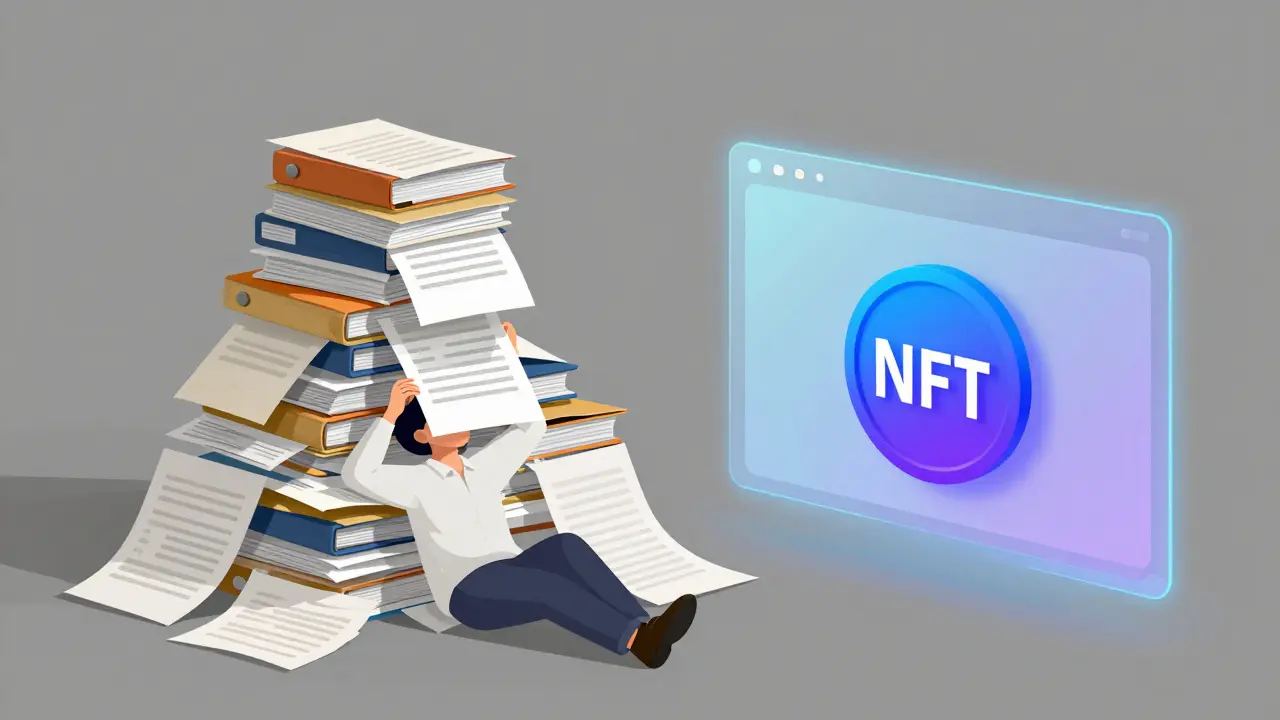
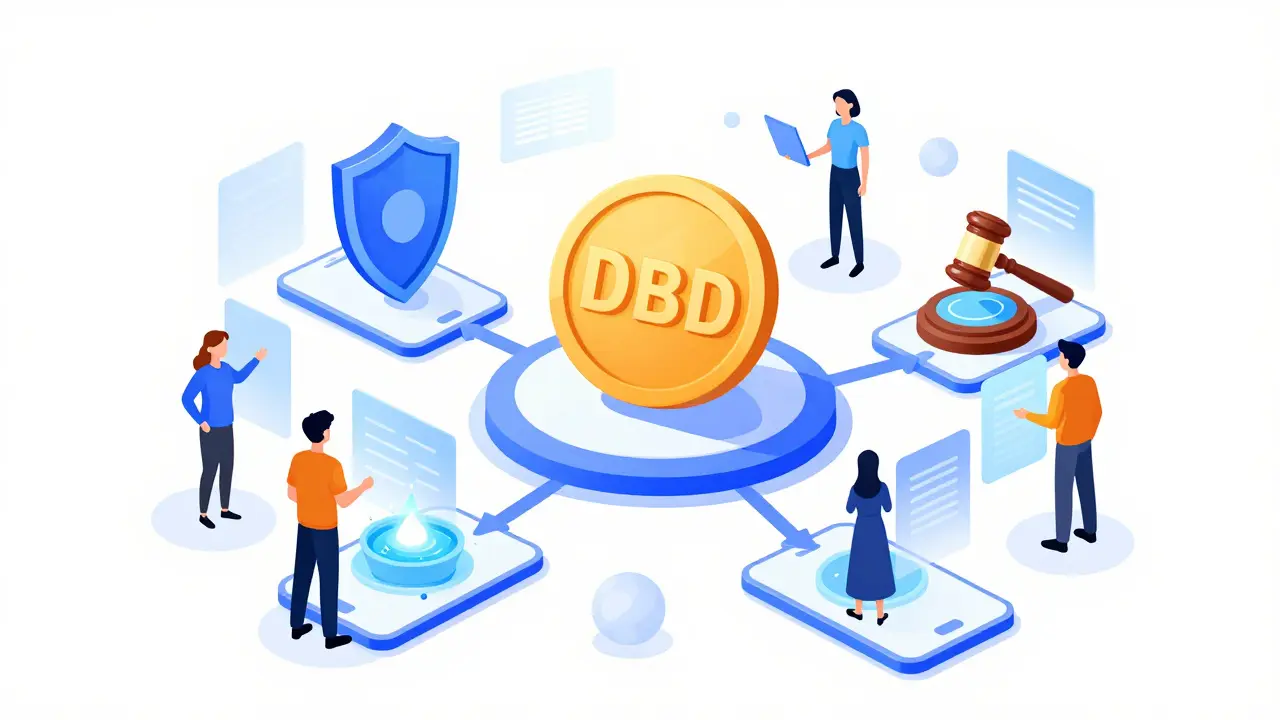
At its heart, DBD is built on the Ethereum blockchain using the ERC-20 token standard. This means it lives on the same network as the biggest coins in the world, allowing it to integrate with standard wallets. But the real magic (or ambition) is in the NFT integration. In a traditional setup, your insurance policy is a PDF or a piece of paper. In the DBD model, your policy is represented as a Non-Fungible Token. This makes the policy unique, verifiable on the blockchain, and theoretically easier to transfer or manage. The ecosystem is governed by a DAO (Decentralized Autonomous Organization), meaning the community of token holders can theoretically vote on how the marketplace operates and how the risk pools are managed. To make this work, the project introduced an "asset registry app" available on both the Apple App Store and Google Play. The idea is that you list your asset, find an insurer, and lock in a policy using DBD tokens. For the investors, the platform offers a way to provide liquidity to claims pools, essentially acting as the "backstop" for insurance payouts in exchange for a share of the premiums.The Utility of the DBD Token
If you hold DBD, what can you actually do with it? It isn't just a speculative asset; it has several built-in functions within its own economy. The token is used for:- Payment of Premiums: Users pay for their insurance coverage using DBD.
- Claims Settlement: When a loss occurs, the payout to the policyholder is handled via the token.
- Governance: Holding the token gives you a voice in the Insurance DAO.
- Staking and Investing: You can lock up your tokens in liquidity pools to earn a yield from the premiums paid by others.
- Reputation Scoring: The system intends to use tokens to track the reliability of both insurers and policyholders.
| Attribute | Value |
|---|---|
| Blockchain Standard | Ethereum (ERC-20) |
| Maximum Supply | 800,000,000 DBD |
| Contract Address | 0xa5f1dbb0e55bc31f32c6d032bee330288490e722 |
| Primary Use Case | Decentralized Insurance |
Market Performance and Red Flags
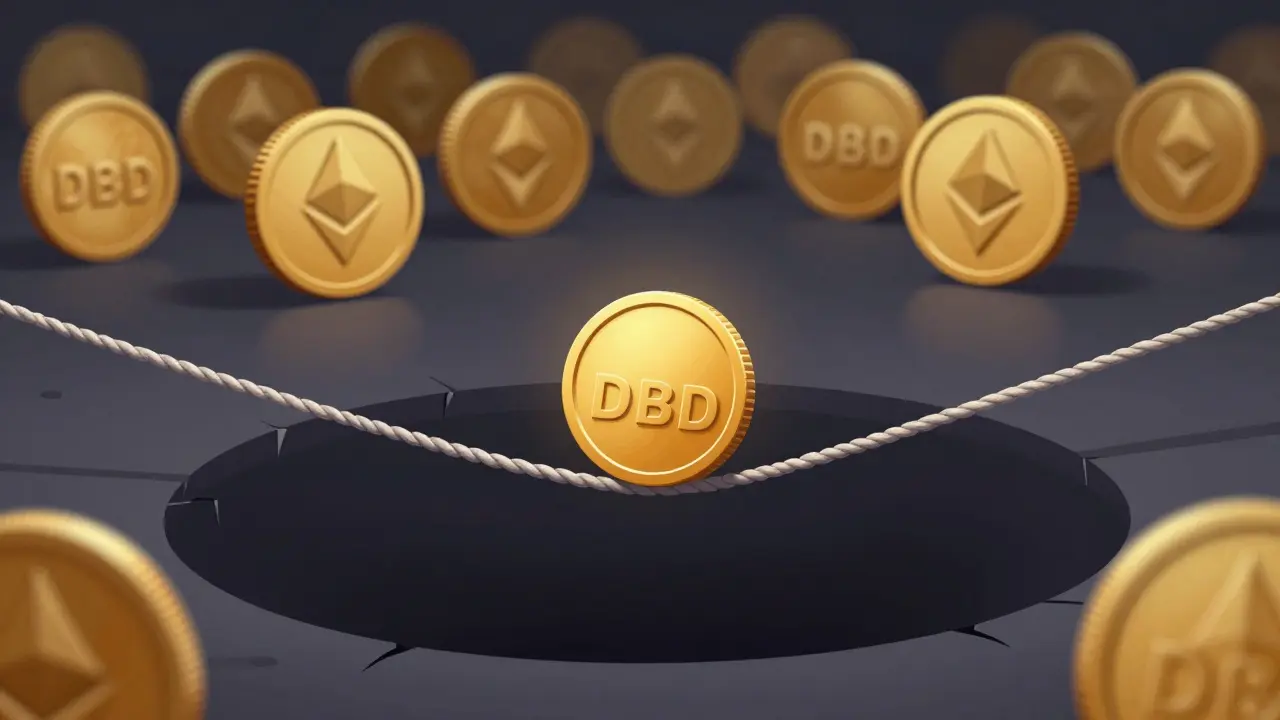
Here is where things get tricky. While the whitepaper paints a picture of a revolutionary marketplace, the market data tells a different story. As of late 2023, the token has been trading at very low levels, often between $0.0031 and $0.0037. More concerning is the liquidity. If you try to sell a significant amount of DBD-say, more than $500-you might find it nearly impossible. Traders on platforms like Bitcointalk have reported "thin order books," which is a fancy way of saying there aren't enough buyers. This leads to massive slippage, meaning you end up selling your coins for way less than the listed price. There are also huge discrepancies in how the coin is reported. Some platforms list the market cap as zero, while others show a fluctuating number. This usually happens when a coin has very low trading volume or when the circulating supply isn't being tracked accurately by the exchanges. When a project is ranked around #2400 in the global market, it's a sign that it's struggling for oxygen in a sea of more popular projects.Comparing DBD to Other DeFi Insurance
To understand where DBD fits, you have to compare it to the giants of the sector. Most blockchain insurance projects focus on "smart contract cover"-essentially insuring you against a bug in a piece of code. DBD is trying to do something different by focusing on real-world assets (physical things).| Feature | Day By Day (DBD) | Nexus Mutual / InsurAce |
|---|---|---|
| Asset Focus | Real-World Physical Assets | Smart Contracts & DeFi Protocols |
| Liquidity | Very Low (Difficult to exit) | High (Deep trading pools) |
| Track Record | Minimal operational data | Millions in claims processed |
| Policy Form | NFT-based | Smart contract-based |
The Risks: What You Need to Know
Investing in a low-cap utility token like DBD is a high-risk gamble. Beyond the liquidity issues, there's a lack of visible developer activity. For a project that claims to be an automated insurance marketplace, there isn't much evidence of active, updated code on public repositories like GitHub. Then there's the regulatory cloud. Because DBD offers "income for investors" via staking and claims pools, regulators in many countries might view it as a security rather than a currency. If a government decides it's an unregistered security, the project could face legal hurdles that would make it even harder to trade. Finally, the learning curve is a hurdle. You can't just buy this on a big exchange and forget it. You need to understand how to manage an Ethereum wallet, how to set slippage on a DEX (Decentralized Exchange), and how NFT ownership actually works for insurance. Beginners are looking at roughly 8 to 10 hours of study just to use the platform without making a costly mistake.The Verdict on Day By Day
Does the world need a blockchain-based insurance market? Absolutely. The current system is slow and expensive. Does DBD successfully provide that? That's the big question. Right now, the project exists more as a set of promises in a whitepaper than a functioning business. If you're a developer or a blockchain enthusiast, the concept of using NFTs for policies is brilliant. But as a financial asset, the lack of transparency, the disappearing market cap data, and the difficulty of selling your position make it a dangerous play. Until they can show a verified list of active policies and a surge in trading volume, it remains a speculative experiment in the fringes of the crypto world.Is Day By Day (DBD) a safe investment?
It is considered high-risk. The token suffers from extremely low liquidity, meaning it can be very difficult to sell your coins once you've bought them. Additionally, the lack of verifiable operational data and low trading volume suggest significant volatility and risk of loss.
How do NFTs play a role in the DBD project?
In the DBD ecosystem, NFTs act as the digital representation of an insurance policy. Instead of a traditional contract, the NFT proves your ownership of the policy and the asset being insured, making the process transparent and easily transferable on the blockchain.
Where can I trade DBD tokens?
DBD is primarily traded on smaller exchanges. While some users have used BitMart or Uphold, be aware that the order books are very thin, which often leads to failed transactions or high slippage for larger trades.
What is the maximum supply of DBD?
The fixed maximum supply of the Day By Day token is 800 million DBD. According to current data, the majority of these tokens are already in circulation.
Can I earn money by staking DBD?
The project is designed to allow investors to earn income by providing liquidity to claims pools and participating in DAO staking. However, the actual profitability depends on the volume of insurance premiums being paid into the system, which is currently low.

People Comments
The slippage issue is a massive red flag... seriously... if you can't exit a position larger than 500 bucks, it's basically a hotel California coin!!!
Everyone knows this is just a pump and dump scheme lol 🤡 just look at the volumm and the order books are empty af!! why u guys even consider this junk 🤣
Physical asset insurance via NFT is a clever primitive, but the execution here seems flawed. Liquidity is the primary failure point.
Oh sure, because we all know how great it is to have your house insurance as a JPEG that might vanish if the network glitches. Truly revolutionary stuff right here.
I agree with the assessment of the liquidity risks... it is quite concerning... indeed...
Absolute rubbish. This is just another layer of obfuscation for the retail herd to get slaughtered by whales using basic asymmetric information. The lack of a verifiable GitHub commit history is a textbook example of a vaporware project. Why do we keep pretending these pseudo-insurance protocols have any actual solvency or regulatory compliance in a sovereign legal framework? It's just an ERC-20 wrapper around a fantasy. The tokenomics are skewed and the utility is nonexistent because no sane underwriter would move real-world risk into a DAO governed by speculators. It is a complete farce and a waste of bandwidth.
It is interesting to ponder how the shift from institutional trust to algorithmic trust manifests in something as grounded as physical insurance, where the gap between a digital token and a physical building is bridged by a smart contract that cannot actually see the fire or the flood it is insuring, leading one to wonder if the decentralization of the risk pool is actually a benefit or just a way to distribute the loss more efficiently across a crowd of unsuspecting investors who believe in the promise of a frictionless future while ignoring the friction of reality.
typical low cap trash move where they promise real world assets but provide zero proof of actual policies in the pool just to lure in a few thousand retail bags who dont even know how to set slippage on uniswap properly and then wonder why their balance is zero after a trade
For those trying to trade this, make sure you use a limit order if possible, otherwise the slippage will eat your entire principal.
Keep the faith everyone! The concept of bridging RWA (Real World Assets) with DeFi is the next big narrative! Even if the liquidity is low now, the architectural shift toward NFT-based policies is a game changer! Let's push for more transparency and the value will follow! 🚀
The deep state is obviously using these tokens to track our assets via the blockchain and the so called dao is just a front for international surveillance networks to monitor who owns what in the us the lack of dev activity is just a coverup for the actual military grade code they are using behind the scenes
Just be careful guys.
I've seen similar models in other markets, but the lack of transparency here is quite a barrier.