Pakistan’s $300Billion Crypto Trading Volume in 2025: What the Numbers Reveal
Explore why Pakistan’s crypto market claims $300billion in annual volume, the drivers behind the surge, regulatory shifts, and what it means for traders and investors.
When looking at Pakistan cryptocurrency market, the ecosystem of digital assets, traders, and services operating within Pakistan's borders, you quickly see it’s shaped by crypto regulation, rules set by the State Bank of Pakistan and the Securities Commission, supported by a growing network of crypto exchanges, platforms where users buy, sell, and store crypto, and increasingly by stablecoins, price‑pegged tokens that offer a bridge to fiat. This mix of policy, infrastructure, and token innovation defines the market’s current shape.
Regulators in Pakistan have taken a cautious stance: the central bank warns against unlicensed crypto activities, while the securities authority drafts licensing guidelines. In practice, this means the market requires clear compliance pathways for businesses, and traders often lean on legal counsel to navigate AML and Travel Rule obligations. The tighter the rules, the more formal the exchange ecosystem becomes, pushing platforms to adopt KYC, AML monitoring, and transparent reporting.
Local exchanges are the cornerstones of daily trading. Platforms such as Binance Pakistan, local peer‑to‑peer services, and emerging home‑grown apps provide fiat on‑ramps and off‑ramps, but they must align with the same regulatory framework. This creates a direct link: crypto regulation influences exchange availability, which in turn determines how easily users can move money. Many traders also use cross‑border services to bypass heavy fees, a practice that regulators monitor closely.
Stablecoins have become a practical solution for users dealing with the country's inflationary pressures. Tokens like USDT, USDC, and locally focused stablecoins let people store value without converting back to Pakistani rupees. Because stablecoins stay pegged to a fiat currency, they act as a bridge for remittances, DeFi lending, and even paying for goods online. Their rise shows how stablecoins influence the broader market by offering a low‑volatility alternative to Bitcoin or altcoins.
Trading trends reveal that Bitcoin still dominates volume, but interest in DeFi protocols, futures contracts, and NFT projects is rising. Investors watch global price signals, yet they also track domestic news such as tax proposals or exchange bans, which can trigger sudden spikes in activity. Risk management tools—like stop‑loss orders, leverage caps, and diversification into stablecoins—are becoming common practice among Pakistani traders seeking to protect capital.
All these pieces—regulation, exchanges, stablecoins, and trading behavior—create a dynamic environment that keeps evolving. Below you’ll find deep‑dive articles, practical guides, and up‑to‑date reviews that unpack each of these aspects, giving you the knowledge to navigate the Pakistan cryptocurrency market with confidence.
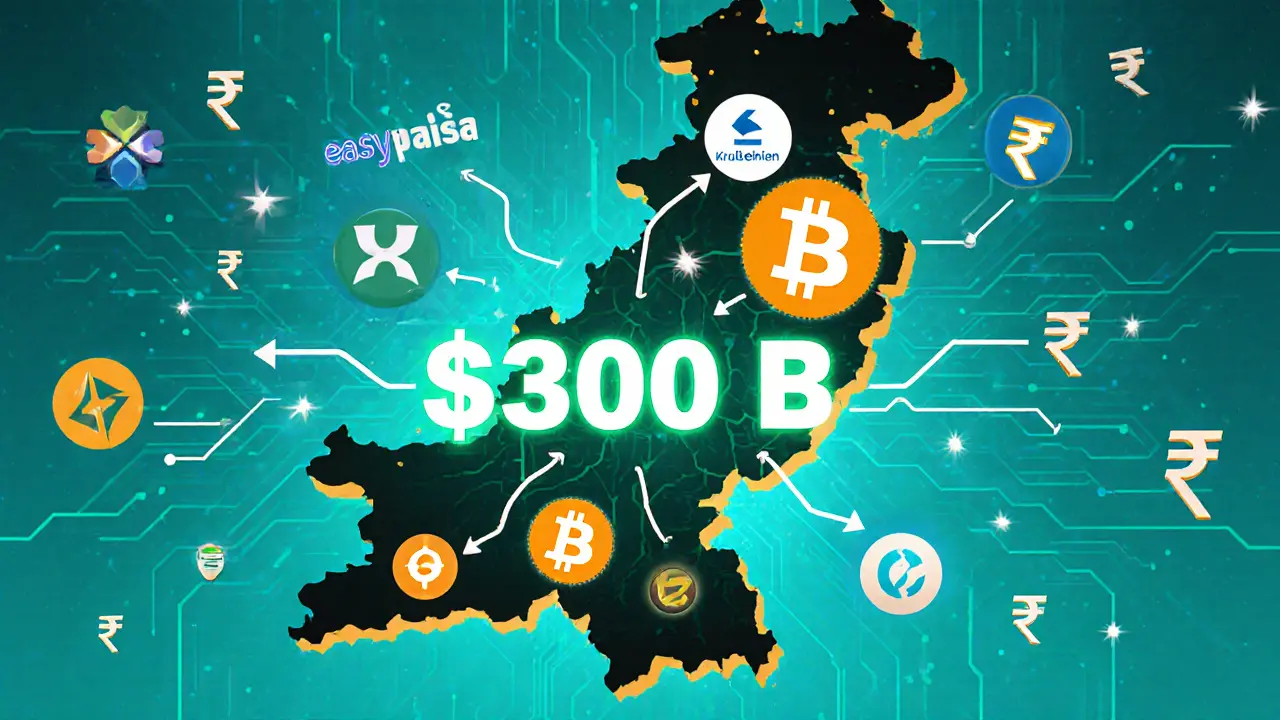
Explore why Pakistan’s crypto market claims $300billion in annual volume, the drivers behind the surge, regulatory shifts, and what it means for traders and investors.