


Bitcoin Withdrawal Fee Calculator
Compare Hubi's fee (0.0005 BTC) vs HTX's fee (0.0008 BTC) to see how much you save on Bitcoin withdrawals.
For reference: 0.0005 BTC = $10.50 (at $21,000/BTC)
Your Savings
Hubi fee per withdrawal: 0.0005 BTC ($10.50)
HTX fee per withdrawal: 0.0008 BTC ($16.80)
Total saved on Hubi: 0.0030 BTC ($63.00)
Over 10 withdrawals, Hubi saves you 40% compared to HTX
Why this matters: If you're withdrawing Bitcoin regularly (like to your hardware wallet), Hubi's lower fees can save you hundreds of dollars per year. At 10 withdrawals per month, you save $63 USD. At 20 withdrawals, you'd save $126 USD.
When you search for Hubi crypto exchange, you’re likely to get flooded with results about HTX - formerly known as Huobi Global. That’s not a mistake. Many people mix up the names, and for good reason. Hubi and HTX are often confused, but they’re not the same. And if you’re looking to trade crypto, knowing the difference matters more than you think.
What Is Hubi Crypto Exchange?
Hubi is a smaller, no-frills cryptocurrency exchange that operates with a simple model: flat fees and low withdrawal costs. Unlike big names like Binance or Coinbase, Hubi doesn’t have flashy marketing or a global office network. It doesn’t need to. Its appeal lies in straightforward pricing.Hubi charges a flat 0.20% fee for every trade, whether you’re making or taking liquidity. That’s the same whether you’re buying $100 of Bitcoin or selling $10,000 of Ethereum. No tiers. No VIP discounts. No hidden surprises. For casual traders or those who don’t move huge volumes, this simplicity can be a relief.
The real standout? Withdrawal fees. Hubi charges just 0.0005 BTC to send Bitcoin out of the platform. That’s about 40% lower than the industry average of 0.0008 BTC. If you’re withdrawing Bitcoin regularly - maybe to a hardware wallet or another exchange - that adds up. Over 10 withdrawals, you’re saving roughly 0.003 BTC, which at current prices is close to $200. That’s not pocket change.
But Is Hubi the Same as HTX?
No. And this is where most people get tripped up.HTX (formerly Huobi Global) is a giant. Launched in 2013, it’s one of the oldest crypto exchanges still operating. It rebranded to HTX in 2023 after a security incident and regulatory pressure. Since then, it’s come back strong. In Q1 2025 alone, HTX saw a 210% surge in net deposits - while most other exchanges were flat or declining.
HTX offers way more than Hubi. You get spot trading, futures, staking, Launchpool token sales, DAO voting, and even a SmartEarn product that lets you earn interest on idle crypto. It supports over 700 to 900 trading pairs, depending on the source. Hubi? It’s mostly spot trading with a handful of coins.
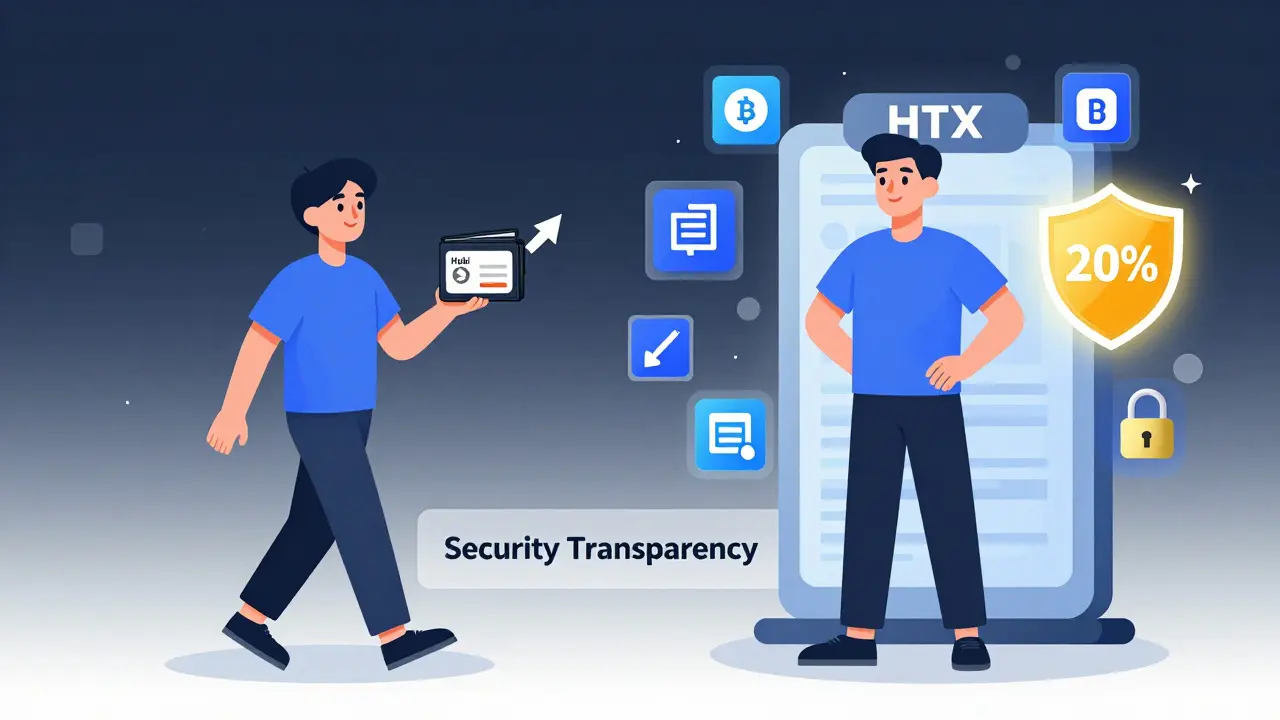
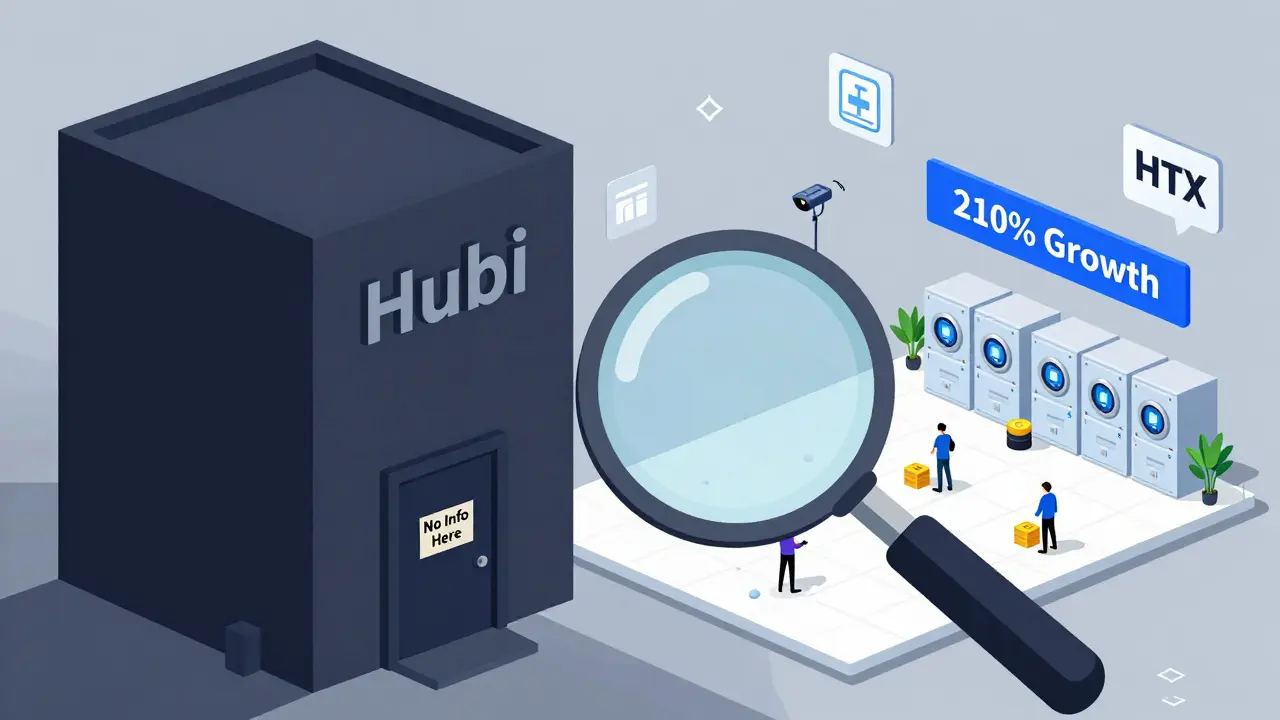
HTX also has a built-in safety net: an Investor Protection Fund. Every quarter, 20% of its profits go toward buying back HT tokens and locking them away as insurance. If something goes wrong - a hack, a system failure - this fund can cover user losses. Hubi doesn’t have anything like that. There’s no public info on its security measures at all.
Fees: Hubi vs. HTX vs. the Industry
Let’s cut through the noise. Here’s how Hubi and HTX stack up against each other and the market.| Feature | Hubi | HTX | Industry Average |
|---|---|---|---|
| Trading Fee (Maker/Taker) | 0.20% (flat) | 0.10%-0.20% (tiered, VIP discounts) | 0.15%-0.25% |
| Bitcoin Withdrawal Fee | 0.0005 BTC | 0.0006-0.0008 BTC | 0.0008 BTC |
| Futures Trading Fee | Not available | 0% for makers (promotional) | 0.02%-0.05% |
| Staking Rewards | Not offered | Up to 12% APY on select assets | 3%-8% APY |
| Investor Protection Fund | No | Yes (20% of quarterly profits) | Very rare |
Hubi’s fees are solid for beginners. But if you trade often or hold large amounts, HTX’s tiered system and zero-cost futures can save you more over time. HTX’s VIP program gives you lower fees the more you trade - and those discounts last forever. Binance’s discounts expire after 30 days. HTX doesn’t play games.
Security: What You Don’t Know Could Hurt You
This is the big gap.HTX has a history. It was hacked in 2020. Lost $150 million. Took a long time to rebuild trust. But since rebranding, it’s gone all-in on security. Cold storage for 95% of assets. Two-factor authentication enforced. Withdrawal whitelisting. Real-time monitoring. And that protection fund - it’s not just a PR stunt. It’s backed by real token buybacks.
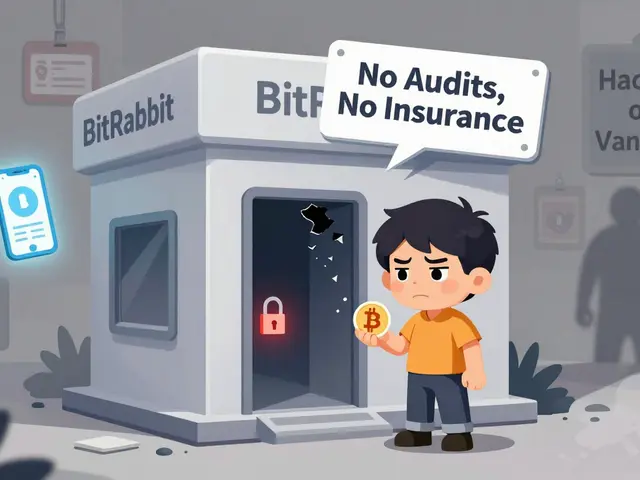
Hubi? Nothing. No public details. No whitepapers. No blog posts about security updates. No mention of cold storage, audits, or insurance. That’s not normal. Even smaller exchanges like KuCoin or Bitrue publish their security practices. Hubi doesn’t. That’s a red flag.
If you’re trading small amounts - say, under $5,000 - and you’re not leaving funds on the exchange long-term, Hubi might be fine. But if you’re holding significant crypto? You’re taking a risk by using a platform that won’t tell you how it protects your money.
Who Is Hubi For?
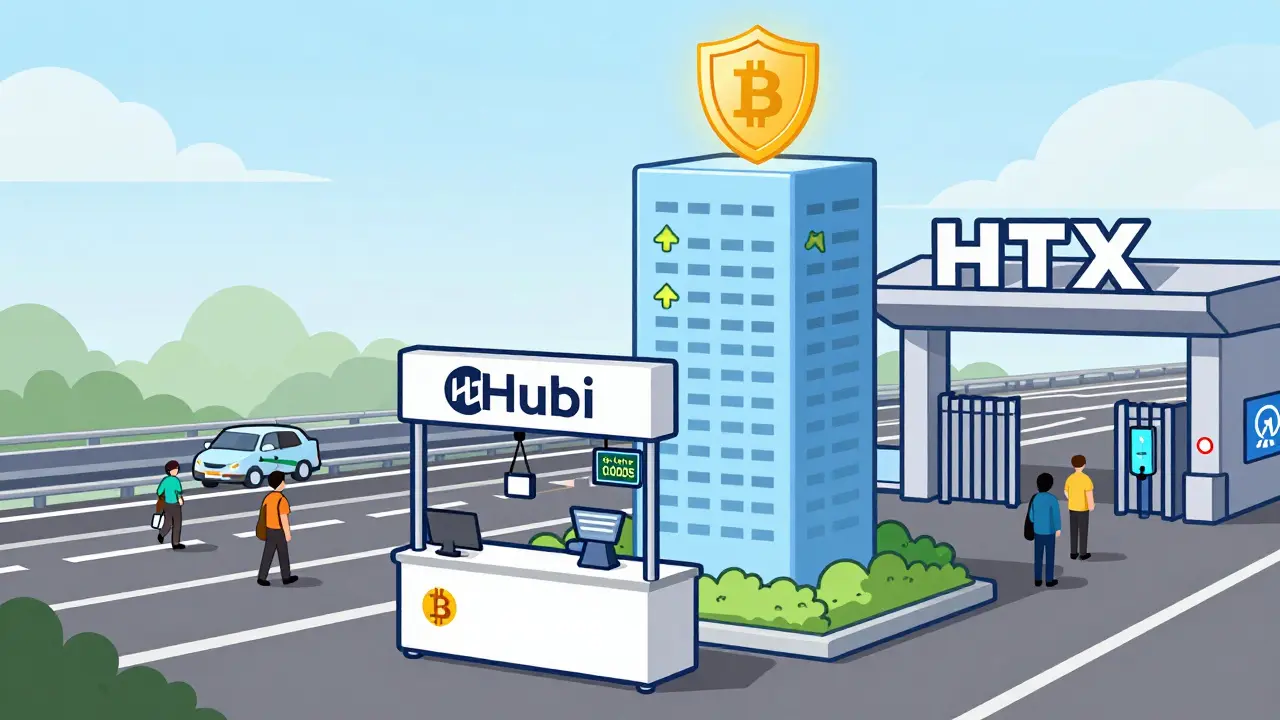
Hubi isn’t for everyone. It’s not built for active traders, institutional investors, or long-term holders. It’s built for one type of person: someone who wants to buy a few coins, withdraw them to their own wallet, and forget about it.Think of it like a gas station on a highway. You don’t go there for a full service. You go because you need fuel, fast, and cheap. Hubi’s low withdrawal fee makes it a good option if you’re doing frequent Bitcoin withdrawals. If you’re not, you’re not getting much value.
It’s also a good option if you’re in a region where bigger exchanges don’t operate. Hubi doesn’t have the same regulatory footprint as HTX, but it’s not blocked in as many countries. If you’re in Southeast Asia, parts of Latin America, or Eastern Europe, and Binance is off-limits, Hubi might be one of the few options left.
Why HTX Is the Real Player
HTX isn’t perfect. It’s still not as user-friendly as Coinbase. Customer support can be slow. And its fiat on-ramps? Still clunky compared to Kraken or PayPal Crypto.But it’s growing. Fast. And it’s doing it without burning cash on ads. It’s building tools people actually use. The fact that net deposits jumped 210% in one quarter - while the whole market was flat - tells you something. People are moving their money there.
HTX has the features, the security, and the track record. Hubi has one thing: low withdrawal fees. That’s it.
Final Verdict: Should You Use Hubi?
If you’re a beginner and just want to buy Bitcoin or Ethereum and move it out quickly - yes, Hubi works. The fees are fair. The interface is simple. And the withdrawal cost is among the lowest you’ll find.But if you’re serious about crypto - if you’re trading regularly, holding long-term, or want to earn interest, trade futures, or feel safe - skip Hubi. Go with HTX. Or better yet, consider Binance, Kraken, or Coinbase if they’re available in your region.
Hubi feels like a temporary solution. HTX feels like a long-term platform. In crypto, where security and reliability matter more than ever, you don’t want to settle for temporary.
What’s Next for Hubi?
No one knows. There are no public roadmaps. No developer updates. No announcements. It’s quiet. Too quiet.That could mean one of two things: either Hubi is a small, stable operation that doesn’t need to shout, or it’s a platform that’s been left behind and is quietly fading out.
Right now, the market is moving toward lower fees, better security, and more features. Hubi has one of those. HTX has all three. If you’re choosing between them, the choice isn’t really a choice.
Is Hubi the same as HTX?
No, Hubi and HTX are completely different exchanges. Hubi is a small platform with flat fees and low Bitcoin withdrawal costs. HTX (formerly Huobi Global) is a major global exchange with hundreds of trading pairs, futures, staking, and a built-in investor protection fund. Many people confuse them because the names sound similar, but they’re not related.
Are Hubi’s trading fees competitive?
Yes, Hubi’s 0.20% flat fee is in line with the industry average, which has dropped from 0.25% to around 0.15-0.20% in 2025. It’s not the cheapest - HTX and Binance offer lower fees for high-volume traders - but it’s simple and predictable, which works for casual users.
Why is Hubi’s Bitcoin withdrawal fee so low?
Hubi charges 0.0005 BTC per Bitcoin withdrawal, which is about 40% lower than the industry average of 0.0008 BTC. This is likely a strategy to attract users who frequently move Bitcoin to cold wallets or other exchanges. Most exchanges charge higher fees to cover network costs and generate revenue - Hubi is betting on volume over profit per transaction.
Is Hubi safe to use?
There’s no public information about Hubi’s security practices. It doesn’t disclose cold storage usage, audits, insurance, or two-factor authentication policies. That’s a major red flag. Compared to HTX, which has a proven security track record and an investor protection fund, Hubi offers no transparency - making it riskier for holding significant funds.
Should I use Hubi or HTX for long-term crypto holding?
Neither is ideal for long-term holding - you should always move crypto to your own hardware wallet. But if you must keep funds on an exchange, HTX is the safer choice. It has stronger security, a protection fund, and better track record. Hubi offers no safety guarantees, so it’s best for short-term trades only.
Can I trade altcoins on Hubi?
Hubi supports a limited selection of major cryptocurrencies like Bitcoin, Ethereum, Solana, and a few others. It doesn’t offer the hundreds of altcoins available on HTX, Binance, or KuCoin. If you want to trade lesser-known tokens, Hubi isn’t the place.
Does Hubi offer staking or earning interest?
No, Hubi does not offer staking, savings accounts, or any interest-earning products. If you want to earn passive income on your crypto, you’ll need to use another platform like HTX, Binance, or Kraken.
Is Hubi available in my country?
Hubi doesn’t publish a list of restricted countries, but it appears to operate in regions where larger exchanges face regulatory hurdles - such as parts of Southeast Asia, Latin America, and Eastern Europe. If you’re unsure, check the platform directly. Always assume it’s not available in the U.S., Canada, or the EU unless confirmed.



People Comments
Hubi’s withdrawal fee is a gimmick. Low fees mean nothing if your funds vanish into a black hole with no audit trail or insurance. Security isn’t optional-it’s the foundation. HTX might charge more, but it’s built to last.
Let’s be real-Hubi’s opacity isn’t ‘minimalist,’ it’s predatory. In a space where 80% of exchanges are rug pulls, choosing a platform that doesn’t disclose its cold storage is like leaving your front door open in a crime-ridden neighborhood. The fact that people still use it is terrifying.
Hubi feels like that one friend who shows up to the party with just a six-pack and no snacks. You’re glad they came, but you’re not gonna stay long. 😅
If you’re just dipping your toes in and pulling crypto out fast, Hubi’s low BTC fee is a legit shortcut. But if you’re building a portfolio? Don’t treat exchanges like temporary Airbnb rentals. HTX, Kraken, Binance-they’re the apartments you rent for years. Hubi’s the hostel you sleep in once because you missed your train.
Low fees are great, but I’d rather pay a little extra to know my crypto won’t vanish because someone forgot to patch a server. Hubi’s like buying a car with no airbags because it’s cheap. You’ll get there… maybe. 🤷♂️
Hubi isn’t a platform it’s a philosophical statement against over-engineered finance. Why do you need staking? Why do you need 900 trading pairs? Simplicity is the ultimate sophistication. HTX is corporate capitalism dressed in blockchain. Hubi is the quiet monk who meditates in a cave while the market screams
There’s a dangerous myth that low fees equal value. But value isn’t just price-it’s safety, transparency, and longevity. Hubi’s silence on security isn’t neutrality-it’s negligence. When you’re holding life savings, silence is the loudest red flag of all.
I’ve used Hubi for small BTC withdrawals for over a year. No issues. No drama. No fancy features. Just clean, cheap transfers. I don’t need staking or futures-I just want to move my coins. Sometimes, less really is more.
Oh wow, Hubi’s ‘low fees’-how quaint. Meanwhile, HTX is building institutional-grade infrastructure while you’re still wondering if your wallet address has a typo. The real question isn’t ‘which exchange?’ it’s ‘which side of the crypto evolution are you on?’
Hubi works fine if you’re not an idiot. If you’re holding 50k on it? Yeah you’re dumb. But if you’re buying 500 bucks of ETH and moving it to your cold wallet? Cool. No need to overthink it.
Hubi’s lack of transparency isn’t ‘minimalism’-it’s a failure of ethical responsibility. In finance, opacity is not a feature, it’s a flaw. To recommend Hubi to anyone serious about crypto is not just irresponsible-it’s morally negligent.
Hubi’s 0.0005 BTC withdrawal is real. I’ve done 15 of them. Saved me $300. But I keep 95% of my holdings off-exchange anyway. Use Hubi as a bridge, not a home. HTX is the house. Hubi’s the taxi.
What’s more dangerous-the platform that doesn’t tell you how it protects you, or the one that tells you everything but still gets hacked? HTX got hacked once, then rebuilt with armor. Hubi never even put on a helmet. The difference isn’t fees-it’s intention.
One must question the very epistemology of trust in decentralized systems. If a platform does not publish its security architecture, can it be said to exist at all? Or is it merely a spectral entity-a phantom of liquidity, haunting the margins of crypto’s ontological frontier? Hubi, in its silence, becomes a Rorschach test for the modern investor: what you see is not what it is, but what you fear.
Hubi is a CIA front. They’re using low withdrawal fees to track your movements. Every BTC you send? They’re tagging it. HTX? They’re just a Russian front. Both are controlled. The only safe exchange is your own node. And even then… they’re watching. 🕵️♂️
Hubi is a scam. I lost 12k there. They vanished after a ‘maintenance update.’ No emails. No replies. Just a 404. I’ve been screaming into the void for 8 months. Don’t be me. Don’t even think about it. HTX is the only one that didn’t ghost me after I asked for help.
Hubi is for Africans and poor people who can’t afford HTX’s ‘elite’ fees. You think you’re saving money? You’re just being exploited by a platform that doesn’t care if you live or die. HTX at least pretends to care. Hubi? It doesn’t even know your name.
Actually, I’ve been using Hubi for 2 years now and never had a problem. I don’t need staking or futures. I just buy, withdraw, repeat. If you’re overcomplicating crypto, maybe you’re the problem. Not Hubi.
Exactly. Hubi isn’t meant to be your crypto bank. It’s your gas station. You don’t expect a gas station to offer car repairs, insurance, or a loyalty program. You just want to fill up and go. If you’re trying to turn Hubi into your retirement account… that’s on you.