
India's 30% Crypto Tax: What Bitcoin Traders Need to Know in 2025
India's 30% crypto tax applies to all Bitcoin and crypto gains with no loss offsetting, 1% TDS, and 18% GST on fees. Traders must track every transaction or risk penalties.
When you buy or sell cryptocurrency in India, Crypto TDS India, a 1% tax deducted at source on crypto transactions introduced in July 2022 applies to nearly every trade. It doesn’t matter if you made a profit or loss—every transfer through a registered exchange triggers this deduction. Unlike capital gains tax, which you pay annually, TDS is taken automatically, right at the point of sale. This isn’t optional. It’s built into the system. And if you’re trading on platforms like Reku or other licensed exchanges in India, you’re already seeing it in your transaction history.
What most people don’t realize is that crypto tax India, the broader framework of taxation on digital assets includes more than just TDS. There’s also a flat 30% tax on profits, no deductions for losses, and no indexation benefits. On top of that, Indian crypto regulations, enforced by the OJK-equivalent body, the OJK require exchanges to report user activity to the Income Tax Department. This means your wallet addresses, trade history, and even staking rewards are being tracked. The government isn’t trying to ban crypto—it’s trying to control it. And if you’re ignoring TDS, you’re risking a notice, a penalty, or worse.
So what does this mean for you? If you’re buying Bitcoin, swapping tokens on a DEX, or cashing out earnings from an airdrop like ARCH or ANTEX, you need to track every single transaction. Even if you’re using a foreign exchange, Indian law still applies if you’re a resident. The 1% TDS doesn’t disappear just because the platform is based overseas. And if you’re trying to avoid it by moving crypto to a personal wallet before selling—you’re still liable. The tax authorities have tools to trace on-chain activity. This isn’t about fear. It’s about clarity.
Some users think TDS is the final tax. It’s not. It’s just an advance payment. You still need to file your annual return and report all crypto income. If your total profit was ₹50,000 and ₹1,000 was deducted as TDS, you might still owe more—or get a refund. The system isn’t perfect. But it’s here to stay. And the rules keep tightening. With countries like Sweden cracking down on energy use and China banning crypto activity, India’s approach is about control, not censorship. You can still trade. You can still earn. But you need to do it legally.
In the posts below, you’ll find real breakdowns of how TDS affects your trades, what exchanges are compliant, how to report your crypto income, and which airdrops or tokens could land you in trouble. You’ll see why CFL365 and Sheesha Finance are red flags—not just because they’re scams, but because they make tax tracking impossible. You’ll learn how Indonesians navigate similar rules, and why UAE traders don’t have to worry about any of this. This isn’t theory. It’s what’s happening right now. And if you’re trading crypto in India, you need to know it.
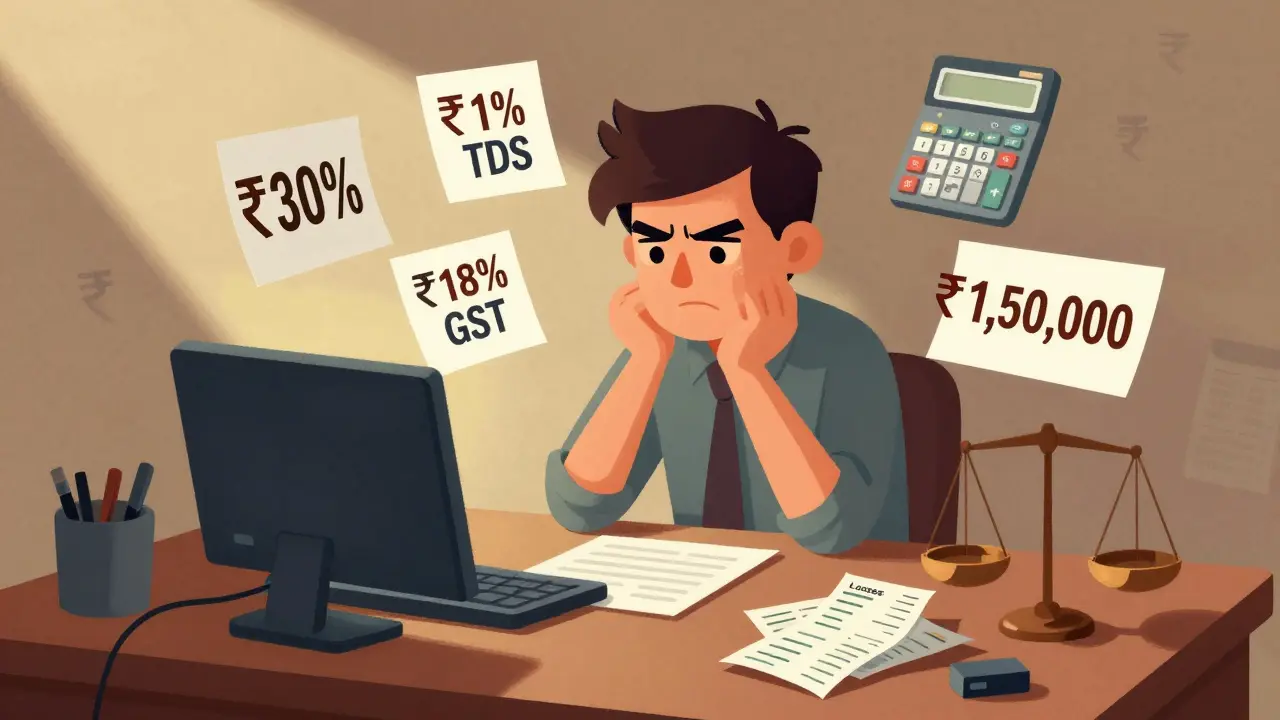
India's 30% crypto tax applies to all Bitcoin and crypto gains with no loss offsetting, 1% TDS, and 18% GST on fees. Traders must track every transaction or risk penalties.