


India Crypto Tax Calculator
Calculate Your Crypto Tax Liability
Enter your crypto transaction details to see your total tax liability under India's current tax rules.
Tax Calculation Results
Note: India's tax rules don't allow loss offsetting. Your tax liability is calculated on each transaction separately, regardless of other gains or losses.
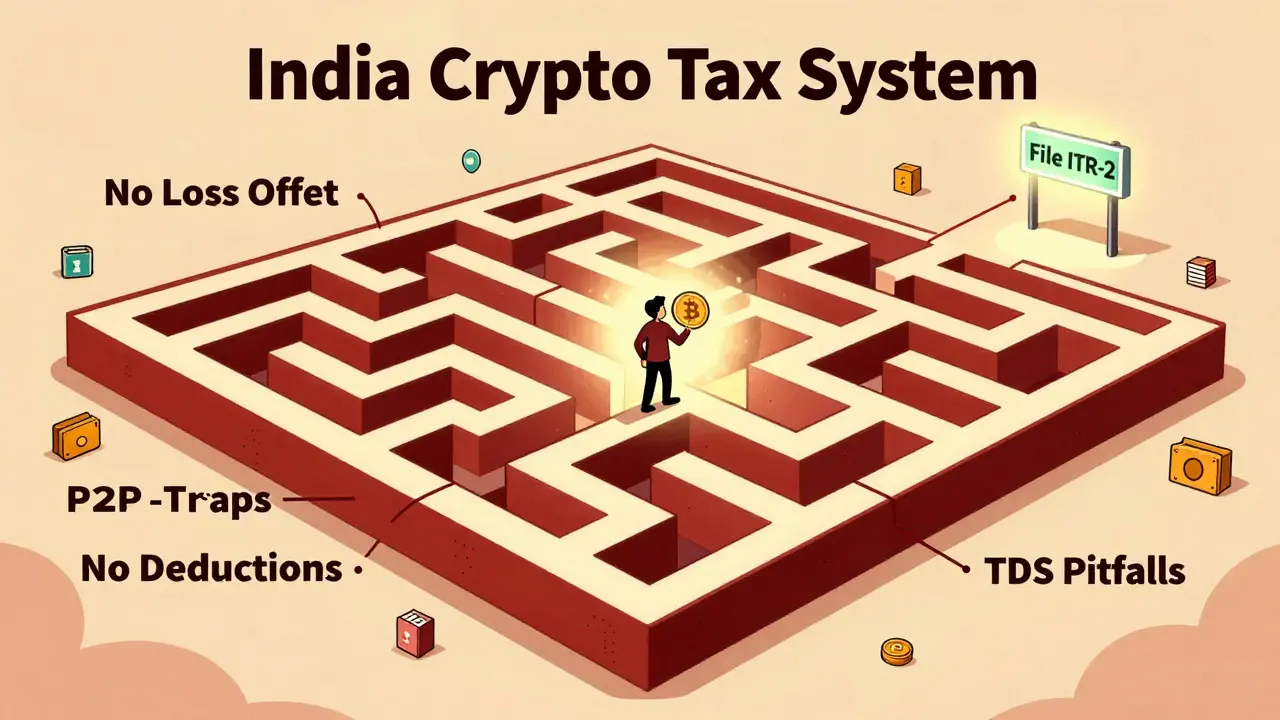
Important: For transactions over ₹50,000, a 1% TDS is deducted at source by exchanges. You must track all your transactions using Schedule VDA in your annual tax return (ITR-2 or ITR-3).
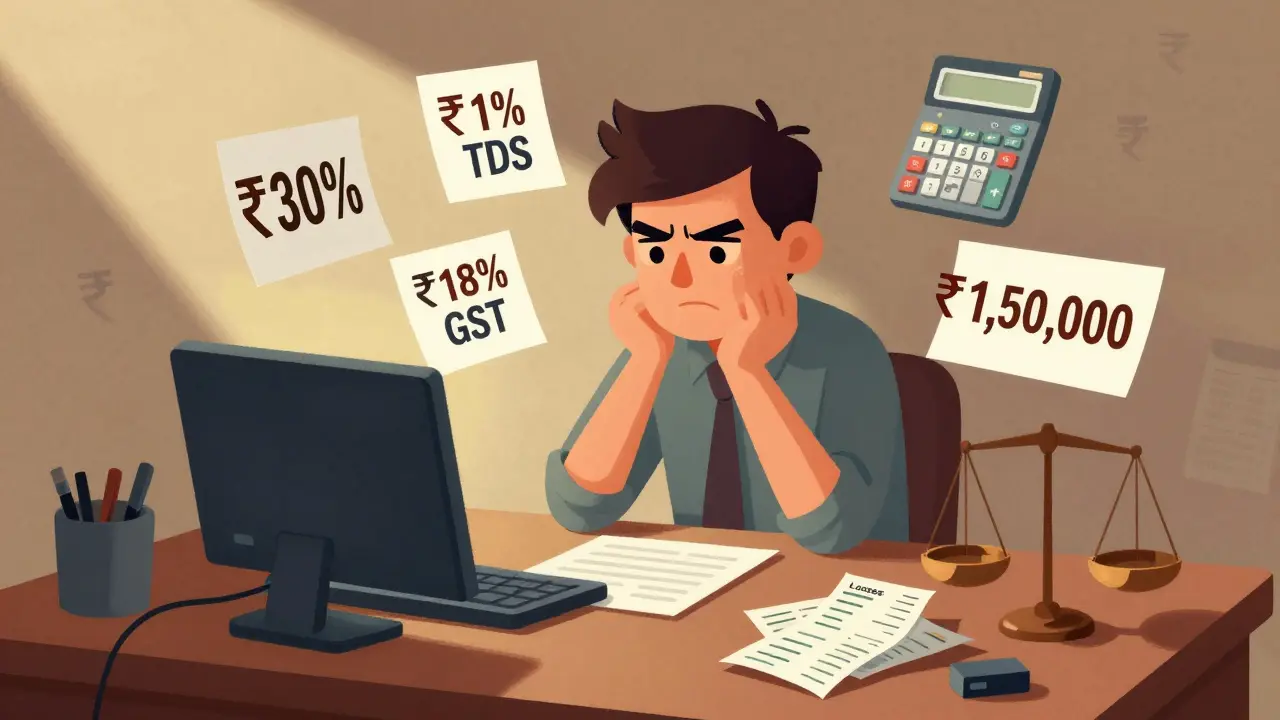
India’s 30% crypto tax isn’t just a rule-it’s a game-changer for anyone trading Bitcoin or other digital assets. If you’re buying, selling, or swapping crypto in India, this tax hits you hard, no matter how long you hold your coins or whether you made a profit overall. Unlike most countries, India doesn’t care if you lost money on Ethereum while making gains on Bitcoin. You still pay tax on every single profit, and you can’t use your losses to balance it out. This isn’t just high tax-it’s a system designed to make crypto trading expensive and complicated.
How the 30% Tax Actually Works
The tax is based on Section 115BBH of the Income Tax Act, introduced in April 2022. It applies to all transfers of Virtual Digital Assets (VDAs), which includes Bitcoin, Ethereum, NFTs, and even tokens from decentralized apps. The rate is flat: 30% on every rupee of profit you make. That’s it. No deductions. No brackets. No exceptions.
Here’s the math: if you bought 1 Bitcoin for ₹25,00,000 and sold it later for ₹30,00,000, your profit is ₹5,00,000. You owe ₹1,50,000 in tax (30% of ₹5,00,000). Simple. But here’s where it gets brutal: you can’t deduct anything else. Not the ₹1,000 you paid in exchange fees. Not the ₹500 wallet gas fee. Not even the cost of buying a hardware wallet. Only the original purchase price counts.
Losses Don’t Matter-Here’s Why
This is the part that trips up most traders. Let’s say you lost ₹40,000 on Solana but made ₹40,000 on Cardano. In most countries, you’d pay zero tax-you broke even. In India? You pay ₹12,000 in tax on the Cardano gain. The loss on Solana? Disappeared. It doesn’t reduce your tax bill. It doesn’t carry forward to next year. It just vanishes.
For active traders, this is devastating. If you’re doing 10 trades a month, you’re likely to have winners and losers. But under Indian law, you’re taxed on every win, even if your portfolio ended the year down ₹50,000. The government treats each trade like a separate income stream, ignoring the bigger picture. Most countries allow loss offsetting because it reflects real economic outcomes. India doesn’t. It sees every sale as a taxable event, period.
The 1% TDS That Sneaks Up on You
On top of the 30% tax, there’s a 1% Tax Deducted at Source (TDS) under Section 194S. It kicked in on July 1, 2022. If you transfer crypto worth more than ₹50,000 in a year (₹10,000 for certain cases like P2P), the exchange or platform must deduct 1% before you get your money.
Let’s say you sold ₹10,00,000 worth of Bitcoin. The exchange takes ₹10,000 (1%) right away and sends it to the tax department. You get ₹9,90,000. That ₹10,000 is credited against your final 30% tax bill. But here’s the catch: if you didn’t make a profit, you still paid that 1%. And you can’t get it back unless you file your return and prove you had no net gain. Most people don’t. They just lose the money.
Worse, not all platforms handle TDS the same way. Some deduct it automatically. Others leave it to you. If you trade on international exchanges or use P2P apps like Binance P2P or CoinSwitch, you’re responsible for tracking and paying it yourself. Many traders miss this and end up with penalties.
The New 18% GST on Exchange Fees
July 2025 added another layer: 18% GST on crypto platform services. That means every fee you pay-whether it’s trading, withdrawing, or converting crypto-is now taxed at 18%.
For example: you pay ₹200 to trade Ethereum on WazirX. That ₹200 becomes ₹236 after GST. If you withdraw ₹50,000, you pay ₹9,000 in GST on the withdrawal fee. This isn’t just on Indian exchanges. Even if you use a foreign platform that charges you in INR, GST applies if you’re based in India.
It’s a three-tier system now: 30% income tax, 1% TDS, and 18% GST on fees. No other country combines all three. You’re not just paying tax on your profits-you’re paying tax on the cost of trading itself.
What You Need to Track
Compliance isn’t optional. The Income Tax Department now requires you to report all crypto activity using Schedule VDA in your annual return (ITR-2 or ITR-3). You need records for every transaction since April 2022. That means:
- Date and time of each buy and sell
- Amount of crypto bought or sold
- INR value at the time of transaction
- Exchange or wallet used
- Transaction IDs and fee amounts
- Proof of purchase price (screenshots, statements)
Manually tracking this across 5 exchanges, 3 wallets, and 50 trades a month? That’s 40+ hours a year. Most traders use tools like Koinly, ClearTax, or CoinTracker-these now have India-specific modules updated through September 2025. But even then, you need to double-check. Auto-imports often miss P2P trades or cross-chain swaps.
How This Compares to the Rest of the World
India’s tax system is extreme. Here’s how it stacks up:
| Country | Tax Rate on Gains | Loss Offset Allowed? | TDS Applied? | GST on Fees? |
|---|---|---|---|---|
| India | 30% flat | No | Yes (1%) | Yes (18%) |
| United States | 0%-20% (long-term) | Yes | No | No |
| Germany | 0% after 1 year | Yes | No | No |
| Singapore | 0% | Yes | No | No |
| United Kingdom | 10%-20% | Yes | No | No |
India is the only major economy that treats crypto like gambling income-no holding period benefit, no loss relief, no deductions. Even countries with high taxes like France (30% flat) allow loss offsetting. India doesn’t.
Who’s Getting Hurt the Most?
Active traders. Retail investors. People who thought crypto was a way to build wealth through smart trading.
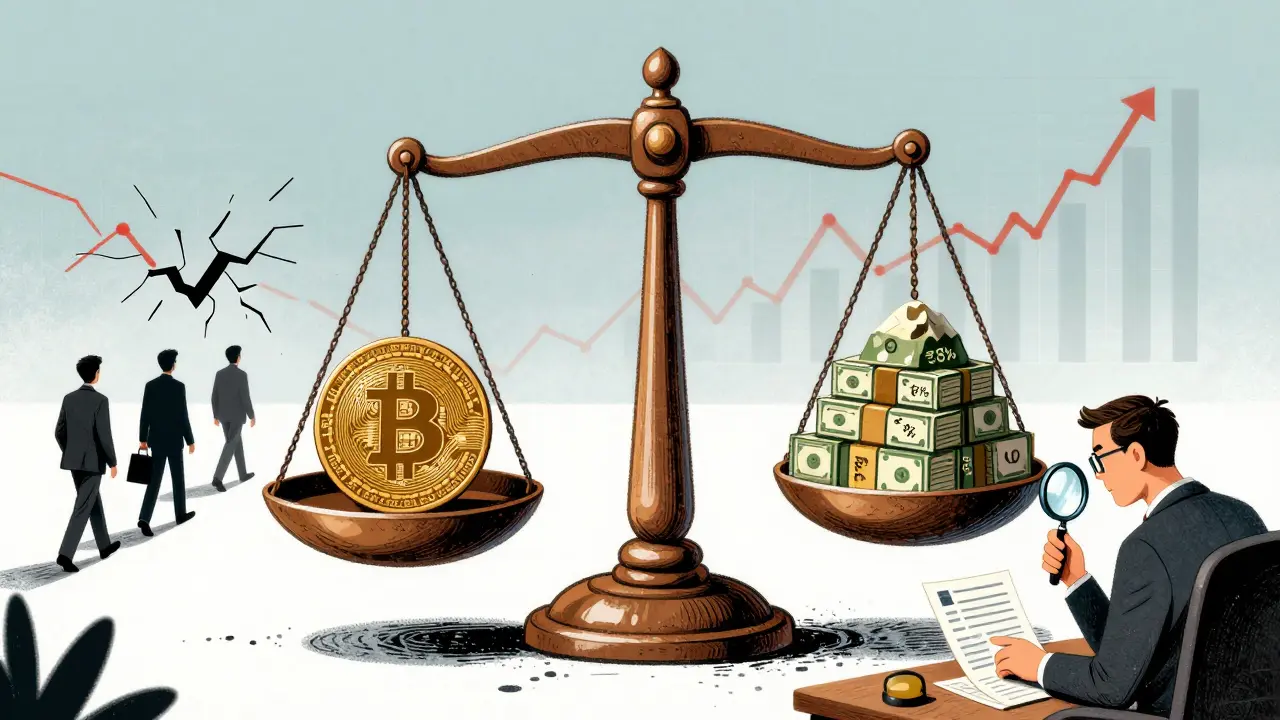
Since the tax hit in 2022, Indian exchange volumes dropped 40-60%. P2P trading grew as people tried to avoid TDS, but now that’s getting harder too. Many are moving to offshore platforms, but that creates new risks: no legal protection, harder to report, and possible penalties if the government cracks down.
Even long-term holders aren’t safe. If you bought Bitcoin in 2020 and sold it in 2025, you still owe 30% on every rupee of profit. No discount for holding five years. No incentive to be patient. The system punishes success, not speculation.
What You Can Do About It
There’s no legal way to avoid the tax. But you can reduce your risk:
- Use tax software: Koinly or ClearTax with India settings. Input every transaction, even small ones.
- Track everything: Save screenshots of every trade, wallet address, and fee receipt. Don’t rely on exchange statements-they’re not always accurate.
- Don’t ignore TDS: If you’re on P2P, calculate 1% yourself. File Form 26AS to check what was deducted.
- File your return: Even if you think you lost money, file. Otherwise, you risk being flagged.
- Don’t trade through unregulated platforms: Offshore exchanges may seem easier, but they’re riskier. If the government asks for records, you won’t have them.
There’s no magic strategy. You can’t time the market to avoid tax. You can’t shift gains to family members. The rules are strict. The only thing you can control is your records and your compliance.
What’s Next?
The government hasn’t signaled any changes. The 30% rate, TDS, and GST are still in place as of September 2025. But pressure is building. Industry groups are pushing for loss offsetting. Tax professionals are calling the system “counterproductive.”
Some experts predict a review by 2026, especially if tax collection doesn’t meet projections. But don’t wait. Right now, the rules are clear: pay 30%, pay 1%, pay 18% on fees, and don’t expect any mercy for losses.
If you’re trading crypto in India, you’re not just investing-you’re navigating a tax minefield. The system isn’t designed to help you grow wealth. It’s designed to collect revenue. Your job is to survive it without getting penalized.
Is the 30% crypto tax in India applicable to NFTs too?
Yes. India’s 30% tax applies to all Virtual Digital Assets (VDAs), which includes NFTs, tokens, and cryptocurrencies. Whether you’re selling an NFT for Bitcoin or INR, any profit is taxed at 30%. No exceptions.
Can I use losses from crypto to reduce my salary tax in India?
No. Losses from crypto trading cannot be offset against any other income, including salary, business income, or capital gains from stocks or real estate. Crypto losses are isolated-they don’t reduce your overall tax burden.
Do I pay tax if I swap one crypto for another in India?
Yes. Swapping Bitcoin for Ethereum is treated as a sale of Bitcoin and a purchase of Ethereum. You must calculate the profit or loss on the Bitcoin sale and pay 30% tax on any gain. There’s no tax-free swap rule in India.
What happens if I don’t report my crypto gains in India?
The Income Tax Department has access to data from exchanges and banks. If you don’t report, you risk a notice, penalty of up to 200% of the tax due, and possible legal action. TDS records also create a paper trail. It’s not worth the risk.
Is there a way to legally avoid the 30% crypto tax in India?
No. The tax applies to all Indian residents on all crypto gains, regardless of where the transaction occurs. Using foreign exchanges doesn’t exempt you. The only legal approach is to comply fully-track every trade, pay the tax, and file your return.





People Comments
This is the most accurate breakdown I've seen. The 1% TDS on every transfer is the silent killer. I've seen traders lose hundreds because they didn't realize the exchange already took it. And the GST on fees? That's just taxing the cost of doing business. No other asset class does this. Keep tracking everything.
bro the indian govt just wanna cash in on crypto like its a vending machine lmao. 30% tax on every win and losses just... poof? what is this, a casino? i swear if i lived there i'd just buy btc on binance p2p and never touch a rupee again.
This isn't taxation... this is CONTROL. They know crypto is the future, so they're making it so painful you'll give up and go back to rupees and banks. The TDS? The GST on fees? The loss non-offset? This is a trap. They don't want you to succeed. They want you to obey. I've seen this pattern before... in dictatorships.
Oh honey. You think this is bad? Wait till the government starts requiring blockchain analytics on your wallet addresses. They already have the data. You're not hiding anything. And that 18% GST on withdrawal fees? That's just the tip of the iceberg. Welcome to the new normal.
Wow. India finally figured out how to tax something that actually moves money. Meanwhile, the US is still letting people write off crypto losses against their salary. Pathetic. Maybe if we taxed Bitcoin like a real asset instead of a toy, we wouldn't have 30% inflation.
This tax is good. People were gambling with crypto like it was lottery. Now they learn. No loss offset? Good. Stop crying. If you lose money, that's your fault. Pay tax on profit. Simple. India is strong now.
I want to acknowledge the emotional toll this system takes on retail traders - especially those who believed in crypto as a path to financial freedom. The isolation of crypto losses, the bureaucratic burden of tracking every micro-transaction, the fear of penalties... it’s not just a tax policy. It’s a psychological burden. Many are quitting not because they lost money, but because the system made them feel broken.
I've been using Koinly for my Indian trades since 2023... and let me tell you, the auto-imports are garbage. You have to manually add every P2P trade, every wallet transfer, every gas fee. I spend 3 hours every quarter just cleaning up my data. And yes, I've filed every year-even when I lost money. Better safe than audited.
I just sold some ETH on WazirX and got hit with 1% TDS + 18% GST on the fee. Then I had to calculate profit manually because their statement didn't include my purchase price. I ended up paying tax on a trade where I broke even. This system is broken. Not high tax - broken.
Anyone else notice the irony? India bans crypto mining but taxes every trade like it's Wall Street. Meanwhile, Singapore says 'cool, no tax' and gets the liquidity. The government thinks it's collecting revenue but it's just exporting traders. I've got friends in Dubai now. They laugh at India's tax code.
Oh so now you're surprised the tax code is a nightmare? You thought crypto was going to be the great equalizer? Nah. It's just another asset class the state wants to squeeze dry. And guess what? You're still better off than someone paying 40% on stocks. Stop whining. The market doesn't care about your feelings.
The 30% tax is a symptom, not the disease. The real issue is the state's refusal to recognize crypto as a legitimate medium of value. It treats transactions as isolated events, ignoring the holistic nature of portfolio dynamics. This isn't fiscal policy-it's epistemological denial. You can't tax a decentralized system with 19th-century accounting logic and expect rational outcomes.
I'm a single mom who traded crypto on the side to pay for my kid's meds. I lost 20K on Solana but made 25K on BTC. I paid 7.5K in tax. I didn't get to deduct my exchange fees or the 300 rupees I spent on a Ledger. I'm not angry. I'm just tired. This system doesn't see people. It sees numbers.
Let me guess - you're one of those people who thinks 'loss offsetting' is a human right? Newsflash: the government isn't your therapist. You made a profit? Pay up. You lost? That's what happens when you gamble. Stop crying about fairness. The market doesn't owe you a safety net.
For anyone thinking of moving to offshore exchanges: don't. The Indian IT dept has agreements with 12+ countries now. They'll get your data. And if you're caught, penalties are 200% of tax owed + possible prosecution. Better to pay the tax and sleep at night. I've helped 30+ clients file correctly. It's tedious, but survivable.
The deeper question: why does society accept that profit must be taxed but loss must be erased? It's not about revenue - it's about control. By making crypto losses invisible, the state ensures that only those who win are visible, and only those who win are accountable. The system doesn't want you to be a trader. It wants you to be a taxpayer.
Foreigners complain about India's tax. But what do you expect? We built a system that works for us. You want freedom? Go to Singapore. We want order. If you trade, you pay. No excuses. This tax keeps the system stable. And stability beats chaos every time.
I used to trade crypto daily. Now I just hold. The tax burden, the tracking, the fear of audit... it's not worth the stress. I'm not rich. I'm just trying to survive. This system doesn't reward patience. It punishes it. So I'm out.
I moved to the US from India last year. I still file crypto taxes for my Indian holdings. The IRS doesn't care about India's 30% tax, but I do. I'm not going to risk penalties. The system is harsh, but compliance is the only way to keep your head down. I've learned to accept it.
The 30% tax is just the visible part. The real cost is the erosion of trust. When you can't use your losses to balance your books, you stop thinking like an investor. You start thinking like a gambler. And when a whole generation learns to gamble instead of invest, that's not a tax policy - that's a cultural collapse.