Apertum DEX Review: High‑Performance Decentralized Exchange on Avalanche
A detailed review of Apertum DEX, covering performance, fees, tokenomics, governance, and how it compares to Uniswap and Apex.
When talking about crypto liquidity, the ease with which a digital asset can be bought or sold without dramatically moving its price. Also known as market liquidity, it drives everything from everyday trading to large institutional moves. A core component of this ecosystem is the liquidity pool, a smart‑contract‑based vault where users deposit pairs of tokens to enable instant swaps. Another pillar is the decentralized exchange (DEX), which relies on those pools to match buyers and sellers without a central order book. Finally, market depth measures how many orders sit at each price level, telling you how resilient a token is to big trades.
Why does liquidity matter? Imagine trying to sell a million dollars worth of a low‑volume token. Without enough buyers, the price would tumble, and you’d lose value. Liquidity pools smooth this process by allowing traders to swap directly against the pool, keeping price impact low. Those pools need liquidity providers—users who lock up assets and earn a slice of each swap as a reward. The more providers join, the deeper the pool, and the smaller the slippage for everyone.
Stablecoins play a surprising role in boosting crypto liquidity. Because they’re pegged to a fiat currency, they act as a bridge between volatile assets and cash‑like stability. When a DEX lists a popular stablecoin, it instantly adds a reliable anchor token that traders can hop in and out of, creating tighter spreads and richer order books. This effect shows up in market depth: the presence of a low‑risk asset deepens the order book, making large trades less disruptive.
Tokenized securities are another emerging source of liquidity. By wrapping traditional assets like stocks or bonds into blockchain tokens, platforms unlock fractional ownership and 24/7 trading. This tokenization expands the pool of participants, especially retail investors who were previously locked out, and adds fresh capital to liquidity pools. The result is a virtuous cycle: more assets, more swaps, higher overall crypto liquidity.
For everyday traders, a few simple checks can reveal whether a token’s liquidity is solid. First, glance at the pool’s size—larger pools generally mean lower slippage. Next, examine the order‑book depth on centralized exchanges; a tight spread between bid and ask signals healthy market depth. Third, use DEX aggregators that route swaps through the deepest pools across multiple platforms, giving you the best price in real time. Finally, keep an eye on liquidity provider incentives; high reward rates often attract more capital, reinforcing the pool’s robustness.
All these pieces—liquidity pools, DEXs, stablecoins, tokenized securities, and market depth—interact to shape the overall health of crypto markets. Understanding how they fit together helps you avoid costly price shocks and spot opportunities where liquidity is thin but demand is high. Below you’ll find a curated set of articles that dive deeper into each of these areas, from exchange reviews to stablecoin mechanics, giving you the tools to navigate crypto liquidity like a pro.
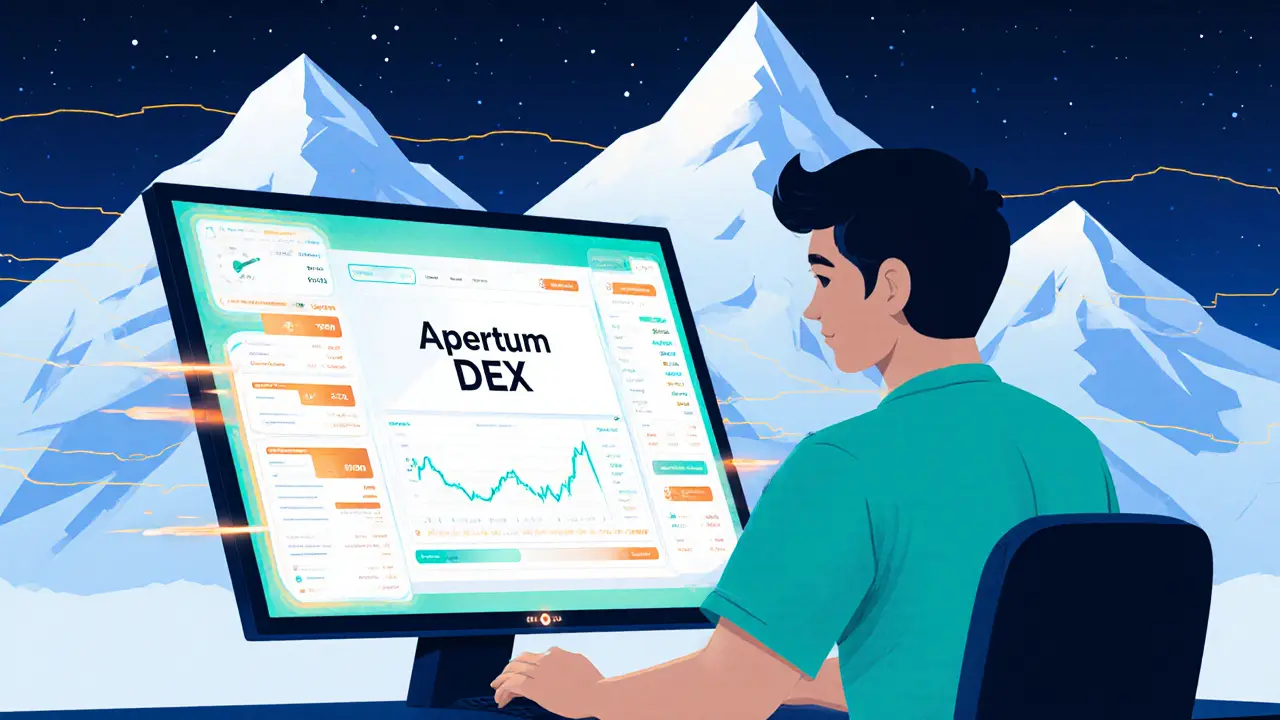
A detailed review of Apertum DEX, covering performance, fees, tokenomics, governance, and how it compares to Uniswap and Apex.