


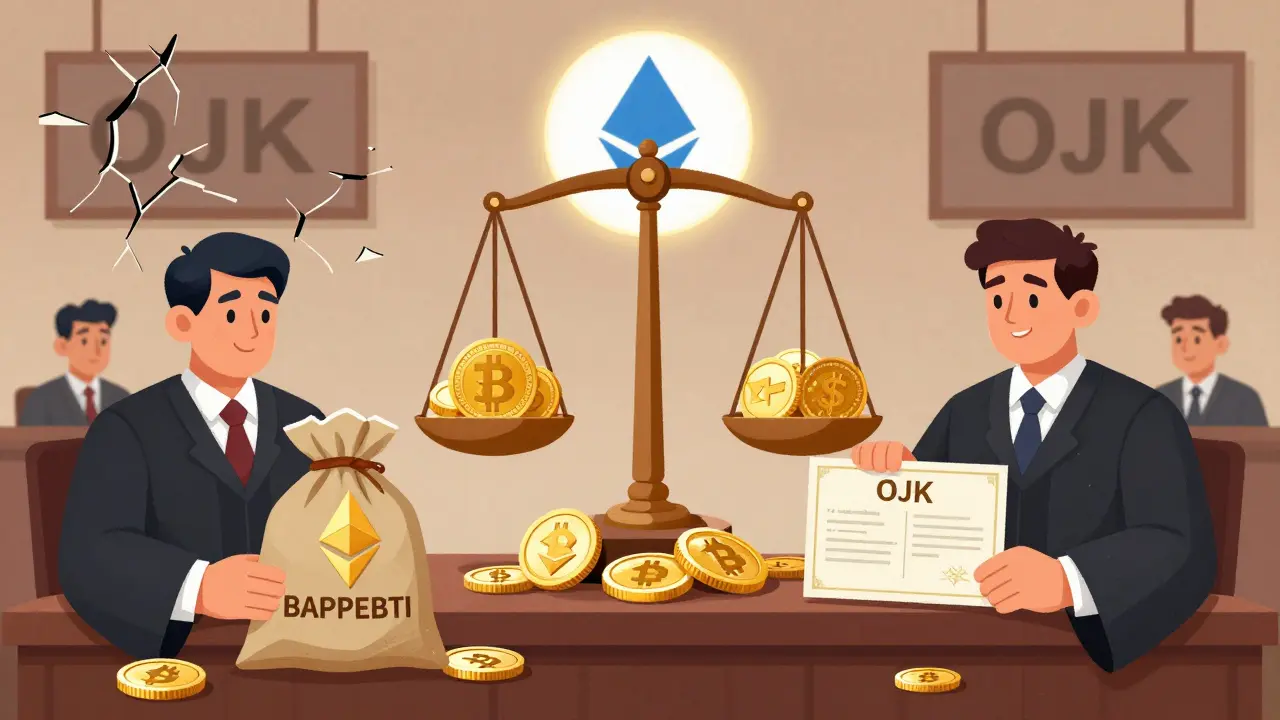
Before 2025, if you wanted to trade Bitcoin or Ethereum in Indonesia, you did it under the rules for commodities. That meant the Commodity Futures Trading Regulatory Agency (BAPPEBTI) was in charge. You could buy and sell hundreds of crypto assets, but you couldn’t use them to pay for coffee, groceries, or rent. The government didn’t see crypto as money - just another thing you could speculate on, like soybeans or gold.
The Big Shift: From Commodities to Financial Assets
On January 10, 2025, everything changed. Indonesia stopped treating cryptocurrency as a commodity. Instead, it reclassified digital assets as digital financial assets. Oversight moved from BAPPEBTI to the Financial Services Authority, known as OJK. This wasn’t just a paperwork shuffle. It was a complete overhaul of how crypto fits into the country’s financial system. Why? Because the old system didn’t protect people well enough. Exchanges listed hundreds of coins with little oversight. Some were outright scams. Investors lost money. And when things went wrong, there was no clear path to get help. OJK, which already regulates banks, insurance, and stock markets, was seen as better equipped to handle investor protection, fraud detection, and market stability. Now, crypto trading isn’t just allowed - it’s regulated like stocks or mutual funds. But here’s the catch: you still can’t use Bitcoin to buy anything. Payment use remains banned. That hasn’t changed. The goal isn’t to turn crypto into cash. It’s to make it a safer investment.What the New Rules Actually Mean for Traders
If you run a crypto exchange in Indonesia, the new rules hit hard. The minimum paid-up capital jumped to IDR 100 billion (about $6.3 million USD). You also need to keep at least IDR 50 billion in equity at all times. That’s not just a suggestion - it’s a legal requirement. And OJK can demand even more if your platform handles large volumes or has systemic risk. No more using dirty money to fund your exchange. The law explicitly says capital can’t come from money laundering or terrorism financing. That means banks and auditors are now checking sources of funds. If you can’t prove where your money came from, you don’t get licensed. All platforms had to reapply for licenses by July 2025. If they didn’t meet the standards, they were shut down. Many small exchanges couldn’t afford the cost and disappeared. Only the bigger, better-funded ones survived.The Whitelist Got Tighter
Before 2025, BAPPEBTI allowed over 850 crypto assets to be traded. That included everything from Bitcoin to obscure tokens with no team, no whitepaper, and no real use case. Now, OJK says: no more. By February 2025, exchanges had to submit their asset lists for review. Any token that didn’t meet new quality standards - like transparent development, active community, or audited smart contracts - was delisted. By April 2025, only approved assets could be traded. That cut the list down to around 120 tokens. Bitcoin, Ethereum, Solana, and a few others made the cut. Hundreds didn’t. This isn’t about banning innovation. It’s about reducing risk. OJK doesn’t want people losing life savings on tokens that vanish overnight.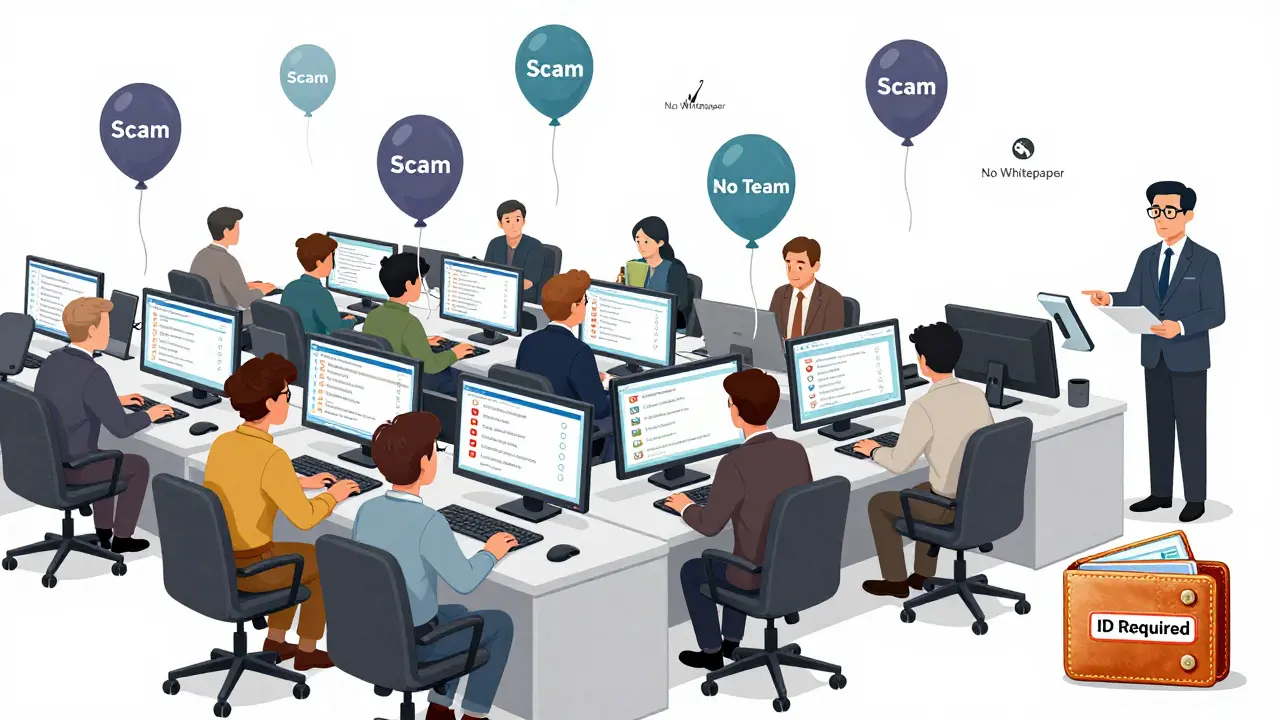
Taxation Got Simpler - and More Realistic
The tax rules changed just as dramatically. Before July 2025, crypto trades were taxed like commodity sales. You paid Value Added Tax (VAT) every time you bought or sold. That made trading expensive and messy. Imagine paying 11% tax just to swap Bitcoin for Ethereum. On August 1, 2025, that changed. Minister of Finance Regulation No. 50 of 2025 (PMK 50) scrapped VAT on crypto trades. Now, you only pay income tax when you sell crypto for profit. No more double taxation. No more VAT confusion. This was a smart move. It matched the new financial asset status. You don’t pay VAT when you sell a stock or a bond. Why should crypto be different? The change made Indonesia’s tax system more aligned with global standards and removed a major friction point for traders.Who’s Watching? OJK, BI, and PPATK
OJK isn’t alone. It works with two other agencies: Bank Indonesia (BI) and the Financial Transaction Reports and Analysis Center (PPATK). BI handles monetary policy and payment systems. PPATK tracks suspicious financial activity. Together, they have real-time access to transaction data from licensed exchanges. If someone moves large sums of crypto to avoid taxes or hide illegal money, the system flags it. That’s why fraud and money laundering have dropped noticeably since 2025. Exchanges must report suspicious activity directly to PPATK. They also need to verify customer identities with strict KYC checks. Even if you’re just trading $100 a month, you still need to show your ID and proof of address.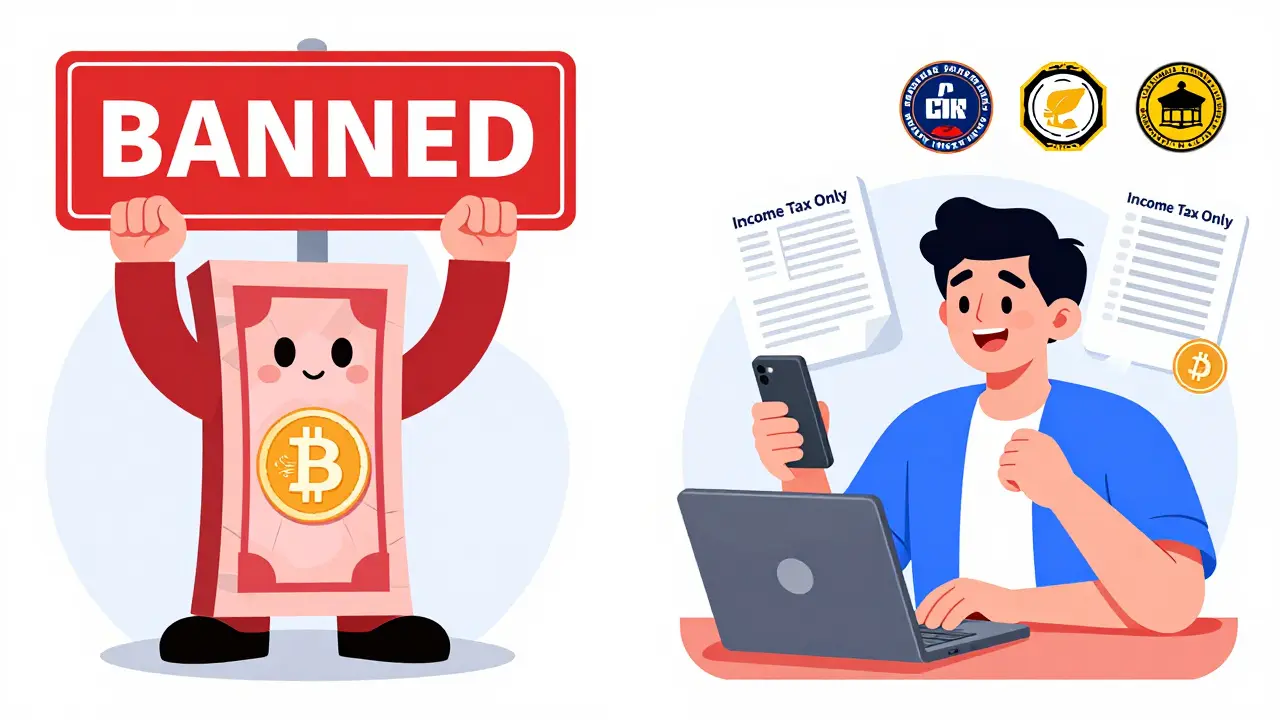



People Comments
Crypto just got real in Indonesia. No more sketchy tokens, no more VAT on every trade, and now you actually have someone to complain to if things go south. Finally, a country getting it right.
120 approved assets? That’s a win. I’d rather have fewer safe options than 850 death traps.
Big win for OJK stepping in. BAPPEBTI was never equipped to handle crypto like a financial asset. Now you’ve got proper AML/KYC, capital requirements, and real oversight. This is what regulated markets look like.
And ditching VAT on trades? Genius. Why tax a trade like it’s a consumer good? It’s an investment. Same as stocks. 🚀
So let me get this straight… they banned crypto payments but now it’s a ‘financial asset’? So you can’t buy coffee with BTC but you can gamble on it with government approval?
Classic. They’re not protecting users-they’re just making sure the state gets its cut before you lose your life savings. 🤡
At least they’re not pretending crypto is money anymore
That’s progress
Let’s be honest-this isn’t about investor protection. It’s about control. The moment you give OJK power over digital assets, you give them power to freeze accounts, blacklist wallets, and dictate what’s ‘approved.’
They didn’t make crypto safer-they made it subject to bureaucratic whims. And don’t get me started on the KYC. You’re not trading crypto anymore-you’re surrendering your identity to a state-run casino.
100B IDR minimum capital? That’s insane. Only the whales survive now. This isn’t regulation-it’s a cartel setup.
But hey, at least the scams dropped 90% 🙌
Still… where’s the innovation going? All the cool indie devs got kicked out. 😔
They call this progress? They just turned crypto into a regulated gambling parlor with a license.
They banned payments because they’re scared of losing control over the rupiah.
They delisted 700 tokens because they don’t understand blockchain-they just want to tax it.
And now you need a lawyer just to trade. Congrats, Indonesia. You just killed the soul of crypto.
One must consider the macroeconomic implications of such regulatory centralization
By granting OJK authority over digital assets the state implicitly endorses a hierarchical financial structure
This undermines the decentralized ethos which is foundational to blockchain technology
One wonders whether this is evolution or surrender
For everyone who says this is too strict-think about the people who lost everything on fake coins.
This isn’t about killing crypto. It’s about saving people who didn’t know any better.
If you’re trading Bitcoin on a legit platform now, you’re safer than ever before.
And no VAT? Yes please. That was ridiculous.
Let’s not throw the baby out with the bathwater.
Oh my GOD, did you see how they shut down 800+ tokens?!?!?!
It’s like they just wiped out entire ecosystems overnight!!!
And now only 120 are left??
Who even decides what’s ‘approved’?!
It’s not transparency-it’s censorship with a spreadsheet!!!
And don’t even get me started on the capital requirements-this is EXACTLY what Wall Street wanted!!!
They’re turning crypto into a bank product!!!
WE’RE ALL LOSING!!!
Look I get it-scams were out of control
But now the big boys own the whole game
Smaller devs? Gone
Independent traders? Locked out
And the government’s watching every single transaction
It’s not safer-it’s just more controlled
And honestly
That’s not what crypto was supposed to be
But hey
At least you don’t pay VAT anymore
Small wins right?
Indonesia’s got balls. While the US is still arguing over whether crypto is a security or a commodity, they just flipped the script and made it a financial asset with teeth.
Minimum capital? Good. No dirty money? Good. Real KYC? Good.
And they didn’t cave to the crypto bros screaming ‘freedom’ while running rug pulls.
Yeah, it’s less wild-but that’s the point.
This isn’t a libertarian fantasy. It’s a functioning financial system.
And if you can’t handle that? Go trade on some offshore exchange and cry into your Dogecoin.
It’s funny how people think regulation kills innovation
But when you look at the 850 tokens before-most were just memes with no code
Now you’ve got real projects with audits and teams
That’s not a loss
That’s curation
And honestly
I’d rather trade on a clean list than risk my money on a coin named ‘Shiba Inu 2.0: Moon or Bust’
Hey if you’re new to crypto in Indonesia-this is actually a great time to get started
Real platforms, real oversight, no VAT traps
Just make sure you stick to the approved list
And don’t chase moonshots
Focus on BTC, ETH, SOL-the ones with real use
You’ll sleep better at night
And you won’t lose your rent money to a Telegram group with 300 members
They say it’s about investor protection
But what if this is all part of a global plan to track every crypto transaction
And what if the rupiah stablecoin they’re talking about is just the first step to a digital currency that replaces cash entirely
And what if OJK and BI are already feeding data to the IMF
And what if this isn’t regulation
But the beginning of financial enslavement
They’re not protecting you
They’re preparing you for the cashless dystopia
Indonesia didn’t just regulate crypto-they outsmarted the entire Western crypto chaos.
Look at the U.S.-five years of hearings, zero clarity, endless lawsuits.
Indonesia? They moved fast, set hard rules, and cleaned house.
And now the world is watching.
This isn’t just national policy-it’s a blueprint.
And if you’re still screaming ‘freedom’ while your wallet’s empty?
You weren’t part of the solution.
You were the problem.
They banned payments but let exchanges thrive?
So you can’t pay your rent with ETH but you can still gamble on it?
That’s not logic
That’s hypocrisy
And the fact that they’re talking about rupiah stablecoins?
That’s the trap.
They’re not letting crypto in
They’re replacing it with their own version
And you’re all cheering like it’s freedom
It’s not
It’s just a different leash
They shut down the small exchanges? Good
Those guys were just crypto scammers with a website
And now the big ones have to prove where their money came from?
Finally
Some accountability
And if you think this is too strict
Try telling someone who lost 50K on a fake token that they should’ve been free to gamble
Sorry not sorry
This is what responsibility looks like
The VAT change alone is worth celebrating.
Before, you paid 11% just to swap BTC for ETH-like buying a coffee.
Now? Only capital gains. Simple. Fair.
And the delisting? Necessary.
Most of those 850 tokens were never meant to exist.
This isn’t censorship.
It’s cleaning up a messy room.
And the capital requirements? Brutal for small players-but they were never sustainable anyway.
Quality over quantity. Always.
Indonesia just turned crypto from a wild west into a bank branch.
And honestly? I’m okay with it.
I lost money on a rug pull last year.
Now I don’t have to wonder if the exchange is legit.
Yeah, it’s less exciting.
But I’d rather sleep than scroll through 800 tokens that vanish by morning.
Somebody had to do it.
And thank god it was Indonesia.