


Ethereum Gas Fee Calculator
EIP-1559 Fee Calculator
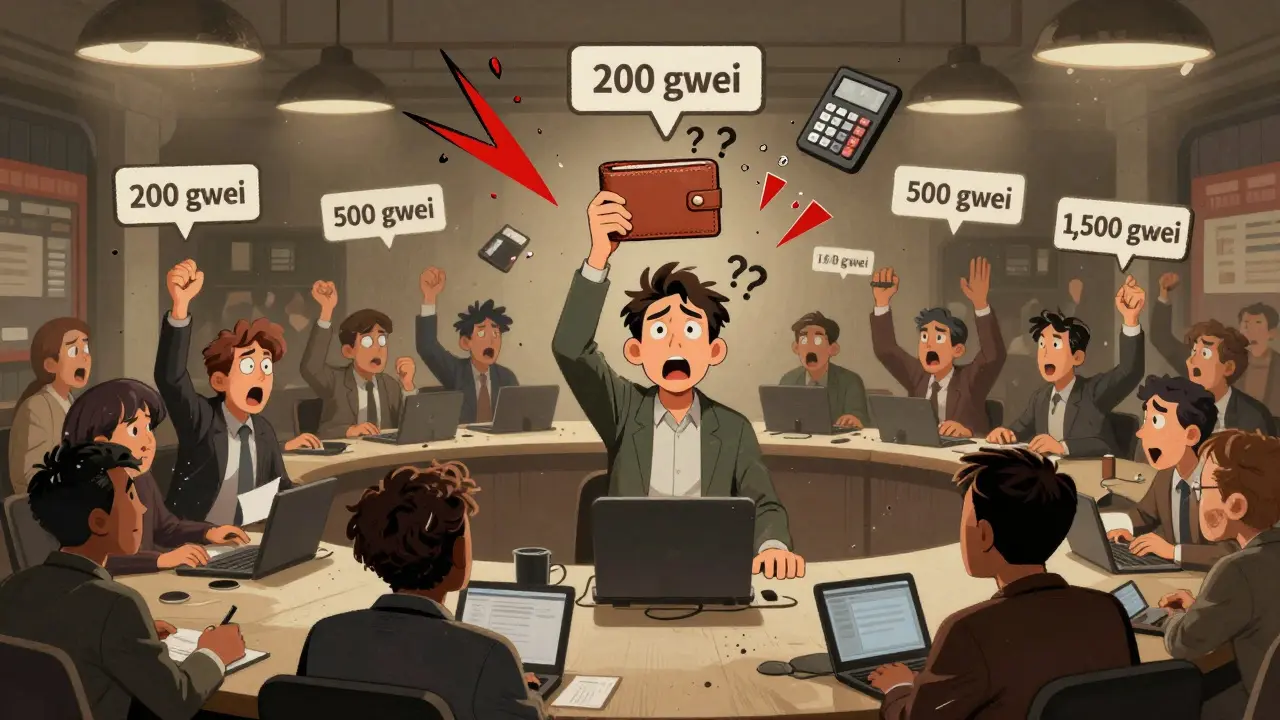
Before August 5, 2021, paying for an Ethereum transaction felt like bidding at an auction you didn’t understand. You’d open your wallet, see a gas price of 200 gwei, and wonder: Is that too high? Too low? Will my transaction even go through? You’d guess. You’d overpay. You’d get frustrated. That was the old system - a first-price auction where everyone scrambled to outbid each other for block space. Then EIP-1559 changed everything.
The Old Way: Chaos in the Fee Market
Before EIP-1559, Ethereum used a simple but broken model. Users set a gas price they were willing to pay, and miners picked the highest offers first. During busy times - like an NFT drop or a DeFi surge - gas prices would spike. Users saw numbers like 1,500 gwei and paid them anyway, just to get their transaction confirmed. Studies showed people were overpaying by nearly 30% on average. Wallets couldn’t give reliable estimates because there was no predictable baseline. You had to rely on third-party tools, and even then, you were flying blind.What EIP-1559 Actually Did
EIP-1559 didn’t just tweak the fee system - it rebuilt it. Launched as part of the London Hard Fork, it introduced three big changes:- A base fee that adjusts automatically based on how full the blocks are.
- An optional priority fee (or tip) you can add to get faster inclusion.
- A burning mechanism that destroys the base fee instead of giving it to miners.
How Fees Looked Before and After
Before EIP-1559, during peak congestion, gas fees hit 1,500 gwei. After? They still spiked - but not nearly as wildly. During the December 2021 NFT boom, base fees peaked around 150 gwei. That’s still expensive, but it’s predictable. You knew why it was high. You could plan for it. Wallets like MetaMask started giving accurate estimates because the base fee followed rules, not chaos. The real win? Overpayment dropped by 63% in the first six months after EIP-1559, according to Consensys. Users weren’t throwing away money anymore. The system became fairer.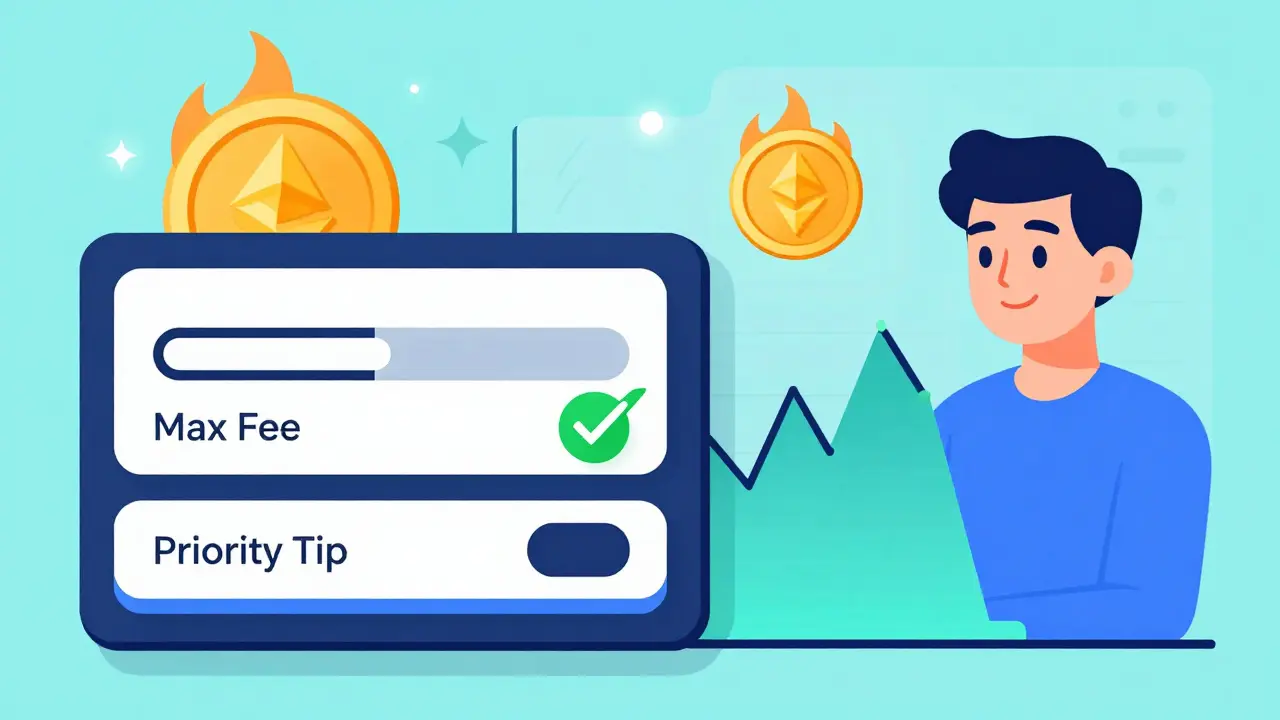
The Burning Effect: ETH as Deflationary Money
This is where EIP-1559 got really interesting. The base fee doesn’t go to miners. It gets burned - permanently removed from circulation. That turned Ethereum’s monetary policy upside down. Before EIP-1559, Ethereum issued about 13,500 ETH per day as block rewards. Miners got paid. The supply grew. After EIP-1559, the base fee burned ETH. On busy days, more ETH got burned than created. In November 2021, Ethereum burned 17,705 ETH in one day while only minting 13,500. That’s a net loss of 4,205 ETH. The network went deflationary. By December 2025, over 5.1 million ETH had been burned - worth roughly $15.4 billion. That’s 4.28% of the total ETH supply at the time of EIP-1559’s launch. Ethereum’s annual inflation rate dropped from 4.4% to just 0.27%. For 38% of days since August 2021, ETH supply actually shrank. This created the "ultrasound money" narrative - ETH becoming scarcer over time, not just fixed like Bitcoin.What Miners Lost (and What They Gained)
Miners didn’t love EIP-1559. They lost the base fee - their biggest source of revenue. Ethermine, one of the largest mining pools, saw transaction fee revenue drop by 35-45% right after the upgrade. But they still got tips. And as network usage grew, so did total tip volume. Plus, ETH’s price rose. So while their fee income dropped, their overall earnings didn’t collapse. Still, the shift hurt. It was a structural change - and it pushed the network toward Proof-of-Stake faster. By September 2022, when The Merge happened, miners were gone. Now validators earn rewards from staking, not fees. EIP-1559 made that transition smoother.What Users Actually Said
People noticed the difference. A Reddit survey of 2,347 users in September 2021 showed 68% said fee predictability improved. MetaMask’s support tickets about gas confusion dropped 42% in Q3 2021. Users liked that they didn’t have to guess anymore. But there were complaints. Many still didn’t understand the two fee parameters. Reddit user u/BlockchainNewbie summed it up: "My wallet suggests numbers, but I still don’t know why there are two of them." And during the NFT boom, people still paid $200 to mint a Bored Ape. EIP-1559 didn’t make fees cheap - it made them transparent. If demand is high, fees are high. But now you know why.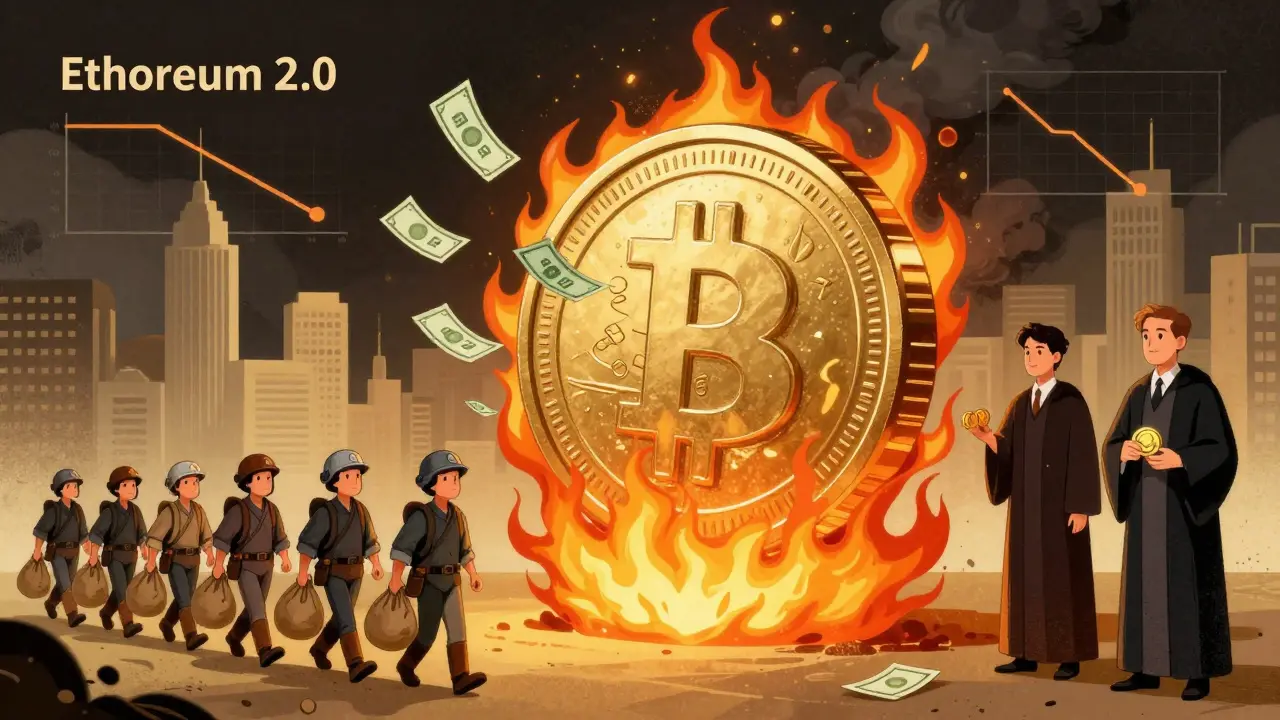
How the Ecosystem Adapted
EIP-1559 wasn’t just code. It required a full ecosystem upgrade. Node operators had to update to Geth 1.10.6+, Nethermind 1.10.11+, or other compatible clients. Wallets had to rebuild their fee estimators. MetaMask shipped support in version 10.4.0 on July 28, 2021. Developers had to update their dApps to handle the new transaction type (Type 2 transactions). Documentation was clear. Ethereum.org’s guide got a 4.7/5 rating. YouTube videos like Bankless’ "EIP-1559 Explained" hit over 2 million views. Medium posts reached 15 million reads in the first year. The community didn’t just accept it - they taught it.The Bigger Picture: EIP-1559 and Ethereum’s Future
EIP-1559 wasn’t meant to solve scalability. Vitalik Buterin himself said so. It was meant to fix the fee market. And it did. But its side effect - ETH burning - became just as important. It gave Ethereum a monetary identity: not just a platform, but a scarce digital asset. After The Merge, burning became even more critical. With no more block rewards for miners, ETH issuance dropped further. In 2023, Ethereum had 187 days where more ETH was burned than created. That’s not a fluke. It’s design. Today, institutions notice. Grayscale reported a 22% spike in ETH investment products after EIP-1559, citing "improved monetary policy clarity." JPMorgan’s JPM Coin system saw 37% less fee volatility, making cross-border payments more reliable. Looking ahead, analysts at Delphi Digital believe EIP-1559’s structure will scale with danksharding and other Layer 2 upgrades. They project a 90% reduction in average fees by 2026 - while keeping the burning mechanism intact.Is EIP-1559 Perfect?
No. Nic Carter warned it could cause "fee spirals" under extreme congestion. And some researchers argue the 50% block target might need adjusting once Ethereum hits 100,000+ transactions per second. But these are refinements, not failures. The bottom line? EIP-1559 solved the biggest pain point for everyday users: unpredictable, expensive fees. It turned Ethereum from a chaotic auction into a transparent, rule-based system. And it gave ETH a new economic engine - one that burns money to make it scarcer. That’s not just a technical upgrade. It’s a revolution in digital money.Did EIP-1559 make Ethereum gas fees cheaper?
Not always - but it made them predictable. EIP-1559 didn’t lower fees during peak demand. During the 2021 NFT boom, fees still hit 150 gwei. But before EIP-1559, they spiked to 1,500 gwei. Now, you know why fees are high, and you won’t overpay by 30%. The system is fairer, even if it’s not cheap.
What happens to the base fee in EIP-1559?
The base fee is burned - permanently destroyed. It doesn’t go to miners or validators. It’s removed from circulation. This is what makes Ethereum’s monetary policy deflationary during busy periods. Over 5.1 million ETH have been burned since August 2021.
Do I still need to pay tips after EIP-1559?
Yes, but only if you want your transaction processed faster. The base fee is automatic. Tips (priority fees) are optional. During high congestion, adding a small tip - like 0.5 to 1.5 gwei - helps miners or validators prioritize your transaction. Most wallets auto-fill this, so you don’t have to think about it.
How does EIP-1559 affect ETH’s price?
It doesn’t directly control price, but it changes supply dynamics. By burning ETH, EIP-1559 reduces the total supply over time. When demand is high and burning exceeds new issuance, ETH becomes scarcer. This has attracted institutional investors who see ETH as "ultrasound money" - a digital asset that gets rarer, not just fixed like Bitcoin.
Is EIP-1559 still active after The Merge?
Yes, absolutely. The Merge replaced miners with validators, but EIP-1559’s fee burning mechanism stayed exactly the same. In fact, it became more important. With no more block rewards for miners, burning became the primary force reducing ETH supply. It’s now a core part of Ethereum’s economic design.
- Poplular Tags
- EIP-1559
- Ethereum gas fees
- base fee
- ETH burning
- Ethereum fee market



People Comments
EIP-1559 was the breath of fresh air Ethereum needed. No more guessing. No more panic bidding. Just clean predictable fees. Game changer.
Oh wow so you mean we don't have to be a crypto day trader just to send $5 to a friend? Groundbreaking. 🙄
The structural recalibration of Ethereum's fee market via EIP-1559 represents a paradigmatic shift in decentralized economic architecture. The burning mechanism introduces a deflationary orthodoxy that fundamentally reorients the asset's monetary ontology. This is not merely an upgrade-it is a cryptographic reformation of value theory.
One cannot help but reflect on the metaphysical implications of burning ether. It is as if the network itself has become a sacrificial altar-where value is not hoarded, but transmuted into scarcity. A digital mysticism, if you will. The miners wept, but the network ascended.
USA built this. China's still trying to figure out how to burn money and call it innovation. EIP-1559? More like EIP-1559-AMERICA-FOREVER
baseFee + tip = 🤯 so simple yet so profound. Wallets finally stopped being magic boxes that spit out random numbers. 🙌 #EthereumIsAlive
People say it made fees predictable. But let's be honest: if you're paying $200 to mint a monkey JPEG, predictability doesn't matter. You're still an idiot.
I remember trying to send ETH during the NFT rush and just closing my wallet in despair. Now? I check the base fee like I check the weather. It's just... normal. That's the real win.
You call this progress? Miners lost 40% of their income and now you're celebrating? This is why decentralization is a myth. The devs just swapped one elite for another.
Oh please. The 'burning' is just a PR stunt. ETH is still inflationary over time. And you think institutions care about this? They care about ETFs. This is crypto theater.
You people act like EIP-1559 solved world hunger. The base fee still spikes during NFT drops. It's not cheaper-it's just less chaotic. Big whoop. And don't even get me started on how wallets still confuse users with 'maxFeePerGas'.
It’s not perfect but it’s miles better. If you’re still overpaying, your wallet settings are wrong. Not the protocol’s fault.
Before this I'd wait hours to send a transaction. Now I hit send and forget. No stress. No panic. Just quiet confidence. That's worth more than any fee drop.
The elegance of this upgrade is truly beautiful. The burn mechanism transforms ETH into a living, breathing asset with its own economic heartbeat. 🌱✨
i still dont get why there are two numbers but i trust my wallet now 😊 and i love that eth is getting scarcer like a rare pokemon card 🥹
So you're telling me the devs just made the rich pay less? And now we're supposed to be impressed? I'm not buying the 'ultrasound money' fairy tale.
This might sound cheesy but I cried when I saw my first refund from a failed bid. Not because I saved $20-but because I finally felt like I wasn't being scammed. Thank you, EIP-1559.
The base fee algorithm's dynamic adjustment mechanism, governed by a 12.5% per-block cap and a 50% block utilization target, represents a robust feedback loop that mitigates fee volatility without requiring centralized intervention. This is textbook mechanism design.
Burned ETH? Yeah right. The government is just hiding it in a secret vault. Next they'll say the moon landing was real.
EIP-1559 made fees predictable. But the real win? Now I can finally afford to send ETH without selling my car
Congratulations, you turned a broken auction into a slightly less broken one. Meanwhile, L2s are doing the real work. EIP-1559 was a Band-Aid on a bullet wound.
The elegance of EIP-1559 lies not merely in its mechanics, but in its philosophical alignment: value is not extracted, but annihilated-transformed into scarcity, into trust, into a new kind of digital gravity. Miners were the old gods. The burn is the new covenant.
So let me get this straight. Before, you paid too much and got mad. Now, you pay less but still pay a lot? And you call that progress? I mean, I guess it's better than before, but it still feels like they're just moving the goalposts. I just want to send money without thinking about it. That's it. That's the dream.
In India, we still pay $50 for a simple swap. EIP-1559 helps, but Layer 2s are the real heroes. Still, the burn mechanism? Brilliant. ETH becoming scarcer than gold? That's the future.
The base fee burn is the quiet revolution. Not flashy, not loud. But it's turning ETH into the first digital asset that actively reduces its supply under normal usage. That's not theory. That's math.
L2s are the future but EIP-1559 made the base layer usable. Without it, L2s wouldn't have had the traction.