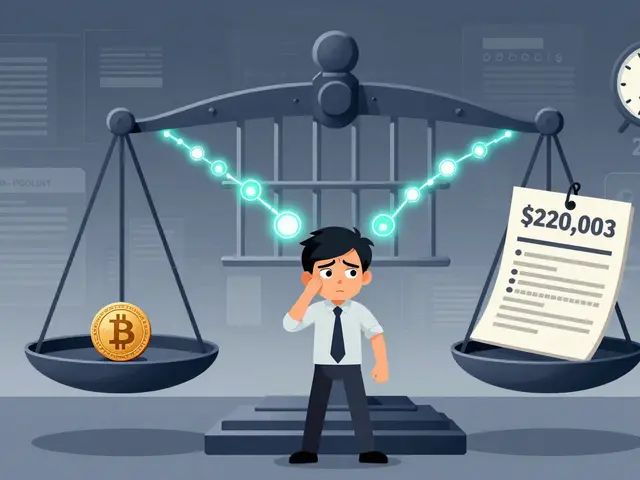
Pakistan’s $300Billion Crypto Trading Volume in 2025: What the Numbers Reveal
Explore why Pakistan’s crypto market claims $300billion in annual volume, the drivers behind the surge, regulatory shifts, and what it means for traders and investors.
When looking at Bitcoin mining Pakistan, the practice of validating Bitcoin transactions using local hardware and power in Pakistan. Also known as BTC mining in Pakistan, it has drawn attention because of rising energy prices and shifting regulations. The core idea is simple: miners solve cryptographic puzzles, add blocks, and earn BTC rewards. Yet the local environment adds layers that you don't see in a generic guide.
The first factor is cryptocurrency mining regulations, government rules that dictate how digital mining operations can be set up, taxed, and reported. Recent policy drafts hint at licensing requirements and possible caps on power consumption for large farms. That directly influences who can start a farm and what paperwork they must file. The second factor is electricity costs, the price per kilowatt‑hour that miners pay for grid or off‑grid power. In Pakistan, tariffs vary by province and time‑of‑day, making it crucial to model profit margins against local rates. A third driver is the availability of mining hardware, ASICs and GPUs that perform the hashing work needed for Bitcoin. Import duties, supply chain delays, and resale markets all affect the upfront cost and eventual ROI.
How these three entities interact creates a clear semantic chain: Bitcoin mining Pakistan requires efficient mining hardware; efficient hardware is only profitable when electricity costs stay low; low electricity costs are often shaped by cryptocurrency mining regulations. If any link in this chain weakens, miners see shrinking margins. For example, a sudden hike in grid tariffs can turn a previously viable operation into a loss‑making one, unless the miner upgrades to more efficient ASICs or shifts to renewable sources. Conversely, a relaxed regulatory environment can attract foreign investment, boosting hardware availability and driving down prices through competition.
Beyond the technical side, the Pakistani crypto market itself adds context. Local exchanges, stablecoins, and remittance flows shape demand for BTC, which in turn affects mining profitability. A vibrant market can increase transaction fees, adding another revenue stream for miners. Understanding these dynamics helps you decide whether to start a small home‑based setup, join a mining pool, or aim for a larger industrial farm. Below you’ll find deep‑dive articles that break down compliance checklists, cost‑analysis tools, hardware reviews, and market forecasts—all tailored to the Pakistani landscape.
Ready to see the full collection? Browse the guides to get actionable steps, real‑world numbers, and expert tips that will let you navigate Bitcoin mining in Pakistan with confidence.

Explore why Pakistan’s crypto market claims $300billion in annual volume, the drivers behind the surge, regulatory shifts, and what it means for traders and investors.