Apertum DEX Review: High‑Performance Decentralized Exchange on Avalanche
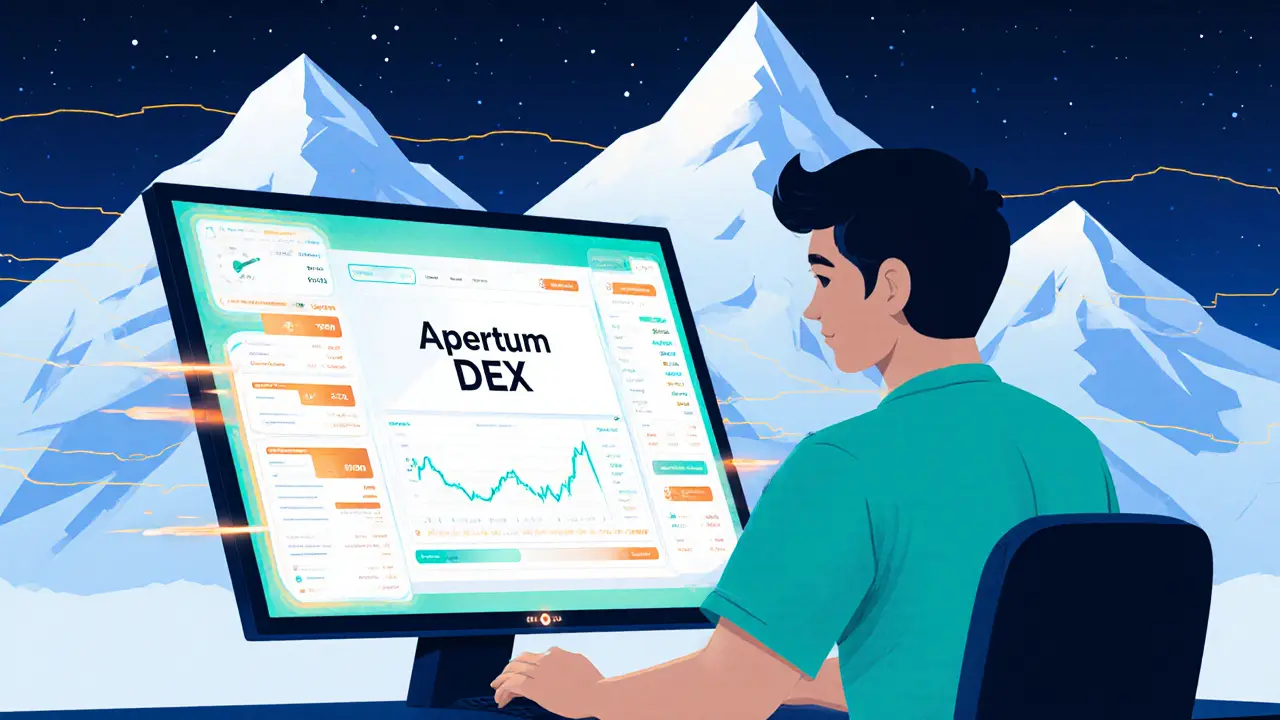
A detailed review of Apertum DEX, covering performance, fees, tokenomics, governance, and how it compares to Uniswap and Apex.
When working with Avalanche Subnet, a customizable network built on the Avalanche blockchain that lets developers create isolated environments with their own rules. Also known as AVAX Subnet, it gives you control over consensus, fees, and governance. The parent chain, Avalanche, a high‑throughput smart‑contract platform that uses a unique consensus called Avalanche, provides the security backbone for every subnet you launch.
A Subnet, a self‑contained blockchain that runs on the Avalanche consensus but can have its own virtual machines, token standards, and permission settings isolates your project from unrelated traffic. This isolation means you can tweak transaction speed, set custom fee structures, or even restrict who can join. In practice, a subnet Avalanche Subnet can be a private finance network, a public gaming arena, or any niche use case that benefits from a tailored rule set.
Every subnet needs Validators, nodes that stake AVAX to confirm transactions and keep the network honest. Validators are the glue that holds the subnet together; they secure the chain, enforce consensus, and earn rewards for honest work. A subnet can choose a small, trusted validator set for privacy or open it up to a larger pool for decentralization, depending on your goals.
Smart contracts run on subnets just like they do on the main Avalanche network. This means developers can deploy DeFi protocols, NFT marketplaces, or gaming logic without worrying about congestion on the primary chain. By moving heavy‑load contracts to a dedicated subnet, you reduce gas fees and improve user experience, which is crucial for any DeFi, decentralized finance applications that rely on fast, cheap transactions you might be building.
One of the biggest advantages of using an Avalanche Subnet is cross‑chain compatibility. Subnets can be bridged to Ethereum, Binance Smart Chain, or other networks using Avalanche’s native bridge technology. This enables assets to move freely, opens liquidity channels, and lets users interact with multiple ecosystems without leaving your app.
Real‑world use cases are popping up fast. Game studios are launching play‑to‑earn worlds where each item lives on its own subnet, ensuring instant trades and zero lag. NFT projects use subnets to host large collections without spiking gas costs. Finance teams build private, compliant ledgers for institutional trading, benefitting from the same security guarantees as the main chain.
Getting started is simpler than you think. The Avalanche CLI, Remix integration, and easy‑to‑follow documentation let you spin up a subnet in minutes. You can define VM types, set custom tokenomics, and even script validator onboarding. Most developers appreciate the low learning curve and the ability to test changes locally before going live.
Performance-wise, subnets inherit Avalanche’s sub‑second finality and high throughput, but you can tune block size and validator count to match your app’s needs. This flexibility translates to lower operational costs – you only pay for the resources you actually use, making it attractive for startups and large enterprises alike.
Governance is another key piece. Since AVAX is staked to run a subnet, token holders can vote on parameter changes, fee adjustments, or validator rotations. This creates a transparent, community‑driven model where decisions are backed by economic stake, aligning incentives across users and operators.
Security can’t be an afterthought. Audits of the subnet’s smart contracts, regular validator performance checks, and monitoring tools help catch issues early. Avalanche’s proven consensus adds an extra safety net, but best practice still calls for code reviews and bug bounty programs.
The Avalanche ecosystem offers vibrant forums, Discord channels, and developer grants to support your journey. Whether you’re a solo coder, a game studio, or a finance firm, the resources are there to help you scale responsibly. As you explore the list of articles below, you’ll find deep dives into specific subnets, validator setups, DeFi integrations, and real‑world case studies that will guide you from concept to production.
A detailed review of Apertum DEX, covering performance, fees, tokenomics, governance, and how it compares to Uniswap and Apex.