
India's 30% Crypto Tax: What Bitcoin Traders Need to Know in 2025
India's 30% crypto tax applies to all Bitcoin and crypto gains with no loss offsetting, 1% TDS, and 18% GST on fees. Traders must track every transaction or risk penalties.
When people talk about a 30% crypto tax, a high marginal tax rate applied to cryptocurrency gains in certain jurisdictions, they’re usually referring to countries that treat crypto like ordinary income or capital gains at steep rates. This isn’t a global rule—it’s a local policy. In places like Belgium, a country with strict crypto taxation rules, profits from trading or staking can be taxed at up to 30% under speculative income laws. Meanwhile, in the UAE, a jurisdiction known for zero crypto taxes, the same trade would be completely tax-free. The difference isn’t about the crypto—it’s about where you live, how you trade, and what your government says about digital assets.
Why does this matter? Because if you’re trading on a global exchange like Hubi or Reku, or earning tokens from an airdrop like ARCH or ANTEX, your tax bill isn’t determined by the platform—it’s tied to your country of residence. Some governments, like Belgium’s, classify crypto gains as speculative income and slap on 30% without deductions. Others, like Sweden, don’t tax crypto directly but restrict mining due to energy use. And then there are places like Indonesia, where the OJK requires reporting and taxes crypto as a commodity, but not necessarily at 30%. The real issue isn’t the percentage—it’s the lack of clarity. Many traders assume all crypto is taxed the same, but that’s not true. A token swap like BNX to FORM or a DeFi staking reward might trigger a taxable event in one country and not in another. Even something as simple as using crypto to buy a coffee can be taxable in some places, while ignored in others.
If you’re holding crypto and wondering how much you might owe, don’t guess. Look at your home country’s rules, not the exchange’s terms. A 30% tax sounds scary, but it only applies if your country enforces it. If you’re in a jurisdiction with no crypto tax, like the UAE, you can legally keep every dollar you earn. If you’re in a high-tax country, you might still reduce your liability by timing sales, using loss harvesting, or relocating. The posts below cover real cases: how Indonesia regulates trading, why Sweden limits mining, and how fake airdrops like CFL365 and CHY are often used to hide tax evasion schemes. You’ll also find warnings about scams that promise tax-free gains—because if it sounds too good to be true, it usually is. What you’ll find here isn’t theory. It’s what’s actually happening to traders right now, in real countries, under real laws.
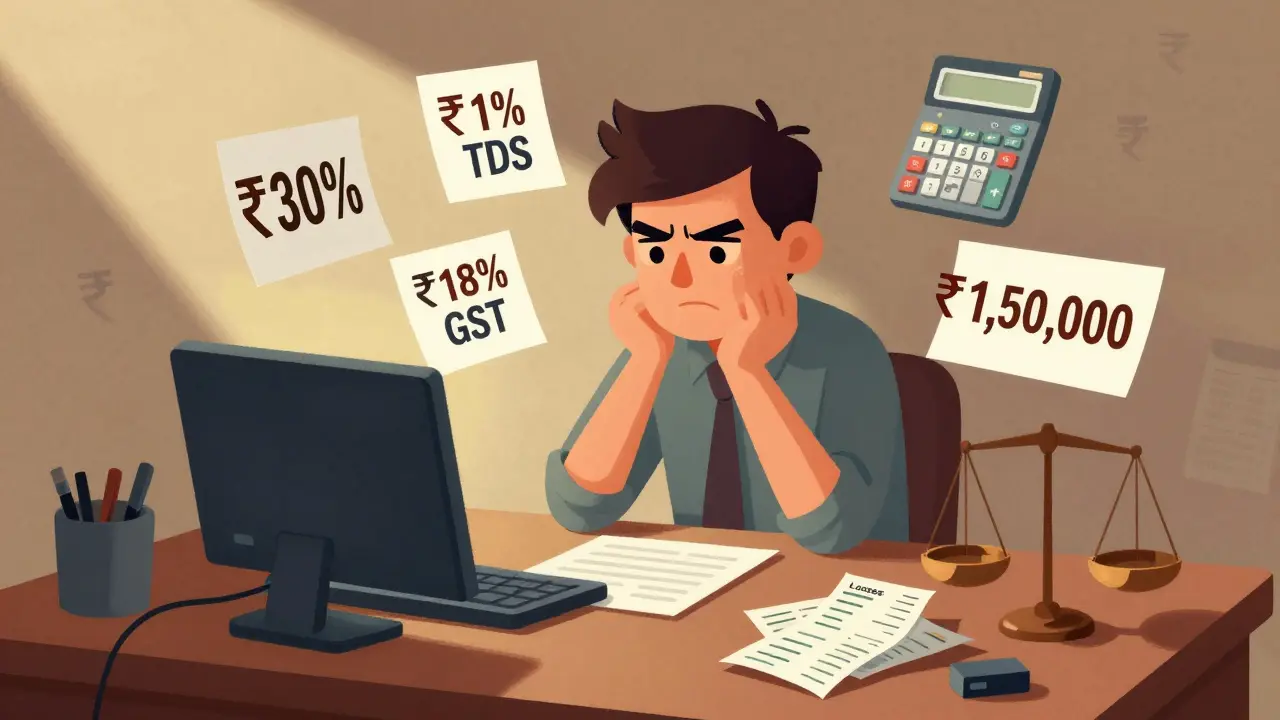
India's 30% crypto tax applies to all Bitcoin and crypto gains with no loss offsetting, 1% TDS, and 18% GST on fees. Traders must track every transaction or risk penalties.