



Chasing an airdrop feels like finding a needle in a haystack when the project hasn’t even launched its token yet. If you are here looking for details on the SteakBank Finance (SBF) airdrop, I have some hard truths to share. As of May 2026, there is no confirmed, official airdrop program for SteakBank Finance. In fact, the data suggests the project might still be in pre-launch or early development stages, with zero tokens currently in circulation.
This doesn't mean you should ignore the platform entirely. It does mean you need to shift your strategy from "claiming free tokens" to "understanding the mechanism." SteakBank Finance is a liquid staking protocol built on the Binance Smart Chain (BSC). Before you risk anything hoping for a reward, you need to know what this platform actually does, how it works, and why the silence around an airdrop matters.
What Is SteakBank Finance?
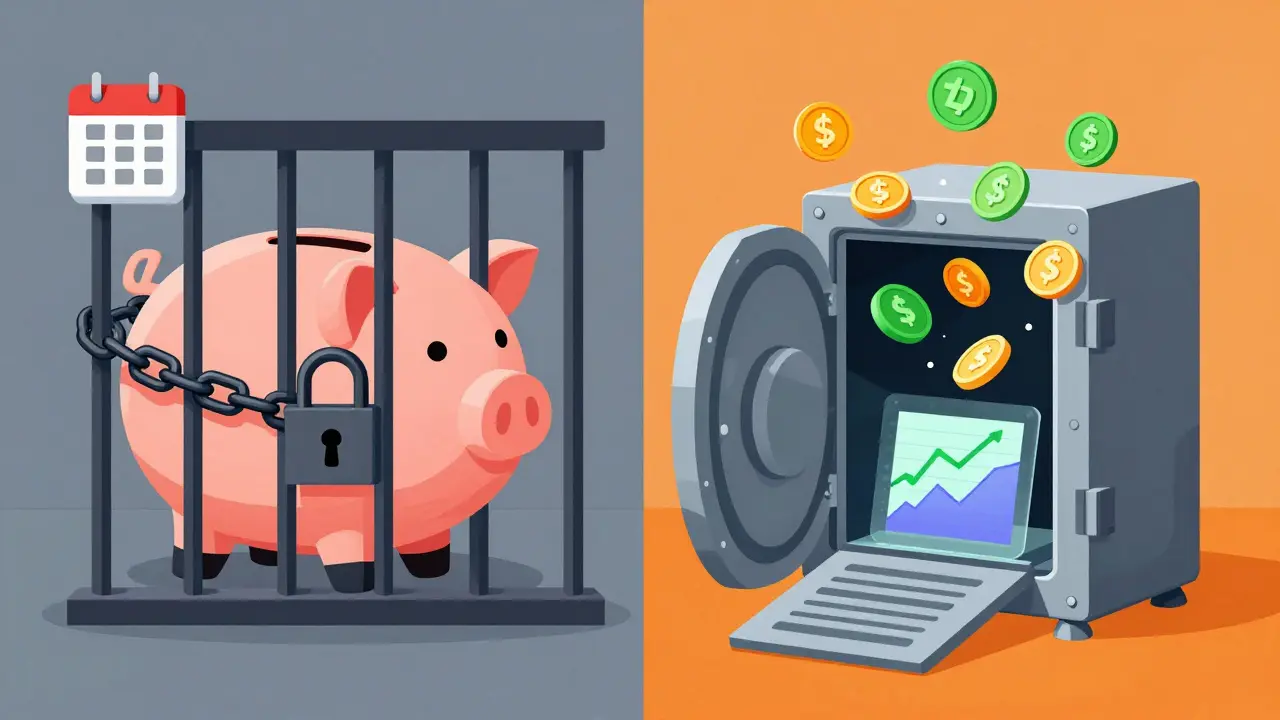
To understand if an airdrop is likely, you first need to understand the product. SteakBank Finance is a liquid staking platform that allows users to stake assets while maintaining liquidity through derivative tokens. Traditional staking locks your coins up. You earn rewards, but you can't touch your principal until you unstake, which often takes days or weeks. This is inefficient for active DeFi traders.
SteakBank solves this by issuing liquid derivative tokens. When you deposit your assets into their smart contracts, you receive these derivatives. These tokens represent your staked position. Crucially, you can trade them, lend them, or use them as collateral in other decentralized finance protocols while still earning the underlying validator rewards. It’s a way to double-dip on yield: once from the staking itself, and again from deploying the derivative token elsewhere.
The Tokenomics Reality Check
Here is where things get tricky for airdrop hunters. The native token, known as SBF, has a maximum supply cap of 10 billion tokens. However, current market data shows zero tokens in active circulation. There is no trading volume, no price discovery, and no established market capitalization.
Why does this matter? Projects usually distribute airdrops after they have launched their token to build community or liquidity. With zero circulation, SteakBank Finance appears to be in a pre-launch phase. This means:
- No Claimable Tokens: You cannot claim SBF because it isn't circulating yet.
- High Speculation Risk: Any website claiming you can "farm" or "claim" SBF right now is likely a scam or spreading misinformation.
- Uncertain Distribution: Without an announced roadmap, we don't know if they plan to do an airdrop at all, or if they will sell the tokens directly via an Initial DEX Offering (IDO) or private sale.
How Liquid Staking Works on BSC
Let’s break down the technical side so you know what you’re dealing with if you decide to interact with the platform later. The core infrastructure relies on smart contracts deployed on the Binance Smart Chain. The primary contract address associated with the project is identified as 0xBb53...b01734. Always verify this address on official channels before connecting any wallet.
The process typically follows this flow:
- Deposit: You send supported assets (like BNB) to the SteakBank smart contract.
- Minting: The protocol mints liquid derivative tokens representing your deposit.
- Earning: Your deposited assets go to validators who secure the network. You earn a share of their rewards.
- Utility: You take the derivative tokens and use them in lending protocols or liquidity pools to generate additional yield.
This model increases capital efficiency. Instead of letting your staked assets sit idle, you keep them working. However, this introduces new risks that you must understand.
Risks You Must Consider
DeFi is not a savings account. Even if an airdrop were to happen, interacting with the protocol carries significant risks. Here is what could go wrong:
- Smart Contract Vulnerabilities: Like any DeFi protocol, SteakBank relies on code. If there is a bug or exploit in the contract, funds can be drained. Since the project is early-stage, ensure you check for independent security audits before depositing anything.
- Impermanent Loss: If you provide liquidity using the derivative tokens in automated market makers (AMMs), you may face impermanent loss. This happens when the price of the derivative token diverges significantly from the underlying asset.
- Validator Slashing: If the validators securing the network misbehave, they can be "slashed," meaning part of their staked assets are destroyed. This could reduce the value of your derivative tokens.
- Regulatory Uncertainty: Liquid staking services are under increasing scrutiny globally. Changes in regulation could impact how platforms like SteakBank operate on BSC.
Competitive Landscape on BSC
SteakBank Finance isn’t operating in a vacuum. The liquid staking sector on Binance Smart Chain is crowded. Established players include Ankr Staking and pSTAKE Finance. These competitors have existing user bases, audited code, and circulating tokens.
SteakBank differentiates itself by focusing specifically on multi-stream revenue generation within the BSC ecosystem. Their pitch is simplicity and integration. However, without a clear competitive advantage in terms of yield rates or security track record, gaining traction against these giants will be difficult. This competition also affects airdrop likelihood; established projects rarely do massive airdrops unless they are launching a major new feature, whereas newer projects might use airdrops to gain initial users.

Is There an Airdrop? How to Stay Safe
Let’s be direct: Do not trust unofficial sources claiming to offer SteakBank Finance airdrops. With zero tokens in circulation, any site asking you to connect your wallet to "claim" SBF is likely trying to drain your funds. Phishing sites often mimic legitimate DeFi interfaces.
If you want to stay updated on potential future distributions, follow these steps:
- Monitor Official Channels: Look for verified social media accounts (Twitter/X, Telegram) linked from the official website. Beware of impersonators.
- Check Documentation: Read the whitepaper or litepaper on their official site. Look for sections on "Token Distribution" or "Community Rewards."
- Verify Contracts: Use blockchain explorers like BscScan to check the contract activity. If there is no transaction history related to token distribution, nothing is happening.
Conclusion: Patience Over Hype
SteakBank Finance represents an interesting approach to capital efficiency on the Binance Smart Chain. The concept of liquid staking is proven, but the execution by a new, pre-launch project carries inherent uncertainty. Currently, there is no evidence of an active airdrop. The lack of circulating tokens suggests the project is still in its infancy.
Instead of chasing phantom airdrops, consider monitoring the project’s development milestones. Have they completed audits? Are they building partnerships? Is there a growing community? These are better indicators of long-term value than speculative claims about free tokens. In DeFi, patience and due diligence are your best tools for survival.
Is there an official SteakBank Finance airdrop in 2026?
No. As of May 2026, there is no confirmed official airdrop for SteakBank Finance. The token (SBF) has zero circulation, suggesting the project is in pre-launch or early development phases. Be wary of any websites claiming otherwise, as they are likely scams.
What is the total supply of the SBF token?
The maximum supply cap for the SteakBank Finance (SBF) token is 10 billion tokens. However, currently, none of these tokens are in active circulation.
Which blockchain does SteakBank Finance operate on?
SteakBank Finance operates on the Binance Smart Chain (BSC). Its smart contracts are deployed on this network to facilitate liquid staking and derivative token issuance.
What are the main risks of using SteakBank Finance?
Risks include smart contract vulnerabilities (potential exploits), impermanent loss when using derivative tokens in liquidity pools, validator slashing risks, and regulatory uncertainties affecting DeFi platforms. Additionally, the project's early stage adds uncertainty regarding long-term viability.
Who are the main competitors of SteakBank Finance?
Key competitors in the liquid staking space on Binance Smart Chain include Ankr Staking and pSTAKE Finance. These established platforms offer similar services with existing user bases and circulating tokens.
How can I verify if an airdrop announcement is legitimate?
Only trust announcements from verified official channels such as the project's official website, verified Twitter/X account, or official Telegram group. Never click links from unsolicited messages or unverified third-party sites. Always check the contract address on BscScan to see if there is actual token activity.
What is the primary contract address for SteakBank Finance?
The primary contract address identified for SteakBank Finance is 0xBb53...b01734. Always double-check this address on official documentation before interacting with any smart contracts.





People Comments
Oh, look at us playing detective with a ghost token.
I’ve been in DeFi since the days when you could lose your life savings by clicking one wrong link on a Telegram bot, and let me tell you, "zero circulation" is code for "rug pull waiting to happen." You guys are really out here treating pre-launch vaporware like it’s the next Ethereum. It’s not just speculative; it’s borderline delusional to think a project with no audits, no liquidity, and no roadmap isn’t just another cash grab for the founders.
The fact that you’re even entertaining the idea of interacting with contract 0xBb53...b01734 without a single independent security review is concerning. I mean, seriously? Do you want to fund someone’s yacht or actually make money? Because right now, you’re just feeding the hype machine. The silence around the airdrop isn’t mysterious; it’s because there is nothing to claim but promises from people who haven’t shipped code yet. Wake up.
It is completely understandable why people are drawn to these opportunities, especially when the promise of free tokens is so enticing. However, as Sharada often says, patience is truly a virtue in this space. We must remember that legitimate projects take time to build their infrastructure and ensure security before launching any token distribution. Instead of focusing solely on the potential airdrop, perhaps we can shift our attention to understanding the underlying technology of liquid staking on BSC. This approach allows us to learn and grow our knowledge base while staying safe from potential scams. Let's support each other in making informed decisions rather than rushing into unverified platforms.
the notion that one should simply wait for an announcement is fundamentally flawed in its execution because the market does not reward passivity it rewards those who understand the deeper mechanics of the protocol and how the derivative tokens might interact with existing lending protocols on the binance smart chain which is a complex web of interdependent contracts that require a thorough understanding of the risks involved such as impermanent loss and validator slashing which are not merely theoretical concerns but practical realities that affect the value of one's position in a significant manner
one must consider the competitive landscape which includes established players like ankr and pstake finance who have already proven their viability and thus any new entrant must offer something substantially different to gain traction which brings us back to the question of whether steakbank finance has a unique value proposition or if it is merely another iteration of a well-trodden path
everyone is sleeping on this tbh the lack of circulation is a feature not a bug it means they havent diluted the supply yet so early adopters will get way more when it finally drops i dont see why ppl are so scared of smart contract risk everything has risk including holding fiat in a bank that loses value every year due to inflation so yeah im gonna keep my eyes on this one and probably bridge some bnb over soon just to be ready
Sure, go ahead and bridge your BNB. See if I care.
While you're busy trying to be the 'early adopter' hero, the rest of us are watching the smart contract vulnerabilities section of this post like hawks. It’s almost poetic how everyone ignores the part about validator slashing until it’s too late. But hey, if you enjoy living on the edge of a potential rug pull, more power to you. I’ll be here, safely parked in stablecoins, laughing all the way to the bank. Or at least, to a decent interest rate. Your move, genius.
i hear what you are saying about the risks and i appreciate that you are looking out for others it is important to stay cautious but also open minded sometimes innovation comes from unexpected places and we should not dismiss projects just because they are new or unproven yet there is always room for growth and learning in this space
Let us maintain a respectful discourse here. While skepticism is healthy, it is equally important to acknowledge the potential for innovation within the decentralized finance sector. SteakBank Finance may indeed be in its early stages, but that does not automatically render it invalid or malicious. We should encourage thorough due diligence rather than outright dismissal. If anyone wishes to explore further, please ensure you verify all contract addresses through official channels and never share private keys. Let us foster a community where information is shared responsibly and safety is prioritized above all else.
Stay safe out there! Don't rush.
you idiots are missing the point entirely liquid staking is the future of yield optimization and steakbank is positioning itself perfectly to capture that market share the fact that they have zero circulation means they are building scarcity which drives value up exponentially once the token launches do you really think ankr and pstake are going to dominate forever no way the new kids on the block always disrupt the status quo so stop whining about risks and start farming because when sbf goes live you will regret not being early enough
The assertion that 'new kids on the block' inherently disrupt established markets is a simplistic and historically inaccurate viewpoint. In the realm of high-finance derivatives and staking protocols, trust and security are paramount. Established entities such as Ankr and pSTAKE have invested heavily in audits, compliance, and user acquisition. To suggest that SteakBank Finance can overcome these barriers merely through 'scarcity' is intellectually lazy. One must consider the regulatory frameworks governing BSC operations and the technical robustness required to manage multi-stream revenue generation. Without a verifiable track record, such claims remain unsubstantiated conjecture.
ruben you sound like a textbook written by someone who has never touched crypto in their life get off your high horse and admit that the masses don't care about your precious audits they care about gains and steakbank is offering exactly that with its liquid staking model so instead of spouting your elitist nonsense maybe you should try connecting your wallet and seeing what happens oh wait you cant because you are too busy protecting your fragile ego
its funny how everyone thinks they know best but really we are all just guessing in the dark the whole concept of an airdrop is kind of silly isnt it like giving away pieces of a pie that doesnt exist yet but hey if it makes you feel better to chase after it then go ahead i guess there is something to be said for hope even if it is misplaced
You raise an interesting philosophical point, Samara! Indeed, the pursuit of airdrops can sometimes feel like chasing shadows. However, I believe that engagement with emerging technologies, even speculative ones, fosters a deeper understanding of the blockchain ecosystem. By participating in discussions and monitoring developments, we contribute to the collective intelligence of the community. So, while the airdrop may not exist yet, the knowledge gained is invaluable! Keep asking questions and stay curious!
i think its cool that ppl are talking about this stuff even if the token isnt out yet it shows there is interest which is good for the project in the long run maybe they will launch soon and we can all see what they are made of until then lets just keep an eye on their socials and see what happens no need to stress too much about it