


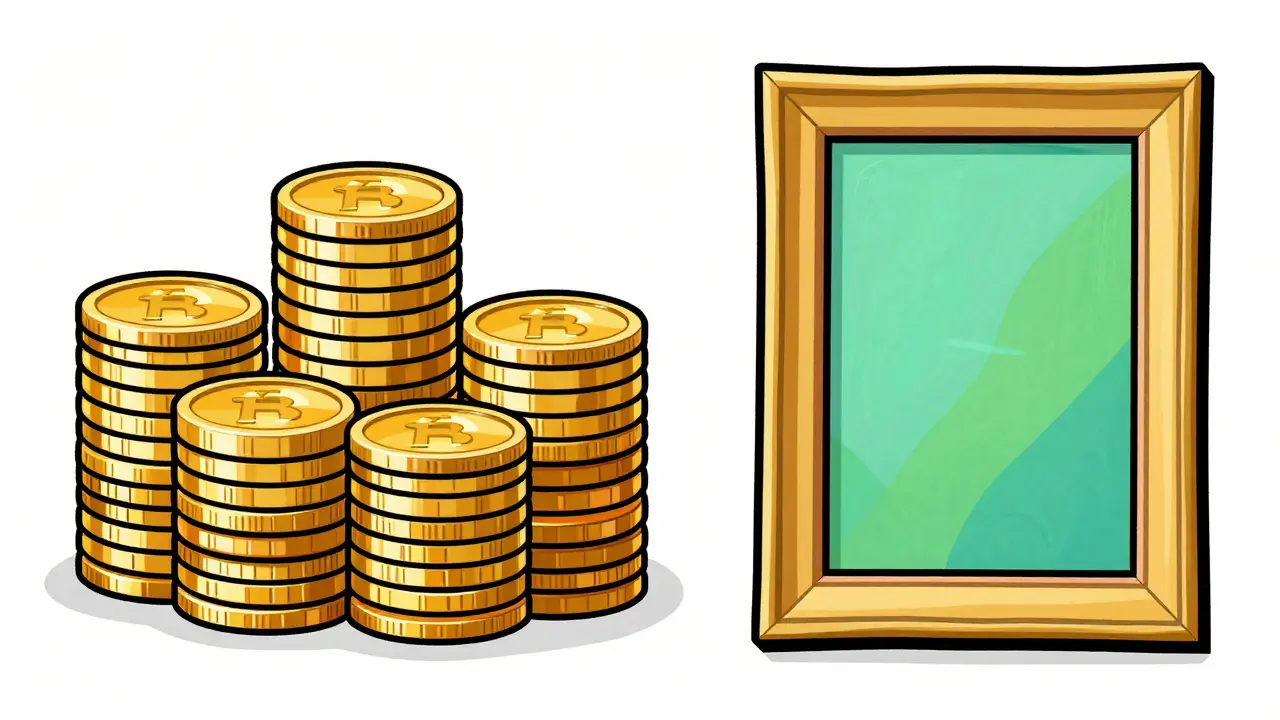
In the evolving landscape of blockchain technology, two terms often float together in conversations about digital ownership: social tokens and NFTs. At first glance, they seem identical-both are bought, sold, and held in digital wallets. However, the underlying mechanics serve entirely different purposes. If you are trying to decide which asset type fits your investment strategy, creator goals, or community-building efforts, understanding this distinction is critical. The fundamental difference lies in a single concept called fungibility, yet the implications stretch far beyond basic definitions.
The Core Definition: Fungibility vs Uniqueness
To grasp why these assets behave differently, we have to look at how value is exchanged. Imagine you hand me a $20 bill. Later, I give you back a different $20 bill. Does it matter? No. They hold equal value; they are interchangeable. This is what defines a fungible asset. A social token operates on this exact logic. It functions similarly to currency or traditional equities within a specific ecosystem. You can trade one unit of a specific social token for another unit of the same token on a 1-for-1 basis without changing its utility or value.
On the other end of the spectrum sits the non-fungible asset. Think of a painting by Van Gogh. You cannot trade a copy of "The Scream" for the original and expect the same recognition. Each piece has a unique identity, history, and metadata attached to it. This is the essence of the Non-Fungible Token (NFT). Unlike social tokens, each NFT possesses a unique cryptographic signature on the blockchain. While one person might own the #1 edition of an artwork, another owns #2. They are never exactly alike, which drives their valuation based on scarcity rather than interchangeability.
Anatomy of Social Tokens
Social tokens have emerged as a vital tool for modern creator economies. They are typically categorized into three specific buckets based on who issues them and what rights they grant.
- Personal Tokens: Issued by individuals like musicians or athletes. These represent a stake in that person's brand or access to their personal network.
- Community Tokens: Designed for collectives. Holding these grants voting rights in a DAO (Decentralized Autonomous Organization) or membership status within a specific group.
- Platform Tokens: Built to encourage usage across a larger software ecosystem rather than a specific individual's content.
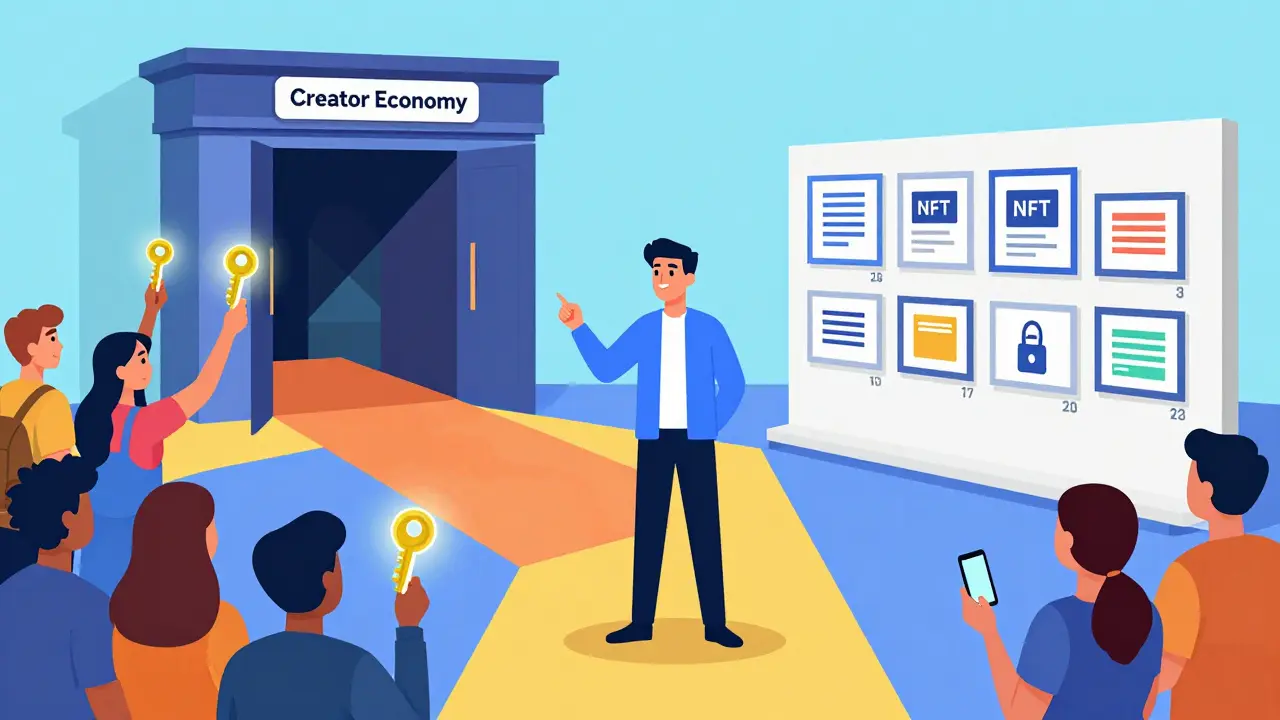
For a concrete example, consider the approach taken by artists like Sting. He launched a token allowing fans to support his music career while gaining entry to exclusive content tiers. Similarly, Polish pop star Doda utilized a token model where holders received private daily updates that non-holders could not access. These implementations prove that social tokens are less about owning a specific JPEG image and more about owning a key to a community or experience.
Understanding NFT Mechanics
NFTs operate differently in structure and philosophy. Most are built on the Ethereum blockchain using the ERC-721 token standard. This standard requires every single token to maintain separate metadata records. When you buy an NFT, you aren't just buying a file; you are buying proof of ownership recorded immutably on a public ledger.
This makes NFTs superior for applications requiring absolute uniqueness. Digital art, collectibles, gaming items, and virtual real estate all rely on the provenance and individual rarity of the asset. The market values these items subjectively. One NFT might sell for thousands of dollars due to its cultural significance or the reputation of its creator, while a visually similar piece might sell for pennies. There is no fixed exchange rate like there is with social tokens. The value is purely driven by what a buyer believes the uniqueness is worth.
Technical Architecture and Costs
Behind the scenes, the engineering differs significantly. Because social tokens are fungible, they utilize standards that allow for batch transfers. A platform can send millions of tokens to users simultaneously using a unified smart contract. This creates a cost-effective environment for community building.
NFTs require a much heavier computational load. Each minted token needs its own unique address management and metadata storage. This results in higher transaction fees (gas fees) on chains like Ethereum. For creators launching an NFT collection, this means paying per item minted, whereas social token issuers generally set up one contract for the entire supply. Scalability favors social tokens when you are dealing with mass adoption or small-value transactions, while NFTs are optimized for premium, high-value individual sales.
| Feature | Social Token | Non-Fungible Token (NFT) |
|---|---|---|
| Fungibility | Fungible (Interchangeable) | Non-Fungible (Unique) |
| Primary Utility | Access, Governance, Loyalty | Ownership, Art, Collectibles |
| Standard Example | ERC-20 (or equivalent) | ERC-721, ERC-1155 |
| Value Basis | Utility, Exchange Rate | Rarity, Scarcity, Market Demand |
| Liquidity | High (Easy to Trade) | Variable (Depends on Marketplace) |
Economic Implications for Creators
The choice between these two models dictates your revenue stream. If you are a musician looking for recurring monthly income similar to a subscription service, a social token is usually the better fit. It encourages fans to hold tokens long-term to maintain perks, creating a steady revenue flow through trading volume or initial issuance.
Conversely, NFTs act more like a product launch. You sell a finite number of artworks or collectibles. Once the mint is over, your passive income stops unless you program royalties into the secondary market sales. While royalties generate ongoing funds, they depend entirely on others trading your work, whereas social tokens often incentivize holding within an active ecosystem for direct utility.
We see hybrid strategies emerging now. Some artists release an NFT as the centerpiece of a campaign-a rare digital artifact-but also issue a companion social token that grants early access to the next NFT drop or physical merchandise. This combines the hype of ownership with the sustained engagement of community access.
Risks and Regulatory Realities
While the technology is robust, the regulatory landscape remains murky. Experts have long warned that social tokens, due to their potential to function like securities or payment methods, attract regulatory scrutiny more aggressively than simple collectible NFTs. In various jurisdictions, issuing a token that promises financial return or governance control could classify it as a security.
Additionally, the volatility is a major factor. Social tokens often lack deep liquidity pools compared to major cryptocurrencies. An investor buying in today might struggle to find a buyer tomorrow if the project loses momentum. NFT markets are even more prone to manipulation and speculative bubbles, where prices can detach completely from intrinsic value. Users must verify the utility promised: does the token actually grant the access advertised, or is it just a financial instrument waiting for a crash?
The Future of Digital Ownership
As we move forward, the lines may blur further. Smart contracts are becoming capable of dynamic features that change token behavior based on conditions. We might see "programmable NFTs" that offer access privileges traditionally associated with social tokens. Conversely, social tokens could evolve to include fractionalized ownership aspects. For now, however, the distinction remains clear: if you want to join a club, use a social token. If you want to own a unique piece of digital history, buy an NFT.
- Poplular Tags
- social token
- NFT
- blockchain
- fungibility
- digital assets

People Comments
This whole social token hype is just another pump and dump scheme waiting to happen 🛑💸. People think they are smart enough to catch the next big thing but they are basically handing their money to scammers with a fancy website. The article tries to sound technical but ignores the fact that 90% of these projects die in six months. Fungibility does not save you when the underlying value is pure vapor. 🤡
The optimism surrounding these tokens is misplaced given current failure rates. Most projects lack fundamental utility beyond initial speculation. Smart money knows better than retail chasing memes. Read the contract terms before clicking buy buttons.
Great explanation here. Social tokens are really useful for communities. They help fans support artists directly. I think we will see growth in this sector soon. It builds trust better than normal contracts. Everyone should learn more about this. Good job sharing this info.
Your take is completely off point here.
im kinda confused about the gas fees part. why would anyone pay so much to send a basic token. feels scammy af. nft is nice but dont get me started on the jpeg space though. maybe social tokens are better for me. i cant tell yet.
It seems like a solid breakdown of the mechanics involved. I agree that utility matters more than rarity for long term holders. Community engagement is the real moat here. Hope to see more builders focus on retention. Good post overall.
I really think we need to consider how much effort goes into building a real ecosystem instead of just minting junk. It is so easy to set up a contract now and i have seen too many people lose money because they did not read the code properly. The gas fees on ethereum are high but that is just proof of work doing what it is supposed to do. We cannot ignore the history of blockchain development either because we are seeing patterns repeat every few years. Scalability is key and social tokens might actually be the solution for mass adoption if the regulations get clear soon enough. I hope we see less speculation and more utility driven projects emerging from the ashes of this bull market cycle.
There are also legal risks that are often ignored by casual investors who just want quick gains. The article mentions sting which is great but he is an outlier case for sure. Most indie musicians will struggle to maintain liquidity pools for their own personal tokens. It requires constant maintenance and marketing to keep the floor price up over time. I am worried about the environmental impact of the proof of work chains used for most of these transactions too. Sustainability is becoming a bigger talking point in the press lately. We need to find ways to reduce energy consumption while keeping security intact. Maybe layer two solutions will help bridge this gap between usability and green tech. I just want us all to be careful and not rush into things blindly. Education is the only way to survive these volatile markets.
You are absolutely right that education is critical for navigating this space. Many creators lack the tools to launch proper tokens. We should encourage them to build sustainable ecosystems first. Don't let the fear drive your decisions away from innovation. Keep learning and stay grounded in reality. You got this.
The dichotomy presented warrants further examination regarding regulatory compliance. One must note the inherent volatility associated with such instruments. Proceed with caution when evaluating potential exposure.
Its like a magical journey into the deep sea of code. I feel colorful ideas bubbling up in my mind. Some day we will swim through this ocean of tokens freely. Maybe we can catch the big fish of returns. Dont forget the sharks though lol. Typo alert. Hope u stay safe bro.
Everyone needs to stay calm during these market shifts. Fear drives bad decisions often. Take a breath and review the facts. Disagreement is natural in investing discussions. Find common ground where possible.
Digital ownership represents a shift in how societies value culture globally. Different regions may adopt these tools differently based on laws. We should respect diverse approaches to technology. Global collaboration could solve many issues present here today. Let us move forward together peacefully.
We observe the evolution of ownership paradigms shifting rapidly. The concept of digital provenance changes societal structures deeply. Are we truly free or merely holding new forms of currency. History repeats itself through technology mediums.
Honestly this changed my perspective on how I view assets online. The difference between swapping coins and owning art is huge. I was thinking about trying to mint something myself soon. I hope others are watching this space closely. I guess I am just saying I am interested. This stuff is wild man.
The analysis demonstrates significant clarity regarding asset classification. Understanding fungibility remains crucial for portfolio management strategies. Investors should prioritize research over hype cycles. Market dynamics dictate success rates fundamentally.
Lucky for you guys there is still profit to be made before the crash. Most people just buy the dip and hold until zero. Why bother reading articles if the market decides for you anyway.
In contemplating the nature of value, we must ask ourselves what constitutes truth in a digital realm. The interplay between code and human trust creates a fascinating paradox. We build systems to verify scarcity yet rely on belief to sustain prices. Is the value inherent or purely social construct. The article touches on this lightly but misses deeper implications. Technology acts as a mirror reflecting our greed and creativity simultaneously. Perhaps the future holds a synthesis of both models rather than separation. Until then we navigate these waters with imperfect maps. Caution advised for those seeking financial freedom through digital means. Patience is a virtue rarely found in this space. We must look beyond the immediate gratification of trades.
I feel incredibly drained by the complexity of this discussion. It takes so much mental energy to parse through these technical distinctions. Sometimes I wish things were simpler and clearer. The pressure to invest correctly is overwhelming. Just sitting back and watching others trade hurts sometimes.
The distinction presented is elementary yet essential for any serious investor to comprehend before committing capital. Those lacking technical literacy often conflate utility tokens with digital collectibles due to ignorance of smart contract standards. Regulation will inevitably clean up the noise separating legitimate infrastructure from speculative gambling vehicles. One must appreciate the engineering discipline required to deploy these protocols securely.
lol i feel like nothing ever changes and its always the same story with crypto :/ the vibes are off right now honestly. hope someone makes it big soon cause i am tired of losing my shirt buying dips. maybe this new stuff will be different idk man .) <3
Both sides have good points to consider. It is important to find balance in our investments. Everyone should choose what works best for them. We don't need to fight over which one is better. Harmony comes from understanding differences.