

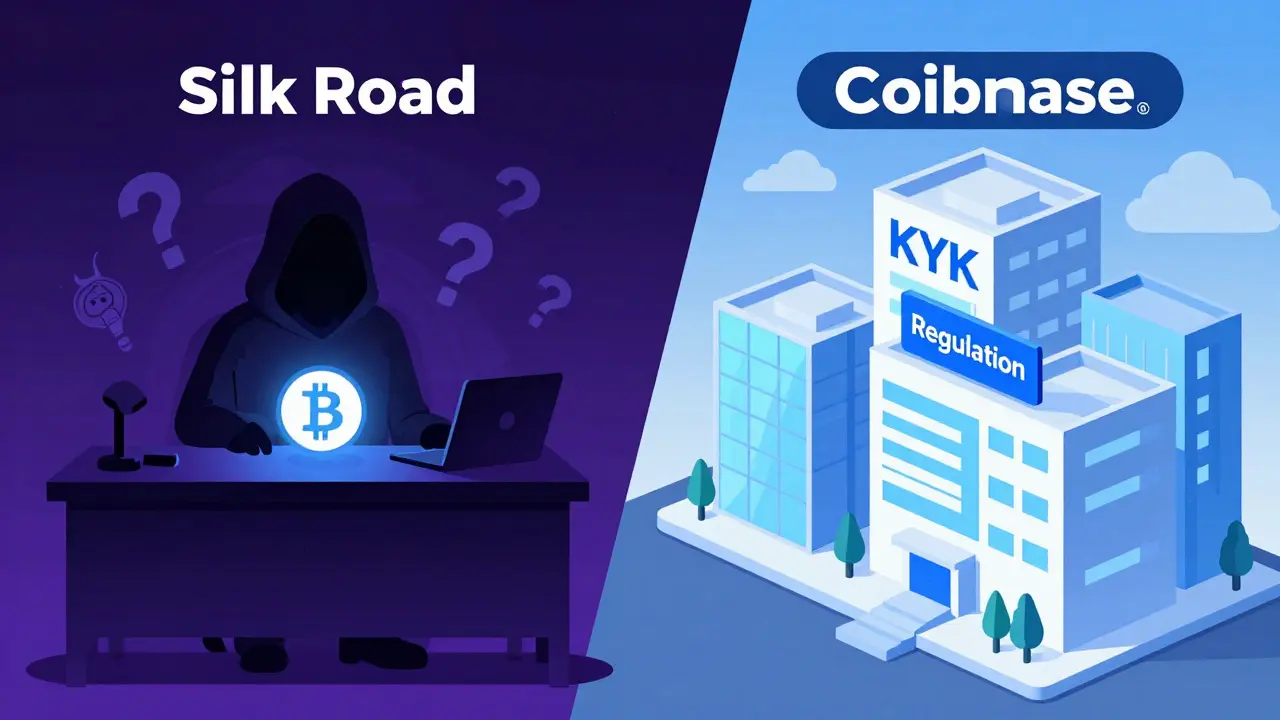
You might have heard the name Silk Road thrown around in discussions about Bitcoin's wild early days. Some people mistakenly call it a crypto exchange, thinking it was a place where you could trade coins for cash or other currencies. But that is simply not true. Silk Road was something else entirely-an underground marketplace that operated on the Tor network from 2011 to 2013. It didn't facilitate trading pairs like BTC/USD; instead, it used Bitcoin as its sole payment method for buying and selling goods, mostly illegal ones.
Understanding what Silk Road actually was requires looking past the myths. It wasn't an exchange platform like Coinbase or Binance. It was a hidden service that functioned more like an early version of eBay, but with anonymity as its core feature. This distinction matters because it explains why the FBI shut it down so decisively and how it shaped the regulatory landscape we see today.
What Exactly Was Silk Road?
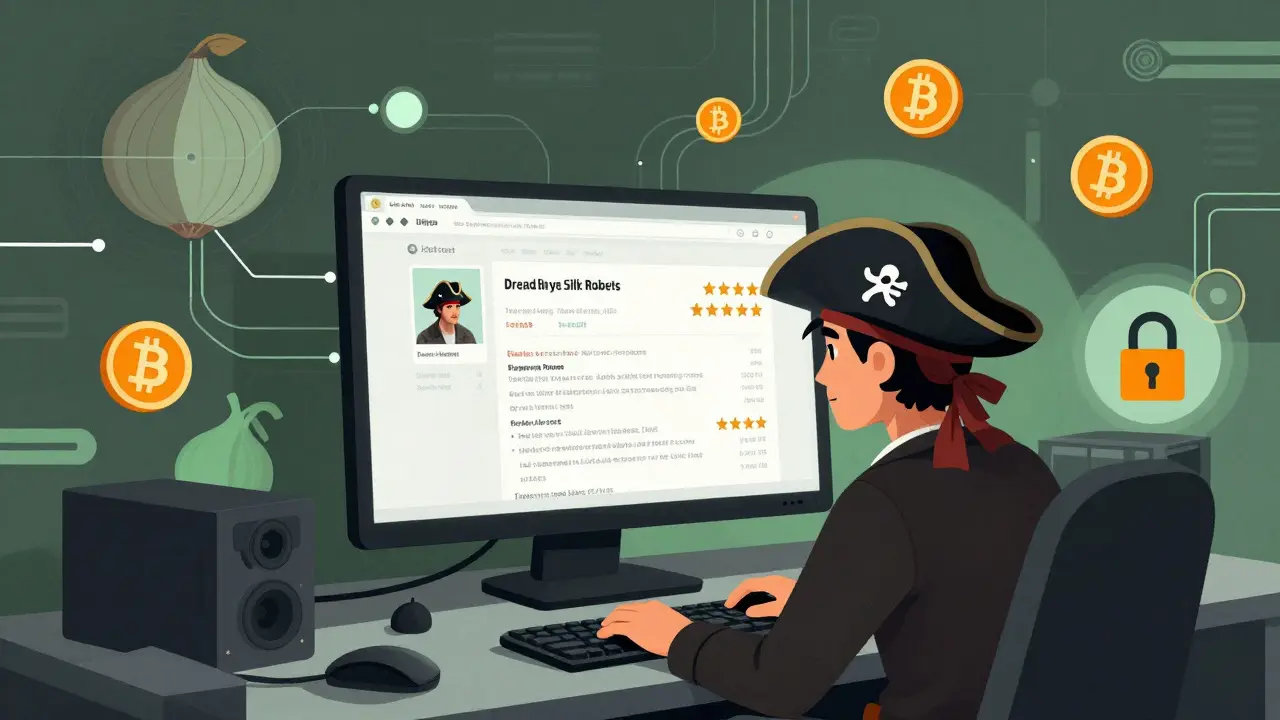
Silk Road launched in February 2011, created by a man named Ross Ulbricht, who operated under the pseudonym 'Dread Pirate Roberts.' The platform lived on the Tor network, which masks users' locations and identities. Unlike legitimate exchanges that require Know Your Customer (KYC) checks, Silk Road asked for nothing. No ID, no phone number, just a Bitcoin wallet address.
The interface looked surprisingly familiar if you had ever shopped online. There were product listings, seller ratings, and even an escrow system. When a buyer purchased something, their Bitcoin went into escrow-a holding account managed by the site-until they confirmed receipt. Only then did the funds release to the seller, minus a commission fee ranging from 8% to 12%. This model generated roughly $13 million in commissions during its existence, though when adjusted for Bitcoin’s massive price appreciation since then, that figure jumps to around $80 million.
Total transaction volume reached approximately $183 million in nominal terms at the time, equivalent to over $1 billion today. While those numbers sound huge, they represent a tiny fraction of modern crypto activity. For context, Coinbase alone reported $1.5 trillion in quarterly trading volume in late 2024. Silk Road’s impact wasn’t about scale; it was about symbolism.
How It Worked Technically
Setting up an account took about 15 to 20 minutes for new users. You needed to download the Tor Browser (version 2.3.25 back then), generate a Bitcoin wallet using software like Bitcoin-Qt 0.6.3, and acquire some Bitcoin. Many users bought coins through early exchanges like Mt. Gox or used person-to-person methods documented in forum guides viewed over a million times before the shutdown.
One clever technical feature was the hedging mechanism. Sellers could fix the USD value of their Bitcoin escrow to protect against volatility. If Bitcoin prices swung wildly while a transaction was pending, Dread Pirate Roberts personally covered the difference. This reduced friction for vendors worried about losing money due to market swings.
However, this centralization became its biggest weakness. All servers initially ran on Amazon Web Services until excessive traffic forced a move to more secure infrastructure in 2012. Still, everything depended on one person controlling the backend. When Ulbricht was arrested in October 2013 at a library in San Francisco, the entire operation collapsed within hours.
Silk Road vs. Legitimate Crypto Exchanges
| Feature | Silk Road (2011-2013) | Modern Exchange (e.g., Coinbase, Binance) |
|---|---|---|
| Purpose | E-commerce marketplace for illicit goods | Trading cryptocurrencies and fiat currencies |
| Identity Verification | None required (fully anonymous) | Strict KYC/AML compliance mandatory |
| Payment Method | Bitcoin only | Multiple cryptos + bank transfers/cards |
| Regulatory Status | Illegal; targeted by law enforcement | Licensed and regulated in most jurisdictions |
| Transaction Volume | ~$183M total lifetime | Trillions annually across global markets |
The table above highlights key differences. Silk Road never intended to compete with financial institutions. Its goal was privacy and access to restricted items. Legitimate exchanges focus on liquidity, security, and compliance. They report suspicious activities to authorities and integrate seamlessly with traditional banking systems. Silk Road did none of that-it actively avoided detection.
This fundamental difference means comparing them directly is misleading. Calling Silk Road a “crypto exchange” confuses two completely different models. One facilitates legal commerce; the other enabled black-market trade. Confusing the two leads to poor understanding of both technology and regulation.
User Experience and Reputation System
Despite being illegal, Silk Road developed sophisticated user feedback mechanisms. Vendors competed fiercely for positive reviews. According to research published in IEEE Security & Privacy, top sellers maintained 98% positive feedback rates. Buyers valued consistency and reliability, often preferring trusted vendors over cheaper options.
A study analyzing nearly 2,000 archived user reviews found that 63.2% concerned drug products. Average vendor ratings hovered around 4.1 out of 5.0-higher than street transactions but lower than mainstream e-commerce platforms. Common complaints included shipping delays (42% of negative reviews) and mismatched product potency (37%). Positive feedback frequently praised transaction privacy (89%) and responsive vendor communication (76%).
This reputation economy proved that even black markets develop self-regulating structures. However, it also attracted scams. Users reported instances where sellers misrepresented products or disappeared after receiving payments. The escrow system helped mitigate total losses but couldn’t prevent fraud involving quality issues.
Why It Fell Apart
Silk Road’s downfall came from several factors. First, its centralized structure meant one arrest brought down the whole network. Second, blockchain analysis techniques improved rapidly. Law enforcement agencies began tracing patterns linking wallets to real-world identities. Third, internal betrayals occurred among staff members cooperating with investigators.
After the initial shutdown, successors emerged quickly. Silk Road 2.0 launched in November 2013 but suffered a catastrophic hack in February 2014. Attackers exploited transaction malleability vulnerabilities, stealing $2.7 million worth of Bitcoin. This event demonstrated the fragility of amateur-built platforms compared to professionally secured exchanges.
Today, Silk Road exists only as a historical case study. The U.S. government seized 144,336 BTC from its servers. At the time, those coins were worth $3.6 million. By December 2025, their value exceeded $9.1 billion. The Treasury has sold portions gradually through multiple auctions, impacting short-term price movements each time.
Legacy and Impact on Regulation
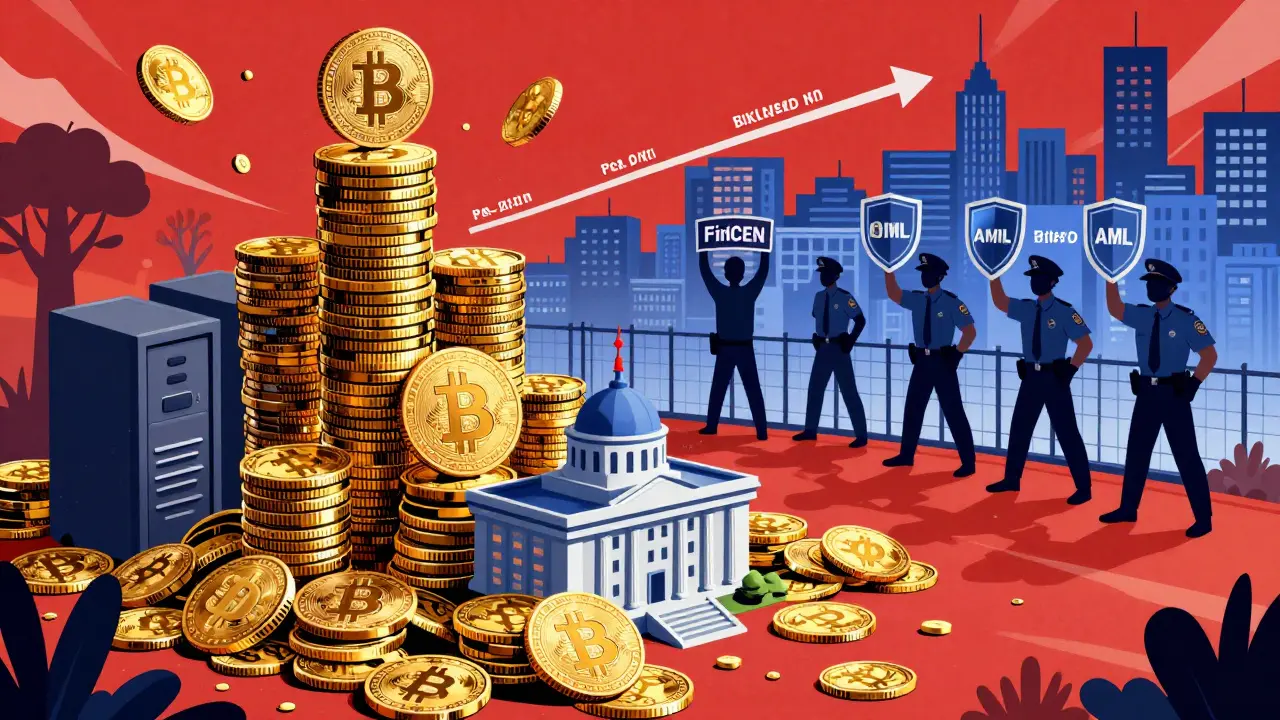
Silk Road changed how governments view cryptocurrency forever. Before 2011, few regulators paid attention to digital assets. Afterward, agencies scrambled to create frameworks addressing anonymity risks. The Financial Crimes Enforcement Network (FinCEN) issued its first crypto guidance in May 2013, explicitly citing Silk Road as justification.
New York introduced the BitLicense framework in 2015, requiring strict oversight for any business handling virtual currency. Europe followed suit with Anti-Money Laundering Directives referencing Silk Road’s operational model. These rules apply primarily to legitimate exchanges, forcing them to implement robust identity verification procedures.
Academics continue studying Silk Road’s influence. Carnegie Mellon University preserves millions of archived pages for scholarly analysis. Researchers examine how decentralized reputation systems evolved and whether similar models can serve legitimate purposes without criminal associations.
Privacy advocates argue that Silk Road highlighted important questions about surveillance capitalism versus individual rights. Critics counter that enabling illegal commerce undermines public safety. Both sides agree that complete anonymity creates challenges for accountability.
Lessons for Today’s Market
If you’re considering entering the crypto space, remember these takeaways from Silk Road’s story:
- Anonymity comes with significant risk. Platforms promising zero verification often lack proper security measures.
- Centralized control points create single failures. Decentralized solutions offer better resilience against takedowns.
- Reputation systems matter regardless of legality. Trust drives adoption whether selling books or banned substances.
- Regulation follows innovation. What seems unregulated today may face scrutiny tomorrow.
- Technology neutrality doesn’t mean moral neutrality. Tools enable actions; users decide outcomes.
Modern alternatives exist for those seeking enhanced privacy without breaking laws. Mixers, tumblers, and confidential transactions provide varying degrees of obfuscation while remaining compliant with local regulations. Always verify jurisdictional requirements before engaging with unfamiliar services.
For investors watching government sales of seized Silk Road Bitcoin, keep an eye on auction announcements. Large dumps correlate with temporary price dips according to academic studies. Timing purchases around these events could yield strategic advantages.
Final Thoughts
Silk Road remains fascinating precisely because it failed spectacularly. It showed us what happens when technology outpaces governance. It revealed human tendencies toward trust-building even in hostile environments. And it forced society to confront uncomfortable truths about freedom versus control.
Calling it a crypto exchange misses the point entirely. It was a mirror reflecting our collective anxieties about privacy, commerce, and authority. Whether you view it as cautionary tale or revolutionary experiment depends largely on your perspective. What’s undeniable is its lasting imprint on cryptocurrency culture and policy worldwide.
Was Silk Road really a cryptocurrency exchange?
No, Silk Road was not a cryptocurrency exchange. It was a darknet marketplace that accepted Bitcoin as payment for various goods and services, primarily illegal ones. Unlike exchanges such as Coinbase or Binance, it did not allow users to trade cryptocurrencies for fiat money or other digital assets.
Who founded Silk Road?
Ross Ulbricht founded Silk Road under the pseudonym 'Dread Pirate Roberts.' He operated the site from February 2011 until his arrest by the FBI in October 2013. Ulbricht received life imprisonment plus 40 years without parole for running the platform.
How much Bitcoin did the government seize from Silk Road?
The U.S. government seized 144,336 BTC from Silk Road’s servers. At the time of seizure in 2013, this amounted to approximately $3.6 million. As of late 2025, those same coins are valued at over $9.1 billion. The Treasury continues selling portions through periodic auctions.
Did Silk Road have any legitimate uses?
While predominantly associated with illicit activities, Silk Road did host some legal items including books, art, and political materials. However, estimates suggest less than 6% of transactions involved non-illegal goods. Most users accessed the platform specifically for prohibited substances and services.
Are there still active versions of Silk Road today?
Original Silk Road ceased operations permanently after its 2013 shutdown. Several successor sites attempted to replicate its model, including Silk Road 2.0 and later iterations, but none achieved comparable dominance. Current darknet markets operate independently with different names and infrastructures.
How did Silk Road affect Bitcoin regulation?
Silk Road prompted immediate regulatory responses globally. Agencies like FinCEN issued new guidelines targeting cryptocurrency businesses. Jurisdictions implemented stricter KYC requirements for exchanges. The EU referenced Silk Road when drafting anti-money laundering directives affecting all crypto service providers.
Can I access Silk Road archives safely?
Accessing original Silk Road domains poses serious legal and cybersecurity risks. Researchers recommend consulting curated academic collections like Carnegie Mellon’s Darknet Market Archive Project instead. These resources preserve historical data without exposing visitors to malicious content or potential prosecution.
What happened to Ross Ulbricht?
Ross Ulbricht remains incarcerated serving consecutive life sentences plus 40 years without possibility of parole. Appeals regarding conviction fairness continue periodically, though courts have consistently upheld original verdicts based on overwhelming evidence presented during trial proceedings.
- Poplular Tags
- Silk Road
- crypto exchange
- darknet market
- Bitcoin history
- Ross Ulbricht