


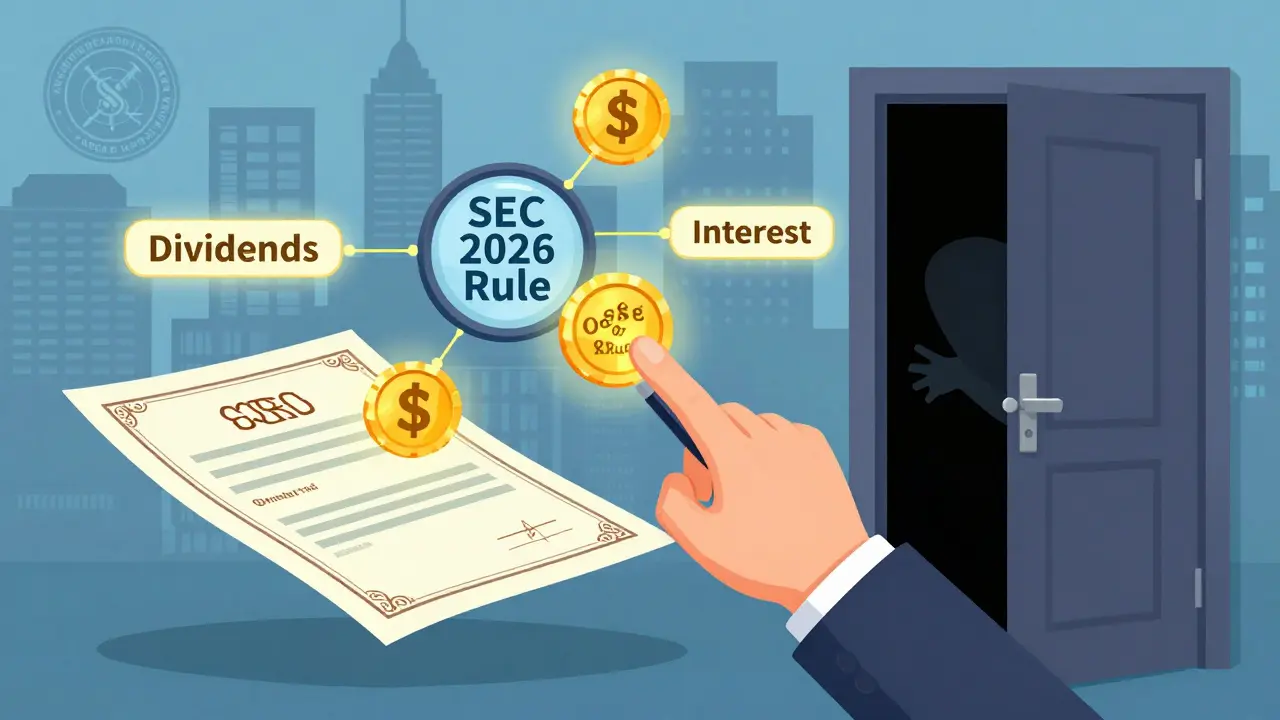
Security tokens aren’t just another crypto trend. They’re digitized versions of real financial assets - stocks, bonds, real estate shares, even private company equity - now wrapped in blockchain technology. And as of January 28, 2026, the U.S. Securities and Exchange Commission (SEC) made it crystal clear: if it acts like a security, it’s regulated like one. No exceptions. No loopholes. Whether it’s onchain or offchain, the rules don’t change.
What Exactly Is a Security Token?
A security token represents ownership in an underlying asset. Think of it like a digital share certificate. Instead of a paper document signed by a transfer agent, you hold a token on a blockchain. But here’s the catch: it’s not the blockchain that makes it a security. It’s the rights attached to it.
If the token gives you:
- Expected profits from someone else’s efforts (like dividends or profit-sharing)
- Ownership in a company or real estate project
- Rights to repayment with interest
Then it’s a security. Period. The SEC doesn’t care if it’s on Ethereum, Polygon, or a private ledger. If it meets the Howey Test - the legal standard used since 1946 - it’s regulated.
The Two Main Issuer Models (And Why They Matter)
The SEC outlined two primary ways companies issue tokenized securities. Neither changes the legal status - but they change how you build the system.
Model 1: Onchain Master Ledger
The issuer uses blockchain as the official record of who owns what. Wallet addresses, token balances, and issue dates live onchain. But names, addresses, and tax IDs? Those stay offchain, in a traditional database. When you sell your token, the blockchain transfer automatically updates the master record. It’s hybrid: public ledger for ownership, private system for identity.
Model 2: Offchain Master Ledger
The security itself is recorded offchain - like a traditional stock ledger. The token is just a digital receipt. It doesn’t grant ownership rights directly. Think of it like a barcode that links to your paper stock certificate. If the barcode is copied, the underlying asset doesn’t move. This model is simpler to implement but requires more manual reconciliation.
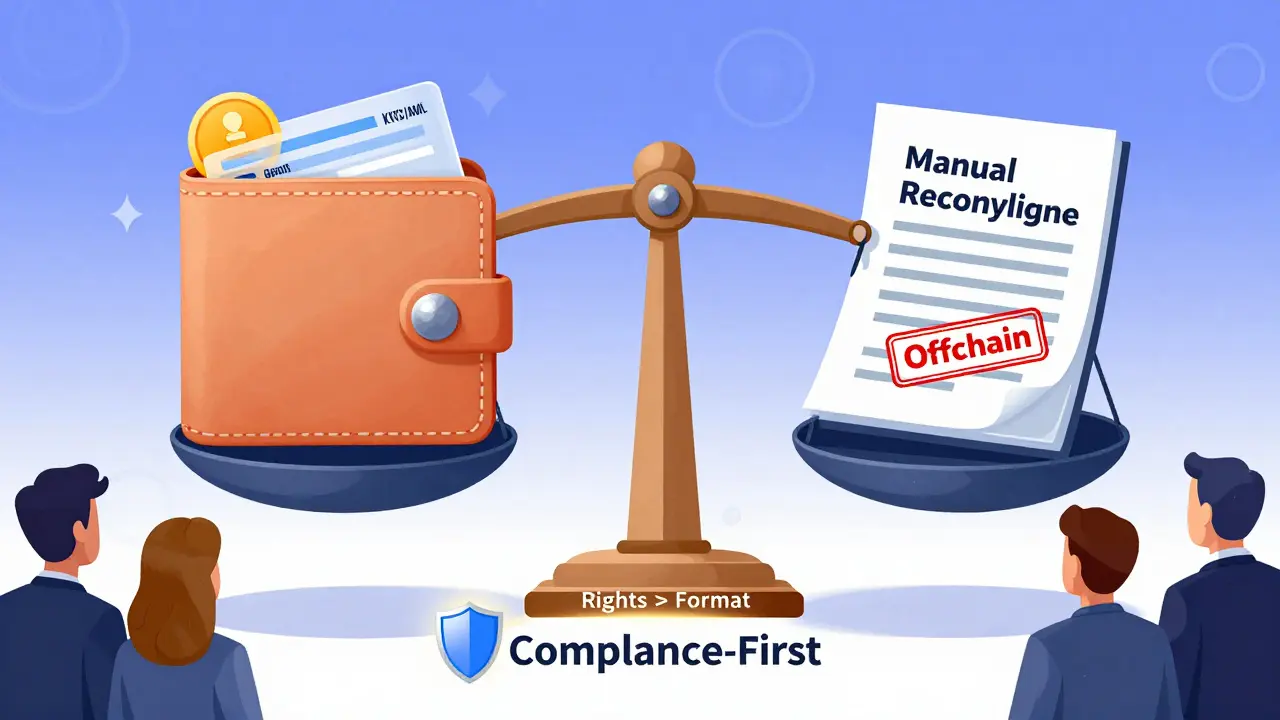
The key takeaway? Format doesn’t matter. Rights do.
Third-Party Tokenization: Custodial and Synthetic
Not every security token is issued by the original company. Sometimes, a third party steps in.
Custodial tokenized securities happen when a bank or custodian holds the real asset and issues tokens representing your indirect ownership. You don’t own the stock - you own a claim on the stock held by the custodian. This is common in institutional settings.
Synthetic tokenized securities are trickier. These tokens don’t represent real assets at all. Instead, they mimic price movements - like a derivative or a security-based swap. The SEC says these can’t be sold to regular investors unless they’re registered and traded on a national exchange. Only "eligible contract participants" - basically accredited investors with high net worth or institutional status - can touch these.
Compliance Isn’t Optional - It’s Built In
If you’re issuing or trading security tokens, you need three core compliance layers:
- Know Your Customer (KYC) - Verify identity. Not just "Is this a real person?" but "Is this person legally allowed to invest in this asset?"
- Anti-Money Laundering (AML) - Screen funds. Block transactions from sanctioned wallets or high-risk jurisdictions.
- Investor Suitability - Make sure someone understands the risk. A $100 investment in a startup token? Different rules than a $100,000 stake in a commercial real estate fund.
These aren’t checkboxes. They’re embedded into the system. Smart contracts can block transfers if KYC expires. Wallets can freeze assets if AML flags appear. Automated systems now handle 90% of compliance tasks - reducing human error and regulatory risk.
Smart Contracts That Enforce Rules
Smart contracts aren’t just code. In security tokens, they’re legal tools.
They can:
- Only allow transfers to whitelisted wallets (approved investors)
- Block sales to non-accredited investors
- Enforce lock-up periods (like IPO restrictions)
- Automatically distribute dividends based on onchain holdings
Standardized protocols like ERC-1400 (used in the U.S.) and ST-20 (EU) help exchanges and custodians recognize compliant tokens. Without these standards, integration fails. A token that can’t be traded on a regulated exchange is dead in the water.
Custody: Where Your Tokens Live Matters
Who holds your tokens? That’s as important as who issues them.
For retail investors, secure wallets with identity-linked access are essential. Think of it like a bank account with biometric login and transaction limits.
Institutional investors need more. Multi-Party Computation (MPC) wallets - where no single person holds the full key - are now standard. Cold storage, segregated accounts, and insurance against hacks are non-negotiable. The SEC expects proof of custody controls. If you lose tokens because your private key was stored in a spreadsheet? You’re liable.
The DTC Pilot: Wall Street Goes Onchain
One of the biggest signals of legitimacy came in late 2025: the Depository Trust Company (DTC) - the backbone of U.S. stock settlement - announced its pilot program for tokenized securities. Starting in Q3 2026, registered wallets will transfer tokens directly, tracked by DTC’s offchain LedgerScan system.
This isn’t a test. It’s adoption. If DTC accepts tokenized assets, then pension funds, mutual funds, and insurance companies will follow. Nasdaq is already requiring brokers to flag whether they’re trading tokens or traditional shares. The infrastructure is being built.
Global Alignment: SEC, ESMA, MAS
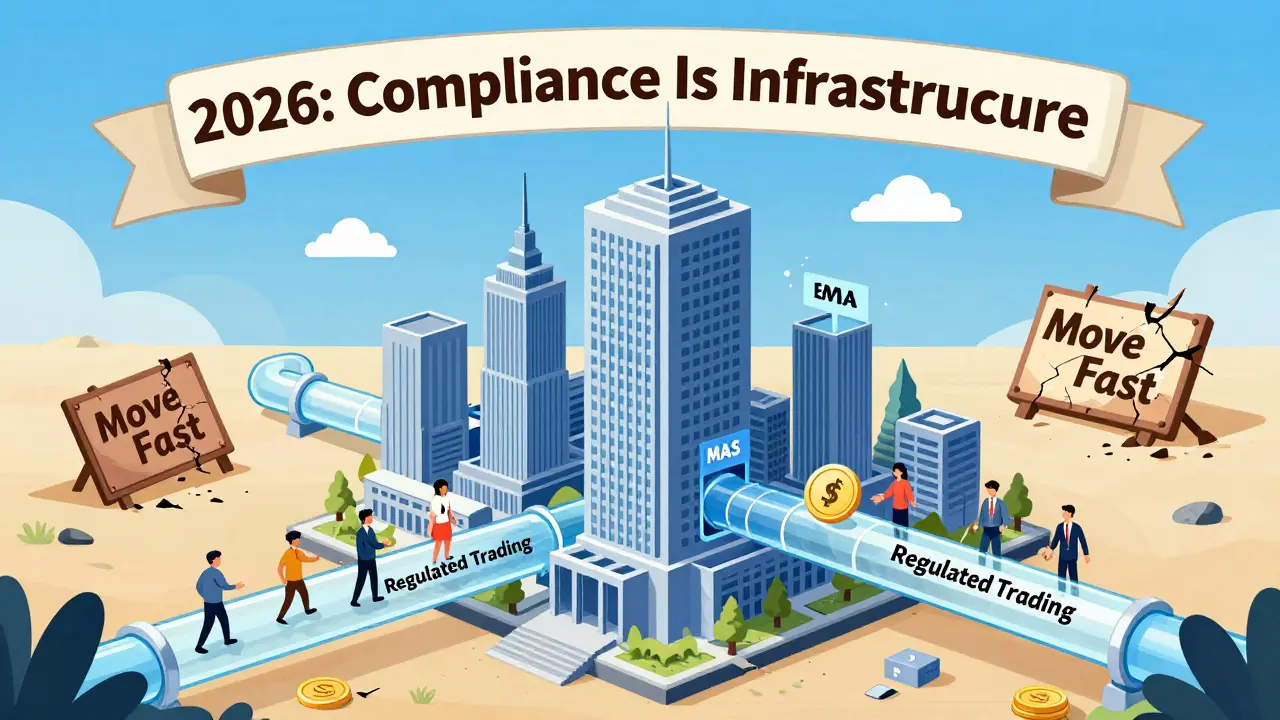
The U.S. isn’t alone. The European Securities and Markets Authority (ESMA) and Singapore’s Monetary Authority (MAS) have issued matching guidance. All three agree:
- Token format doesn’t override securities law
- Investor protection is the priority
- Compliance must be baked into the technology
Even stablecoin rules are tightening globally. As of 2026, stablecoins must be 1:1 backed by liquid assets, audited monthly by top accounting firms. Non-compliant tokens are being delisted. This shows regulators are serious - and they’re applying the same rigor to security tokens.
What Happens If You Don’t Comply?
Penalties are harsh. The SEC has already fined multiple projects over $50 million for unregistered security token sales. Some were shut down entirely. Exchanges that listed non-compliant tokens faced fines and restrictions.
But it’s not just legal risk. Reputation risk is worse. Investors won’t touch a project that’s been flagged. Institutional capital won’t flow in. Liquidity dies. The market is moving fast - and regulators are watching.
The Future Is Compliance-First
The early days of crypto were about "move fast and break things." That’s over. Security tokens are built for institutions. That means rules, audits, licenses, and accountability.
Successful projects now follow a checklist:
- Legal review completed
- Smart contract audited by third party
- KYC/AML integrated
- Custody solution secured
- Trading venue approved
- Disclosure documents filed
And they design for the future: modular contracts, multi-chain support, API-ready systems. Because tomorrow’s regulation might require something new. If your system can’t adapt, it’s obsolete.
Security tokens aren’t replacing stocks. They’re upgrading them. Faster settlement. Global access. Transparent ownership. But none of that matters if you break the law. Compliance isn’t a cost center. It’s the foundation.
Are security tokens the same as utility tokens?
No. Utility tokens give access to a service or product - like a discount on a platform or voting rights in a DAO. Security tokens represent financial ownership - dividends, profit shares, or equity. The SEC looks at the economic reality, not the label. If investors expect profits from others’ efforts, it’s a security, no matter what you call it.
Can I issue a security token without a lawyer?
Technically, yes - but you shouldn’t. The SEC doesn’t care how technical your blockchain is. If you’re offering an investment contract, you need legal compliance. Skipping legal review risks fines, asset freezes, or criminal charges. Most compliant issuers work with securities attorneys and compliance firms from day one.
Do I need to register with the SEC to issue a security token?
You must either register the offering with the SEC or qualify for an exemption. Common exemptions include Regulation D (private placements to accredited investors), Regulation A+ (mini-IPOs with public disclosure), and Regulation S (for offshore investors). Registration is expensive and time-consuming. Exemptions are faster but come with strict limits on who can invest and how much can be raised.
Can retail investors buy security tokens?
Yes - but only if the offering is registered or uses an exemption that allows retail participation, like Regulation A+. Most private offerings (Reg D) are limited to accredited investors. Platforms now use automated investor screening to block unqualified buyers before they even connect their wallet.
What happens if a security token is hacked?
If the hack is due to poor custody or unaudited smart contracts, the issuer or custodian may be held liable. Regulators expect robust security: multi-signature wallets, insurance, and continuous monitoring. Investors who lose funds due to negligence may have legal recourse. The days of "not our problem" are over.
Are security tokens traded on crypto exchanges?
Only on exchanges registered as national securities exchanges or broker-dealers with the SEC. Most DeFi exchanges aren’t compliant. Platforms like tZERO, Securitize, and Maple are licensed to trade security tokens. Unlicensed trading risks regulatory action against both the platform and the issuer.

People Comments
Love how this breaks down the real stuff without the crypto bro hype. Finally, someone gets it - it’s not about the blockchain, it’s about the rights. I’ve been telling my buddies this for months. If it pays dividends or gives you equity, it’s a security. Period. No magic wallet fixes that.
So if I mint a token that just lets me vote on which coffee shop gets funded, is that a utility token? Or does the SEC still come after me because people expect profits?
Utility token? You’re already in violation. The SEC doesn’t care about your branding. If investors believe they’ll profit, it’s a security. Stop pretending semantics matter.
Finally, a post that doesn’t sugarcoat it. The days of ‘we’re just a DAO’ are over. If you’re raising capital through tokens and promising returns, you’re a security. Get legal help before you lose everything.
Man… it’s beautiful how capitalism adapts. We used to have paper certificates, now we have immutable ledgers. The system evolves, but the soul remains - greed wrapped in code. 🤔
Let me be crystal clear: any entity issuing a token without a registered offering or qualifying exemption is committing a federal crime. The SEC is not a suggestion box. They are not negotiating. They are enforcing. And they have the power to seize assets, freeze accounts, and prosecute individuals. This is not a drill.
I’ve been watching this space for years. The real win here is automation. KYC and AML built into smart contracts? That’s the future. No more human error. No more loopholes. Just clean, enforceable rules.
Yeah right. The SEC says it’s a security. But what if the token is on a private chain with zero public trading? What if it’s just for internal use? You think they’re gonna come after a startup using tokens to track equity among 5 founders? Please. This is all theater.
Interesting how the U.S. leads the charge while Europe and Singapore follow. The irony? The U.S. is the most litigious market, yet also the most technically sophisticated. We’re not just regulating - we’re architecting the next financial infrastructure. And yes, that’s worth respecting.
Smart contracts enforcing lockups and investor limits this is the future
Why are we even talking about this? Everyone knows the SEC is just trying to crush innovation. They don’t understand blockchain. They don’t want to understand it. They just want control. And the people who built this? They’ll be punished for thinking differently.
What’s wild is how much of this was predictable. The Howey Test from 1946 still applies. That’s not a flaw - it’s a feature. The law didn’t need updating. The tech just made it harder to hide.
I’ve been wondering how custody works for retail. If I hold a token in my MetaMask but the issuer requires whitelisting, does that mean my wallet gets blocked? Or is it the exchange that enforces it?
THEY'RE USING DTC TO TRACK TOKENS??? 😱 This is the deep state taking over crypto! Mark my words - soon they’ll be tracking your wallet through your smart fridge. The SEC is building the Matrix. They already know your IP. They know your gas fees. They know when you sleep. 🤖💣
Let me tell you something about the SEC - they are not here to protect investors, they are here to protect the existing financial oligarchy. Tokenization threatens Wall Street’s monopoly on settlement, on custody, on control. That’s why they’re forcing compliance - not to make things fair, but to make sure only the big banks can play. The average person will never get access to tokenized real estate because the gatekeepers won’t let them. This isn’t innovation. It’s a rebranding of exclusion.
Regulation A+? That’s a joke. The disclosure requirements alone cost millions. No small issuer can afford it. So who benefits? The law firms. The custodians. The exchanges. Not the investors. Not the innovators.
Big win for real estate! Imagine buying a slice of a Manhattan office building with $500. No brokers. No paperwork. Just a token. This is the democratization we’ve been waiting for. Let’s make it happen.
It’s funny how we call this ‘blockchain finance’ when really, it’s just finance with better recordkeeping. The blockchain didn’t change the economics - it just made the rules harder to ignore. The real innovation? Compliance as code. That’s the quiet revolution.
Finally, clarity. No more guessing. If it acts like a stock, it’s a stock. Simple. Clean. Good for everyone who wants to build real products.
who even reads all this lmao i just want to buy a token and get rich
Let’s be honest - the entire regulatory framework is a mess. KYC? AML? Investor suitability? All of it is fragmented across jurisdictions, platforms, and custodians. There’s no interoperability. No standardization. No real-time verification. And yet, we’re acting like this is a solved problem? It’s not. It’s a patchwork of broken systems held together by duct tape and hope. And when it fails - and it will - the blame will fall on the issuers, not the regulators who refused to build a unified system.
For anyone building this - don’t try to do it alone. Find a compliance partner. Use ERC-1400. Work with a licensed exchange. The tech is here. The infrastructure is here. What’s missing is the willingness to do it right. You don’t need to be a lawyer - but you do need one on your team.