


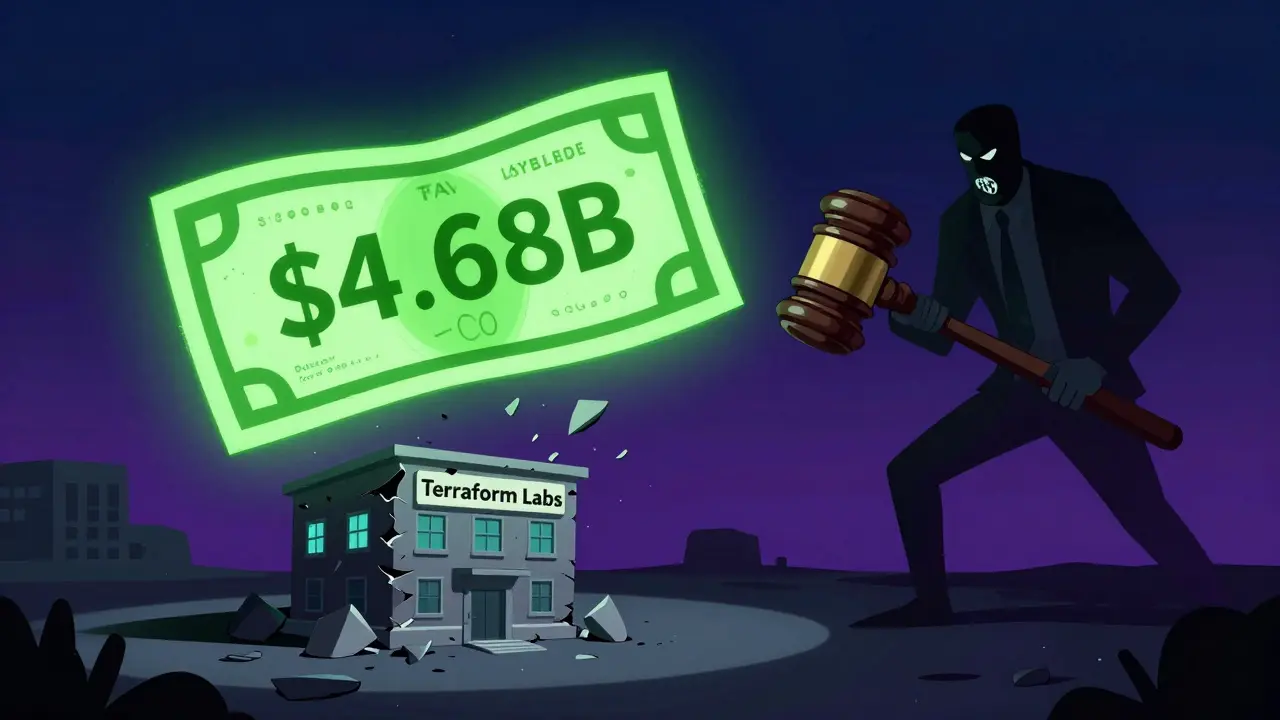
One single fine accounted for more than the entire history of SEC cryptocurrency penalties combined. That is the reality behind the staggering $4.68 billion in fines imposed by the U.S. Securities and Exchange Commission (SEC) on crypto companies during 2024. It sounds like a number plucked from science fiction, but it is real, and it fundamentally changed how regulators view digital assets.
If you have been following the crypto space, you likely felt the ground shift beneath your feet in late 2024 and early 2025. The regulatory environment went from aggressive enforcement to sudden silence, then to a new era of cautious cooperation. Understanding this transition requires looking past the headline numbers and examining who got fined, why they got fined, and what happened when the political winds changed direction in Washington.
The Anomaly Behind the Record Number
To understand the $4.68 billion figure, you have to look at the composition of that total. It wasn't a steady stream of moderate penalties against dozens of small firms. It was dominated by one massive outlier: the penalty against Terraform Labs, the company behind the collapsed TerraUSD stablecoin and its co-founder Do Kwon.
According to a report by Social Capital Markets published in January 2025, the Terraform Labs case alone generated the bulk of that $4.68 billion. This single action represented the largest penalty ever imposed by the SEC on a crypto entity. When you remove this one case, the rest of the 2024 enforcement landscape looks significantly different-still serious, but not apocalyptic.
This concentration of risk highlights a key characteristic of SEC enforcement under former Chair Gary Gensler: the agency prioritized high-impact cases involving alleged fraud and unregistered securities offerings over broad, systemic registration issues. The goal was deterrence through severity. By imposing a multi-billion dollar fine, the SEC sent a clear message that offering unregistered securities with misleading information would result in catastrophic financial consequences.
| Entity | Year | Fine Amount | Primary Allegation |
|---|---|---|---|
| Terraform Labs | 2024 | $4.68 Billion | Unregistered securities; misleading investors |
| Telegram | 2019 | $1.24 Billion | Unregistered token sale (Grams) |
| Ripple Labs | 2021 | $125 Million | Selling XRP as an unregistered security |
| John & JonAtina Barksdale | 2022 | $102.64 Million | Fraudulent Initial Coin Offering (ICO) |
The Gensler Era: Enforcement by Litigation
Gary Gensler served as SEC Chair from April 2022 until January 2025. His tenure was defined by a strategy often described as "regulation by enforcement." Rather than issuing clear, comprehensive rules for the crypto industry, the SEC relied heavily on the Howey Test, a legal framework established in 1946 to determine if an arrangement constitutes an investment contract (and thus a security).
Under Gensler, the SEC brought 33 cryptocurrency-related enforcement actions in 2024. While this number was actually a 30% decrease from the 47 actions in 2023, the monetary value skyrocketed. Cornerstone Research reported that the Gensler administration imposed $6.05 billion in monetary penalties against crypto entities, nearly four times the $1.52 billion imposed under previous Chair Jay Clayton.
The timing of these actions was also notable. Half of the 2024 enforcement actions (17 cases) were filed in September and October, just weeks before the November presidential election. Critics argued this was strategic timing designed to maximize political pressure or secure legacy wins before a potential change in administration. Supporters countered that the SEC simply acted when evidence was sufficient, regardless of the calendar.
The focus was twofold: holding executives personally accountable and applying the Howey test broadly. The agency targeted not just companies but their leaders, arguing that individuals could not hide behind corporate structures when violating securities laws. This approach created a climate of uncertainty for many legitimate businesses that wanted to comply but lacked clear guidelines on what compliance looked like.
The Great Pivot: January 2025 Changes
The landscape shifted dramatically on January 20, 2025, when Gary Gensler resigned. The next day, Acting Chairman Mark Uyeda announced the formation of the Crypto Task Force, led by Commissioner Hester Pierce, widely known as "Crypto Mom" in industry circles.
The Task Force explicitly criticized the prior commission for relying on "novel and untested legal interpretations" and regulating retroactively. Their mandate was to move away from enforcement-heavy tactics toward clearer rulemaking. On February 20, 2025, the SEC restructured its internal units, replacing the Crypto Assets and Cyber Unit with the Cyber and Emerging Technologies Unit (CETU). This new unit was tasked with deploying enforcement resources "judiciously," effectively trimming the number of attorneys dedicated solely to crypto enforcement.
This structural change signaled a philosophical shift. The new leadership believed that excessive enforcement drove innovation offshore rather than fostering domestic growth. They aimed to create a predictable regulatory environment where businesses could operate without fear of sudden, existential lawsuits based on ambiguous legal theories.

Case Dismissals and New Priorities
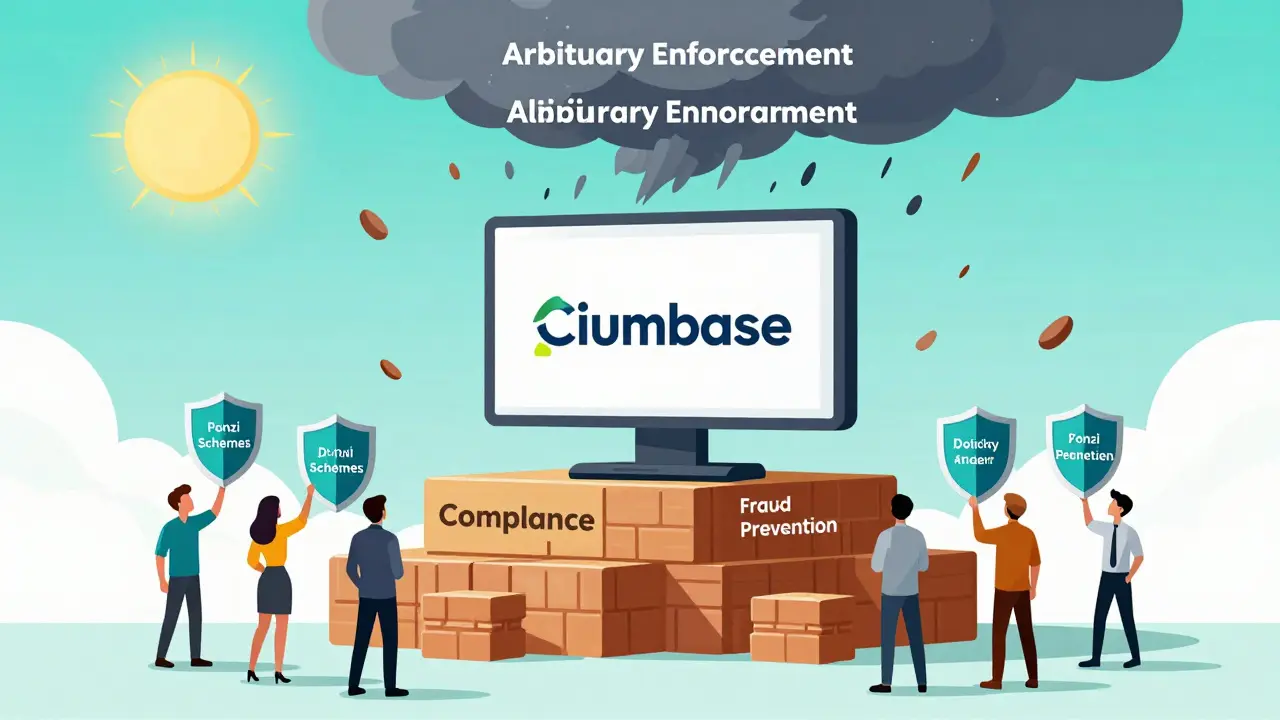
The most tangible sign of this new approach came on June 11, 2025, when the SEC dismissed its ongoing civil enforcement action against Coinbase Inc. and Coinbase Global Inc. The exchange had been fighting the SEC since June 2023, arguing that most tokens traded on its platform were not securities. The dismissal was a watershed moment for the industry, validating years of legal battles and signaling that the SEC no longer viewed broad registration violations as its top priority.
However, this does not mean the SEC stopped enforcing laws entirely. The agency continued to pursue cases involving clear fraud and investor harm. For example, in April 2025, the SEC charged Ramil and PGI Global with a $198 million crypto asset and foreign exchange fraud scheme. In May 2025, charges were announced against Unicoin Inc.
The distinction is crucial. The new administration drew a line between fraudulent conduct and technical registration violations. If you are stealing money or running a Ponzi scheme, the SEC will still come after you. But if you are operating an exchange that may have technically failed to register as a broker-dealer, the path forward is now more likely to involve negotiation and compliance plans rather than immediate litigation.
What This Means for Investors and Businesses
For crypto businesses, the current environment offers both relief and new challenges. The relief comes from reduced fear of arbitrary enforcement. Companies can now engage with regulators more openly, knowing that the goal is compliance, not destruction. The challenge lies in navigating the transitional period. Old rules are being discarded, but new ones are not yet fully written.
Investors should remain cautious. While the SEC has softened its stance on registration, it remains vigilant against fraud. The $4.68 billion fine serves as a reminder that reckless behavior carries severe consequences. Always verify the legitimacy of projects, especially those promising guaranteed returns or using complex, opaque mechanisms.
Looking ahead to late 2025 and 2026, industry observers are watching for formal guidance on token classification and exchange registration requirements. The Crypto Task Force is reportedly focused on developing sensible disclosure frameworks and realistic paths to registration. If successful, this could establish the first stable regulatory foundation for the U.S. crypto industry in over a decade.
Key Takeaways for Stakeholders
- For Exchanges: Expect fewer lawsuits over registration status but increased scrutiny on anti-money laundering (AML) and know-your-customer (KYC) practices. Engage proactively with regulators.
- For Project Founders: Fraud remains the primary target. Ensure transparency in communications and avoid misleading claims about token utility or value.
- For Investors: Regulatory clarity is improving, but risks remain. Diversify your portfolio and stay informed about regulatory developments.
- For Legal Teams: Focus on compliance frameworks that align with emerging CETU guidelines. Prepare for a future where registration is possible but requires rigorous documentation.
Conclusion: A New Chapter Begins
The $4.68 billion in fines was not just a statistic; it was the climax of a specific regulatory era. As we move further into 2026, the narrative is shifting from punishment to partnership. The SEC is attempting to balance investor protection with innovation, a delicate tightrope walk that will define the next chapter of American crypto regulation.
Whether this new approach succeeds depends on execution. Will the SEC provide clear rules? Will courts uphold them? Will international competitors undercut U.S. efforts? Only time will tell. But one thing is certain: the days of blind-sided enforcement are largely behind us, replaced by a more transparent, albeit still complex, regulatory landscape.
Why did the SEC impose $4.68 billion in fines in 2024?
The majority of this amount came from a single penalty against Terraform Labs and Do Kwon for offering unregistered securities and misleading investors. This case alone accounted for most of the record-breaking total, reflecting the SEC's strategy of imposing severe penalties for major violations.
Did the SEC stop enforcing crypto laws after January 2025?
No, the SEC continues to enforce laws, particularly against fraud and investor harm. However, it has shifted away from pursuing technical registration violations and has dismissed several high-profile cases, such as the lawsuit against Coinbase, focusing instead on creating clearer regulatory pathways.
What is the Crypto Task Force?
The Crypto Task Force was formed in January 2025 under Acting Chairman Mark Uyeda and led by Commissioner Hester Pierce. Its goal is to replace enforcement-driven regulation with clear rulemaking, providing sensible disclosure frameworks and realistic paths to registration for crypto businesses.
How does the Howey Test apply to crypto?
The Howey Test is a legal standard used to determine if an investment contract exists. Under the previous administration, the SEC applied this test broadly to many crypto tokens, arguing they were securities. The new administration is reconsidering this approach, seeking more nuanced classifications.
What happened to the Coinbase vs. SEC lawsuit?
On June 11, 2025, the SEC filed a joint stipulation to dismiss the civil enforcement action against Coinbase. This marked a significant policy shift, indicating that the new administration prioritizes fraud prevention over broad registration mandates for exchanges.




People Comments
You really think this is about 'clarity'? Please. The SEC didn't change its tune because it suddenly cared about innovation; they changed it because the political winds shifted and Gensler was a liability. The $4.68 billion fine wasn't a deterrent for fraud, it was a cash grab disguised as justice, and now that the new guys are in charge, they're rolling out the red carpet for the same criminals who got fined before. It's not a policy shift, it's a capitulation to lobbying dollars.
Oh, how quaint. You seem to labor under the delusion that regulatory bodies operate with any semblance of moral consistency rather than pure opportunism. 🙄 The notion that the 'Crypto Task Force' will magically produce sensible frameworks is laughable to anyone with even a rudimentary understanding of administrative law. They are merely swapping one set of ambiguous precedents for another, likely crafted by lawyers who have never written a line of code or understood the underlying technology. Do not mistake their retreat from enforcement for enlightenment; it is simply a rebranding exercise designed to soothe the anxieties of venture capitalists. 😒
I can’t believe people are still celebrating this like it’s Christmas morning! 🎄🤡 This isn’t progress, folks, it’s a betrayal of every retail investor who lost everything because these exchanges operated in the shadows. How many families had to sell their homes to pay off debts incurred on platforms that were technically 'unregistered securities'? The moral rot here is staggering. We are letting the architects of our financial ruin walk free while pretending we’re moving into a 'new era.' It makes my blood boil just thinking about the lack of accountability. 😡💔
It is profoundly disheartening to witness the collective amnesia regarding the sheer volume of fraud that preceded this so-called 'pivot.' One might argue that the dismissal of the Coinbase case is not a victory for the industry, but rather a catastrophic failure of oversight. Furthermore, the suggestion that 'negotiation' replaces litigation implies a level of trust that has been thoroughly eroded by years of obfuscation. Indeed, the transition from 'enforcement by litigation' to 'enforcement by negotiation' does not eliminate risk; it merely privatizes it. Consequently, investors remain exposed to systemic vulnerabilities that no amount of 'clear guidance' can fully mitigate. Therefore, caution is not merely advisable; it is imperative.
The Terraform Labs fine skewed the data entirely. Without that outlier, the enforcement record looks standard. Don't overreact to one big number.
look at the way the narrative shifts when the power dynamics change. its not about rules anymore, its about who holds the keys to the kingdom. gensler was playing chess while everyone else was playing checkers, but now the board is flipped and the pieces are rearranged. the howey test was a blunt instrument, sure, but it forced clarity through pain. now we get 'guidance' which is just polite speak for 'we will decide what you can do tomorrow based on how much you paid us today.' its a philosophical shift from justice to commerce. scary stuff.
Wow, this is actually huge news! 🚀✨ I’ve been following crypto since the early days, and seeing the SEC finally step back from the 'regulation by enforcement' playbook feels like a breath of fresh air. Hester Pierce being in charge is such a positive sign for the community. I’m genuinely excited to see what the Crypto Task Force comes up with next. Let’s build! 💪🌟
When we look at the history of regulation, we often find that the pendulum swings too far in one direction before correcting itself, and this situation is no different. The heavy hand of Gensler created a climate of fear, yes, but it also highlighted the fundamental issues within the industry that needed addressing. Now, as we move into this new phase, we must ask ourselves if the root causes of instability have been resolved or merely suppressed. The collapse of TerraUSD was not just a legal issue; it was a failure of design and ethics. If the new regulations focus only on compliance paperwork without addressing the technological and ethical foundations, we may be setting the stage for another crisis. We need to think deeply about what true stability means in a decentralized world.
I have spent considerable time analyzing the legal precedents set during the Gensler era, and it becomes evident that the reliance on the Howey Test was both necessary and flawed. While it provided a framework for classification, it lacked the nuance required for digital assets. The current administration’s approach to dismantling these cases suggests a belief that market forces alone can regulate behavior, which is a dangerous assumption. I find myself questioning whether the dismissal of the Coinbase case sets a precedent that encourages reckless behavior under the guise of 'innovation.' The long-term implications for investor protection are murky at best, and I remain skeptical of any system that prioritizes corporate convenience over rigorous oversight.
I appreciate the detailed breakdown of the timeline here. It is important to remember that while the fines were large, the goal should always be fair treatment for all parties involved. I hope the new task force listens to small businesses as well as the big exchanges. Communication is key! 🙏
The entire premise that 'clarity' is beneficial is flawed. Ambiguity drives legal fees, which drives profits for the firms that navigate it. The SEC knows this. The shift isn't about helping you; it's about streamlining the extraction process. Stop cheering for your own exploitation.
its so wrong that they let these companies off the hook after doing so much damage. people lost life savings and now the sec is just shaking hands with them? i dont understand how anyone can feel safe investing when the rules keep changing every time there is an election. it feels like a scam to me.
I know it can feel overwhelming with all these changes, but I truly believe this could be a turning point for the better! 🌈 The fact that they are focusing on fraud rather than technicalities is a good sign for honest businesses. Let's stay hopeful and keep learning! You've got this! 💖