

It was only five years ago that banking on cryptocurrency in Nigeria felt like a crime. If you tried to move money from your bank account to a crypto exchange, the transaction would bounce. Your bank might even freeze your account. Today, the landscape is completely different. Banks are allowed to serve licensed crypto firms, and the government has passed laws recognizing digital assets as securities. But how did we get here? The journey from a hardline ban in 2021 to the structured regulation of 2025 is one of the most dramatic policy reversals in African financial history.
This timeline isn't just about rules changing; it’s about a clash between central authority and grassroots adoption. It shows what happens when you try to ban technology that millions of people actually need. For anyone looking to understand the current state of Nigeria's crypto banking ban reversal, you have to look at the pressure points that forced the hand of regulators.
The Hardline Ban: February 2021
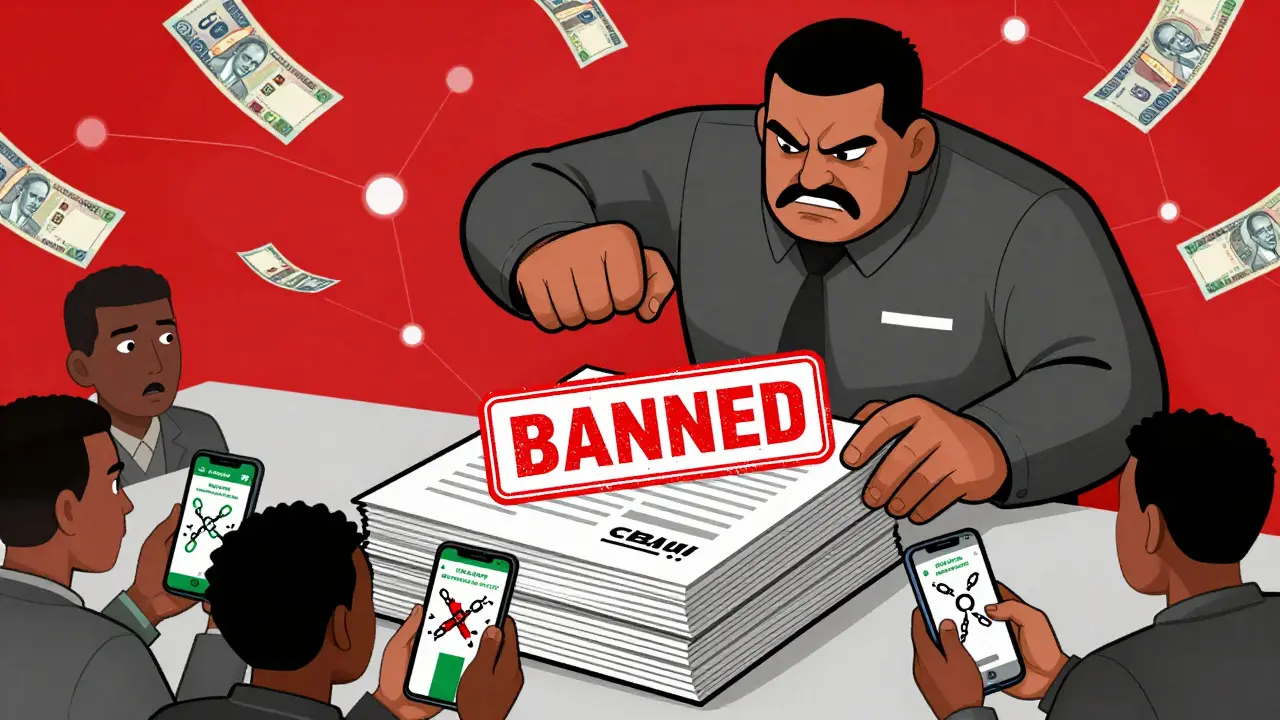
The story really starts in earnest on February 5, 2021. On this day, the Central Bank of Nigeria (CBN) issued a circular that sent shockwaves through the financial sector. Governor Godwin Emefiele didn’t mince words. He told the Senate that cryptocurrency transactions threatened the "safety and soundness" of the nation’s financial system.
The directive was simple but brutal: commercial banks and financial institutions were barred from processing any cryptocurrency-related transactions. This meant no direct transfers from bank accounts to exchanges like Binance or LocalBitcoins. The CBN argued that these "opaque activities" were destabilizing the Naira and facilitating money laundering.
This wasn’t entirely out of nowhere. It built on a January 2017 directive that had already restricted Bitcoin transactions. But the 2021 ban was comprehensive. It effectively cut off the formal banking system from the crypto economy. The immediate effect was chaos for users who relied on bank transfers. However, it also created an unexpected outcome: it pushed everyone toward peer-to-peer (P2P) markets.
The Underground Boom: 2022-2023
You’d think banning crypto would kill its popularity. In Nigeria, it did the opposite. By 2022, Nigeria had become the second-largest country globally for P2P trading volume. Why? Because people needed a way to preserve value against inflation and access foreign currency.
Exchanges adapted quickly. They ramped up their P2P marketplaces, connecting buyers and sellers directly. Instead of using banks, Nigerians used mobile money, cash deposits, and informal networks to trade crypto. The ecosystem went underground, or rather, parallel. The CBN noticed this. Despite the ban, adoption rates soared. Nigeria consistently ranked in the top five countries worldwide for crypto adoption according to the Chainalysis Global Crypto Adoption Index.
By late 2022, cracks began to show in the ban. The CBN quietly started allowing some banks to work with crypto firms under undisclosed conditions. This was a pragmatic move. Nigeria was facing severe foreign exchange shortages. The government realized that ignoring the massive flow of capital through crypto was hurting the broader economy. The ban was unsustainable because the demand was too strong.
The Official Reversal: December 2023
The turning point came in December 2023. A new leadership team at the CBN, following the departure of Governor Emefiele, decided to change course. Citing "current global trends," the central bank officially lifted the February 2021 ban.
This wasn’t a free-for-all. The reversal came with strict conditions. Banks were permitted to resume relationships with cryptocurrency trading platforms, but only if those platforms held a valid license from the Securities and Exchange Commission (SEC). This shifted the regulatory burden from the banks to the exchanges.
The CBN also issued Virtual Asset Service Provider (VASP) Guidelines. These guidelines required banks to set "prudent" transaction limits for crypto accounts and prohibited cash withdrawals from such accounts. The goal was to maintain oversight while enabling operations. It was a compromise: allow the business, but keep a tight leash on the money flow.
| Feature | February 2021 Ban | Post-December 2023 Framework |
|---|---|---|
| Bank Transactions | Prohibited for all crypto firms | Allowed for SEC-licensed VASPs |
| Primary Regulator | Central Bank of Nigeria (CBN) | SEC (Licensing) & CBN (Banking Rules) |
| User Access | Forced into informal P2P channels | Formal banking rails available |
| Cash Withdrawals | N/A (No banking access) | Prohibited from crypto accounts |

Legal Recognition: The Investments and Securities Act 2025
If 2023 was about permission, 2025 was about legitimacy. The passage of the Investments and Securities Act (ISA) 2025 marked the final step in the reversal. This law provided comprehensive legal recognition for digital assets as securities under the authority of the SEC.
Before the ISA 2025, owning crypto wasn’t illegal, but it existed in a gray area. You couldn’t sue someone easily if they scammed you, and banks were hesitant to touch it. The ISA 2025 changed that. It established clear compliance requirements and regulatory oversight. All cryptocurrency firms, now formally defined as Virtual Asset Service Providers (VASPs), must obtain proper licensing and adhere to Digital Assets Rules.
This legislation removed the uncertainty that had plagued the industry for four years. It signaled to international investors that Nigeria was serious about integrating digital assets into its formal financial system. It also aligned Nigeria with other major economies that treat tokens as securities or commodities.
Ongoing Tensions and Enforcement Risks
Don’t mistake regulation for total acceptance. The road hasn’t been smooth. Throughout 2024, tensions flared. Nigerian authorities frequently blamed crypto traders for volatility in the foreign exchange market. There was persistent ambivalence toward digital asset activity.
In March 2024, things got heated. Two executives from Binance, the world’s largest exchange, were detained by Nigerian authorities over allegations of untraceable funds. This highlighted that enforcement risks remain high. Even with a regulatory framework, individual actors can face scrutiny if they violate anti-money laundering (AML) rules.
Later in May 2024, reports surfaced that the national security advisor was considering declaring crypto trading a national security threat. This sparked fears of another crackdown, particularly on P2P trading, which remains the primary access method for many ordinary Nigerians. While no full-scale ban returned, these incidents remind us that the government is watching closely.

Why the Change? Economic Pressure and Global Standards
So, why did the CBN and the federal government reverse course? It wasn’t just ideological. It was economic necessity.
- Foreign Exchange Shortages: Nigeria faced chronic shortages of US Dollars. Crypto provided a vital channel for remittances and trade. Blocking it hurt the economy more than it helped stability.
- FATF Gray List: Nigeria wanted to be removed from the Financial Action Task Force’s Gray List. Being on this list reduces development financing and scares away foreign investment. To get off the list, Nigeria needed robust AML and Know Your Customer (KYC) frameworks. Regulating crypto, rather than banning it, allowed the government to impose these standards.
- Tax Revenue: An underground economy pays no taxes. By bringing crypto firms into the fold via SEC licensing, the government could potentially tax transactions and corporate profits.
A 2023 Consensys survey showed that 50% of Nigerians wanted regulations that encouraged participation while protecting investors. The new framework attempts to balance this public desire with government control.
What This Means for Users and Businesses
For the average Nigerian user, the shift means safer, albeit more bureaucratic, access. You can now use bank accounts linked to licensed exchanges. However, expect stricter KYC checks. The days of anonymous trading are over.
For businesses, the barrier to entry has risen. Getting an SEC license is not easy. Industry insiders note that regulators aren’t handing out licenses like candy. One anonymous CEO told Semafor Africa, "There aren’t going to be as many exchanges... I don’t think they’ll be giving so many licenses out." This creates a oligopoly where only well-capitalized firms can operate legally.
Major players like Yellow Card have moved quickly, applying for licenses and partnering with global giants like Coinbase. This consolidation benefits users by providing more reliable services, but it may reduce competition in the long run.
Looking Ahead: Implementation Challenges
We are still in the early stages of implementation. Key questions remain unanswered. What are the specific transaction limits individuals must declare? Do virtual asset trades require separate disclosure from regular banking transactions? These ambiguities create uncertainty.
However, the direction is clear. Nigeria has moved from prohibition to tolerance to regulation. This mirrors trends in South Africa and Kenya. The success of this model will influence crypto policy across sub-Saharan Africa. If Nigeria can balance innovation with stability, it could become a hub for digital finance in Africa. If not, it serves as a cautionary tale of how complex enforcement can be.
The reversal of the crypto banking ban is a victory for advocates, but the war for stability is ongoing. Keep an eye on the SEC’s licensing pace and the CBN’s transaction rules. Those details will define the next chapter.
When did Nigeria lift the crypto banking ban?
The Central Bank of Nigeria officially lifted the February 2021 banking ban in December 2023. This allowed banks to resume relationships with cryptocurrency trading platforms that hold a valid license from the Securities and Exchange Commission (SEC).
Is cryptocurrency legal in Nigeria in 2025?
Yes, cryptocurrency is legal and recognized as a security under the Investments and Securities Act (ISA) 2025. While owning crypto is not illegal, businesses must be licensed by the SEC, and banks must follow specific guidelines set by the CBN when serving these firms.
Can I withdraw cash from my crypto account in Nigeria?
Under the current CBN guidelines, cash withdrawals from cryptocurrency accounts are generally prohibited. Banks are required to set prudent transaction limits and maintain strict oversight, often requiring digital transfers rather than physical cash handling for crypto-related funds.
Who regulates cryptocurrency in Nigeria?
Regulation is shared between two main bodies. The Securities and Exchange Commission (SEC) handles the licensing and compliance of Virtual Asset Service Providers (VASPs). The Central Bank of Nigeria (CBN) governs the banking relationships and sets operational parameters for how banks interact with licensed crypto firms.
Why did Nigeria reverse its crypto ban?
The reversal was driven by economic pressures, including foreign exchange shortages and the need to comply with global Anti-Money Laundering (AML) standards to escape the FATF Gray List. The government realized that an outright ban was unsustainable due to high public adoption and the potential for tax revenue from regulated entities.
What is the ISA 2025 and how does it affect crypto?
The Investments and Securities Act (ISA) 2025 provides comprehensive legal recognition for digital assets as securities. It removes crypto from the legal gray area, establishing clear compliance requirements and ensuring that all crypto firms operate under the oversight of the SEC, thereby offering better investor protection.