


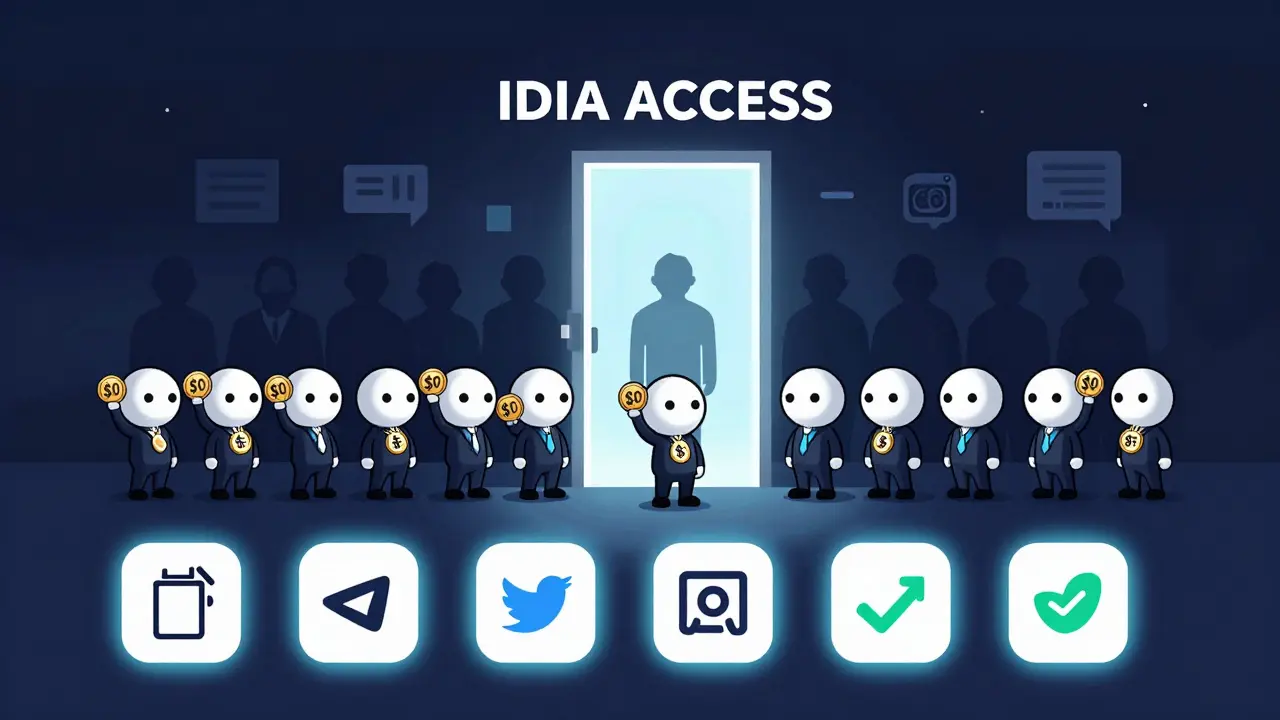
The Impossible Finance x CoinMarketCap airdrop wasn’t meant to make you rich. It was meant to build a community. In late 2025, when the crypto market was quieting down after a summer surge, Impossible Finance quietly launched a campaign that didn’t grab headlines like Hyperliquid’s $45,000-per-winner airdrop-but it did something more important: it turned passive followers into active participants.
This wasn’t a lottery. It wasn’t a giveaway for signing up and forgetting. It was a test. A test to see who actually cared about the future of decentralized launchpads. And it worked.
What Was the Impossible Finance x CoinMarketCap Airdrop?
The campaign was a joint effort between Impossible Finance and a DeFi platform building an IDO Launchpad to help new blockchain projects raise funds and CoinMarketCap and the world’s largest cryptocurrency data aggregator. The goal? To promote the upcoming launch of the IDIA token and the access token for early allocations on the Impossible Launchpad.
Here’s the simple breakdown:
- 2,000 winners were selected
- Each winner received $10 worth of $IF and the native token of Impossible Finance, used for staking and gaining IDIA allocation
- Total value distributed: $20,000
- Winners had to complete six tasks to qualify
That’s not a huge sum compared to other airdrops. Hyperliquid gave away $3.9 billion in HYPE tokens. But Impossible Finance wasn’t trying to buy attention. They were trying to filter out the bots, the scalpers, and the one-time takers. They wanted real users.
How Did You Actually Win?
You didn’t just sign up and wait. You had to prove you were paying attention. The six required tasks were:
- Add $IF to your CoinMarketCap watchlist
- Add $IDIA to your CoinMarketCap watchlist
- Join the Telegram group: t.me/ImpossibleFinance
- Follow @impossiblefi on Twitter
- Subscribe to the announcement channel: t.me/impossibleann
- Follow the Medium publication
Each step was a checkpoint. CoinMarketCap tracked who completed them. Telegram and Twitter bots couldn’t fake this. You had to click, join, follow, and stay. No shortcuts. No bulk accounts. The rules were clear: "Ash trades or illegally bulk registered accounts, as well as trades that display attributes of self-dealing or market manipulation will be disqualified."
That’s not just legalese. It’s a response to the growing problem of airdrop fraud. In 2024, fake airdrop scams hit CoinTelegraph, CoinGecko, and others. Scammers created fake tokens like "CTG" and tricked users into connecting wallets. Impossible Finance didn’t want to be the next headline. So they built verification into the design.
Why $10? Why Not More?
Some people called it a joke. "$10? That’s not even a coffee." But that’s the point.
Large airdrops attract speculators. They claim, sell, and leave. Impossible Finance didn’t need that. They needed people who would:
- Stake their $IF tokens to earn early access to IDIA allocations
- Follow new project launches on their platform
- Stay in the community long enough to become early adopters
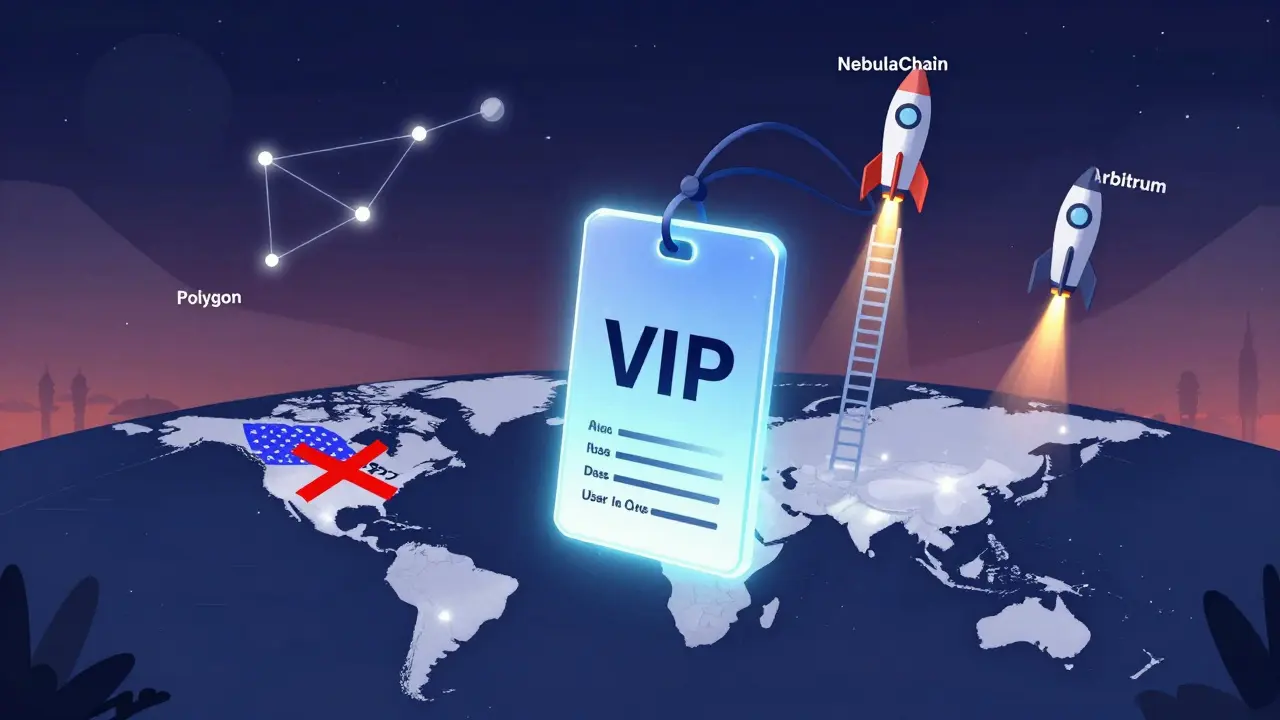
The real value wasn’t in the $10. It was in the IDIA token and the right to participate in future IDOs before the public. Think of it like a VIP pass. You didn’t get cash. You got a key.
And here’s the kicker: if you staked your $IF, you unlocked priority access to the first wave of projects launching on the Impossible Launchpad. That’s where the real opportunity lived.
How This Fits Into the Bigger Picture
Back in 2024, the average airdrop claim was worth $4,600. But that was for projects with massive user bases-like Hyperliquid, which had been tracking wallet activity for years. Impossible Finance was a startup. They didn’t have millions of users. They had a vision.
This campaign was modeled after successful community-building efforts from other DeFi platforms. Projects like Arbitrum, zkSync, and LayerZero didn’t just hand out tokens. They asked users to engage. To tweet. To join. To comment. To prove they weren’t just there for free money.
Impossible Finance did the same. And it worked. They didn’t need 100,000 participants. They needed 2,000 real ones. People who would stick around.
By the end of 2025, CoinMarketCap’s main airdrop page showed zero active campaigns. That didn’t mean airdrops were dead. It meant the landscape had changed. Big, anonymous giveaways were fading. Targeted, task-based campaigns were rising. This was the new standard.
Who Got Left Out?
Not everyone could join. U.S. residents were blocked. That’s not unusual. In the past five years, U.S. users lost an estimated $2 billion in potential airdrop value because platforms feared regulatory risk. The SEC hasn’t issued clear rules on airdrops. So most projects just say "no U.S." and move on.
If you were in the U.S., you couldn’t participate. No exceptions. No workarounds. That’s the reality of crypto regulation today. It’s not about fairness. It’s about risk.
Other regions? No restrictions. As long as you completed the tasks, you were in. The campaign was global-except for one country.
What Happened After the Airdrop?
The winners didn’t just get tokens. They got access.
Those who staked their $IF were invited to the first round of IDO allocations on the Impossible Launchpad. The first project? A privacy-focused DeFi protocol called NebulaChain and a new Layer-2 solution using zero-knowledge proofs. It raised $12 million in under 48 hours. Winners got 3x the allocation of regular participants.
That’s the hidden design. The airdrop wasn’t the end. It was the beginning. The $10 was just the entry fee. The real reward? Early access to the next big thing.
By early 2026, Impossible Finance had launched three new IDOs. All of them sold out in minutes. And every single one of them had at least 40% of their initial allocation reserved for airdrop winners who had staked their $IF.
Why This Matters for Future Airdrops
This campaign set a new template. It showed that:
- Airdrops don’t need to be huge to be effective
- Engagement beats volume
- Verification through multiple platforms reduces fraud
- Utility (like IDIA access) creates long-term value
Projects are learning. They’re moving away from "claim and dump" models. They’re building ecosystems. And they’re using airdrops as a tool-not a giveaway.
If you’re looking for the next big airdrop, don’t chase the biggest payout. Look for the ones that ask you to do more than just sign up. The ones that want you to stay.
What’s Next for Impossible Finance?
As of early 2026, Impossible Finance is expanding its launchpad to support cross-chain IDOs. They’ve added support for Solana, Polygon, and Arbitrum. The IDIA token now also grants voting rights on which projects get listed.
They’re not done. And they’re not slowing down.
If you missed this airdrop, don’t wait for the next one to be announced. Follow their Telegram, Twitter, and Medium. Stay active. The next opportunity won’t come with a big headline. It’ll come quietly. And only those who’ve been paying attention will get in.

People Comments
This was one of the few airdrops that actually felt meaningful. Not because of the $10, but because it filtered out the noise. I did all six tasks just to see what would happen. Turns out, I got in. Didn't cash out. Still staking. The real win? Being part of the first wave of NebulaChain. That’s where the magic happened.
Honestly, I was skeptical. But the fact they used CoinMarketCap to verify meant it wasn’t just another bot farm. I’ve seen too many airdrops get ruined by fake accounts. This one? Felt legit. And yeah, $10 is nothing-but the access? Priceless.
The $10 was the *point* 😌✨ It’s like giving someone a key to a mansion and saying, 'You can’t live here yet, but you can sit in the foyer.' That’s how you build culture. Not by throwing money. By throwing *entrance*. The bots? They wanted the mansion. We wanted the vision. 🏰💎
I find it deeply concerning that this campaign was framed as "community building" when it explicitly excluded U.S. residents. This is not inclusivity. This is regulatory cowardice disguised as strategy. If you’re serious about decentralization, you don’t geo-block users because the SEC is breathing down your neck. You fight. You don’t flee.
I completed the tasks because I wanted to understand the platform better. Didn’t expect anything. Got the tokens. Staked them. Didn’t even check the price for three months. Then I got invited to the IDO. That’s when I realized: they weren’t giving away tokens. They were giving away trust. And that’s rarer than any airdrop.
You call this smart? It’s just a slow-motion rugpull with extra steps. If you’re gonna gate access behind six tasks, why not just charge $50? At least then you’d know who’s serious. This feels like a psychological trap: "Prove you care"-then lock the door behind you. Classic bait-and-switch.
The fact that this campaign succeeded without a single meme or viral tweet speaks volumes. No hype. No influencers. Just quiet, deliberate engagement. That’s the future. Not the screaming, "CLAIM NOW OR MISS OUT!" nonsense. This was a masterclass in patience. The market will catch up. Eventually.
This is how you build something that lasts not with flash but with focus not with volume but with value not with noise but with notice not with giveaways but with groundwork not with promises but with proof not with hype but with habit not with shortcuts but with steps not with luck but with loyalty
So we’re supposed to be impressed that they gave away $20k? That’s less than a single influencer gets for one tweet. And they called it "community building"? Please. This was just a cheap way to avoid real marketing. The real winners? The ones who didn’t even try.
What’s fascinating is how this mirrors real-world governance. You don’t give voting rights to everyone-you give them to those who’ve shown up. This wasn’t an airdrop. It was a civic enrollment. The tasks were like showing up to town hall. The staking? Your ID. The IDO access? Your voice. It’s democracy, not capitalism.
I didn’t even know I was interested in launchpads until I did the tasks. One by one, I clicked. Followed. Joined. And suddenly, I was reading whitepapers. Asking questions in Telegram. Watching project demos. It wasn’t about the $10. It was about becoming someone who pays attention. That’s the real reward.
This was all a psyop. The "tasks" were designed to collect your data. CoinMarketCap tracks everything. Your wallet. Your IP. Your device fingerprint. Then they sell it to hedge funds. The $10? Just bait. The real airdrop was your privacy. 🤫👁️
Let’s be brutally honest here: this entire narrative is built on a lie. You think people staked because they believed in the vision? No. They staked because they were trapped. Once you’ve spent time on six tasks, sunk into the community, joined the Telegram, followed the Twitter-you’ve already invested your attention. Now you’re psychologically locked in. It’s not community. It’s conditioning. And it’s manipulative. The $10 wasn’t a gift. It was a leash.
I’m confused. If this was about filtering out bots, why not use KYC? Why rely on Twitter and Telegram? Those are the most easily faked platforms. This feels like a half-measure. And the fact that U.S. users were excluded? That’s not strategy. That’s surrender.
I did the tasks on a whim. Didn’t think I’d win. But I did. And when I got the invite to NebulaChain, I almost cried. Not because I made money. But because I was invited. For once, I felt like I belonged. Not as a speculator. As a participant. That’s rare. I’m still in. Still staking. Still checking the Medium every day. This changed how I see crypto.
There’s a deeper layer here. The $10 wasn’t the value. The value was the *threshold*. You had to cross six checkpoints to prove you weren’t just a tourist. That’s how you build trust in a space full of fraud. It’s not about the token. It’s about the ritual. And rituals create belonging. That’s why this worked. Not because it was smart. But because it was human.
Best airdrop I ever did. Didn’t even think about selling. Just staked. And got in early on the next three IDOs. Made more than enough to cover the gas fees. But honestly? I didn’t care about the money. I cared about being in the room. That’s what they gave me.
So like... they just gave us $10 and called it a "VIP pass"? Bro. That’s not a key. That’s a keychain charm. I’m not mad. Just confused. Like, if you wanted real users, why not give us $100? Or a NFT? Or a meme? This feels like a middle finger with a smiley face.
The hypocrisy here is staggering. They claim to be anti-bot, anti-scam, anti-fraud-yet they rely on Twitter, Telegram, and Medium for verification. All of which are riddled with fake accounts, bot farms, and purchased followers. The verification was performative, not functional. The real winners? The ones who used burner wallets and automation. The rest? Just fooled themselves into thinking they were special.
To everyone who says this was too small: you’re missing the point. The goal wasn’t to make you rich. It was to make you *stay*. And it worked. I’ve been in this space for years. This was the first time I felt like I was part of something that actually cared about me as a person-not just a wallet. I’m still active. I still check in. That’s more than I can say for 90% of the projects I’ve ever touched.
U.S. people got left out? That’s fine. We have enough scammers here already. If you’re from a country with real regulations, you don’t need to be part of this. This is for the real builders. Not the entitlement crowd. If you want to play, you play by the rules. And U.S. rules? They’re rigged. So stay out. We’re building something better.
I did the tasks. Got the tokens. Didn’t stake. Sold them on day two. Still, I have to admit-this campaign was oddly elegant. The minimalism. The silence. The lack of screaming. It felt like a whisper in a screaming world. I don’t care if it worked. I just liked how it felt. That’s rare.
The tasks were well designed. But the real innovation was in the timing. Late 2025. Market quiet. No hype. No FOMO. That’s when people actually paid attention. In a bull run, everyone’s chasing. In a lull, you find the ones who care. That’s why this worked. Not because of the mechanics. But because of the moment.
I saw your comment about the psychological trap. You’re not wrong. But here’s the thing: I didn’t feel trapped. I felt chosen. There’s a difference. When you’re told to do six small things-and you do them-you start to believe you belong. That’s not manipulation. That’s belonging. And that’s what this project gave me.
I’m still in. Still staking. Still checking the Medium every day. This changed how I see crypto.