


Imagine trying to buy a house but the only person willing to sell it is asking double the market price because they’re the sole source. That’s what trading on a thin decentralized exchange feels like. High slippage, wide spreads, and frustrated users walking away. If you are building or managing a Decentralized Exchange (a platform allowing peer-to-peer cryptocurrency trading without intermediaries), liquidity isn’t just a metric; it’s your lifeline.
Liquidity determines how easily assets can be bought or sold without causing drastic price changes. For DEXs, improving this flow is the single biggest challenge between staying alive and thriving. It requires more than just throwing tokens at the problem. You need a mix of technical innovation, smart economic incentives, and strategic partnerships. Here is how top platforms are solving the liquidity puzzle in 2026.
The Foundation: Attracting Professional Market Makers
You cannot rely solely on retail users to provide deep order books. Retail traders come and go with market sentiment. To get stable, reliable liquidity, you need professional market makers. These are sophisticated entities that continuously place buy and sell orders, ensuring smooth execution for everyone else.
To attract them, you have to speak their language: efficiency and risk management. Leading centralized exchanges like Binance set the standard here, but DEXs can compete by offering tailored programs. This means providing direct technical support and advanced API access so their algorithms can run smoothly. More importantly, you must offer volatility protection. During extreme market crashes, market makers take massive losses if they are stuck holding depreciating assets. Risk-sharing arrangements or rebates tied to volume targets keep them engaged even when the market turns ugly.
- Performance-based rebates: Pay them based on the depth of liquidity they maintain, not just the volume they generate.
- Risk sharing: Offer mechanisms that protect their capital during black-swan events.
- Tiered fee discounts: Reduce their trading costs as they hit higher liquidity thresholds.
Technical Edge: Smart Order Routing and Aggregation
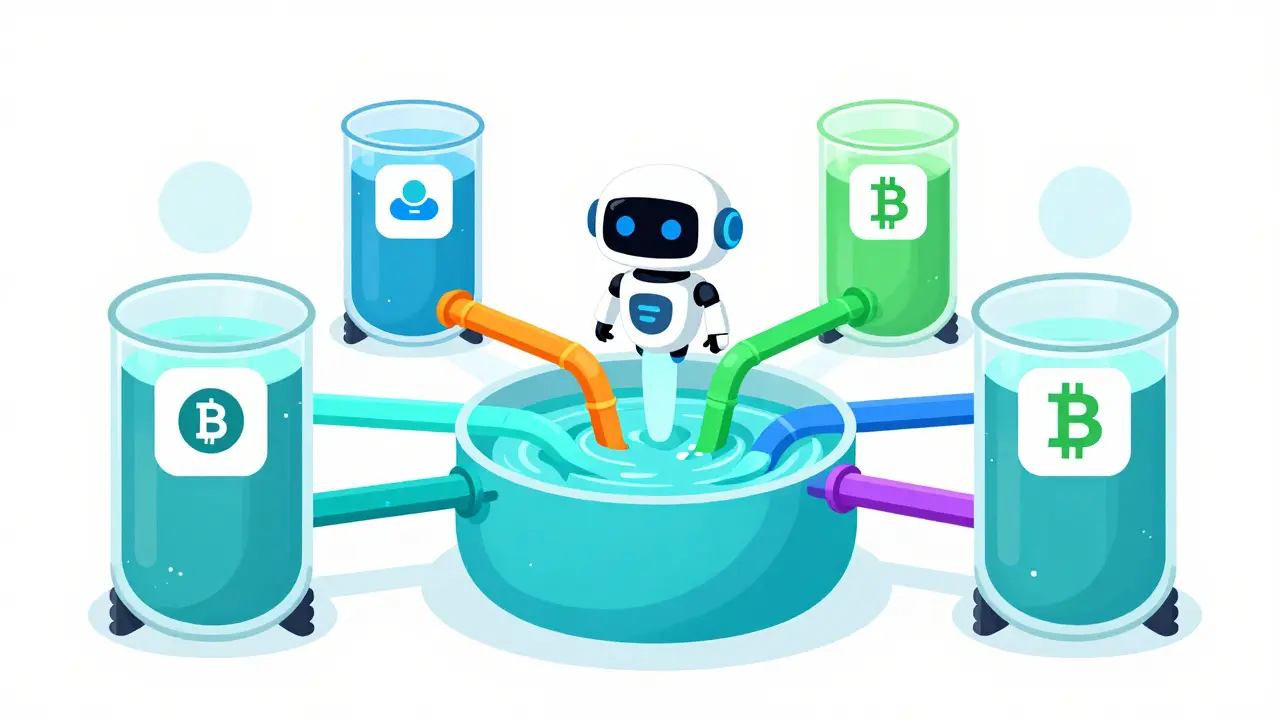
If your DEX is new, you don’t have the luxury of waiting years to build deep pools from scratch. The solution? Borrow liquidity. Smart Order Routing (SOR) is technology that automatically directs trades to the best available prices across multiple platforms.
By integrating SOR, your platform can split a large trade across several different liquidity sources-including other DEXs-to minimize slippage. This makes your exchange look much deeper than it actually is. Cross-exchange liquidity sharing allows smaller DEXs to tap into the vast oceans of liquidity on established markets like Ethereum mainnet. If you are building on an alternative chain like Polygon or NEAR, connecting to these global aggregators creates an instant boost in trading depth. Users stay because they get competitive pricing, and you gain volume because the experience is seamless.
Incentivizing Liquidity Providers: Beyond Basic Yield Farming
Yield farming is a strategy where users stake cryptocurrencies to earn tokenized rewards, enabling liquidity providers to earn significant returns for assuming additional risk. While common, basic yield farming often leads to "mercenary capital"-LPs who leave the moment better rewards appear elsewhere. To fix this, you need to structure incentives that encourage long-term commitment.
Time-locking and vesting schedules are your best friends here. Instead of paying out rewards instantly, require LPs to lock their liquidity for specific periods, such as 30, 60, or 90 days. Offer tiered bonuses for those who stay longer. This filters out speculators and keeps real liquidity in the pool. Additionally, distributing governance tokens to loyal LPs gives them a stake in the protocol’s success, aligning their interests with yours. When LPs feel like owners rather than mercenaries, they stick around.
| Strategy | Pros | Cons | Best For |
|---|---|---|---|
| Standard Yield Farming | Quick attraction of capital | High churn rate; mercenary capital | New project launches |
| Time-Locked Rewards | Stable, long-term liquidity | Less attractive to short-term speculators | Mature protocols |
| Governance Token Distribution | Aligns LP interests with protocol health | Dilutes existing token holders | Community-driven DAOs |
Optimizing Capital Efficiency with Concentrated Liquidity
The introduction of concentrated liquidity, popularized by Uniswap V3 is a protocol version that allows liquidity providers to customize price ranges where liquidity is provided rather than spreading it across all possible prices, changed the game. Instead of spreading capital thin across the entire price spectrum of Bitcoin (from $1 to $1,000,000), LPs can focus their funds in narrow bands where trading actually happens (e.g., $60,000-$65,000).
This dramatically increases capital efficiency. LPs earn more fees per dollar invested because their capital is actively working. However, it introduces concentration risk. If the price moves outside your chosen range, your position converts entirely into the less valuable asset, and you stop earning fees. To manage this, modern DEXs are using advanced tools. Research shows that schemes like LiqBoost use dynamic reallocation to adjust positions based on market conditions. Some platforms even employ deep reinforcement learning (DRL) agents to automatically rebalance positions, reducing the manual effort and risk for LPs.
Onboarding Institutions: The Big Money Game
Retail drives volume, but institutions drive stability. Institutional investors bring massive amounts of capital and trade consistently, regardless of hype cycles. However, they have strict requirements that typical DeFi protocols ignore.
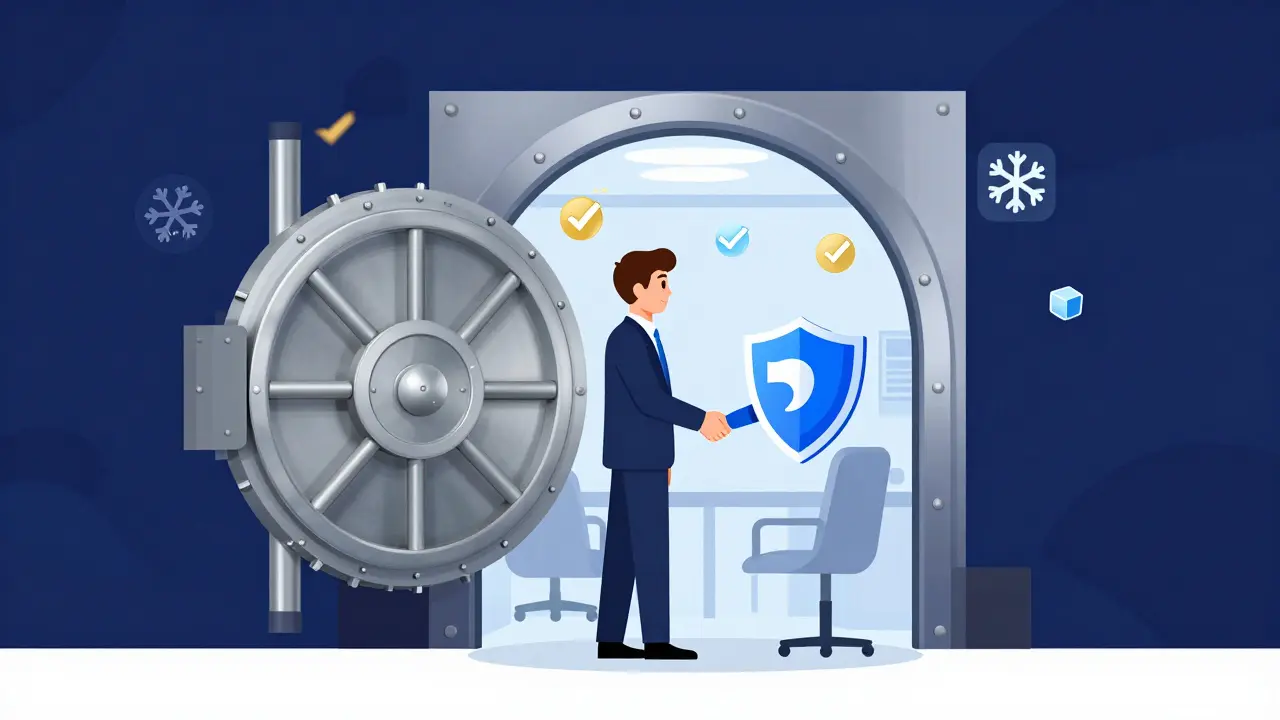
To win them over, your DEX needs robust security and compliance. This means adhering to Anti-Money Laundering (AML) and Know Your Customer (KYC) standards, including FATF Travel Rule compliance. They also need custody solutions, such as cold storage wallets with multi-signature security, to protect their assets. Furthermore, institutions often prefer Over-The-Counter (OTC) desks for large settlements to avoid slippage. By offering these enterprise-grade features, you open the door to a steady stream of high-value liquidity that doesn't evaporate overnight.
Building a Self-Reinforcing Ecosystem
Improving liquidity isn't a one-time task; it's a cycle. Better liquidity leads to lower slippage, which attracts more traders. More traders mean higher volumes, which generates more fees for LPs, which attracts more liquidity. To kickstart this flywheel, focus on listing high-volume pairs like BTC, ETH, and major stablecoins. These assets naturally attract buyers and sellers. Support both fiat and crypto deposits to reduce friction for newcomers. Finally, engage your community with referral bonuses and cashback programs for frequent traders. When users feel rewarded for their activity, they become advocates, bringing in more participants and deepening the pool further.
What is the most effective way to bootstrap liquidity for a new DEX?
The most effective method combines aggressive initial yield farming campaigns with smart order routing (SOR). SOR allows you to borrow liquidity from larger exchanges, making your new DEX appear deep and competitive immediately. Simultaneously, offer time-locked rewards to ensure the capital attracted by yield farming stays in the ecosystem long enough to establish a base.
How does concentrated liquidity differ from traditional AMMs?
Traditional Automated Market Makers (AMMs) spread liquidity across all possible price ranges, leading to low capital efficiency. Concentrated liquidity, seen in Uniswap V3, allows providers to allocate funds to specific price intervals. This maximizes fee earnings for active ranges but requires active management to avoid impermanent loss when prices move out of the selected band.
Why do institutional investors hesitate to use DEXs?
Institutions prioritize security, compliance, and custody. Many DEXs lack robust KYC/AML procedures, multi-signature cold storage options, and OTC desks for large trades. Without these enterprise-grade features, institutions view DEXs as too risky for large-scale capital deployment.
What role do market makers play in DEX liquidity?
Market makers provide continuous buy and sell orders, ensuring tight spreads and minimal slippage for traders. They stabilize prices during volatile periods. To retain them, DEXs must offer competitive compensation, API access, and risk-sharing mechanisms that protect their capital during extreme market movements.
Can small DEXs compete with giants like Uniswap?
Yes, by leveraging liquidity aggregation and niche specialization. Small DEXs can integrate with larger protocols via APIs to offer deep liquidity without building it from scratch. They can also focus on specific blockchain networks or unique asset classes where larger competitors have less presence, capturing dedicated user bases.