


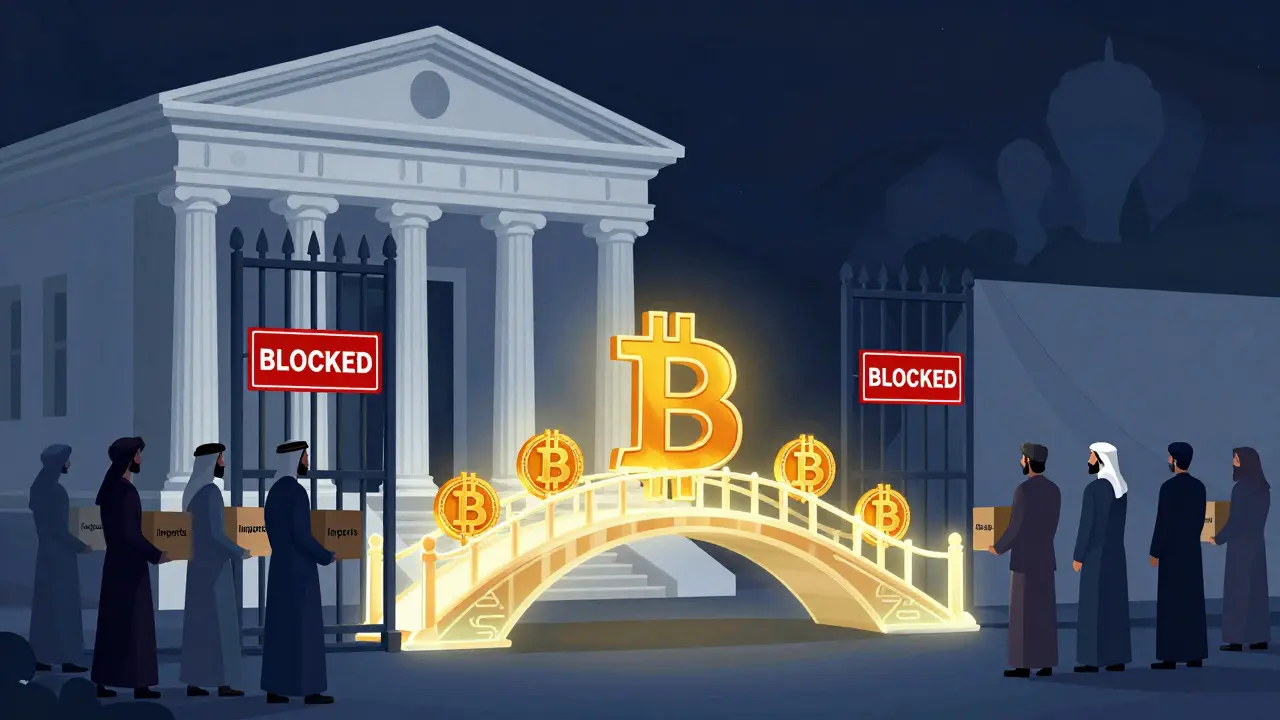
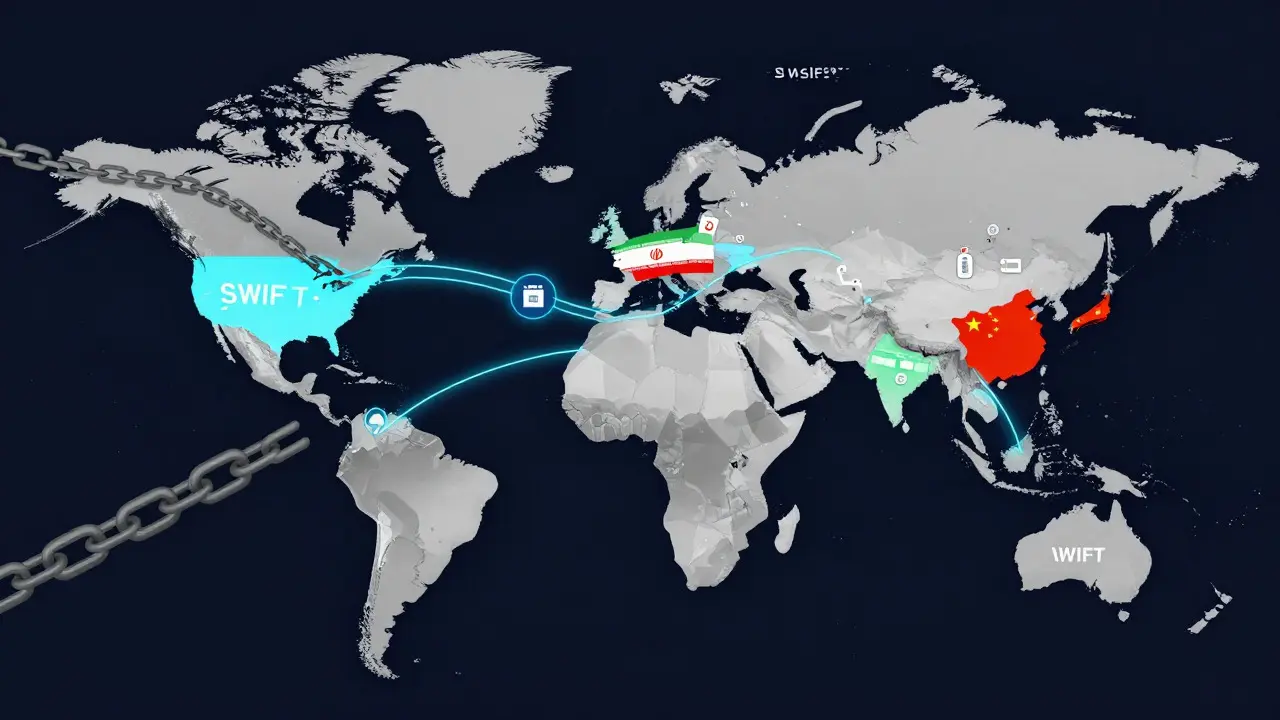
Imagine trying to buy machinery from Germany or medicine from China, but every time you try to pay, a global financial blockade stops the money. That is the daily reality for businesses in Iran. For decades, international sanctions have cut off the country’s banks from the SWIFT system, making traditional trade nearly impossible. But while politicians argue over diplomacy, Iranian traders found a loophole that doesn’t rely on dollars or euros. They turned to Bitcoin.
This isn’t just about hobbyists trading coins online. It is a state-sanctioned, industrial-scale strategy to keep the economy moving. By late 2025 and into 2026, using cryptocurrency for imports has become one of the most significant real-world applications of digital assets anywhere in the world. The question isn’t whether it works-it does. The question is how a nation builds an entire parallel financial infrastructure under the nose of the global banking system.
The Dual-Track Regulatory Framework
To understand how this works, you have to look at the rules set by the Central Bank of Iran (CBI). On the surface, the rules seem contradictory. The CBI strictly prohibits domestic payments using cryptocurrencies. You can’t walk into a bakery in Tehran and pay for bread with Bitcoin. If you try, you’re breaking currency control laws.
However, there is a massive exception for international trade. The government allows licensed miners to sell their mined coins specifically for trade settlement. This creates a "dual-track" system. Inside the country, the Rial reigns supreme. Outside the country, Bitcoin acts as the bridge currency. This framework is overseen by multiple authorities, including the Ministry of Energy, which manages electricity quotas, and the Iran Cyber Police (FATA), which monitors digital transactions for compliance.
This structure emerged gradually. In 2018, Iran legalized cryptocurrency mining under industrial electricity tariffs. When power shortages hit in 2021, mining was temporarily banned. But by 2023, recognizing the economic necessity, the government authorized cryptocurrency use for cross-border trade. Today, this system is the backbone of Iran’s import sector.
How the Import Process Actually Works
If you are an importer in Iran, you don’t just open a Coinbase account and send funds. The process is highly centralized and bureaucratic. Here is the step-by-step flow of a typical crypto-enabled import:
- Licensing: The importing company must obtain approval from the Central Bank of Iran. Only state-approved entities can engage in these transactions.
- Mining or Acquisition: The company either operates its own licensed mining farm or purchases Bitcoin from a licensed miner. These miners operate large-scale facilities equipped with ASIC miners.
- CBI Authorization: Before any coins leave the country, the export of mined crypto requires explicit authorization from the CBI. This ensures the government tracks the outflow of capital.
- Conversion Abroad: Once the Bitcoin crosses the border digitally, the foreign supplier converts it into fiat currency (like Euros or Yuan) or accepts it directly if they are also sanctioned.
- Documentation: Strict Anti-Money Laundering (AML) and Know-Your-Customer (KYC) rules require licensed miners to document all coin movements. Every transaction is logged to prevent illicit capital flight.
This system funnels transactions through the Central Bank rather than direct private channels. While this introduces payment delays and heightened compliance requirements, it gives the state total control over who gets access to foreign goods. As of early 2025, the CBI ordered the closure of rial payment gateways for exchanges, forcing them to obtain licenses and further tightening this funnel.
The Role of the IRGC and State Power
You cannot talk about crypto in Iran without talking about the Islamic Revolutionary Guard Corps (IRGC). The military branch has emerged as the dominant force in the country’s cryptocurrency mining sector. Reports indicate that by 2019-2020, Tehran’s most influential power brokers moved aggressively into crypto mining under directives from Supreme Leader Ali Khamenei.
Why? Because it earns hard currency without needing to export oil. The IRGC partnered with Chinese companies to establish massive mining farms. A prime example is the 175-megawatt Bitcoin farm in Rafsanjan, located in Kerman province. Ostensibly a joint venture between an IRGC-linked enterprise and Chinese investors, this facility consumes electricity on an industrial scale.
These operations benefit from rock-bottom electricity tariffs, often effectively free due to political connections. They operate in special economic zones or on IRGC-controlled bases with minimal scrutiny. Since 2018, firms affiliated with the IRGC have processed billions of dollars worth of transactions through platforms like Binance to bypass U.S. sanctions. This isn’t just business; it’s national security strategy disguised as tech investment.
| Feature | Traditional Banking (SWIFT) | Crypto-Based Trade |
|---|---|---|
| Sanctions Exposure | High (Blocked by US/EU) | Low (Peer-to-Peer) |
| Speed | Days to Weeks | Hours (Blockchain confirmation) |
| Regulatory Control | International Banks | Central Bank of Iran (CBI) |
| Cost | High fees + correspondent banking costs | Network fees + mining energy costs |
| Primary Actor | Commercial Banks | IRGC & Licensed Miners |
Energy Crisis: The Hidden Cost of Freedom
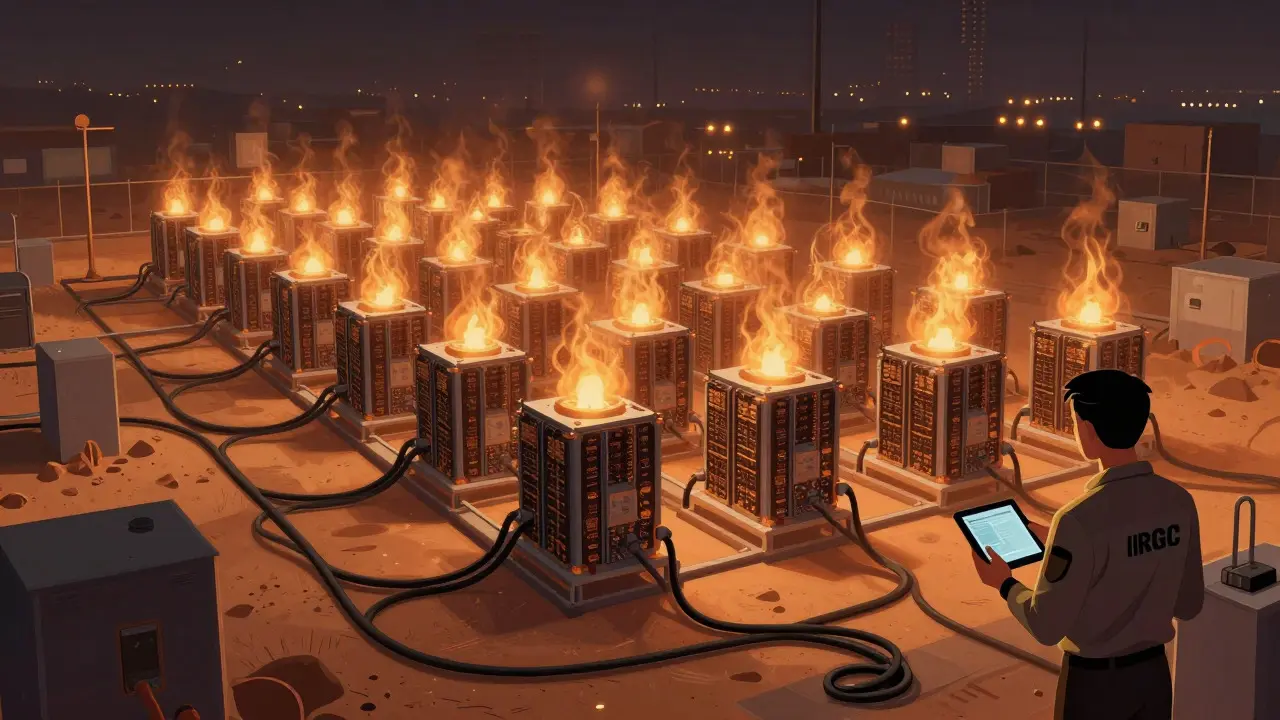
There is no free lunch, especially when it comes to Bitcoin mining. The energy consumption aspect has created a national crisis in Iran. Large cryptocurrency mining operations run or protected by state actors have become a hidden culprit exacerbating the power grid crisis.
Investigations point to a "crypto cartel" formed by state-affiliated miners, including religious foundations like Astan Quds Razavi. These entities divert national electricity for profit. During summer peaks, cities experience debilitating power outages, leaving homes dark and factories idle. Meanwhile, the mining farms hum along with dedicated power feeds.
This tension forces the government into difficult choices. In 2021, the sheer strain on the grid led to a temporary ban on mining. Now, the Ministry of Industry approves mining equipment imports carefully, and the Iran Power Generation Company allocates strict electricity quotas. Citizens are even encouraged to report illegal mining activities, reflecting the government's concern about unauthorized operations undermining state control.
Global Partnerships and Diplomatic Moves
Iran isn’t doing this alone. The country has actively pursued international cryptocurrency cooperation agreements. In November 2018, Iran signed a bilateral agreement on cryptocurrency cooperation with Russia. Two months later, negotiations expanded to include Austria, Bosnia-Herzegovina, England, France, Germany, Switzerland, and South Africa.
The goal is clear: build a cryptocurrency-based trade network that operates independently of traditional banking systems subject to Western sanctions. The first documented cryptocurrency import transaction occurred on August 9, when Iran made its first import order worth $10 million using an unspecified cryptocurrency. This milestone proved that smart contracts and digital assets could facilitate bilateral trade between similarly sanctioned countries.
Challenges and Risks for Traders
For businesses engaging in cross-border trade with Iran, the stringent crypto regulations create operational friction. While it bypasses sanctions, it introduces new risks:
- Price Volatility: Bitcoin’s price can swing wildly. An importer locking in a deal might see the value drop significantly before the transaction clears.
- Technical Complexity: Managing cold storage, wallet security, and blockchain transfers requires sophisticated technical infrastructure that many traditional importers lack.
- Regulatory Shifts: The rules change fast. A license valid today might be revoked tomorrow if the CBI decides to tighten controls further.
- Compliance Delays: Because all transactions go through the CBI, payment delays are common. You aren’t getting instant settlement like in a pure peer-to-peer model.
Despite these hurdles, the scale of crypto-enabled capital flows is substantial. By 2024, $4.18 billion worth of cryptocurrencies left Iran, representing a 70-percent increase from the previous year. Analysts forecast the sector will generate $1.5 billion in revenue by 2025, growing to $1.9 billion shortly after. Iran produces almost five percent of all new bitcoins, proving that this strategy is here to stay.
The Future of Crypto Trade in Iran
As we move through 2026, the long-term viability of Iran’s cryptocurrency import strategy depends on balancing two competing needs: economic survival and energy stability. The government continues to expand mining regulations while maintaining payment restrictions. There is no formal capital gains tax due to the trading prohibition, but taxation on mining operations varies by energy usage.
The strategy serves dual purposes: generating revenue through mining operations and facilitating international trade despite sanctions. It differs significantly from the Chinese model, which initially adopted similar restrictions but evolved differently. Iran’s approach recognizes Bitcoin as a tool to break through sanctions, using money created domestically from gas and other energy resources rather than exchanging these via exports for foreign currency.
For the global community, Iran offers a case study in resilience and adaptation. Whether you view it as financial innovation or sanctions evasion, one thing is certain: Bitcoin has enabled trade where none existed before. And as long as the sanctions remain, the lights in the mining farms will stay on, even if the rest of the city goes dark.
Is it legal to use Bitcoin for imports in Iran?
Yes, but only for licensed entities and specific cross-border trade settlements. The Central Bank of Iran (CBI) prohibits domestic retail payments in crypto but authorizes licensed miners and approved importers to use Bitcoin to settle international trades. All transactions must be documented and authorized by the CBI.
Which organizations control crypto mining in Iran?
The Islamic Revolutionary Guard Corps (IRGC) plays a dominant role, operating large-scale mining farms often in partnership with Chinese companies. Other key players include the Central Bank of Iran (CBI), which regulates transactions, and the Ministry of Energy, which manages electricity quotas.
How does Iran avoid U.S. sanctions using Bitcoin?
By bypassing the SWIFT banking system entirely. Instead of sending dollars through international banks, Iranian entities mine or acquire Bitcoin and transfer it digitally to foreign suppliers. The suppliers then convert the Bitcoin into local fiat currency, effectively removing the U.S. dollar from the transaction chain.
What is the impact of crypto mining on Iran’s power grid?
It has caused severe strain. Large mining farms consume vast amounts of electricity, leading to frequent power outages in residential and industrial areas. The government has had to implement strict quotas and occasionally ban mining during peak demand periods to stabilize the grid.
Can regular citizens in Iran trade Bitcoin freely?
No. Public trading remains prohibited under currency controls. The CBI has closed rial payment gateways for exchanges, requiring licenses for operation. Regular citizens face restrictions on converting Rials to crypto for speculative trading, though some informal markets persist.
Which countries cooperate with Iran on crypto trade?
Iran has signed agreements with Russia and negotiated with countries including Austria, Bosnia-Herzegovina, England, France, Germany, Switzerland, and South Africa. The focus is on building a trade network independent of Western banking systems.
How much revenue does Iran generate from crypto mining?
Analysts forecast the sector generated around $1.5 billion in revenue by 2025, with projections reaching $1.9 billion shortly after. Additionally, $4.18 billion worth of cryptocurrencies left Iran by 2024, highlighting the massive scale of capital flows.





People Comments
It is truly inspiring to see how innovation can thrive even under such heavy pressure. The Iranian people are showing incredible resilience by adapting their financial systems to keep trade alive. This dual-track system proves that when traditional paths are blocked, new ones will be carved out with determination and clever thinking. It gives me hope that technology can serve as a bridge for connection rather than just a tool for division. We should appreciate the ingenuity here.
This entire situation is morally bankrupt. You have a state draining its own citizens' electricity to fund a shadow economy while families freeze in the dark. It is disgusting how they prioritize crypto profits over basic human needs like power for hospitals and homes. The IRGC is essentially stealing from the poor to line their pockets with untraceable digital gold. How do you sleep at night knowing your lights stay on because someone else's were turned off?
One must consider the profound ethical implications of this so-called innovation. The narrative presented here glosses over the sheer brutality of the energy crisis inflicted upon the populace. It is not merely an economic strategy; it is a systemic failure of governance disguised as technological progress. The centralization of power through the IRGC’s mining operations creates a feudal structure where the elite profit while the masses suffer. To call this 'resilience' is to ignore the suffering of the everyday citizen who cannot afford a generator. The duality of the regulatory framework is nothing more than a mechanism for control. One wonders if the global community is too distracted by the allure of decentralized finance to notice the centralized oppression happening right before our eyes. The environmental cost alone is staggering, yet it is conveniently omitted from these optimistic forecasts. This is not freedom; it is exploitation wrapped in blockchain terminology. We need to look closer at who really benefits from this 'parallel infrastructure.'
The technical architecture of this setup is fascinatingly complex. It reminds me of the early days of Tor networks but applied to high-value commodity trade. The use of ASIC miners in industrial zones with subsidized power is a classic arbitrage play. However, the reliance on CBI authorization introduces a single point of failure that could collapse the whole system if sanctions tighten further on the banks holding the fiat conversions abroad. I wonder if they are using mixers or privacy coins to obscure the trail before converting to EUR or CNY. The latency issues mentioned are likely due to the bureaucratic bottleneck rather than blockchain confirmation times. It’s a neat hack, but fragile.
There is a beautiful symmetry in how nations adapt to isolation. History shows us that when one door closes, another opens, often in unexpected ways. Iran’s use of Bitcoin is a testament to the human spirit’s ability to find solutions where others see dead ends. It is a reminder that money is ultimately a social construct, and societies can redefine it when necessary. Let us view this not just as evasion, but as a creative leap forward in international relations. Perhaps other sanctioned nations can learn from this model to maintain dignity and trade.
Just watching this unfold from afar. It’s wild how the grid gets strained while the servers hum along. Feels like a sci-fi plot come to life.
the paradigm shift is undeniable yet the boundary between state control and individual liberty blurs into a murky haze of algorithmic determinism. we are witnessing the birth of a new socio-economic stratum defined not by geography but by access to computational power and electrical subsidies. it is a recursive loop of dependency where the state provides the energy for the very tool that circumvents its monetary sovereignty. fascinatingly dystopian isn't it
Let us be clear about what is actually transpiring here. This is not merely trade facilitation; it is a sophisticated method of laundering state-sponsored funds beyond the reach of Western oversight. The involvement of the IRGC is no coincidence. They are building a parallel financial system to fund proxy wars and destabilize regions without leaving a paper trail. The 'energy crisis' is a convenient smokescreen to justify hoarding resources for military-industrial complexes. Do not be fooled by the tech-bro narrative of 'innovation.' This is national security warfare conducted via hash rate. The US government knows exactly what is happening and is likely waiting for the perfect moment to strike at the software layer of these exchanges.
From a philosophical standpoint, this raises questions about the nature of value and sovereignty. If a nation can create its own medium of exchange through computation rather than resource extraction or debt issuance, does it hold true sovereignty? The tension between the Rial and Bitcoin represents a clash between traditional fiat authority and decentralized consensus mechanisms. It is an experiment in political economy on a massive scale. One must observe whether this leads to greater autonomy or simply a different form of dependency on foreign hardware and software providers.
You guys are missing the obvious. The volatility risk is huge for importers. If BTC drops 10% during the clearance process, who eats the loss? Probably the importer, which means higher prices for consumers. Also, the KYC requirements mean the government knows exactly who is buying what. It’s not anonymous at all. It’s just a different ledger. Don’t let the hype fool you into thinking this is free market magic. It’s heavily regulated state capitalism. :)
its all part of the grand design to undermine the dollar hegemony. the elites want cashless society and bitcoin is the trojan horse. iran is just the test case. soon everyone will be forced to use digital currency and then they can turn it off. simple as that. wake up sheeple.
I feel so much pain for the ordinary families in Tehran. Imagine trying to cook dinner or study for exams in the dark while the mining farms burn through megawatts. It breaks my heart that technology, which should connect us, is being used to deepen inequality. The moral weight of this system is crushing. We need to talk more about the human cost, not just the billions in revenue. Please share this so people understand the real tragedy behind the headlines.
It’s interesting to see both sides of the argument here. On one hand, there is the undeniable strain on the grid and the ethical concerns raised by Joy and Amy. On the other, there is the pragmatic reality that sanctions force countries to innovate. Maybe the solution lies in better energy management or renewable integration for these mines. We should try to understand the complexity without jumping to conclusions. Dialogue helps us see the full picture.
I hear the frustration in many of these comments. It is easy to judge from the outside, but living under sanctions changes everything. For the Iranian trader, this isn’t about greed; it’s about survival. The emotional toll of navigating a blacklisted banking system is immense. Let us offer some empathy to those trying to keep their businesses afloat. The resilience shown here is admirable, even if the methods are controversial. We should support efforts to normalize trade and reduce suffering.
Look, everyone is acting like this is some revolutionary new thing, but it’s basically just smuggling with extra steps. You think the West doesn’t know? Of course they know. The reason they haven’t shut it down completely is because it keeps the Iranian regime busy and contained. It’s a pressure valve. And let’s not forget the Chinese angle. China loves cheap energy and stable trade partners. This whole setup benefits Beijing more than Tehran. So next time you hear about 'crypto freedom,' remember who really holds the leash. It’s not a grassroots movement; it’s a geopolitical chess move played by generals and politicians who don’t care about your wallet. The average person in Iran still suffers, but now their suffering is monetized by the state. That’s the ugly truth nobody wants to admit because it ruins the nice story about decentralization.
just a small point but the table says speed is hours for crypto. in reality if the cbi approval takes weeks then the blockchain speed doesnt matter much. also typos in the article are annoying but good read overall.
The efficiency gains here are remarkable. By bypassing SWIFT, Iran has reduced transaction friction significantly, despite the bureaucratic hurdles. This serves as a powerful case study for other emerging markets looking to reduce dependency on legacy banking systems. The key takeaway is that technology can empower nations to assert financial independence. We should encourage more open dialogue on how these models can be adapted for legitimate trade development globally.
as an indian i can relate to the hustle culture needed to navigate complex regulations. its amazing how they managed to get chinese companies involved. the partnership aspect is key here. hope this brings more stability to the region. 😊
the ontological status of bitcoin in this context is shifted from asset to utility. it becomes a verb rather than a noun. a way of doing business. the typo prone nature of online discourse often obscures these deeper truths. but yes the energy aspect is crucial. it is a thermodynamic exchange of sorts.
Cool stuff! 🌍💻 It’s great to see how different cultures are finding unique ways to adapt. The collaboration with Russia and China shows that diplomacy is still alive and well, just in a new format. Keep pushing boundaries! ✨
Indeed; the structural integrity of this financial workaround is quite robust. One must acknowledge the meticulous planning required to establish such a dual-track system. Furthermore, the regulatory oversight ensures a degree of accountability that is often lacking in purely decentralized models. It is a prudent approach to economic survival. Well articulated post.