


Imagine trying to run a crypto exchange where every single customer transaction is scrutinized by the government, and you have to keep 95% of your users' money in offline vaults. That is not a hypothetical nightmare; it is the daily reality for operators in Japan under the Financial Services Agency (FSA), Japan's primary financial watchdog responsible for overseeing all crypto-asset exchange service providers and enforcing strict compliance standards. For years, this agency has been the gatekeeper of one of the world's most regulated yet vibrant cryptocurrency markets. But the landscape is shifting fast. With the recent announcement that digital assets will soon fall under the main securities law, the stakes are higher than ever. If you are an investor, trader, or industry player looking at the Japanese market, understanding these strict rules is no longer optional-it is survival.
The core of Japan's regulatory identity is its FSA crypto oversight. This isn't just about following rules; it is about a specific philosophy born from disaster. When the Mt. Gox collapse happened in 2014, wiping out billions of dollars in Bitcoin, the Japanese government realized that "wild west" regulations were too risky. They didn't ban crypto. Instead, they built a cage made of steel. Today, that framework positions Japan as a global leader in balancing innovation with safety. The question remains: can this strict model survive the pressure of new technologies like DeFi and tokenized stocks?
From Payment Services Act to Financial Instruments Law
To understand where we are going, we have to look at where we started. For nearly a decade, the backbone of crypto regulation in Japan was the Payment Services Act (PSA), a legal framework originally designed for fiat currency payments that was amended in 2017 to include digital assets. Under the PSA, the FSA defined what a "crypto-asset" actually is. It distinguished these digital tokens from traditional money, creating a separate legal category. This distinction was crucial because it meant that if you wanted to buy, sell, or exchange these assets in Japan, you needed a license from the FSA.
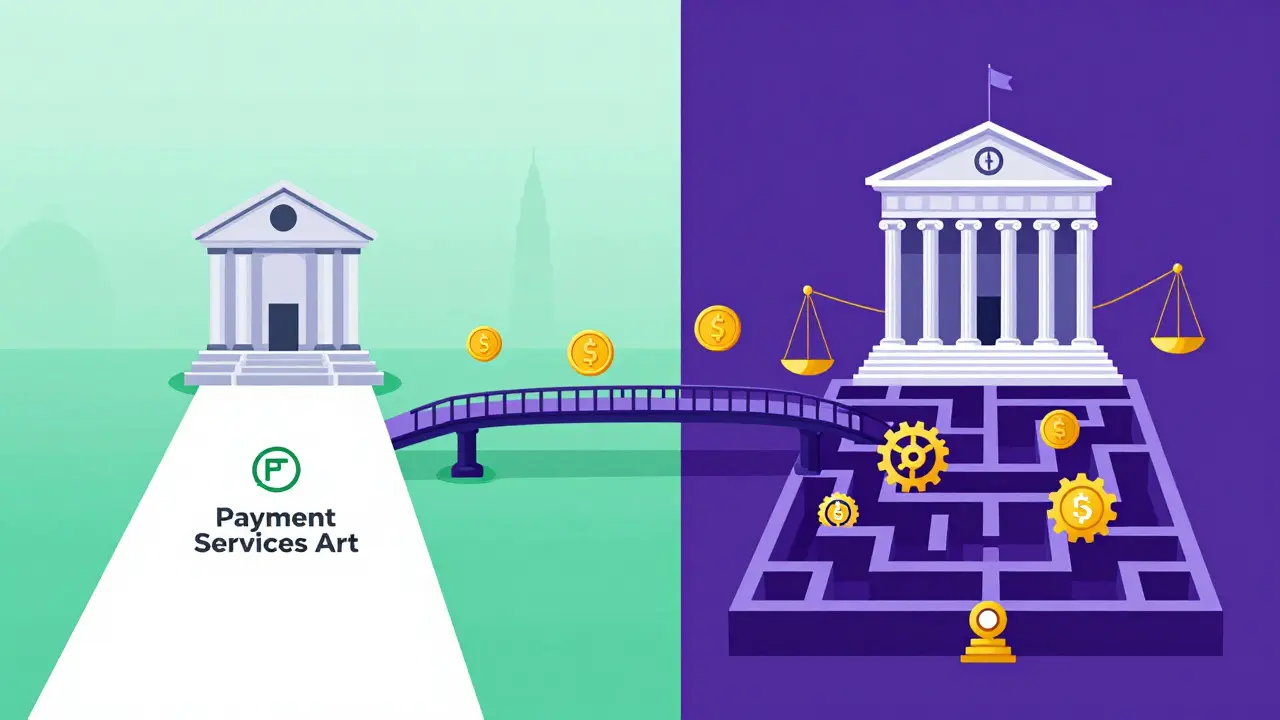
However, the PSA was never perfect for everything. It worked well for simple exchanges like buying Bitcoin with Yen. But as the market evolved, new types of assets appeared. Think about governance tokens that let you vote on protocol changes, or utility tokens that act like shares in a company. These don't fit neatly into the "payment" box. That is why, on September 2, 2025, the FSA announced a major shift. They proposed moving certain digital assets under the Financial Instruments and Exchange Act (FIEA), Japan's comprehensive securities law that governs stocks, bonds, and other investment products. This move effectively says that some crypto assets are actually securities. If a token looks like a stock and acts like a stock, the FSA wants to regulate it like a stock. This creates a dual-framework system where simple payment tokens stay under the PSA, but investment-like tokens move to the stricter FIEA regime.
The Iron Rules: AML, KYC, and Cold Storage
If you think compliance is boring, wait until you see the specifics of the FSA's requirements. These are not suggestions; they are mandates enforced with heavy penalties. The first pillar is Anti-Money Laundering (AML) and Know Your Customer (KYC). Every user on a licensed Japanese exchange must go through rigorous identity verification. No anonymous trading here. The FSA requires exchanges to monitor transactions for suspicious activity and report them immediately. This level of scrutiny is far beyond what many offshore exchanges offer, which is exactly why Japanese platforms are seen as safer havens for serious investors.
The second pillar is perhaps the most operationally challenging: asset segregation and cold storage. The FSA mandates that exchanges must completely separate customer funds from their own operational capital. You cannot use your users' Bitcoin to pay your office rent. Even more strictly, the FSA requires that at least 95% of user assets be kept in offline "cold wallets." Only a tiny fraction can remain online for quick trading. Why such a high percentage? Because history showed that online wallets are vulnerable to hacks. By forcing exchanges to store almost everything offline, the FSA drastically reduces the risk of large-scale theft. For exchange operators, this means significant technical complexity and cost, but for users, it means peace of mind knowing their assets are locked down tight.
| Feature | Payment Services Act (PSA) | Financial Instruments and Exchange Act (FIEA) |
|---|---|---|
| Primary Focus | Payment methods and basic exchanges | Securities and investment products |
| Applicable Assets | Simple crypto-assets (e.g., BTC, ETH for payment) | Tokens with investment/governance features (e.g., STOs, DeFi tokens) |
| Licensing Body | FSA Registration | FSA Approval/Registration as Investment Trust Business Operator |
| Key Requirement | 95% Cold Storage, AML/KYC | Mandatory Disclosures, Insider Trading Rules |
| Investor Protection | Asset Segregation | Prospectus Requirements, Market Conduct Rules |
What the FIEA Shift Means for Investors
So, what does this switch to the FIEA actually change for you? First, it brings clarity. In the past, it was often unclear whether a specific token was a security or a commodity. Now, the FSA is drawing a clear line. Tokens with "investment-like" characteristics-think tokens that promise dividends or give you voting rights in a project-will be treated as securities. This means issuers will have to file detailed prospectuses, similar to what companies do when they issue stocks. For investors, this is huge. It means more transparency. You will know exactly what you are buying, who is behind it, and what the risks are.
Second, it opens the door for regulated products. One of the biggest hurdles for institutional money entering crypto was the lack of standardized, safe vehicles. By bringing tokens under the FIEA, the FSA creates a legal path for regulated crypto ETFs, including spot Bitcoin ETFs. Imagine being able to buy exposure to Bitcoin through a traditional brokerage account with the same protections as a stock index fund. This could flood the Japanese market with institutional capital, boosting liquidity and stability. However, it also means stricter enforcement. Insider trading and market manipulation, previously hard to police in decentralized markets, will now face the full weight of securities law.
The Cost of Safety: Fees and Operational Burden
Let’s be honest: safety comes at a price. Operating under the FSA’s strict compliance regime is expensive. Industry reports suggest that compliance costs can represent 15-20% of operational expenses for major exchanges. Where does this money go? Legal teams specializing in crypto law, advanced cybersecurity infrastructure, continuous AML monitoring systems, and regular audits. These costs inevitably trickle down to the user in the form of higher trading fees compared to unregulated offshore platforms. Is it worth it? Most Japanese users say yes. They value the security and legal certainty over saving a few cents per trade. But for high-frequency traders or those seeking maximum leverage, the friction might be frustrating.
Furthermore, the registration process itself is a marathon. Getting FSA approval typically takes 6 to 12 months. You need extensive documentation, proof of physical presence in Japan, and a solid track record. This barrier to entry keeps out fly-by-night operators, which is good for the market’s long-term health. But it also means fewer competitors, potentially leading to less price competition among exchanges. The trade-off is clear: a smaller, safer, more stable market versus a larger, riskier, more chaotic one. Japan has chosen the former.

Looking Ahead: DeFi, Stablecoins, and the 2026 Bill
The FSA is not resting on its laurels. As the formal bill implementing the FIEA reclassification is expected in early 2026, the agency is already looking at the next frontier: Decentralized Finance (DeFi). How do you regulate a platform with no central CEO? The FSA has established a DeFi Study Group, meeting every two to three months with industry experts and academics. They are exploring how to apply existing rules to smart contracts and decentralized protocols without stifling innovation. It is a delicate balance. Too much regulation kills DeFi; too little invites scams.
Stablecoins are another area of intense focus. With the rise of tokenized real-world assets, the FSA is evaluating how to ensure that stablecoins remain pegged reliably. There are also ongoing discussions about tax reforms. In August 2025, proposals emerged to bring crypto gains under a standard 20% tax bracket and allow investors to carry forward losses for three years. This would align crypto taxation more closely with other financial investments, making it easier for individuals to manage their tax obligations. These developments signal that the FSA is not just policing the current market but actively shaping the future of finance in Japan.
Why Japan’s Model Matters Globally
You might wonder why all this matters if you live outside Japan. Well, Japan’s FSA-led approach is becoming a global reference point. Regulators in Europe, the US, and Asia are watching closely. Many see Japan’s framework as a blueprint for how to handle the complexities of digital assets without banning them. The success of Japan’s market, despite its strict rules, proves that regulation and growth can coexist. If other countries adopt similar models, we could see a convergence of global standards, making cross-border crypto trading smoother and safer. For now, Japan stands alone as the pioneer, setting the pace for the rest of the world to follow.
What is the main difference between the PSA and FIEA frameworks in Japan?
The Payment Services Act (PSA) primarily regulates crypto-assets used for payments and basic exchanges, focusing on AML/KYC and cold storage. The Financial Instruments and Exchange Act (FIEA) will regulate tokens with investment or governance features, treating them like securities with mandatory disclosures and insider trading rules.
How much of user assets must be stored in cold wallets under FSA rules?
The FSA mandates that at least 95% of user assets must be kept in offline cold wallets to minimize hacking risks. Only a small portion can remain online for immediate trading needs.
When will the new FIEA regulations for crypto take effect?
The formal bill implementing the reclassification of certain digital assets under the FIEA is expected to be introduced in early 2026, following the initial proposal in late 2025.
Do I need a license to open a crypto exchange in Japan?
Yes, any business providing crypto-asset exchange services in Japan must register with the Financial Services Agency (FSA). The process involves extensive documentation, security audits, and typically takes 6 to 12 months to complete.
How does FSA oversight affect trading fees for users?
Strict compliance requirements increase operational costs for exchanges, such as legal fees and cybersecurity infrastructure. These costs are often passed on to users in the form of slightly higher trading fees compared to less regulated jurisdictions.