



Getting a crypto exchange off the ground in Nigeria used to be a bit of a wild west experience. But things changed fast. With the signing of the Investments and Securities Act 2025 (ISA 2025), the Nigerian government finally stopped dancing around the issue and officially recognized digital assets as securities. This means if you're running a platform where people trade tokens, you're no longer operating in a gray area-you're under the direct supervision of the Securities and Exchange Commission (SEC) the primary regulatory body overseeing the Nigerian capital market.
If you're looking to launch or legitimize a trading platform, the goal is simple: you need to become a licensed Digital Asset Exchange (DAX) a regulated entity authorized to facilitate the trading of digital assets in Nigeria. It's a rigorous process, but it's the only way to avoid the heavy penalties now tied to unregulated operations and Ponzi-style scams. Here is exactly what you need to know to get compliant.
The Financial Hurdle: Capital and Bonds
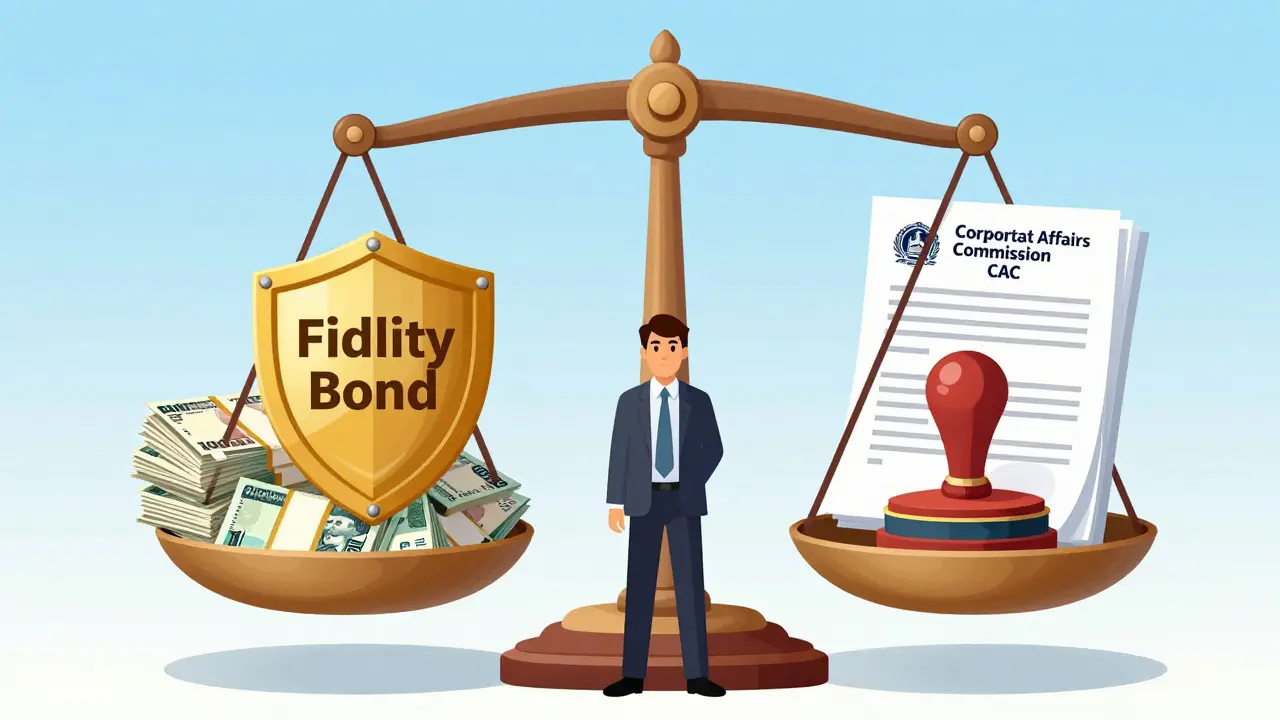
The SEC isn't handing out licenses to anyone with a laptop and a dream. They want to see that your business is stable enough to protect user funds. The first big barrier is the minimum paid-up capital. To apply, your entity must show a minimum of ₦500 million (roughly $325,000 USD). You can prove this through bank balances, fixed assets, or investments in quoted securities, but be ready for the SEC to dig deep into where that money came from.
Beyond the initial capital, there's a safety net requirement. You must secure a fidelity bond covering at least 25% of your paid-up capital. In practical terms, this means a minimum bond of ₦125 million. This bond acts as a guarantee that if things go south, there's a financial mechanism in place to mitigate losses, which is a direct response to the frequent "rug-pulls" and exchange collapses that have plagued the local market.
| Requirement | Minimum Value | Acceptable Forms |
|---|---|---|
| Paid-up Capital | ₦500 Million | Bank balances, Fixed assets, Quoted securities |
| Fidelity Bond | ₦125 Million | Insurance/Guarantee bond (25% of capital) |
Paperwork and Legal Structure
Your corporate DNA needs to be aligned with the SEC's vision. You can't just be a "general trading company." Your Corporate Affairs Commission (CAC) the agency responsible for registering companies in Nigeria documentation must be precise. Specifically, your Memorandum and Articles of Association (MEMART) must explicitly state that your company intends to operate as a cryptocurrency exchange.
You'll need to submit a packet containing:
- Certificate of Incorporation from the CAC.
- CAC Forms (including Form 1.1 and Form 7).
- Audited financial statements. If you're a brand-new company, a detailed statement of affairs will suffice.
- A comprehensive breakdown of your governance systems and technology infrastructure.
Navigating the Compliance Maze: AML and KYC
The SEC is terrified of crypto becoming a playground for money laundering. While the ISA 2025 provides the broad authority, the actual boots-on-the-ground rules follow Central Bank of Nigeria (CBN) guidance. As a licensed Virtual Asset Service Provider (VASP) an entity that facilitates the transmission of virtual assets, you are required to implement strict Anti-Money Laundering (AML) and Combating the Financing of Terrorism (CFT) controls.
This means no more anonymous trading. You must have a robust Know Your Customer (KYC) the process of verifying the identity of a client process. This involves verifying government IDs and performing ongoing monitoring of transfers. The SEC's goal here isn't just about crime-it's about visibility. By forcing exchanges to identify every user, the government can more easily track transactions for future tax purposes.
The "No Objection" Rule and Operational Limits
Once you have your license, you aren't totally free. The SEC has implemented a "No Objection" rule. Essentially, you cannot just list any token that becomes trendy. You must obtain prior SEC approval before trading any specific virtual or digital asset. This turns the SEC into a gatekeeper, preventing the flood of high-risk meme coins that often lead to investor losses.
There is also a very strict rule about financial assistance. You cannot provide direct or indirect financial help to your employees, officers, or investors to trade on your own platform. This is designed to prevent market manipulation and internal conflicts of interest. If you're a foreign operator, don't think you're exempt. If you target Nigerians via email, local promotions, or agents, you are legally required to follow these same rules.
Fast-Tracking Your License: The ARIP Program
Because the regulatory gap was so wide, the SEC launched the Accelerated Regulatory Incubation Programme (ARIP) a fast-track initiative to provide clearer pathways for crypto business licensing in June 2024. This is essentially a regulatory sandbox where the SEC can monitor new business models in a controlled environment before granting full licenses.
So far, the bar is high. Only a few pioneer entities like Quidax and Busha have managed to secure provisional licenses through this route. However, the SEC has signaled that it wants to move faster in 2025 and 2026 to bring more players into the legal fold, recognizing that Nigerians are increasingly using stablecoins to hedge against the volatility of the Naira.
The Trade-off: Security vs. Speed
For the end user, this regulatory shift is a double-edged sword. On one hand, it solves the massive security problem. Research from Busha showed that nearly half of Nigerian users were scared off by security concerns. Having an SEC-backed license gives users a place to complain and a level of assurance that the exchange won't vanish overnight.
On the other hand, the "friction" is real. Moving from a peer-to-peer (P2P) environment to a supervised system means slower onboarding due to KYC and potentially higher costs for the exchange to maintain compliance. For businesses using crypto for cross-border payments, the mandatory licensing verification for local partners can slow down the speed of transactions that were once nearly instantaneous.
Is a CAC registration enough to operate a crypto exchange in Nigeria?
No. While a Certificate of Incorporation from the Corporate Affairs Commission (CAC) is a prerequisite, you specifically need a Digital Asset Exchange (DAX) license from the SEC to operate legally. Operating without SEC approval can lead to severe penalties under the Investments and Securities Act 2025.
What happens if I list a token without SEC approval?
Under the "No Objection" rules, you must get prior approval before listing any digital asset. Trading unapproved tokens can result in regulatory sanctions or the suspension of your operational license.
Does this law apply to foreign exchanges?
Yes. If a foreign operator actively targets Nigerian investors through emails, local agents, or publications within Nigeria, they fall under the SEC's jurisdiction and must comply with the licensing requirements.
How much money do I need for the initial capital requirement?
You need a minimum paid-up capital of ₦500 million. This can be held as cash in bank accounts, fixed assets, or investments in quoted securities, provided the source of funds can be verified by the SEC.
What is the ARIP and how does it help?
The Accelerated Regulatory Incubation Programme (ARIP) is a fast-track system that allows crypto startups to enter a regulatory sandbox. It helps businesses get provisional licenses more quickly while working closely with the SEC to refine their compliance models.




People Comments
The ISA 2025 is obviously a move to centralise control over the Naira's flight. Most people miss the fact that the ₦500 million capital requirement is a deliberate barrier to keep out smaller fintech innovators, essentially creating an oligopoly for the big players like Quidax. This isnt just about security; its about fiscal surveillance. The SEC knows exactly how to squeeze the liquidity out of P2P markets using these restrictive DAX frameworks.
lol why do ppl think govt regs actually stop scams?? its just more paperwork for the rich guys to hide behind. totaly useless
money is just a shared hallucination anyway so whether the sec approves it or not the value remains in the mind of the believer
It is important to respect the legal frameworks of each nation. This approach seems professional.
everyone just wants to feel safe. it's a human need
Typical of our glorious nation to make things complicated while the rest of the world just trades. But hey, at least we have the most expensive licenses in Africa. Truly a masterpiece of bureaucracy!
The "No Objection" rule is actually quite an interesting way to filter out the noise of meme coins.
Absolute rubbish. The UK doesn't need this level of hand-holding. Nigeria is just trying to mimic a financial system it cannot maintain.
The systemic asymmetry of the ARIP sandbox is a textbook example of regulatory capture. By modulating the entry barriers through arbitrary capital requirements, the SEC is merely institutionalizing an extractive rent-seeking mechanism. The lack of algorithmic transparency in the "No Objection" rule is particularly egregious, effectively creating a curated liquidity pool that benefits only the institutional vanguard while marginalizing the retail stratum. This isn't regulation; it's a choreographed theater of compliance designed to mask the underlying fragility of the Naira's peg. The cognitive dissonance required to view this as "investor protection" is staggering. We are seeing the transition from an organic, decentralized marketplace to a state-sanctioned cartel. The fidelity bond is a pittance compared to the potential for systemic failure in a hyper-inflationary environment. Only a naive observer would believe that ₦125 million provides a meaningful hedge against a total liquidity collapse. The operational limits on financial assistance further ensure that the inner circle remains insulated from the volatility they curate for the masses. It's a sophisticated game of musical chairs where the SEC holds the music and the licenses are the only seats left. The irony of calling it "accelerated" is a delightful touch of bureaucratic satire. In reality, it's a slow-motion strangulation of the P2P ethos that actually gave the Nigerian crypto scene its initial vitality. Truly a masterclass in how to kill an industry while pretending to save it.
Great breakdown of the rules. Very clear.
US does it better 🇺🇸 Nigeria needs to stop playing around with money 🤡
I can see why people are nervous about the KYC stuff. Privacy is so important :)
Basically the gov wants a cut of the profits and wants to know who is getting rich. It's the same old story, just with a new digital wrapper.
This is a huge step for legitimacy! 🚀 Let's help the new founders navigate this!
THEY ARE TRACKING EVERYTHING!!! 🕵️♀️ This is just a front for the globalist agenda to freeze our wallets whenever they feel like it!!! TOTAL SURVEILLANCE STATE!!!!
If anyone needs help with the CAC forms, I can share some templates that worked for my friends!
its kinda cool that they have a sandbox for this. hopefuly more apps get in soon!
Sounds like a solid plan for long term growth.. hope it works out for the local deves
Umm, did we really think ₦500m was
Pure gold info! Super helpful!
Waste of time. This just makes the big exchanges bigger while we suffer :/