



In 2026, running a cryptocurrency business without a solid compliance program isn't just risky; it's impossible. You simply cannot survive if you aren't checked by regulators. Last year, we saw a massive shift when the EU's MiCA regulation became fully enforceable across all member states. Today, if you operate a Virtual Asset Service Provider (VASP), you face real scrutiny from bodies like FinCEN in the US and VARA in Dubai. Institutional investors, who control the bulk of market capitalization, now demand proof of these frameworks before signing deals. In fact, surveys show that over three-quarters of major investors refuse to engage with platforms lacking comprehensive compliance.
This article cuts through the noise. We will look at exactly what a modern compliance program entails, why the regulatory landscape has changed so drastically, and how much it actually costs to stay legal. We focus on practical steps, skipping the theoretical jargon to give you a roadmap that works right now.
Understanding the Core Compliance Framework
A Crypto Compliance Program is a structured set of internal policies and procedures designed to ensure a digital asset company adheres to local laws and international standards regarding money laundering, terrorist financing, and consumer protection. It acts as the bridge between your technology stack and government requirements.
To function correctly, this framework relies on three interconnected pillars that every operator must master:
- Identity Verification (KYC): This is your first line of defense. You need to verify who your users are before they trade. Under current guidelines, basic verification might just need an email for small transactions under $1,000, but larger activities trigger stricter checks.
- AML/PEP Screening: Once identified, users are screened against Anti-Money Laundering databases and Politically Exposed Persons lists. This prevents sanctioned individuals or criminal networks from using your platform.
- Wallet & Transaction Monitoring: This uses AI to watch the blockchain 24/7. If funds move in suspicious patterns, the system flags them for review.
Risk-based approaches are key here. You don't treat a user moving $50 the same way you treat someone moving $500,000. Enhanced Due Diligence (EDD) kicks in when transactions exceed $3,000, requiring documents that prove the source of wealth.
Navigating Global Regulatory Landscapes
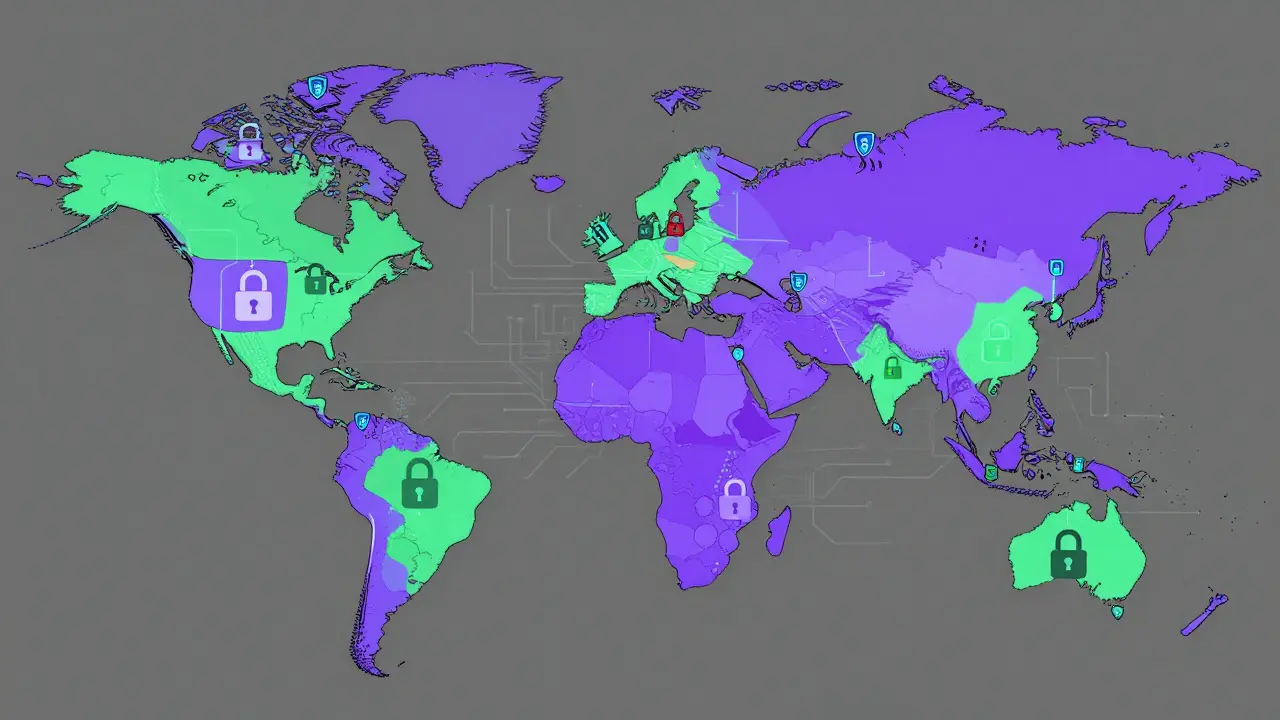
The biggest headache for crypto founders isn't just having a program; it's that every country writes its own rules. As of 2026, the fragmentation is still significant, though we are seeing some alignment. The United States employs a complex state-by-state approach where you might need dozens of separate money transmitter licenses to operate nationwide. One analysis suggests you could need up to 47 different licenses depending on your footprint.
In contrast, the European Union took a different path with its Markets in Crypto-Assets (MiCA) regulation. Since December 2024, MiCA has provided a single license valid across all 27 member states. This simplifies things greatly compared to the US model, but it comes with higher entry costs.
| Jurisdiction | Key Authority | License Requirement | Record Retention |
|---|---|---|---|
| United States | FinCEN / State Regulators | Multiple Money Transmitter Licenses (MTLs) | 5 Years (Federal) |
| European Union | EBA / National Competent Authorities | Single MiCA License (Pan-EU) | 5-10 Years |
| Dubai (VARA) | Virtual Assets Regulatory Authority | VARA Registration | 5 Years |
| Abu Dhabi (ADGM/DIFC) | FSRA / DFSA | FCA Authorization | 8 Years |
You also have options like Dubai's VARA, which offers faster licensing-averaging 90 days compared to 180 days in the US. While ADGM in Abu Dhabi mandates an even longer record retention period of eight years, the clarity of these rules helps businesses plan ahead.
Implementing the Technology Stack
Manual compliance doesn't work in the blockchain world. The speed and volume of transactions require automation. Your stack typically includes APIs that connect your platform to identity verification providers. Companies like Sumsub, Onfido, and Veriff handle the heavy lifting of scanning IDs and verifying biometric data.
Beyond ID checks, you need powerful blockchain analytics tools. These systems analyze the chain itself to trace where funds come from. They can flag interactions with known illicit wallets instantly. In 2025 reporting, top-tier systems processed over 10,000 transactions per second with a 98.7% accuracy rate for flagging suspicious activity.
Data privacy remains a delicate balance. You must store records securely while meeting disclosure needs. For example, the US Crypto Travel Rule mandates sharing sender and recipient details for transfers exceeding $3,000. Failure to comply here results in steep penalties.
Budgeting for Long-Term Viability
Let's talk numbers because budgets often get overlooked until it's too late. For a mid-sized exchange, setting up a robust compliance infrastructure usually ranges between $50,000 and $500,000 annually. Enterprise-level operations dealing with Fortune 500 partners can see costs exceed $1 million per year.
These expenses cover software licensing, compliance officers, and external audits. It is not just about buying a tool; you need staff skilled in both finance and technology. According to workforce analysis, only about 12% of traditional compliance professionals possess the dual skillset required for crypto. Finding talent is part of the cost.
Furthermore, consultants play a huge role. Many startups report spending hundreds of thousands in consulting fees alone just to navigate initial setup. One exchange owner shared their experience, noting that implementing MiCA compliance cost $350,000 upfront, plus significant ongoing maintenance. Despite the price tag, the alternative is losing access to banking channels and institutional clients.

Pitfalls to Avoid During Execution
Even with money and tech, things go wrong. A common issue involves User Experience (UX). If you ask for too much info too soon, you kill signups. A CTO reported that strict KYC initially dropped new user registrations by 32%. However, switching to tiered verification-where low-risk users get verified quickly-helped recover those numbers.
False positives are another drain. Old rule-based systems flagged innocent behavior constantly, wasting analyst time. Modern AI-driven monitoring reduces this significantly, but you still need humans to review the alerts. Another risk lies in multi-jurisdictional conflicts. Just because you are legal in the EU doesn't mean your data storage complies with US privacy laws or vice versa. Always ensure your tech provider supports cross-border data handling.
What is the minimum requirement for starting a crypto compliance program?
At a minimum, you need to register as a Money Services Business (MSB) with FinCEN in the US, implement Know Your Customer (KYC) identity checks, and establish transaction monitoring protocols. You cannot skip these basics regardless of your business size.
How does MiCA impact European crypto companies?
MiCA provides a harmonized framework allowing companies to get one license for operations across all 27 EU member states. It enforces strict capital reserves and consumer protection rules that were previously inconsistent.
Is the Travel Rule applicable to all crypto transfers?
Generally, yes. Under current standards, transfers exceeding $3,000 trigger the obligation to share originator and beneficiary information between service providers. Smaller peer-to-peer transactions may be exempt depending on local interpretations.
Can I outsource my entire compliance department?
You can outsource functions like KYC screening or blockchain analytics, but the ultimate liability always rests with the company board. You cannot transfer the legal responsibility to a third-party vendor.
What happens if I fail a regulatory audit?
Penalties vary but often include heavy fines, revocation of operating licenses, and personal liability for executives. In severe cases, failure to comply can lead to criminal charges related to money laundering.
Conclusion: The Path Forward
By March 2026, the conversation around crypto isn't about permission anymore; it's about execution. Regulations are settling, and the "Wild West" phase is effectively over. You cannot ignore the signal sent by FINRA and global watchdogs. Building a compliant operation is costly and complex, but it is the only way to secure the trust needed for long-term growth. The industry trajectory points toward tighter alignment by 2027, making early adoption of rigorous standards your best strategy for survival.






People Comments
Hey everyone!! This article is so exciting to read! i always thought complience was boring but seeing how much money we save by doing it properly makes me feel great
we really need to push this kind of stuf forward in our startups. it helps thier business models so much and keeps us safe from those big gov fines. i hope everyone reads this carefully because its such a good roadmap for 2026. lets keep building cool things safely together!
Agree totally
From a European perspective, the MiCA implementation has been far smoother than anticipated despite the initial noise regarding capital reserves. We noticed that firms who engaged compliance officers early in the Q1 cycle faced significantly fewer friction points during the December audit period.
The ability to operate pan-EU with a single license is indeed a massive operational advantage compared to the fragmented US state-level licensing model. However, do not underestimate the cost implications for smaller fintech entities trying to onboard.
While the author presents a robust argument regarding necessity, I find the cost projections rather optimistic when accounting for external consulting fees which often remain undisclosed in public reports.
One must critically examine whether the current regulatory framework truly protects the consumer or merely serves to solidify institutional gatekeeping mechanisms against the decentralized ethos of the blockchain.
I completely agree with the structural integrity of the framework outlined here. When implementing the KYC pipeline, it is crucial to integrate EDD triggers dynamically based on transaction velocity metrics rather than static thresholds alone.
We also need to consider the cross-border data sovereignty issues arising from GDPR versus the Travel Rule mandates under FATF standards. The synergy between AI-driven monitoring tools and human-in-the-loop verification processes remains the golden standard for reducing false positives significantly.
Great insights on EDD triggers.
The real agenda behind these rules is to strip privacy from the people while giving Big Tech and the Feds total surveillance access to your wallet history.
They want you to believe you are protecting yourself from scammers, but you are actually handing over the keys to the financial police. Wake up before they ban cold storage entirely!
I remember back in 2021 when we used to worry about simple tax reporting instead of this entire bureaucratic machine we see now.
It feels like every update brings another layer of paperwork and we just accept it as the price of living in society even though it hurts the spirit of innovation we started with years ago.
American companies dont need to follow EU rules ! protect our data first lol :)
You have a point about sovereignty but global markets require some baseline cooperation :)
The distinction between local regulatory authorities and federal oversight bodies is critical for any entity planning a multi-jurisdictional expansion strategy in Asia. Compliance officers must maintain a strict adherence to AML/CFT guidelines as specified by the Financial Action Task Force to avoid significant reputational damage.
It is imperative that boards understand their fiduciary duties extend beyond mere operational licenses to encompass ethical governance structures regarding user fund safety.
Oh absolutely, nothing says freedom like filling out forms for the pleasure of bureaucrats. Surely that's what we signed up for.
When we dive deep into the architecture of a modern compliance stack, we find that the technology is only half of the equation and the human element is often where vulnerabilities appear.
You need to understand that KYC is not just a checkbox but a continuous relationship management tool that requires constant calibration against emerging threat vectors in the dark web economy.
Furthermore, the cost of non-compliance extends beyond the immediate fine and includes the opportunity cost of losing banking partners who de-risk from crypto exposures rapidly.
Another consideration is the workforce gap where finding talent that understands both code and law is incredibly difficult leading to reliance on expensive consultants.
This creates a dependency that can slow down your product iteration cycles significantly if not managed with internal training programs.
We must also account for the dynamic nature of regulations where laws change weekly requiring agile policy documents that can pivot overnight without breaking service continuity.
Investors are watching closely and will pull funding if they see governance as an afterthought rather than a core product feature of your platform.
It is essential to automate wherever possible because manual reviews lead to bottlenecks that frustrate legitimate users trying to deposit funds.
False positives remain a major issue even with AI so having a clear escalation path for customer support teams is vital for retention rates.
Data retention policies must balance legal requirements with user privacy rights to prevent unnecessary liability from data breaches holding sensitive identity info.
The travel rule specifically demands interoperability protocols that many legacy VASPs struggle to implement due to older API infrastructures.
Risk scoring models should be transparent internally to auditors to demonstrate you are not cherry-picking high risk clients intentionally.
Sanctions screening lists get updated daily and failing to sync with the latest OFAC updates can land your CEO in hot water quickly.
Cross-border data transfer restrictions mean you cannot simply store KYC docs in one cloud region and serve globally without legal review.
In conclusion, building this system is complex but ignoring it is suicide in the 2026 regulatory environment we currently inhabit.
Start treating compliance as a product team rather than a legal burden to survive the next decade.
Great breakdown john! krypto compiliance is super tricky nowadays. we need bettr tools for sure
I am curious why you focus so heavily on US laws when Asian exchanges seem to be doing fine with different rules. Also are you sure about the $3000 threshold for the travel rule?
Can you share your sources for the cost estimates regarding enterprise compliance budgets?
Sounds like they are testing new laws to see what sticks until they can enforce total control. Keep your keys private.
This is just basic hygiene yet small players act like it is an obstacle course. True professionalism means knowing these rules already.
While experience dictates the complexity varies by firm size, basic adherence is indeed non-negotiable regardless of scale.
There is a quiet anxiety in this space that regulation will never stop getting tighter but businesses must adapt to stay relevant.
Actually the elites know the loopholes and small guys pay the bills for compliance. Its rigged system honestly.
It is important to recognize that regulatory harmonization takes time, and international cooperation is slowly improving these standards for mutual benefit.
still thinking bout this! hope the new year brings better tools for us startups to handle all this paper work easier