



Imagine walking into a coffee shop or clicking 'buy' on Amazon and paying with cryptocurrency without converting to fiat first. It sounds like the future of finance, but for most people, it remains a frustrating dream filled with high fees, slow transactions, and confusing wallet setups. Enter ZoidPay, a project that promises to bridge this gap.
You might have seen the ticker ZPAY floating around crypto forums or exchange listings. But what exactly is it? Is it just another meme coin hoping for a quick pump, or is there actual utility behind the hype? The truth is somewhere in the middle, and it’s complicated. ZoidPay isn’t just a token; it’s an entire ecosystem built to make crypto spending practical. However, its journey has been anything but smooth, marked by multiple blockchain migrations and significant market challenges.
In this guide, we’ll strip away the marketing fluff. We’ll look at how ZoidPay works, why it moved blockchains, who is backing it, and whether it’s actually viable for everyday use in 2026. If you’re considering holding ZPAY or using their services, you need to understand both the technology and the red flags.
The Core Concept: Making Crypto Spendable
At its heart, ZoidPay is a global fintech company designed to provide end-to-end blockchain payment solutions. Founded in Cyprus in 2018 by Eduard Oneci and Vasily Burcin, the project aims to solve one of crypto’s biggest problems: usability. Most cryptocurrencies are terrible for buying groceries because transactions are slow, expensive, or irreversible in a way that merchants hate.
ZoidPay tries to fix this by creating a suite of tools that work together. Instead of just giving you a card, they offer a four-part ecosystem:
- Chrome Extension: Launched in October 2021, this allows you to shop on any website (like Amazon or eBay) by connecting your existing crypto wallet directly to the checkout page.
- Marketplace App: This acts as an aggregator for merchants, offering cashback in crypto, DeFi services, staking options, and loans.
- Non-Custodial Wallet App: This serves dual purposes. For consumers, it’s a secure place to manage assets. For merchants, it functions as a mobile Point of Sale (POS) system.
- Crypto Cards: These are blockchain-agnostic cards that use NFC technology for contactless payments, allowing peer-to-peer transfers and in-store purchases.
The goal is simple: remove the friction between holding Bitcoin or Ethereum and spending it at your local store. By integrating these tools, ZoidPay hopes to drive mainstream adoption of Web3 financial services.
A Journey Across Blockchains: From Ethereum to MultiversX
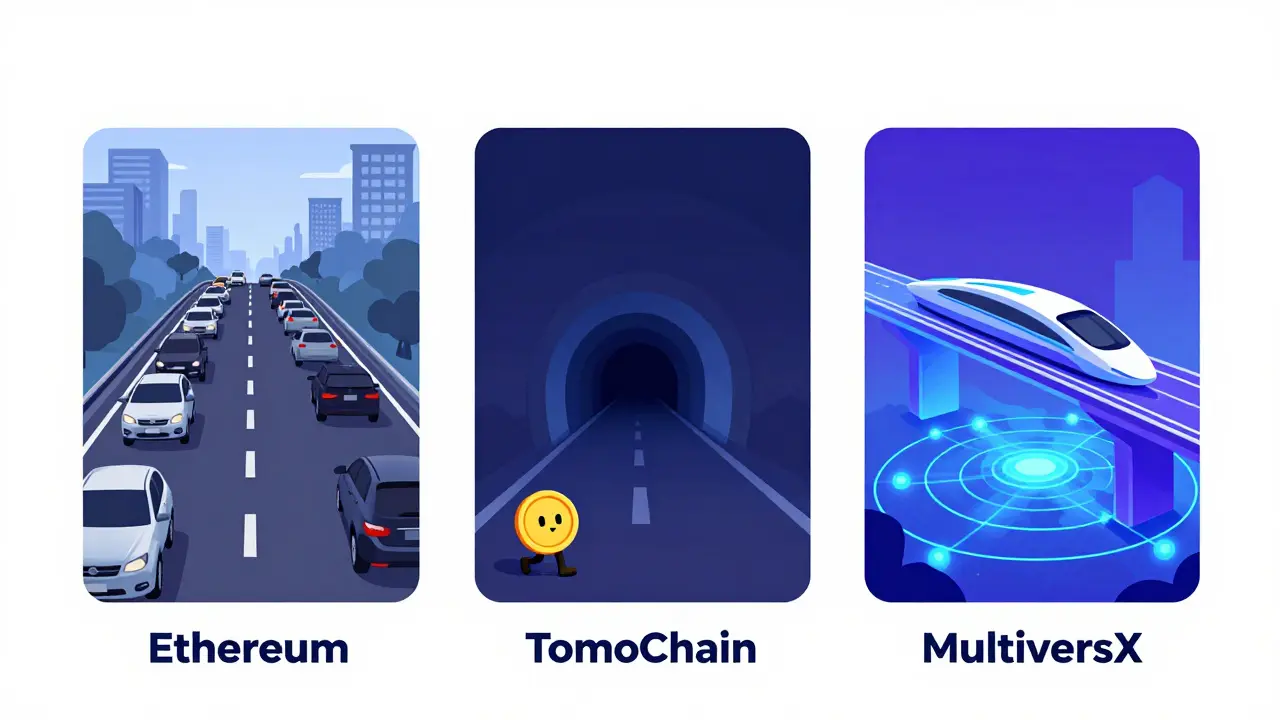
If you follow crypto infrastructure, you know that choosing the right blockchain is critical. ZoidPay’s history shows a classic case of trial and error. The project launched in May 2018 on the Ethereum blockchain. At the time, Ethereum was the standard for smart contracts. However, as network congestion grew, gas fees skyrocketed. Imagine trying to buy a $5 latte but paying $15 in transaction fees. That doesn’t work for retail payments.
To address this, ZoidPay migrated to TomoChain, a layer-two solution focused on privacy and speed. While this helped reduce costs, it limited interoperability. Eventually, the team found its current home on MultiversX (formerly known as Elrond). This move was strategic. MultiversX offers high throughput and low latency, which are essential for real-time payments. According to technical analyses from Tokero.com, this migration demonstrates adaptability, but it also adds complexity for users who must now interact with a different network environment than where the token originated.
| Blockchain | Period | Reason for Move |
|---|---|---|
| Ethereum | May 2018 - ~2019 | Initial launch; high security but slow/expensive fees. |
| TomoChain | ~2019 - ~2022 | Lower fees, faster transactions, privacy features. |
| MultiversX (Elrond) | 2023 - Present | Optimal balance of speed, cost, and scalability for payments. |
Tokenomics and Market Reality
Let’s talk about the money. The native token, ZPAY, has a total supply of 700,000,000 tokens. But here is where things get tricky. As of late 2023, major data aggregators like Coinbase reported zero active circulation for ZPAY. This is a massive red flag for liquidity. How can a payment token be used if it isn’t circulating?
Price-wise, ZPAY has struggled. It trades in the fractions of a cent, hovering around $0.0033 USD. Over a 24-hour period, it can drop more than 5%, showing high volatility typical of low-cap altcoins. The daily trading volume is startlingly low-around $590 across all exchanges. Compare this to market leaders like Coinbase Card, which processed billions in transactions, and the scale difference is stark.
However, the project did raise $75 million in November 2022 from GEM Digital Limited. This institutional backing suggests that some investors see long-term potential in the infrastructure, even if the retail market hasn’t caught on yet. The question remains: will that capital translate into user growth, or will it burn out without sufficient demand?
How ZoidPay Compares to Competitors
You don’t have to use ZoidPay to spend crypto. There are giants in this space. Let’s compare ZoidPay against established players like Coinbase Card, Crypto.com Visa Card, and Binance Card.
The big competitors offer simplicity. You load your card, you swipe, done. They handle the conversion behind the scenes. ZoidPay tries to do something different: it offers a "blockchain-agnostic" approach. This means it attempts to work across multiple networks, which is technically impressive but often confusing for average users. Additionally, ZoidPay includes DeFi features like staking and loans within its marketplace, which pure payment cards don’t always offer.
But there’s a catch. ZoidPay lacks the merchant acceptance network of its rivals. While Coinbase partners with Visa globally, ZoidPay relies on its own Chrome extension and specific merchant integrations. If your favorite store doesn’t accept ZoidPay directly, you’re stuck using the extension, which requires you to have a compatible wallet set up correctly. That’s a steep learning curve for someone who just wants to buy shoes online.

Red Flags and Community Sentiment
We need to be honest about the risks. One of the strongest indicators of a crypto project’s health is its community. ZoidPay struggles here. Reports indicate only 57 Twitter followers as of 2023. In the crypto world, where projects thrive on viral marketing and community engagement, this number is anomalously low. Reddit discussions are virtually nonexistent, and user reviews on platforms like Trustpilot are scarce.
This lack of social proof raises questions about adoption. Are people actually using the Chrome extension? Are merchants accepting the POS system? Without verifiable success stories or case studies, it’s hard to confirm that ZoidPay has achieved meaningful traction beyond its initial funding round.
Furthermore, the regulatory landscape is unclear. With operations based in Cyprus, ZoidPay must navigate EU financial regulations. However, details on KYC/AML compliance across different jurisdictions are not prominently documented. For a payment processor, regulatory clarity is non-negotiable. Users should proceed with caution until more transparency is provided.
Future Outlook: Can ZPAY Recover?
So, where does this leave us in 2026? Price predictions vary wildly. TradingBeasts forecasts a price of $0.0027 by 2026, while LiteFinance predicts a much lower range, averaging around $0.001 by 2029. These models suggest a bearish outlook, reflecting the current lack of momentum.
For ZoidPay to succeed, it needs three things:
- Exchange Listings: Getting listed on major tier-one exchanges would boost liquidity and visibility.
- Merchant Partnerships: Integrating with large retailers rather than relying solely on browser extensions.
- Community Growth: Building a user base that advocates for the product organically.
Until then, ZoidPay remains a niche player. It’s an interesting experiment in multi-chain payments, backed by significant venture capital, but it hasn’t yet cracked the code on mass adoption. If you’re a developer interested in Web3 infrastructure, the tech might appeal to you. If you’re a casual investor looking for easy gains, the low liquidity and high volatility make ZPAY a risky bet.
Is ZoidPay safe to use?
Safety depends on how you define it. Technically, ZoidPay uses non-custodial wallets, meaning you control your private keys, which is generally safer than custodial solutions. However, the project’s low liquidity, lack of widespread user reviews, and unclear regulatory status present operational risks. Always ensure you understand the risks of interacting with lesser-known DeFi platforms before connecting your main wallet.
Which blockchain is ZPAY on now?
ZPAY primarily operates on the MultiversX (formerly Elrond) blockchain. It previously existed on Ethereum and TomoChain. When buying or transferring ZPAY, ensure you are using the correct network address to avoid losing funds, as cross-chain bridges may not support all legacy versions of the token.
Can I buy ZPAY on Coinbase?
No, ZPAY is not currently tradable on Coinbase. The token has extremely limited exchange listings, with very low trading volume. You may find it on smaller decentralized exchanges or niche centralized platforms, but liquidity is poor, meaning you could face significant slippage when buying or selling.
What is the ZoidPay Chrome Extension used for?
The Chrome Extension allows users to pay with cryptocurrency directly on websites that don’t natively support crypto, such as Amazon or eBay. It connects your crypto wallet to the checkout process, facilitating the transaction without needing to convert to fiat currency manually beforehand.
Who founded ZoidPay?
ZoidPay was co-founded by Eduard Oneci and Vasily Burcin in 2018. The company is headquartered in Cyprus and received a significant $75 million investment from GEM Digital Limited in November 2022.
- Poplular Tags
- ZoidPay
- ZPAY token
- crypto payments
- MultiversX blockchain
- fintech