



When you hear someone say they're 'HODLing' their Bitcoin, they're not talking about a new type of wallet or a secret trading technique. They're saying they're holding - no matter what. The term started as a typo. In December 2013, a guy named GameKyuubi posted on BitcoinTalk after a few drinks, typing: 'I AM HODLING.' He meant to say 'holding,' but the mistake stuck. What began as a drunken message became one of the most powerful ideas in crypto history.
How HODL Became a Movement
Back then, Bitcoin was trading around $10. GameKyuubi saw the price dip and panicked. He wrote: 'I have more than I can afford to lose, so I'm not selling.' He didn't want to cash out just because the market got shaky. His post got replies like 'I AM HODLING TOO!' and soon, the phrase spread. People started using it as a mantra. Then came the backronym: 'Hold On for Dear Life.' It fit perfectly during the crashes that followed.
By 2017, Bitcoin surged from $1,000 to nearly $20,000. HODLers made 1,900% returns. Traders who bought and sold constantly? A University of California study found they lost 36% on average. Why? Because they reacted to every dip, every spike, every tweet from Elon Musk. HODLers just sat tight. They didn't need charts, indicators, or trading bots. They needed patience.
What HODLing Actually Looks Like
HODL isn't just about buying Bitcoin and forgetting about it. It's a mindset. It means buying crypto because you believe in its long-term value - not because you think it'll double next week. You set a goal: 'I'm buying this because I think it'll be worth 10x in five years.' Then you do nothing. No checking your portfolio every hour. No panic selling when Bitcoin drops 15% in a day.
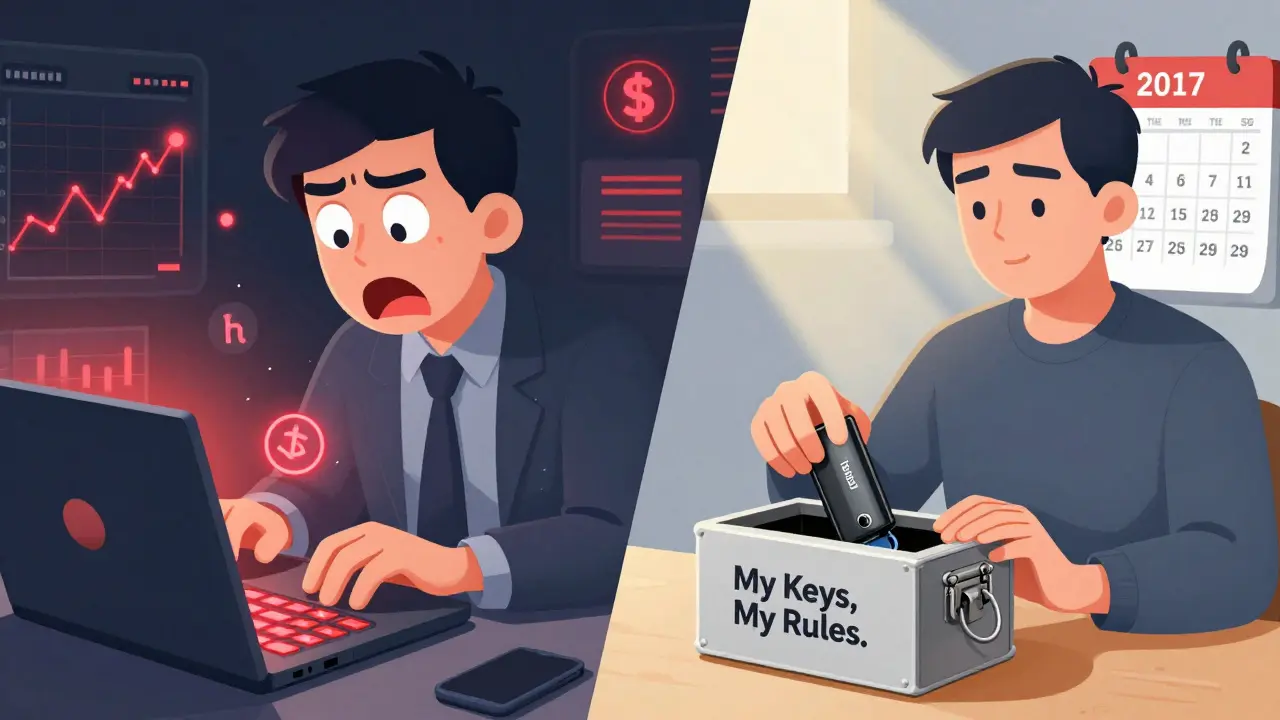
Real HODLers store their crypto in personal wallets, not on exchanges. Why? Because exchanges get hacked. Exchanges get shut down. Exchanges freeze accounts. If you're serious about holding long-term, you control your own keys. That means downloading a wallet like Electrum or Ledger, backing up your recovery phrase, and storing it somewhere safe - not in the cloud, not on your phone, not in a Google Doc.
The technical part? Easy. Setting up a wallet takes 10 minutes. The hard part? Staring at your balance drop 80% and not selling. Bitcoin fell from $19,167 in December 2017 to $3,200 a year later. Ethereum dropped from $1,400 to $85 in 2018. People who HODLed through that? They eventually made back their money - and then some. People who sold? They missed the next bull run.
Why HODL Works - And Why It Doesn't
HODLing works best with Bitcoin. Why? Because Bitcoin has a fixed supply. Only 21 million will ever exist. As more people adopt it, scarcity drives value. Institutions like MicroStrategy bought over 214,000 BTC. Grayscale's Bitcoin Trust grew from $2 billion to $28 billion in two years. These aren't traders. They're HODLers on a corporate scale.
But HODL doesn't work for every coin. Take Cardano. It hit $3 in September 2021. By 2023, it was under $0.30. The team kept building. The tech kept improving. But the price didn't bounce. Why? Because hype isn't the same as utility. HODLing a coin with no real use case is like holding a stock in a company that never makes money. The Corporate Finance Institute warns: 'Blind HODLing ignores fundamental valuation.'
That's why many now practice 'strategic HODLing.' They hold the core of their portfolio - say, 70% in Bitcoin - and trade the rest. A 2023 CryptoQuant report found 62% of long-term holders do this. It's not pure HODL. But it’s smarter.
The Psychological Toll of HODLing
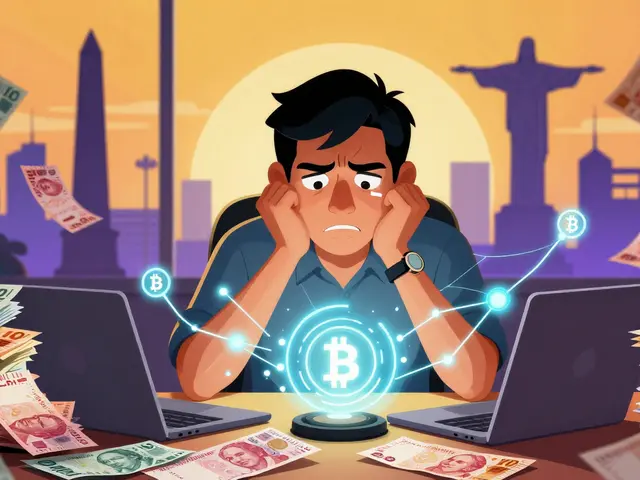
Here’s the truth no one talks about: HODLing is emotionally brutal. A 2023 CryptoCompare survey found 63% of long-term holders experienced 'severe anxiety' during market drops over 50%. You wake up, check your phone, and your $50,000 investment is now $18,000. You see headlines: 'Crypto Crash Deepens.' Your friends are selling. Your uncle asks, 'Did you lose all your money?'
That's when 'diamond hands' are born - a slang term for people who refuse to sell, no matter what. A Twitter poll in June 2023 showed 57% of crypto investors called themselves diamond hands. But the other 43%? They sold. One Reddit user posted: 'I HODLed through 2018. Sold at $3,500. Bitcoin hit $70,000 two years later.' That's the pain.
There's no magic fix. But experts recommend one thing: write down your reasons for buying before you buy. 'I'm buying Bitcoin because it's digital gold.' 'I believe in decentralized money.' When the market crashes, reread that. It helps.
Taxes, Security, and the Future of HODL
HODLing has tax advantages. In the U.S., if you hold crypto for over a year before selling, you pay long-term capital gains tax - up to 20%. If you trade often? You pay up to 37%. So holding isn't just about price. It's about keeping more of your money.
But here's the scary part: 20% of all Bitcoin ever mined - about 3.8 million coins - is lost forever. Why? People forgot their passwords. Lost their USB drives. Deleted their wallets. If you HODL, your keys are your responsibility. No one can recover them. No customer service line. No 'I forgot my password' button.
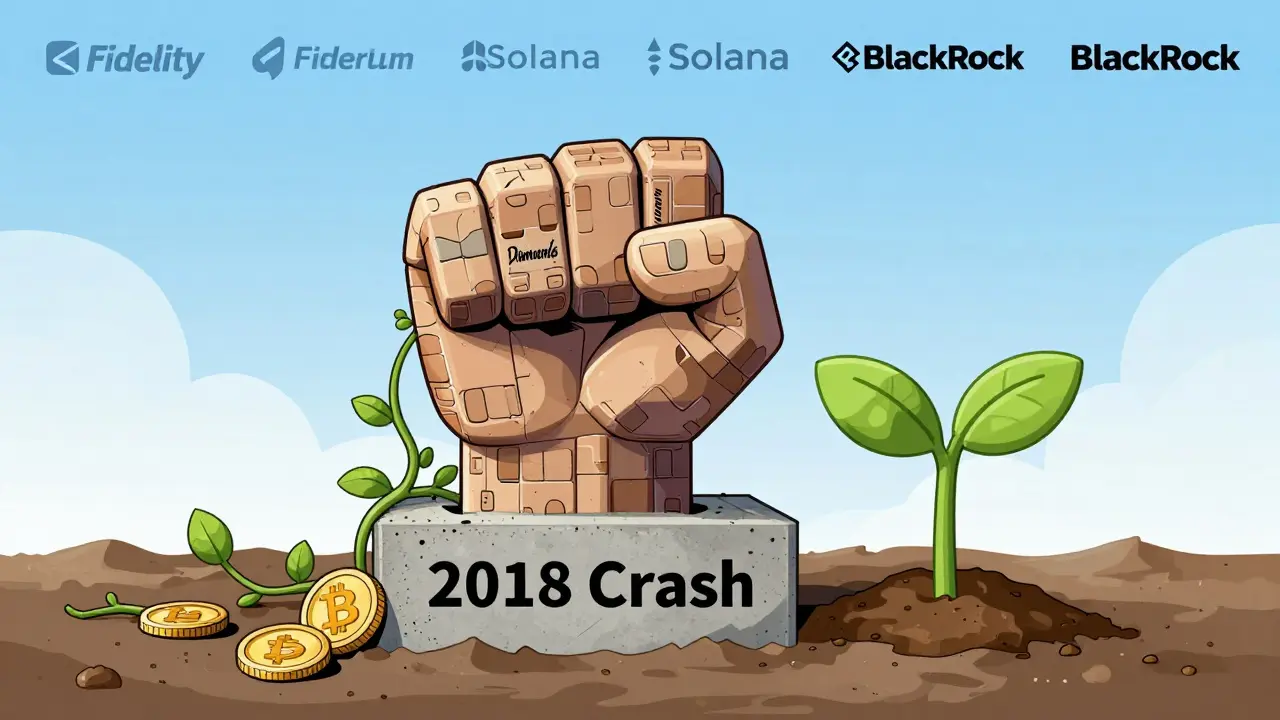
What’s next? Institutional HODLing is growing. Fidelity found that 45% of institutional investors now use HODL-style strategies, up from 12% in 2020. BlackRock filed for a Bitcoin spot ETF in 2023 - a sign that Wall Street is embracing long-term holding. Analysts predict Bitcoin could hit $120,000 by 2025. But they also warn: 'Blind HODLing won't work as markets mature.'
The future of HODL isn't about ignoring the market. It's about understanding it. Holding Bitcoin because you believe in its role as money. Not because you think it'll make you rich overnight. The original HODLer didn't know what he started. He just refused to sell. And that simple act changed crypto forever.
Is HODL Right for You?
Ask yourself:
- Can I handle a 70% drop without selling?
- Do I understand what I'm buying - or am I just chasing hype?
- Am I willing to hold for 5+ years?
- Do I know how to securely store my keys?
If you answered 'yes' to all four, HODL might be your strategy. If not, maybe you need to learn more first. Don't rush. The best HODLers didn't start with millions. They started with one Bitcoin. And the courage to wait.
Where did the term HODL come from?
HODL originated from a December 18, 2013, forum post on BitcoinTalk by a user named GameKyuubi. He misspelled 'holding' as 'HODLING' in a drunken post while explaining he wouldn't sell his Bitcoin despite a price drop. The typo became a meme and later evolved into a core crypto philosophy.
Is HODL the same as buy and hold?
Yes, HODL is essentially the crypto version of 'buy and hold.' It means purchasing an asset and keeping it for the long term, regardless of short-term price swings. Unlike active trading, HODLing doesn't involve timing the market or reacting to daily volatility.
Can I HODL altcoins like Ethereum or Solana?
You can, but it's riskier than HODLing Bitcoin. Bitcoin has a proven track record, fixed supply, and growing institutional adoption. Most altcoins lack these fundamentals. Many have crashed 90% or more and never recovered. Experts recommend HODLing only a small portion of your portfolio in altcoins - if at all.
Do I need to be rich to HODL?
No. You can HODL with as little as $10. The strategy isn't about how much you invest - it's about how long you hold. Many of the biggest HODLers started with small purchases during Bitcoin's early years. What matters is your mindset, not your bank balance.
What's the difference between HODL and staking?
HODL means holding crypto without earning rewards. Staking means locking up your crypto to help secure a blockchain network - and earning interest in return. Staking can give you 3-15% annual returns, but it requires technical setup and carries risks like smart contract bugs. HODL is simpler: buy, store, wait.
Is HODLing safe from hackers?
HODLing is safer than leaving crypto on exchanges - but only if you store it properly. Use a hardware wallet like Ledger or Trezor. Write down your recovery phrase. Store it offline. Never share it. If you keep crypto on an exchange, you're not truly HODLing - you're trusting someone else to keep it safe.
How long should I HODL for?
There's no fixed timeline. Most successful HODLers hold for 5+ years. Bitcoin's historical cycles show it takes about 4 years to complete a major bull-bear cycle. Holding through at least one full cycle gives you the best chance of profiting. Many HODLers aim for 10 years or more.
What if Bitcoin crashes again? Should I sell?
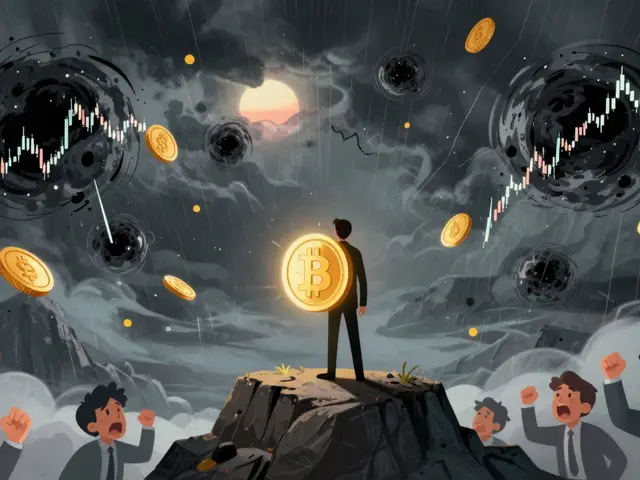
If you truly believe in Bitcoin's long-term value, then no - you shouldn't sell. Past crashes have always been followed by recoveries. The 2018 crash saw Bitcoin drop 84%. The 2022 crash saw it fall 75%. Both were followed by new all-time highs. Selling during a crash locks in your losses. HODLing lets you ride out the storm.


People Comments
HODL is just another word for being too lazy to trade smart
Ohhhhh, so you're telling me... that a drunk guy's typo... became a whole fucking movement??
Like... holy shit.
I mean... I HODL... but I never knew the origin was this chaotic.
Imagine if he'd typed 'HODLING' on Twitter... it would've died in 3 hours.
But BitcoinTalk? Back then? It was the wild west of finance.
No moderators. No algorithms. Just real people losing their minds over digital coins.
And somehow... this one typo... stuck.
It's beautiful. Like a meme born from panic.
Not some corporate whitepaper. Not a Goldman Sachs analyst.
Just a guy with too much whiskey and too much faith.
I'm not even mad. I'm kinda proud.
Our whole culture... started with a typo.
And now? We're all just... HODLing... like he did.
That's poetry.
While the anecdote about GameKyuubi is charming, it is imperative to clarify that HODLing as a strategy is not universally optimal. Empirical data from the University of California study cited in the post demonstrates statistically significant underperformance among active traders, yet this does not imply that passive holding is optimal for all asset classes. For instance, altcoins with weak tokenomics, such as those lacking utility or decentralized governance, exhibit negative expected returns over five-year horizons. Moreover, the assumption that Bitcoin's fixed supply guarantees value ignores macroeconomic variables such as regulatory adoption, network hash rate decay, and global liquidity shifts. Strategic asset allocation, rather than binary HODLing, remains the prudent approach for risk-averse investors.
Did you know the government already knows who HODLs?
Every time you buy Bitcoin, your bank reports it.
Every time you move it to a wallet? The blockchain is public.
They're tracking your every move.
And when the next crash comes? They'll freeze your assets.
They're scared of decentralized money.
That's why they're pushing CBDCs.
They want you to be dependent.
HODLing is the only rebellion left.
But if you're using an exchange? You're already owned.
Hardware wallet? Good.
Recovery phrase on paper? Even better.
But if you store it in a Google Doc?
You're already dead.
And when they come for your keys?
They'll come with subpoenas.
They'll come with lawyers.
They'll come with guns.
HODL... or lose everything.
So I HODL like 0.5 BTC... and I check it like... 12 times a day 😅
It's not even about the money anymore.
It's like... my emotional barometer.
Bitcoin down? I feel like a failure.
Bitcoin up? I feel like a genius.
It's ridiculous.
But I can't stop.
My wife says I talk to my phone like it's a person.
She's not wrong.
I even named my wallet 'Bobby'.
He's been through a lot.
2018? Bobby cried.
2021? Bobby flexed.
2022? Bobby almost died.
Now? Bobby's just chillin'.
And so am I.
😂
I love how HODLing is both a strategy and a meditation.
You're not trying to beat the market.
You're trying to beat your own fear.
Every time I see my portfolio drop, I take a breath.
I remember why I started.
Not to get rich.
But to be free.
Free from banks.
Free from inflation.
Free from the lie that money has to be controlled.
Bitcoin isn't perfect.
But it's the closest thing we have to real freedom.
And that's worth holding onto.
Most people don't realize HODLing isn't passive
It's the most active form of resistance
You're not just holding coins
You're rejecting the entire financial system
Every time you don't sell during a crash
You're saying no to fear
No to FOMO
No to Wall Street
It's a quiet revolution
And it's working
Because the system can't control what it doesn't own
And you own your keys
That's power
HODL isn't about Bitcoin. It's about discipline.
Somebody said HODLing is dumb because altcoins crash
Bullshit
You don't HODL dogecoin because your cousin told you to
You HODL Bitcoin because you understand scarcity
You HODL because you know the system is rigged
You HODL because you're tired of being played
It's not a trading strategy
It's a middle finger to capitalism
And I love it
I started HODLing with $50 in 2019
Didn't check it for a year
Came back and it was 3x
Didn't touch it again
Now I'm sitting on enough to pay off my student loans
Not because I'm smart
But because I didn't panic
That's the secret
Not luck
Not timing
Just... not selling
My mom asked me if I lost all my money last year
I said 'no'
She said 'then why are you still so quiet?'
I said 'because I'm waiting for the moon'
She said 'what's the moon?'
I said 'it's when Bitcoin hits $100k'
She said 'that's not real'
I said 'neither is Social Security'
She didn't talk to me for a week
But I still HODL
To anyone thinking about HODLing: start small
Buy $20 worth
Put it in a wallet you control
Don't check it for 30 days
Then check it
Then don't check it for another 30
Do this three times
You'll learn more about yourself than any course on trading
HODLing teaches patience
It teaches trust
It teaches that value isn't always visible
And that's the real crypto lesson
What's fascinating about HODL isn't the price action-it's the psychological evolution of the community.
Early adopters were anarchists, crypto-punk idealists.
Mid-cycle HODLers were tech-savvy skeptics who saw opportunity in disruption.
Now? The majority are just regular people-teachers, nurses, baristas-who bought a few sats after hearing about it on TikTok.
They don't care about blockchain architecture.
They care about not being exploited by banks.
They care about inflation eating their rent money.
They care about leaving something real for their kids.
The movement isn't about technology anymore.
It's about dignity.
And that's why it'll outlast every exchange, every ETF, every regulatory crackdown.
People don't abandon dignity.
They fight for it.
That comment about the 63% anxiety stat? I felt that.
Woke up one morning, Bitcoin down 40%
Thought I was ruined
Called my brother
He said 'remember why you bought it'
I read my old note: 'I want freedom from the system'
Didn't sell
Two months later? Up 80%
Still don't check it every hour
But I still have that note
On my fridge
Next to my grocery list
My dad sold his Bitcoin at $8k
Now he asks me if I still have mine
I say yes
He says 'good'
He doesn't understand why
But he respects it
That's enough
HODL isn't a strategy
It's a culture
And cultures don't die because prices drop
They evolve
Bitcoin was a rebellion
Now it's a legacy
And the people who held?
They didn't just make money
They built a new kind of trust
Between strangers
Across borders
Without a middleman
That’s worth more than any price tag
Oh, so HODLing works because... 'scarcity'?
How quaint.
So is gold scarcity the reason it's been stagnant for 12 years?
And yet-somehow-Bitcoin's 'scarcity' is magic?
How convenient.
Let me guess: the next guru will say 'Bitcoin is digital gold because it's shiny and heavy in your dreams.'
Meanwhile, the real world is moving to CBDCs.
And you're still HODLing like it's 2017.
Adorable.