

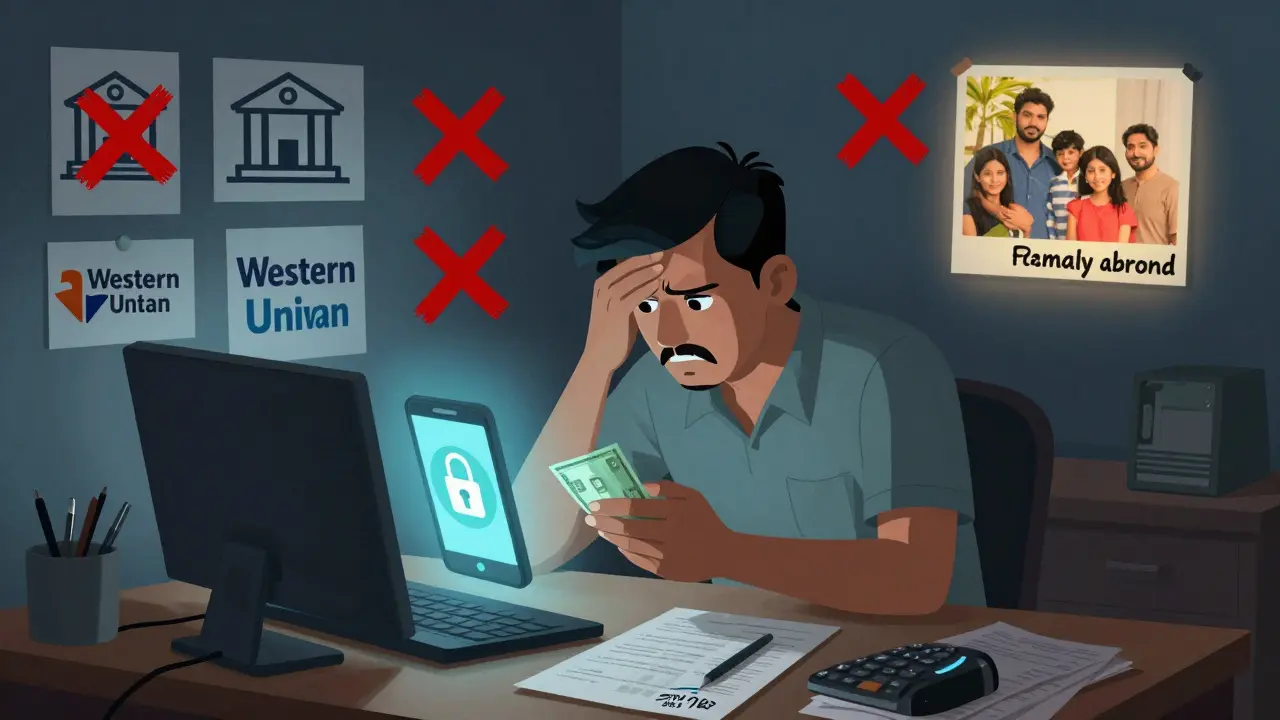
Imagine trying to send money to a family member abroad, but every official channel is blocked. For thousands of people in Nepal, this isn't a hypothetical scenario-it's daily life. Since the Nepal Rastra Bank (NRB) central bank of Nepal that regulates financial institutions and currency issued its comprehensive ban on all cryptocurrency activities in 2017, digital assets like Bitcoin the first and most widely recognized decentralized digital currency have been illegal to mine, trade, or even possess. Yet, despite heavy fines, imprisonment threats, and aggressive government crackdowns, an underground crypto market thrives. It operates in the shadows, driven by the need for cross-border remittances and investment opportunities that the formal banking system fails to provide efficiently.
Why People Trade Crypto Underground in Nepal
The drive to participate in the cryptocurrency market a decentralized network for trading digital assets without intermediaries in Nepal stems from practical necessity rather than just speculative greed. The primary catalyst is the high cost and slow speed of traditional international money transfers. When Nepali workers abroad send money home via Western Union or banks, they face significant fees and unfavorable exchange rates. Cryptocurrencies offer a faster, cheaper alternative. Additionally, many citizens view digital assets as a hedge against inflation and currency devaluation, seeking to preserve wealth in a global reserve asset rather than holding it solely in Nepalese Rupees. This demand persists despite the legal risks because the perceived benefits outweigh the potential penalties for many users.
How the Underground Network Operates
Navigating the banned landscape requires technical know-how and careful planning. Traders rely on a combination of tools to bypass state-imposed restrictions. Here are the core methods used in the current underground ecosystem:
- Peer-to-Peer (P2P) Platforms: Services like Binance P2P a platform allowing direct user-to-user cryptocurrency trading with escrow services are the backbone of underground trading. Users buy crypto directly from other individuals. Payments are settled through local e-wallets like eSewa a popular digital wallet service in Nepal for online payments and transfers or traditional bank transfers, making the transaction trail harder for authorities to trace compared to direct exchange deposits.
- Virtual Private Networks (VPNs): The Nepal Telecommunication Authority (NTA) government body responsible for regulating telecommunications in Nepal blocked access to major cryptocurrency websites in 2021. To get around this, traders use VPNs to mask their IP addresses and appear as if they are browsing from outside Nepal. However, using a VPN for crypto access is explicitly prohibited by recent NRB circulars.
- Encrypted Messaging Apps: Coordination happens on platforms like Telegram a cloud-based instant messaging service known for strong encryption features and WhatsApp. These apps allow traders to find partners, negotiate prices, and share tips on avoiding detection while maintaining a layer of privacy.

Government Enforcement and Recent Crackdowns
The Nepalese government has shown zero tolerance for digital currency violations. The enforcement strategy involves multiple agencies working together to close loopholes. The Central Investigation Bureau (CIB) specialized police unit in Nepal handling complex crimes including cybercrime leads digital raids, while the NRB monitors banking patterns for suspicious activity. In July 2025, authorities arrested two Indian nationals, Rupesh Kumar Gupta and Bipin Kumar, who were running a massive illegal operation out of a grocery store in Lalitpur. They had conducted transactions worth over Rs 1.5 billion. Police seized cash, CCTV equipment, and charged them under the Criminal Code 2074 for unauthorized virtual currency use and illegal hundi transactions. This case highlights how seriously the state takes these offenses, targeting not just small individual traders but also large-scale organized networks.
| Feature | Official Banking System | Underground Crypto Network |
|---|---|---|
| Legality | Fully Legal | Illegal (Ban since 2017) |
| Transaction Speed | Slow (Days for international) | Fast (Minutes to Hours) |
| Cost | High Fees & Poor Exchange Rates | Lower Fees & Market Rates |
| Risk Level | Low (Regulated) | Very High (Arrest, Fines, Scams) |
| Accessibility | Requires Bank Account & ID | Requires Tech Skills & VPN |
The Real Risks You Face
Participating in underground crypto trading is not just a minor infraction; it carries severe consequences. First, there is the legal risk. Violations can lead to imprisonment and heavy fines under cybercrime and foreign exchange laws. Second, there is the financial risk. Without regulatory protection, you have no recourse if a P2P counterparty scams you. If someone sends you fake payment proofs or reverses a bank transfer after receiving your crypto, you lose everything. Third, there is the psychological toll. Living with the constant fear of being tracked by banking pattern analysis or digital surveillance creates significant stress. Authorities are increasingly sophisticated, using AI-driven tools to detect unusual transaction patterns that signal crypto involvement.

Regional Context: Why Nepal Stands Alone
Nepal’s stance is an outlier in Asia. While neighbors like India are developing regulatory frameworks that balance control with innovation, and Bhutan has explored adoption, Nepal maintains a complete prohibition. This divergence creates pressure on the government. Citizens see friends in neighboring countries legally investing in digital assets, which fuels resentment and drives more people toward the black market. The NRB views cryptocurrencies as a threat to monetary sovereignty and financial stability, fearing capital flight and loss of control over the national economy. However, this strict approach has not eliminated demand; it has only pushed it deeper underground, making it harder to monitor and regulate effectively.
What Should You Do?
If you are considering crypto trading in Nepal, understand that you are operating in a high-risk environment. There is no safe way to break the law. If you must engage in digital finance, stick to legal alternatives such as regulated foreign exchange services or authorized digital wallets for domestic payments. Avoid using VPNs for financial transactions, as this is now explicitly targeted by regulators. Never trust anonymous P2P traders without extensive verification, and be aware that any funds involved in illegal crypto trades can be confiscated by authorities. Stay informed about legal changes, but do not assume legalization is imminent. As of 2026, the ban remains firm, and enforcement is intensifying.
Is Bitcoin legal in Nepal?
No, Bitcoin and all other cryptocurrencies are strictly illegal in Nepal. The Nepal Rastra Bank banned all crypto-related activities, including mining, trading, and possession, in 2017. Violations can result in fines and imprisonment.
Can I use Binance in Nepal?
Accessing Binance is technically possible using a VPN, but it is illegal. The Nepal Telecommunication Authority has blocked crypto websites, and using a VPN to bypass this block for financial transactions is prohibited by the NRB. Doing so exposes you to legal action and account freezing.
What happens if I get caught trading crypto?
If caught, you may face charges under the Cyber Crime Act and foreign exchange regulations. Penalties include heavy fines and potential imprisonment. Authorities may also confiscate your digital assets and related equipment. Recent cases show arrests for transactions involving millions of rupees.
Why do people still trade crypto underground?
People trade underground primarily for cheaper and faster cross-border remittances, as well as for investment purposes. Traditional banking channels are often slow and expensive, driving users to seek alternatives despite the legal risks.
Will Nepal legalize cryptocurrency soon?
As of 2026, there are no official plans to legalize cryptocurrency. The government maintains a strict prohibition stance, viewing digital currencies as a threat to monetary control. While global trends shift, Nepal remains one of the most restrictive jurisdictions in Asia.