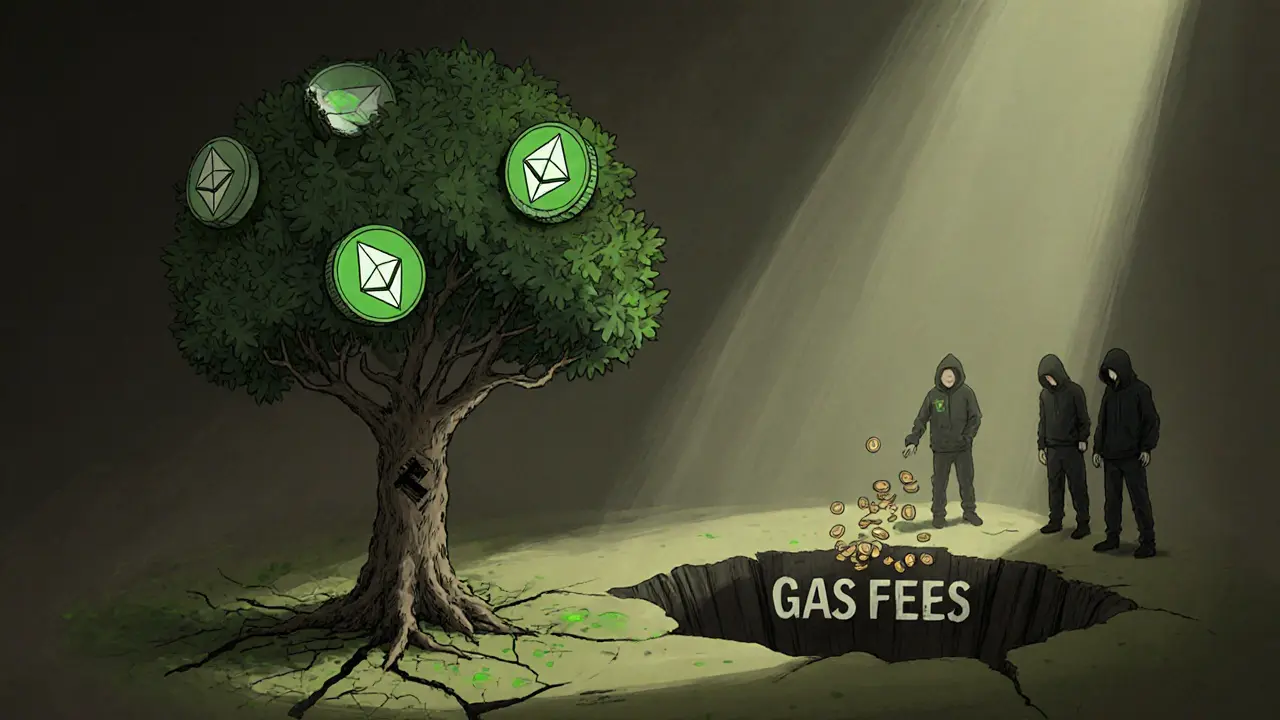
Green Crypto: Sustainable Blockchain Projects and Eco-Friendly Coins Explained
When you hear green crypto, cryptocurrencies designed to minimize environmental harm through low-energy consensus mechanisms and renewable-powered networks. Also known as eco-friendly crypto, it’s not about marketing—it’s about changing how blockchains operate from the ground up. Most people still think Bitcoin eats up entire countries’ power, and while that was true for proof-of-work chains, it’s not the whole story anymore. Today, dozens of networks run on proof-of-stake, proof-of-history, or other methods that use 99% less energy than Bitcoin’s original model. The shift isn’t hypothetical—it’s happening now, and it’s changing who invests, who builds, and who cares.
Behind every sustainable blockchain, a network built to operate with minimal electricity, often powered by renewable sources and validated by stake rather than brute-force computing is a real trade-off: speed, decentralization, or security. Ethereum’s switch to proof-of-stake in 2022 cut its energy use by over 99.9%, proving that big chains can go green without collapsing. Meanwhile, newer chains like Solana and Cardano were built this way from day one, using efficient consensus designs that don’t need massive mining farms. But not all claims are equal. Some tokens call themselves "green" just because they’re small—no real audit, no transparency, no proof. True sustainability means measurable reductions in carbon output, public energy reports, and partnerships with renewable energy providers. It’s not about being perfect—it’s about being honest and measurable.
Then there’s the carbon-neutral crypto, a project that offsets its remaining emissions through verified carbon credits or direct investment in clean energy projects. These aren’t just feel-good labels. Some teams buy carbon credits from verified programs like Gold Standard or Verra. Others fund solar farms that power their nodes. A few even run their validators on hydroelectric or wind-powered data centers. It’s not magic—it’s accounting. And if a project says it’s carbon neutral but won’t show you the receipts, it’s not green. It’s just quiet.
What you’ll find below isn’t a list of hype coins. It’s a collection of real cases—some successful, some failed—where people tried to make crypto cleaner. You’ll see how institutions are quietly shifting into low-energy assets, how scams hide behind "eco-friendly" names, and why some of the most promising green projects still struggle to get attention. This isn’t about being perfect. It’s about knowing what’s real when the market screams "sustainable" at you.